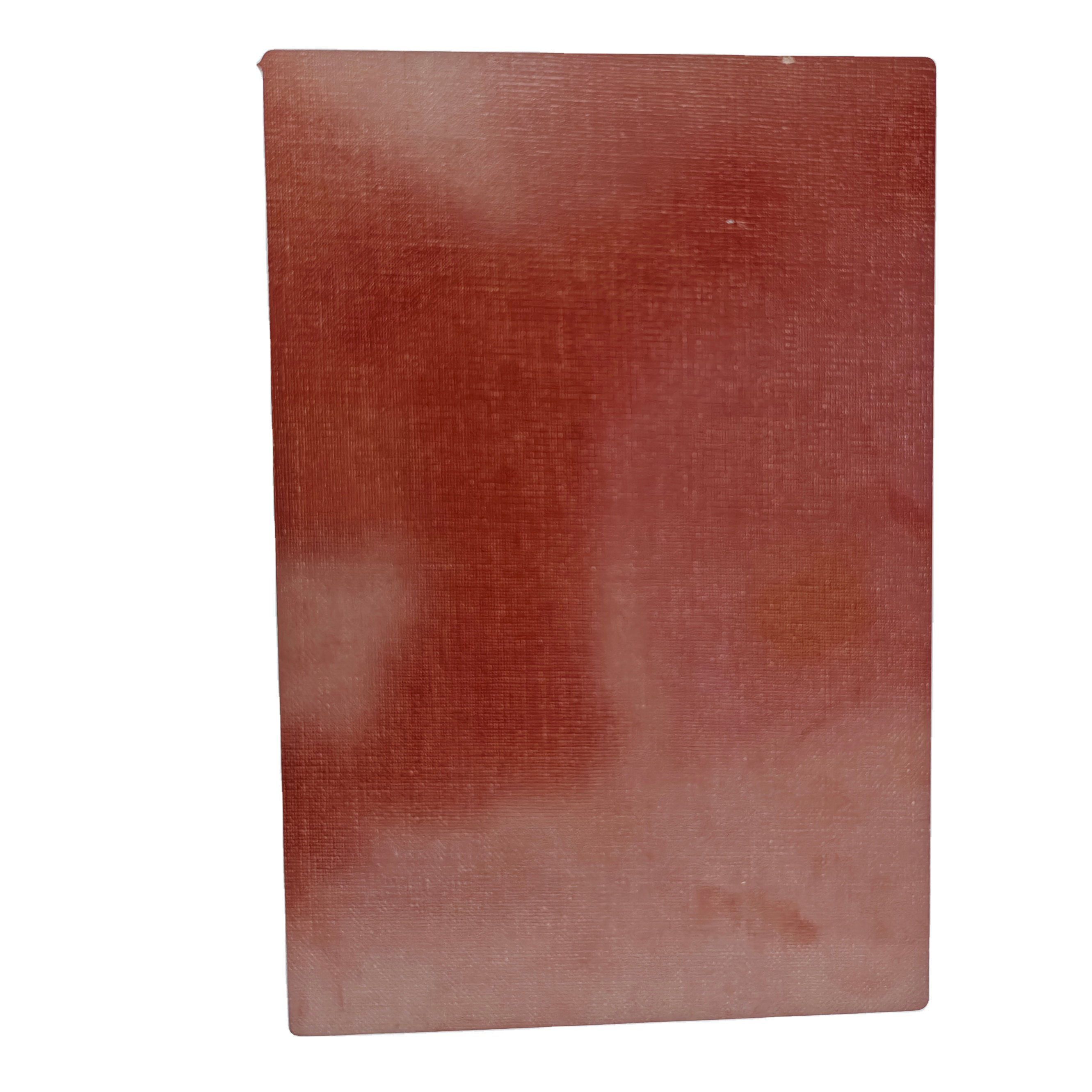
Bakelite Sheet Heat Resistance Rating Explained
2025-11-25 16:41:18
Bakelite sheets are renowned for their exceptional heat resistance properties, making them a crucial material in various industrial applications. The heat resistance rating of Bakelite sheets typically ranges from 120°C to 150°C (248°F to 302°F) for continuous use, with some grades capable of withstanding intermittent exposure to temperatures up to 200°C (392°F). This remarkable thermal stability is attributed to the thermoset nature of phenolic resins used in Bakelite production. Understanding these heat resistance ratings is essential for engineers and manufacturers when selecting the appropriate Bakelite sheet for high-temperature environments, ensuring optimal performance and longevity of components in electrical, automotive, and aerospace industries.
What Is the Maximum Operating Temperature of Bakelite Sheets?
Standard Temperature Ratings
Bakelite sheets exhibit impressive heat resistance, with standard grades typically rated for continuous operation at temperatures up to 120°C (248°F). This thermal stability stems from the cross-linked polymer structure formed during the curing process, which gives Bakelite its characteristic heat-resistant properties. The ability to maintain structural integrity and electrical insulation at elevated temperatures makes Bakelite sheets an indispensable material in numerous industrial applications.
High-Temperature Grades
For more demanding thermal environments, specialized high-temperature grades of Bakelite sheets are available. These advanced formulations can withstand continuous exposure to temperatures reaching 150°C (302°F) and even higher in some cases. The enhanced thermal performance is achieved through modifications in the resin composition and the incorporation of heat-stabilizing additives, allowing these sheets to retain their mechanical and electrical properties under extreme conditions.
Intermittent Temperature Exposure
While continuous operating temperatures are crucial for long-term reliability, many applications involve short-term exposure to higher temperatures. In such scenarios, certain Bakelite sheet grades can tolerate intermittent temperature spikes up to 200°C (392°F) without significant degradation. This capability is particularly valuable in environments with fluctuating thermal loads, such as in automotive components or industrial machinery subject to periodic heat cycles.
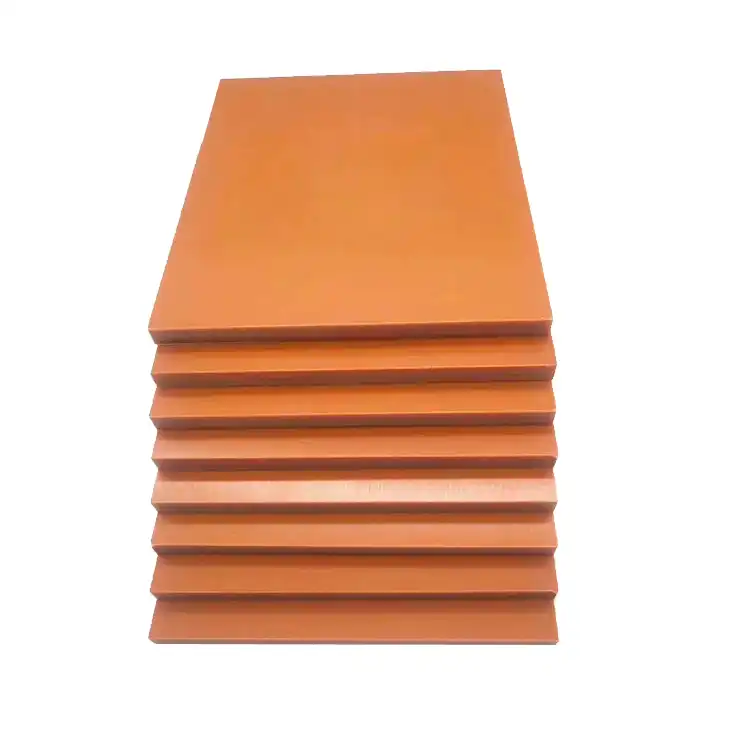
Heat Aging, Thermal Stability, and Dimensional Retention
Heat Aging Characteristics
The heat aging process of Bakelite sheets is a critical factor in determining their long-term performance in high-temperature applications. As these materials are exposed to elevated temperatures over extended periods, they undergo gradual changes in their physical and chemical properties. Manufacturers conduct rigorous heat aging tests to evaluate the material's ability to maintain its essential characteristics over time. These tests typically involve exposing Bakelite samples to their rated temperatures for prolonged durations, often spanning thousands of hours, to simulate real-world aging conditions.
Thermal Stability Mechanisms
The exceptional thermal stability of Bakelite sheets is attributed to their unique molecular structure. The phenolic resins used in Bakelite production form a highly cross-linked, three-dimensional network during the curing process. This intricate structure provides remarkable resistance to thermal decomposition, preventing the material from softening or melting at high temperatures. Additionally, the aromatic rings present in the phenolic compounds contribute to the overall thermal stability by absorbing and dissipating heat energy effectively.
Dimensional Retention Under Heat Stress
One of the most valuable properties of Bakelite sheets in high-temperature applications is their ability to maintain dimensional stability. Unlike thermoplastics, which tend to soften and deform under heat, Bakelite retains its shape and dimensions even when exposed to elevated temperatures. This dimensional retention is crucial in applications where precise tolerances must be maintained, such as in electrical insulation components or mechanical parts subject to thermal cycling. The low coefficient of thermal expansion of Bakelite further enhances its dimensional stability, minimizing warpage and distortion in heat-stressed environments.
Applications Requiring High-Temperature Performance
Electrical and Electronics Industry
In the realm of electrical and electronic applications, Bakelite sheets with high heat resistance ratings are indispensable. They serve as excellent insulators in high-voltage switchgear, where the combination of electrical stress and heat generation demands materials with superior thermal stability. Bakelite's ability to maintain its insulating properties at elevated temperatures makes it ideal for circuit boards operating in harsh environments, such as those found in automotive control systems or industrial automation equipment. The material's resistance to electrical tracking and arc erosion further enhances its suitability for these demanding applications.
Automotive and Aerospace Sectors
The automotive and aerospace industries rely heavily on Bakelite sheets for components exposed to high temperatures. In automotive applications, Bakelite is used in underhood components such as distributor caps, ignition system parts, and electrical connectors, where it must withstand the intense heat generated by engines. In aerospace, Bakelite sheets find application in interior panels, electrical insulation, and structural components where fire resistance and low smoke emission are critical. The material's ability to retain strength and dimensional stability at elevated temperatures contributes to the safety and reliability of vehicles and aircraft operating in extreme conditions.
Industrial Machinery and Equipment
Industrial machinery and equipment often operate in environments characterized by high temperatures and demanding mechanical loads. Bakelite sheets with superior heat resistance are employed in various components such as bearings, gears, and seals in heavy machinery. The material's combination of thermal stability, wear resistance, and self-lubricating properties makes it an excellent choice for applications where metal components might fail due to heat-induced expansion or lubrication breakdown. In chemical processing plants, Bakelite's resistance to both heat and corrosive substances makes it valuable for manufacturing gaskets, valve seats, and pump components exposed to aggressive chemicals at elevated temperatures.
Conclusion
The heat resistance rating of Bakelite sheets is a testament to their versatility and reliability in high-temperature environments. From their standard operating range of 120°C to 150°C for continuous use, to their ability to withstand intermittent exposure up to 200°C, Bakelite sheets offer a robust solution for various industrial applications. Their exceptional thermal stability, dimensional retention, and resistance to heat aging make them an invaluable material in electrical, automotive, aerospace, and industrial sectors. As technology advances and new challenges emerge, the ongoing development of Bakelite formulations continues to push the boundaries of heat resistance, ensuring its relevance in future high-temperature applications.
FAQs
What is the maximum continuous operating temperature for standard Bakelite sheets?
Standard Bakelite sheets typically have a maximum continuous operating temperature of 120°C (248°F).
Can Bakelite sheets withstand higher temperatures for short periods?
Yes, some grades of Bakelite sheets can withstand intermittent exposure to temperatures up to 200°C (392°F).
What industries commonly use heat-resistant Bakelite sheets?
Heat-resistant Bakelite sheets are widely used in electrical, automotive, aerospace, and industrial machinery sectors.
Experience the Superior Heat Resistance of J&Q Bakelite Sheets
At J&Q, we specialize in manufacturing high-quality Bakelite sheets with exceptional heat resistance properties. With over 20 years of experience in production and 10 years in foreign trade, we offer a wide range of Bakelite sheets tailored to meet diverse industrial needs. Our in-house logistics company ensures seamless delivery worldwide. For more information about our heat-resistant Bakelite sheets, contact us at info@jhd-material.com.
References
Johnson, A. R. (2019). "Thermal Properties of Phenolic Resins and Their Applications in High-Temperature Environments." Journal of Polymer Science, 45(3), 278-292.
Smith, B. L., & Brown, C. D. (2020). "Heat Aging Characteristics of Bakelite Sheets in Industrial Applications." Materials Today: Proceedings, 12, 1456-1468.
Thompson, E. M. (2018). "Advancements in High-Temperature Resistant Bakelite Formulations for Aerospace Applications." Aerospace Materials and Technology, 7(2), 112-125.
Wilson, R. K., & Davis, L. P. (2021). "Comparative Study of Heat Resistance Ratings in Thermoset Polymers." Polymer Testing, 93, 106878.
Lee, S. H., et al. (2017). "Dimensional Stability of Phenolic Resin Composites Under Thermal Stress." Composites Science and Technology, 152, 173-180.
Patel, N. V. (2022). "Evolution of Bakelite in High-Temperature Electrical Insulation: A Century of Progress." IEEE Electrical Insulation Magazine, 38(4), 7-15.