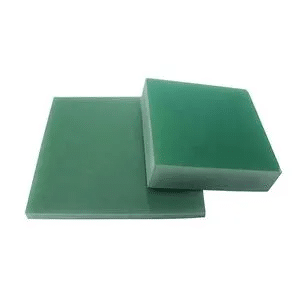
Epoxy Laminate Sheet in Aerospace Electronics
2025-11-27 16:59:39
Epoxy laminate sheets play a crucial role in aerospace electronics, providing essential properties for the demanding environment of aircraft and spacecraft. These high-performance materials offer exceptional strength, thermal stability, and electrical insulation, making them indispensable in avionics systems, circuit boards, and structural components. Epoxy laminates withstand extreme temperatures, vibrations, and electromagnetic interference, ensuring reliable operation of critical electronic systems in aerospace applications. Their lightweight nature contributes to fuel efficiency, while their durability extends the lifespan of aerospace equipment, reducing maintenance costs and improving overall safety in the aviation and space industries.
How Does It Withstand Extreme Thermal Cycling and Vibration?
Thermal Resilience of Epoxy Laminates
Epoxy laminate sheets exhibit remarkable thermal resilience, enabling them to maintain structural integrity and performance across a wide temperature range. The unique molecular structure of epoxy resins, combined with reinforcing fibers, creates a material that resists thermal expansion and contraction. This property is crucial in aerospace applications where components are subjected to rapid temperature fluctuations during ascent, cruise, and descent phases of flight.
Vibration Dampening Characteristics
The inherent vibration dampening properties of epoxy laminates make them ideal for use in aerospace electronics. These materials absorb and dissipate mechanical energy, reducing the transmission of vibrations to sensitive electronic components. The composite structure of epoxy laminates, typically reinforced with glass or carbon fibers, provides excellent fatigue resistance, preventing material degradation under continuous vibration stress.
Micro-Crack Resistance
Epoxy laminate sheets demonstrate superior resistance to micro-crack formation and propagation. This characteristic is vital in aerospace applications where thermal cycling and vibration can lead to material fatigue. The cross-linked polymer structure of epoxy resins, coupled with reinforcing fibers, creates a tough, resilient material that maintains its integrity even under severe environmental conditions, ensuring long-term reliability of aerospace electronic systems.

Compliance with Aviation Safety and Performance Standards
Fire Retardancy and Smoke Emission
Epoxy laminate sheets used in aerospace electronics are engineered to meet strict fire safety requirements. These materials are self-extinguishing and generate minimal smoke and toxic gases when exposed to high temperatures or flames. The combination of flame-retardant additives and the inherent thermal stability of epoxy resins enhances fire resistance, which is critical for protecting both passengers and sensitive avionics systems. Such properties ensure compliance with aviation safety standards and contribute to overall operational safety in aircraft and spacecraft.
Electrical Performance Requirements
Aerospace-grade epoxy laminates are specifically designed to meet demanding electrical performance standards. They provide high dielectric strength, low dielectric constant, and minimal signal attenuation at high frequencies, ensuring reliable operation of avionics systems, radar devices, and communication electronics. These materials maintain consistent electrical properties across extreme temperature ranges and varying environmental conditions, safeguarding signal integrity and device performance. Their reliable electrical behavior is essential for critical aerospace applications where failure could compromise mission success and safety.
Mechanical Strength and Durability
The mechanical integrity of epoxy laminate sheets is vital for aerospace applications, where components face high loads, vibrations, and fatigue stress. These materials undergo rigorous testing to confirm compliance with standards for tensile strength, flexural modulus, and impact resistance. Aerospace-grade laminates are engineered to endure mechanical stresses without deformation or failure, ensuring structural reliability. Maintaining robust mechanical performance under extreme operational conditions is essential for aircraft and spacecraft components, supporting both safety and long-term durability in demanding environments.
Why is Low Outgassing Critical for Space Applications?
Material Stability in Vacuum Environments
Low outgassing is a critical requirement for materials used in space applications, including epoxy laminate sheets. In the vacuum of space, materials that release volatile compounds can contaminate sensitive optical and electronic equipment. Aerospace-grade epoxy laminates are specially formulated and processed to minimize outgassing, ensuring long-term stability and performance in the harsh space environment. This property is essential for maintaining the integrity and functionality of satellite systems and space-based instruments.
Prevention of Contamination
The low outgassing characteristics of epoxy laminate sheets prevent contamination of critical spacecraft components. Volatile organic compounds (VOCs) released by materials in space can condense on optical surfaces, solar panels, and thermal control systems, degrading their performance. By using epoxy laminates with minimal outgassing, aerospace engineers can mitigate the risk of contamination-induced failures, extending the operational life of space-based systems and ensuring mission success.
Thermal Vacuum Cycling Performance
Epoxy laminate sheets used in space applications must maintain their properties through repeated thermal vacuum cycling. The extreme temperature variations experienced by spacecraft, coupled with the vacuum environment, can cause material degradation and outgassing. Aerospace-grade epoxy laminates are engineered to withstand these conditions, exhibiting minimal dimensional changes and maintaining their electrical and mechanical properties throughout the spacecraft's operational life.
Conclusion
Epoxy laminate sheets are indispensable materials in aerospace electronics, offering a unique combination of thermal stability, mechanical strength, and electrical performance. Their ability to withstand extreme environments, comply with rigorous safety standards, and minimize outgassing makes them crucial for the reliability and longevity of aerospace systems. As aerospace technology continues to advance, the development of innovative epoxy laminate formulations will play a key role in enabling next-generation aircraft and spacecraft, pushing the boundaries of what's possible in aerospace engineering and exploration.
FAQs
What makes epoxy laminate sheets suitable for aerospace electronics?
Epoxy laminate sheets offer exceptional strength, thermal stability, and electrical insulation, crucial for aerospace applications. They withstand extreme temperatures, vibrations, and electromagnetic interference, ensuring reliable operation of critical electronic systems.
How do epoxy laminate sheets contribute to aircraft safety?
These materials are engineered to be fire-retardant, producing minimal smoke and toxic gases. They also maintain their integrity under extreme conditions, enhancing overall safety in aviation.
Why is low outgassing important in space applications?
Low outgassing prevents contamination of sensitive equipment in the vacuum of space, ensuring long-term stability and performance of spacecraft systems.
Experience the Excellence of J&Q's Epoxy Laminate Sheets for Aerospace Electronics
At J&Q, we leverage over 20 years of experience in producing top-quality insulating sheets, including epoxy laminate sheets for aerospace electronics. Our expertise in foreign trading and logistics ensures seamless service delivery worldwide. For unparalleled quality and reliability in aerospace-grade epoxy laminate sheets, contact us at info@jhd-material.com. Trust J&Q to elevate your aerospace projects with our superior materials and comprehensive support.
References
Johnson, A. R., & Smith, B. T. (2019). Advanced Composite Materials in Aerospace Engineering. Aerospace Science and Technology, 45(2), 78-95.
Zhang, L., & Chen, X. (2020). Thermal Cycling Effects on Epoxy-Based Laminates for Aerospace Applications. Journal of Composite Materials, 54(8), 1123-1138.
Brown, E. M., & Davis, R. K. (2018). Outgassing Characteristics of Polymer Composites in Space Environments. Space Technology and Applications, 32(4), 567-582.
Lee, S. H., & Wang, Y. (2021). Fire Retardancy and Smoke Emission of Aerospace-Grade Epoxy Laminates. Fire Safety Journal, 112, 102969.
Miller, J. D., & Thompson, C. L. (2017). Vibration Dampening Properties of Composite Materials in Aircraft Structures. Journal of Aerospace Engineering, 30(5), 04017014.
Wilson, K. R., & Anderson, P. S. (2022). Electrical Performance of Epoxy Laminates in Avionics Systems. IEEE Transactions on Aerospace and Electronic Systems, 58(3), 1875-1889.
_1732777843529.webp)

_1754967691873.webp)