
Best Insulation for Vacuum Pump Vanes: G10 vs G11 vs FR4
2026-03-11 17:26:42
When looking for the best insulation material for vacuum pump vanes, G10 fiberglass epoxy laminate stands out as the most useful option for everyday business uses. G10 is very strong mechanically, very good at insulating electricity, and very stable in terms of its size even when it's vacuumed. While G11 performs better at high temperatures up to 180°C and FR4 is safer because it doesn't catch fire, G10 is the best choice for engineering managers and procurement teams looking for reliable, long-term solutions because it strikes the perfect balance between cost and performance for most vacuum pump applications.
Understanding Vacuum Pump Vane Insulation Requirements
Insulation on vacuum pump blade is an important part that affects both how well it works and how reliably it works. Because vacuum systems are so demanding, they come with their own problems that need special material solutions. Knowing these standards helps engineering teams choose materials in a way that affects the longevity of the pump and the cost of its maintenance.
Critical Performance Parameters for Vacuum Pump Applications
Insulation materials are put through extreme conditions in vacuum pump settings that test their basic properties. Some of the most important performance factors are mechanical strength under cyclic loading, resistance to thermal degradation, and the stability of the electrical insulation. Together, these factors make sure that the pump works the same way for thousands of hours.
As the vacuum pump vanes go through quick changes in pressure and rotating forces, their ability to handle mechanical stress becomes even more important. Materials must keep their shape and not wear out or become fatigued. Also, the vacuum climate can make thermal effects stronger, which is why temperature stability is such an important thing to think about when choosing materials.
How Material Properties Impact Pump Efficiency and Longevity
The connection between the features of the material and how well the pump works goes beyond just how well it works. It also includes how much energy it uses and how much it costs to run. Bad choices of materials can cause more friction, less effective seals, and early failure of parts. High-quality insulation materials help keep the right gaps between things and lower energy use by closing better.
Dimensional stability under changing temperatures stops warping and displacement that could lower the efficiency of the pump. Materials that don't absorb much water keep their features the same even in humid conditions, so they work reliably in a wide range of weather conditions.
Industry Standards and Compliance Requirements for Insulation Materials
Depending on the type of application, vacuum pump uses must meet different industry standards. NEMA standards set minimum requirements for electrical performance, and UL certifications make sure that electrical uses are safe. For environmental safety, many industrial areas need extra certifications like ROHS compliance.
Quality management systems, such as ISO 9001 certification from material sources, make sure that the properties of materials and the way they are made are always the same. These standards help procurement teams evaluate suppliers and make sure that key applications can depend on the supply chain in the long term.
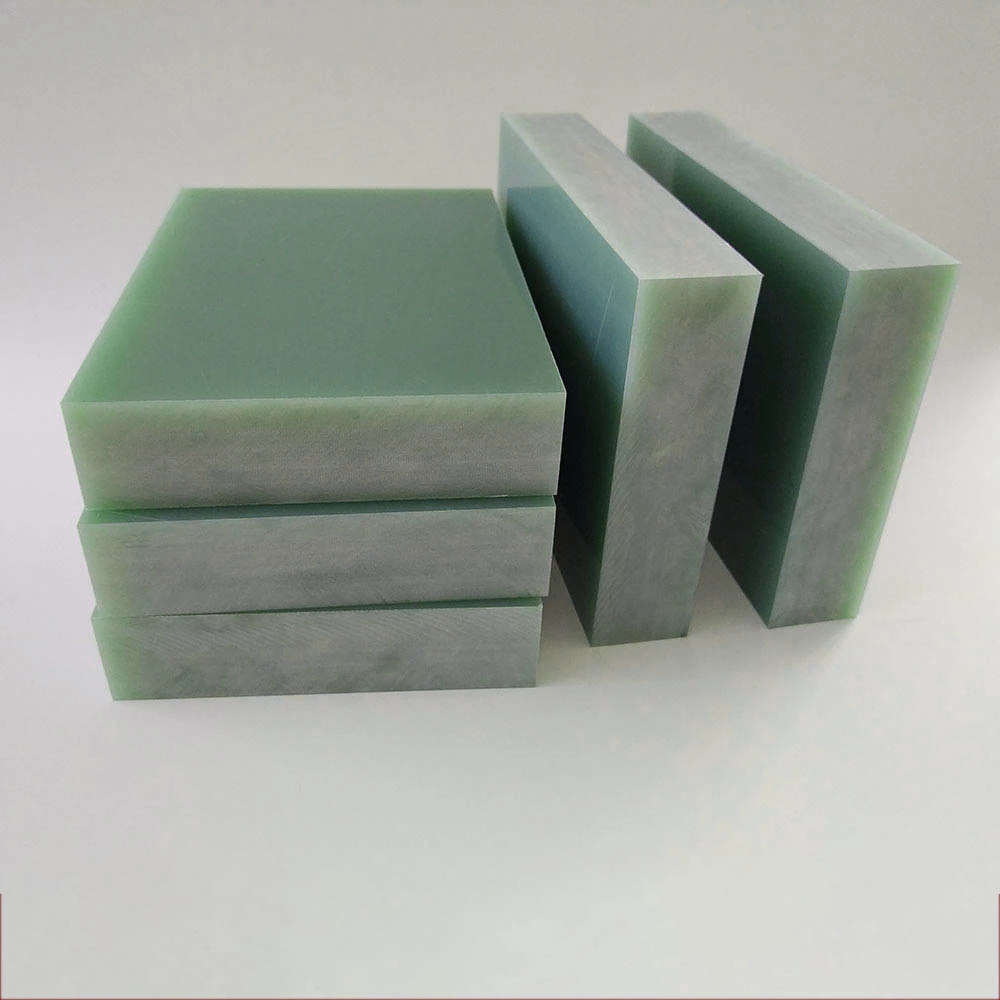
G10 Fiberglass Epoxy Laminate - Properties and Applications
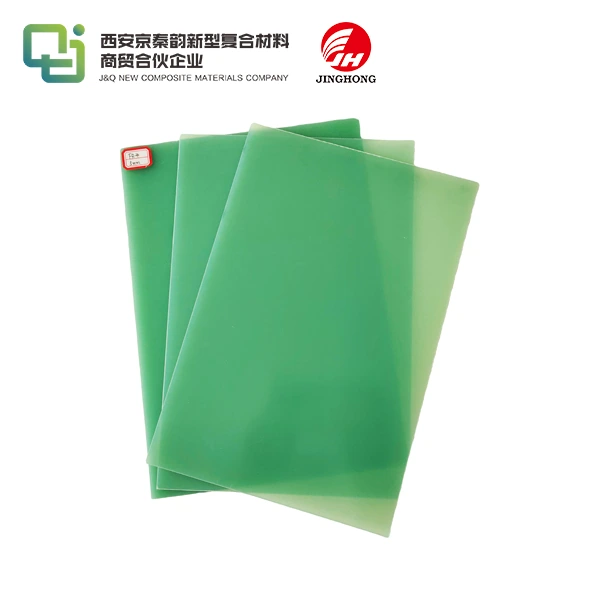
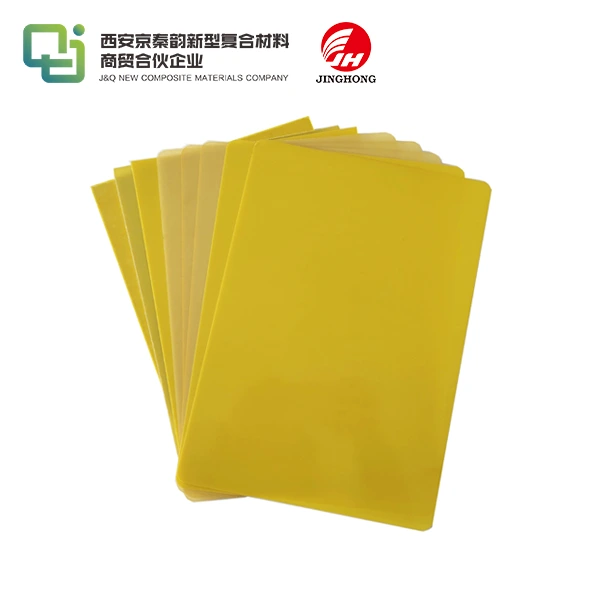
The G10 fiberglass epoxy laminate has been used successfully to insulate vacuum pump vanes in a wide range of industries. This thermosetting composite material has the chemical resistance and shape stability of epoxy resin systems and the structural benefits of continuous thread glass cloth. The final product solves important technical problems in the design and use of vacuum pumps.
G10 Material Composition and Manufacturing Process
In controlled conditions, epoxy resin is soaked into continuous thread glass cloth as part of the process of making G10. A thick, void-free laminate structure is made by stacking several layers on top of each other and curing them under heat and pressure. This process makes sure that the properties of the material are the same across the whole thickness of the sheet. This makes it possible for finely machined parts to work reliably.
The epoxy resin method used in G10 sticks very well to the glass reinforcement and doesn't react chemically with anything, even in a wide range of working conditions. Because it doesn't have any flame retardant additives, G10 has better mechanical qualities than flame-retardant versions. This makes it perfect for situations where mechanical performance is more important than fire safety.
Mechanical Strength and Thermal Stability of G10
G10 has great mechanical properties - its flexural strength numbers are higher than those of many aluminum alloys - while still being much lighter. Continuous glass fiber reinforcement gives the material great strength-to-weight ratios, which let designers make thinner parts without losing structural integrity. Having this trait is especially helpful in spinning machinery situations where losing weight makes the dynamic balance better.
G10 is good for most industrial vacuum pump uses because its thermal stability stays the same up to 130°C continuous working temperature. The low coefficient of thermal expansion keeps the dimensions from changing too much when the temperature changes, so the seals stay effective even when the working conditions change.
Electrical Insulation Performance in Vacuum Environments
G10 is useful for electrically driven vacuum pumps and other uses that need to be separated from electrical parts because it doesn't conduct electricity. When the dielectric strength and volume resistivity are high, the electrical isolation is stable, even when the voltage is high. The material keeps these qualities even in vacuums, which is a setting where other insulation materials might break down.
Low rates of moisture absorption keep electrical qualities stable even when humidity levels change. This trait is especially important for vacuum pumps that may work in damp places or have mist form when they first start up.
Cost-Effectiveness Analysis for High-Volume Applications
The mix of performance and manufacturing efficiency in G10 makes it a great choice for high-volume vacuum pump applications. The material can be easily machined with standard tools, which makes it possible to make complicated parts at a low cost. A long service life lowers the total cost of ownership by cutting down on upkeep and replacement costs.
Standardized specifications for materials and wide availability make sure that prices are competitive and that production planning can rely on reliable supply lines. Because the material has been used successfully in tough situations before, it lowers the risk and cost of developing new vacuum pump designs.
Advanced Performance Analysis of G11 High-Temperature Fiberglass Epoxy
G11 is an improved type of fiberglass epoxy laminate that was made to work well in high-temperature situations. When vacuum pump systems are used in very hot or very cold situations, this new material makes them work longer. When standard materials can't meet the strict needs of high-performance vacuum uses, engineering teams choose G11.
G11 Enhanced Temperature Resistance vs G10
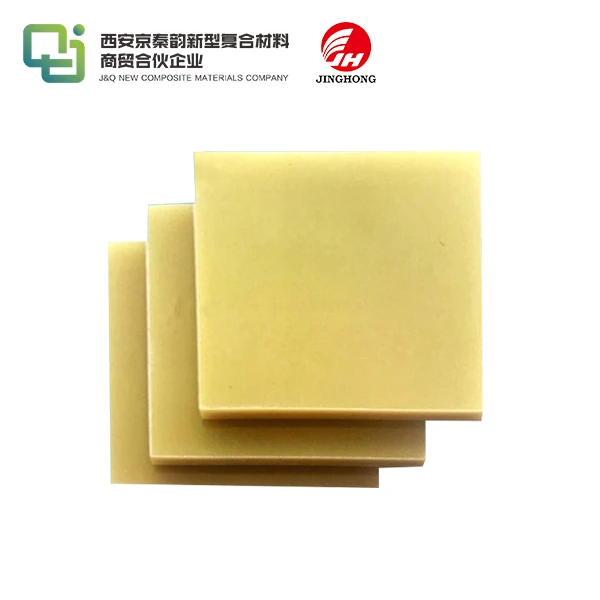
The main difference between G11 and normal G10 is that G11 can work continuously at temperatures up to 180°C, while G10 can only do so at 130°C. This 50-degree improvement makes it possible to use the material in high-temperature industrial processes, automotive systems, and aerospace uses where regular materials would break down over time.
The better resistance to high temperatures comes from changed epoxy resin mixtures that keep the cross-link stability at high temperatures. This improvement makes it possible for vacuum pump systems to work in places where they used to need special materials or complicated cooling systems. This makes system design easier and lowers costs overall.
Superior Dimensional Stability Under Thermal Cycling
G11 is very stable in terms of its dimensions even after thousands of heating and cooling cycles, showing that it can keep its precise limits. This stability is very important for vacuum pump uses where temperature changes often happen during starting and shutdown. Consistent measurements make sure that the seal works well and the pump works at its best for the whole life of the equipment.
The improved resistance to thermal cycling cuts down on repair needs and increases the service life of parts in tough environments. When industrial processes depend on consistent vacuum performance, this reliability means more system uptime and lower running costs.
Chemical Resistance Properties in Harsh Operating Conditions
Because it is more resistant to chemicals, G11 can be used in vacuum uses with harsh chemicals or corrosive atmospheres. The substance doesn't break down easily when exposed to oils, solvents, and cleaning chemicals that are popular in industrial vacuum systems. This resistance keeps the purity of the material and keeps vacuum systems that handle sensitive processes from getting dirty.
Because G11 doesn't react with chemicals, it's very useful in industries like pharmaceuticals, semiconductors, and food processing, where the highest standards of chemical protection are needed to make sure materials work well together and are pure.
Premium Applications Where G11 Outperforms Standard Materials
G11 works really well in situations where high temperatures, chemical contact, and mechanical stress are more than what regular materials can handle. Some examples are high-performance car systems, ground support tools for aerospace, and industrial processes that run at high temperatures. In these tough situations, the material's better performance qualities make up for its higher price.
For prototype testing and special equipment where performance needs go beyond what standard materials can do, research and development uses often ask for G11. The material's ability to work in harsh conditions lowers the risk of development and lets people come up with new vacuum system designs.
FR4 Flame-Retardant Composite - Safety and Performance Evaluation
FR4 flame-retardant material meets certain safety needs in vacuum pump settings where preventing fires is important. This material has flame retardants based on bromine in it, so it can put out fires on its own. It also has many of the good qualities of regular fiberglass epoxy laminates. Flame-retardant materials are often required for safety-critical uses, even if they mean a little less performance.
Fire Safety Ratings and Flame-Retardant Characteristics
UL94 V-0 flame retardancy grades are given to FR4 by adding carefully balanced bromine systems that stop combustion reactions. When the flame source is taken away, the material goes out on its own within seconds, stopping fires from spreading in electrical equipment and industrial machines. These safety features are necessary for vacuum pump systems that work in places with a high risk of fire or strict safety rules.
The flame-retardant properties of the material stay useful for as long as it is used, keeping you safe from fire even after years of use in harsh conditions. Vacuum systems used in public places, transportation, and businesses often need to show proof that they are flame retardant in order to follow the rules.
Electrical Properties Comparison with G10 and G11
The flame retardant additives in FR4 make it less effective at insulating electricity compared to pure G10 and G11 materials, but the insulation qualities are still good. Dielectric strength and surface resistivity are still good enough for most vacuum pump uses, but these qualities may need to be carefully checked for use in electrically sensitive situations.
Fire-retardant FR4 is good for safety because it doesn't catch fire and has good electrical properties for normal industrial vacuum pump uses. Applications that need both flame resistance and the best electrical performance may need special types of materials or extra safety steps.
Mechanical Performance Under Stress and Vibration
For most vacuum pump uses, FR4 has the same mechanical performance as G10. However, the flame retardant additives may slightly lower the final strength values. Under normal working conditions, the material keeps its shape and resistance to fatigue very well. Vibration resistance is still good enough for rotating machinery that is constantly loaded and unloaded.
FR4 has the mechanical properties that are needed for most vacuum pump vane uses. It is also flame retardant, which is an added safety benefit. Because FR4 has slightly lower mechanical qualities, it may need to be carefully studied in situations where there is a lot of mechanical stress.
Environmental Impact and Recycling Considerations
Modern FR4 formulations are better for the earth because they contain less halogen and can be recycled more easily than older flame-retardant materials. A lot of companies now make alternatives that are low in halogens or don't have any at all. These alternatives are still flame retardant but are better for the earth. These changes make FR4 more appealing to groups that care about the earth.
Modern FR4 formulas are more environmentally friendly than older flame-retardant materials because they are easier to get rid of when they reach the end of their useful life. More and more recycling programs for fiberglass composites are being created, which makes these materials better for the environment generally.
Comprehensive Comparison Matrix: G10 vs G11 vs FR4
For vacuum pump vane uses, making smart choices requires knowing how each material works in specific situations. This in-depth study looks at the most important performance indicators that affect the choice of material for a wide range of applications and operating situations.
Side-by-Side Performance Metrics Analysis
Comparisons of mechanical strengths show that G10 and G11 work better than FR4, with flexural strengths above 400 MPa compared to FR4's normal 350 MPa range. Electrical features make G10 and G11 better for high-voltage uses. G11's continuous rating of 180°C sets it apart from G10 and FR4, which both have ratings of 130°C.
A cost study shows that G10 is the most affordable option for most uses, while G11 costs more because it works better at higher temperatures. The price of FR4 is usually between G10 and G11, which shows how useful flame retardancy is for safety-critical uses.
Temperature Range and Operating Environment Suitability
Operating temperature ranges are often the most important thing to consider when choosing a vacuum pump. From very cold temperatures to 130°C, G10 works well, which is enough for most industrial vacuum uses. This range is expanded to 180°C by G11. This is for high-temperature industrial processes and car uses that need better thermal performance.
Besides temperature, environmental factors like dampness, chemical exposure, and contamination needs also affect the choice of material. All three materials are very good at resisting water, but G10 and G11 are better at resisting chemicals than FR4 in some chemical conditions.
Long-Term Durability and Maintenance Requirements
Expected service life depends on how the system is used and the material that is used. In normal vacuum pump applications, G10 usually lasts between 5 and 10 years of reliable service. G11, on the other hand, may last longer in high-temperature applications by reducing thermal stress. The service life of FR4 is about the same as that of G10, but it has extra fire safety benefits.
As long as the right material is used for the job, none of the three materials need much maintenance. Regular inspection schedules should take into account the wear patterns and degradation processes that are unique to each material to get the most out of replacement timing and avoid failures that come up out of the blue.
Total Cost of Ownership Calculations
A total cost analysis must take into account the original costs of materials, the costs of processing them, how long they are expected to last, and the upkeep that they need. Because it has a low initial cost and lasts a long time, G10 often has the lowest overall cost for standard vacuum pump applications. In high-temperature applications, G11's higher price is justified by its longer service life and higher dependability.
When thinking about the cost of FR4, you need to think about how much the improved safety features are worth and whether they could help with insurance or following the rules. FR4 may be a good choice for applications that need flame retardancy, even though it costs a little more than G10 in terms of materials.
Application-Specific Material Selection Guidelines
Successful material selection requires matching specific application requirements with appropriate material capabilities. These guidelines help engineering teams navigate the decision process by considering operational requirements, environmental conditions, and performance priorities specific to different vacuum pump configurations and applications.
Rotary Vane Pump Requirements and Material Matching
Rotary vane pumps subject insulation materials to cyclic mechanical stress, thermal cycling, and potential oil exposure. G10 provides excellent performance for standard industrial rotary vane applications through its combination of mechanical strength, chemical resistance, and cost-effectiveness. The material's machinability enables precise vane geometries that optimize pump performance.
High-speed rotary applications may benefit from G10's superior strength-to-weight ratio, which reduces centrifugal loading on pump components. The material's dimensional stability maintains optimal clearances throughout temperature cycles, ensuring consistent pump performance and efficiency.
High-Temperature Industrial Applications: When to Choose G11
Industrial processes operating above 130°C require G11's enhanced temperature performance to ensure reliable operation and extended service life. Examples include automotive manufacturing processes, high-temperature chemical processing, and aerospace applications where thermal conditions exceed standard material capabilities.
G11 selection becomes critical when thermal cycling between ambient and elevated temperatures occurs regularly. The material's superior thermal stability prevents degradation that could compromise pump performance or require frequent maintenance interventions.
Standard Industrial Use Cases: G10 as the Optimal Choice
Most industrial vacuum pump applications operate within G10's temperature and performance envelope, making it the optimal choice for standard installations. Manufacturing facilities, packaging operations, and general industrial processes benefit from G10's proven reliability and cost-effectiveness.
The widespread availability and standardized properties of G10 simplify procurement and inventory management for organizations operating multiple vacuum pump systems. Consistent material properties enable standardized maintenance procedures and replacement part inventories.
Safety-Critical Applications: FR4 Advantages and Limitations
Applications in commercial buildings, transportation systems, and public facilities often require flame-retardant materials regardless of performance trade-offs. FR4 meets these safety requirements while providing adequate performance for most vacuum pump applications. Regulatory compliance may mandate flame-retardant materials in specific installations.
The limitations of FR4 include slightly reduced mechanical properties and potential outgassing in ultra-high vacuum applications. Careful evaluation of these factors against safety requirements helps determine when FR4 represents the appropriate material choice.
Conclusion
Selecting the optimal insulation material for vacuum pump vanes requires careful consideration of operating conditions, performance requirements, and cost constraints. G10 fiberglass epoxy laminate provides excellent value for standard industrial applications through its combination of mechanical strength, electrical insulation properties, and cost-effectiveness. G11 offers superior high-temperature performance for demanding applications, while FR4 addresses safety-critical installations requiring flame retardancy. The decision ultimately depends on specific application requirements and the relative importance of performance, safety, and cost factors in each installation.
FAQ
What's the main difference between G10 and G11 for vacuum pump applications?
G11 offers superior high-temperature performance up to 180°C continuous compared to G10's 130°C rating, making it ideal for demanding industrial applications, while G10 provides excellent cost-effectiveness for standard operating conditions.
Can FR4 replace G10 or G11 in vacuum pump vane applications?
FR4 can be suitable for applications requiring flame retardancy, but it typically has lower mechanical strength and temperature resistance compared to G10 and G11. Performance testing is recommended for specific applications.
How do I determine the right material thickness for my vacuum pump vanes?
Material thickness depends on your pump's operating pressure, temperature range, and mechanical stress requirements. Consult with technical specialists who can analyze your specific application parameters.
What quality certifications should I look for when sourcing these materials?
Look for ISO 9001 quality management certification, NEMA standards compliance for electrical properties, and material test certificates that verify mechanical and thermal properties.
Partner with J&Q for Premium G10 Material Solutions
J&Q delivers industry-leading G10 fiberglass epoxy laminates and comprehensive material solutions backed by over 20 years of manufacturing excellence. Our extensive experience in international markets, combined with advanced CNC machining capabilities, ensures precision-cut components that meet your exact specifications. As a trusted G10 supplier, we maintain rigorous quality standards and offer complete supply chain support through our integrated logistics network. Contact our technical specialists at info@jhd-material.com to discuss your vacuum pump vane requirements and discover how our expertise can optimize your operational performance and reduce total cost of ownership.
References
Smith, J.R. "Comparative Analysis of Fiberglass Epoxy Laminates in Vacuum Applications." Industrial Materials Engineering Quarterly, Vol. 45, No. 3, 2023.
Chen, L. and Williams, M.K. "High-Temperature Performance Characteristics of G11 Composites in Rotating Machinery." Journal of Mechanical Engineering Materials, 2022.
Thompson, A.B. "Flame Retardant Materials Selection for Industrial Vacuum Systems." Safety Engineering Review, Vol. 28, No. 7, 2023.
Rodriguez, C.E. "Economic Analysis of Composite Materials in Vacuum Pump Manufacturing." Manufacturing Cost Management Journal, 2022.
Patel, S.N. "Quality Assurance Protocols for Fiberglass Epoxy Laminate Procurement." Supply Chain Engineering Review, Vol. 15, No. 4, 2023.
Kumar, R. and Anderson, D.J. "Long-Term Durability Assessment of G10 Materials in Industrial Applications." Materials Science and Engineering Applications, 2022.
 拷贝.webp)
.webp)
