Buying Epoxy Fiberglass Tubes: Wall Thickness and Supplier Quality
2026-10-20 17:25:11
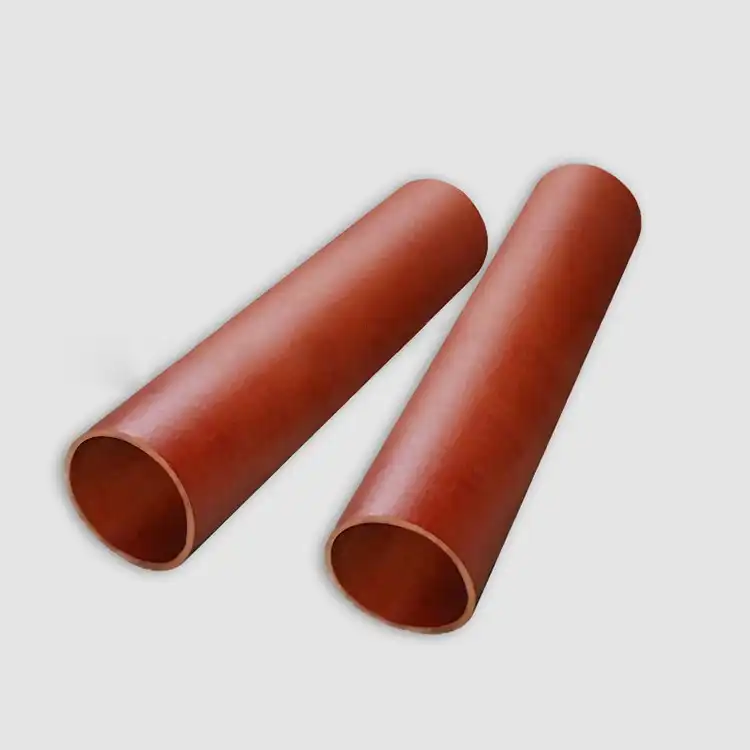
When looking for an Epoxy Fiberglass Tube for industrial gear, electrical insulation, or structural support, long-term performance is determined by two key factors: wall thickness and supplier quality. This guide helps procurement engineers, OEM sourcing managers, and technical buyers understand what they need to know before placing an order, from the basics of material science to supplier evaluation methods that help ensure a reliable and secure supply chain.
Understanding Epoxy Fiberglass Tubes and Their Key Properties
What Is an Epoxy Fiberglass Tube?
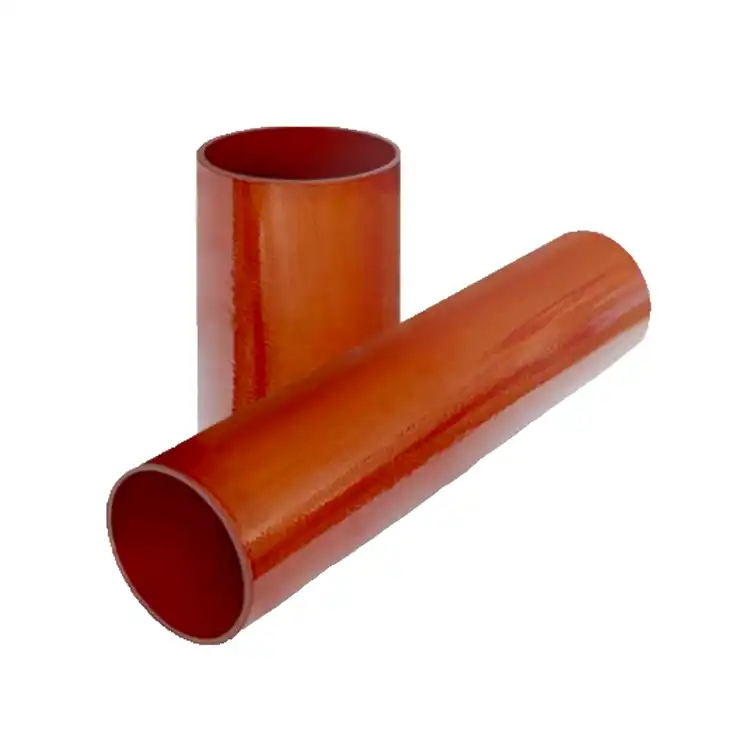
Why would you want an Epoxy Fiberglass Tube? It is a tube made of fiberglass that is made from alkali-free cloth or roving mixed with a thermosetting epoxy resin matrix. The tube is then heated and pressed to make it hard. You can twist strands, push them out of a die, or wrap them around a roll to make threads. There are different ways that the fibers work better and go in different directions. People sometimes use the NEMA grades G10, FR4, and G11. These numbers tell you about the material's physics, the range of temperatures it can handle, and how well it conducts electrical current.
Core Material Properties That Matter
Fiberglass resin tubes are great because they can't be matched by metals or regular plastics. Some grades say they can keep working at -46°F (-50°C), and they say it works well up to 121°C (250°F). There is more than 35 kV/mm of dielectric strength, so it can be used to protect places with a lot of voltage, like switches, generator coil supports, and arc discharge chambers. This means that Izod can really handle shock loads in noisy machine rooms. Its impact strength is about 40 ft-lbs.
Why Industry Sectors Choose This Material
Companies that work with electricity and electronics use FRP tubing for motor insulation and PCB support structures because it meets UL and RoHS standards. People who work with electricity use it to make spark screens and shield coils because it doesn't catch fire and stays stable at high temperatures. Battery pack walls have to stay the same size, so they are heated and cooled a lot. This is what people who work in R&D for cars do.
The Importance of Wall Thickness in Epoxy Fiberglass Tubes
How Wall Thickness Affects Mechanical Performance
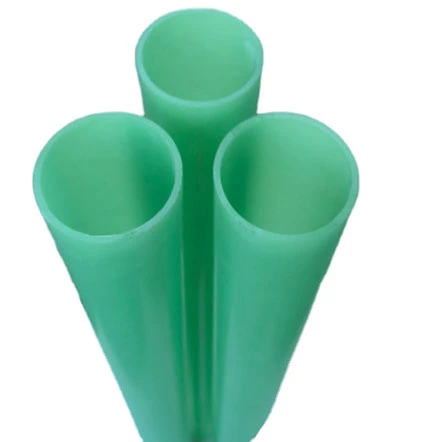
What determines how much weight an Epoxy Fiberglass Tube can support, how strong its hoop structure is, and how well it resists failure under external pressure? The wall thickness plays a key role in these properties. Thin-wall tubes typically have walls less than 3 mm thick, making them suitable for lightweight applications such as robotic arm components and precision instrument housings. For heavy-duty OEM equipment, wall thicknesses of 6–15 mm are often preferred to withstand long-term tensile loads and provide greater structural stability. These thicker tubes are commonly used in hydraulic cylinder plates, downhole instrument housings, and mechanical spacers.
Thickness Selection by Application Type
If you guess wrong about the wall thickness, things can go badly. This is a useful list based on the type of application:
Some low-pressure electrical insulation bands can split the dielectrics with a wall thickness of 1 to 3 mm. This doesn't add any extra weight.
Machine gaps and gears with walls 5 to 10 mm thick can handle higher pressure loads and keep their shape even after being pushed many times. Walls that are thicker than 10 mm work better for high-pressure or deep-environment housings because they don't break as easily and stay in shape even when they're under a lot of impact or pressure.
- Electrical insulation sleeves (low-pressure): 1–3 mm wall thickness is generally adequate, providing sufficient dielectric separation without unnecessary weight.
- Structural mechanical spacers and gears: 5–10 mm walls support higher compressive loads and resist deformation under cyclic stress in industrial machinery.
- High-pressure or deep-environment housings: Walls exceeding 10 mm provide crush resistance and dimensional stability under hydrostatic pressure or heavy dynamic loading.
The range of temperatures, pressures, and expected service life will help you decide which one to use. This is something you should always get from your supplier before you make a promise.
Comparing Wall Thickness Trade-offs Against Alternative Materials
Fiberglass tubes are four times lighter than steel tubes, but steel tubes need thicker walls because they rust faster. However, carbon fiber is stronger when it is pulled apart, but it costs a lot more per unit and doesn't handle chemicals as well in places that are acidic. For most business-to-business uses, glass-epoxy tube is the best choice because it is strong, doesn't rust, doesn't let electricity flow through it, and is cheap.
Evaluating Supplier Quality: What Procurement Managers Should Look For
Certifications and Quality Systems
There are clear signs that a company that makes fiberglass tubes is reliable. A license from ISO 9001 means that the method for checking quality is well set up. There are rules in ASTM D2105 and D2290 that explain how to test the axial tensile strength and hoop tensile strength of fiberglass pipe. When providers talk about these standards, they should use strict language. In the US market, apps for electricity must be UL-approved, and the supply lines of companies that make gadgets must follow RoHS rules.
Production Capabilities and Dimensional Consistency
A lot of buyers don't think about the risk of batch-to-batch physical consistency when sourcing an Epoxy Fiberglass Tube. Manufacturing consistency directly affects downstream processing, particularly when it comes to wall thickness tolerances, inner diameter accuracy, and surface finish. Buyers sourcing from traders may have less control over production processes than those working directly with manufacturers that operate their own winding and extrusion equipment. Before purchasing from a new supplier, request inspection records from at least three different production batches to verify dimensional accuracy and product consistency.
Customization and Lead Time Reliability
There are a lot of different lengths and widths of standard tube stock. However, the tubes need to be cut to the right length or have certain outside sizes or wall thicknesses in order to be used in power infrastructure, car battery systems, and precision machinery. These needs can be met by anyone who has made things before, not just people with a store. It's also important to be able to count on lead times. If a seller handles transportation themselves, they can give more accurate delivery times than if they hire someone else to do it.
Comparing Epoxy Fiberglass Tubes to Other Materials: Making the Right Investment
Cost Versus Performance Over the Product Lifecycle
Plastic pipe of this kind costs more than steel or carbon fiber, but not as much as this one. When you look at the total cost of ownership, things are very different. Glass fiber tubing doesn't lose its shape when the temperature changes a lot. Also, you don't have to cover it to keep it safe. Because it doesn't need to be replaced as often, it costs less over time. When buying things for projects that last more than a year, this math often makes up for the fact that materials cost more at the beginning.
Material Suitability by Industry Demand
For people who work with power and technology, the UL-rated and insulating types are the most useful. The people who make industrial tools care about how strong and simple it is to make parts that don't wear out. People who buy power and energy look for products that have been tested and proven to be stable at high temperatures and flame resistance. Auto engineers need parts that go into battery systems to have stable batch quality and strict specs. Each part has its own needs, but fiberglass composite tubing can meet the most important ones for all five.
When to Choose Alternatives
Making small planes out of carbon fiber tubes is a good idea if your budget allows. For applications involving temperatures above 300°C, metal tubes may be a more suitable option, as standard epoxy adhesive systems are generally not designed to withstand such high temperatures. For low-pressure fluid transfer, conventional plastic tubes may be sufficient. However, an Epoxy Fiberglass Tube remains an excellent choice for applications requiring chemical resistance, electrical insulation, structural insulation, and mechanical support.
Optimizing Your Procurement Strategy: Ordering, Pricing, and Supplier Engagement
Structuring Your Order for Best Value
Pricing for fiberglass composite tubing varies with wall thickness, outer diameter, grade, and order volume. Bulk orders typically reduce per-unit costs meaningfully. Before committing to a large order, request a sample set covering your target specifications. Confirm that the sample matches production output — some suppliers produce hand-selected samples that do not reflect standard line output.
Managing Lead Times and Inventory
Standard-grade tubes from a supplier with in-house stock can often ship within days. Custom specifications require production lead time — typically two to six weeks depending on complexity. Procurement teams running lean inventory should discuss blanket order agreements with their supplier to secure pricing and production slots without holding excess stock.
Building a Long-Term Supplier Relationship
A supplier with 20+ years of manufacturing experience and established foreign trade partnerships brings more than product — they bring process knowledge, specification guidance, and supply chain stability. Suppliers who operate their own logistics company offer end-to-end visibility from production to delivery, which reduces risk for cross-border procurement programs.
Conclusion
Before you choose an Epoxy Fiberglass Tube, make sure its wall thickness meets your requirements for electrical power, mechanical load, and operating temperature. Then, select a supplier that can consistently meet your specifications and delivery expectations. A reliable long-term partner stands out through four key factors: production capacity, dimensional consistency, shipping reliability, and quality control. Whether you need materials for power grid construction, electronics manufacturing, or industrial equipment, choosing the right Epoxy Fiberglass Tube and supplier will help ensure product performance, reduce procurement risks, and save costs in the long run.
FAQ
How do I determine the correct wall thickness for my application?
First, you need to know how much pressure, heat, and weight the structure can handle. A wall only 1 to 2 mm thick can stop electricity from moving through it. For mechanical parts that hold things together, you should say how thick the walls should be based on the amount of hoop and compression stress. You should be able to get a material data sheet from your source that has tested mechanical qualities that will help you make your choice.
What certifications should I look for in a supplier?
This will let you know that the quality is good. You should also look for UL approval for use with electricity in the US market and RoHS compliance for supply lines for electronics. By following the rules for the ASTM D2105 and D2290 tests, the company shows that they use standard scientific language when they talk about and test the product's performance.
Can fiberglass epoxy tubing be custom-machined or cut to size?
Yes. Some types of fiberglass tube, like G10 and FR4, are easy to drill, cut, and machine. When you look for a grade, make sure that the company that sells it can keep its shape after it's been made and that their standards will work with the method you want to use.
What is the typical minimum order quantity (MOQ)?
The MOQ is different for each seller and kind of tube. You might not have to buy a certain amount of an item (MOQ) or the MOQ might be very low. For most special sizes, you need to make a certain number of items. Talk to the seller about doing a bulk order. If you do this, the minimum order size will go down for each order, but you will still get the best price and availability.
Get Your Epoxy Fiberglass Tube Quote from J&Q Today
J&Q has been making noise-blocking items for more than 20 years. It's been more than 10 years since it did business in another country. Since J&Q ships its own Epoxy Fiberglass Tube, it can take care of everything, from making the tubes to sending them. You don't need to guess or deal with agents. You can get samples, talk about custom needs, or get a quote for your next project by emailing info@jhd-material.com or going to jhd-material.com.
References
1. ASTM International. ASTM D2105: Standard Test Method for Axial-Tensile-Strength Properties of Fiberglass (Glass-Fiber-Reinforced Thermosetting-Resin) Pipe and Tube. ASTM International, 2021.
2. ASTM International. ASTM D2290: Standard Test Method for Apparent Hoop Tensile Strength of Plastic or Reinforced Plastic Pipe. ASTM International, 2019.
3. National Electrical Manufacturers Association (NEMA). LI 1: Industrial Laminating Thermosetting Products. NEMA, 2020.
4. Harper, C. A. Handbook of Plastics Technologies. McGraw-Hill, 2006.
5. Mazumdar, S. K. Composites Manufacturing: Materials, Product, and Process Engineering. CRC Press, 2002.
6. Mallick, P. K. Fiber-Reinforced Composites: Materials, Manufacturing, and Design. 3rd ed., CRC Press, 2007.