Choosing Synthetic Stone Carbon Fiber Panels for Reflow Soldering
2026-11-06 17:24:18
The right synthetic stone carbon fiber panel for reflow soldering holds its shape at your peak temperature, controls static, supports the board without extra weight, and keeps its flatness through repeated cycles. I recommend choosing by verified resin system, reinforcement, temperature rating, thickness, and machining accuracy, not by product name alone. Test a prototype under your real reflow profile before you place volume orders. This guide covers composition, sizing, design, quality checks, care, and supplier selection, so your engineering and purchasing teams can decide with confidence.
Understanding Reflow Panels and Their Material Properties
I start every panel review with the material, because the material sets the limits for everything that follows.
Why Material Selection Matters in Reflow Soldering?
All of the boards that go into your oven are touched by repair panels, carriers, and fixings. Because of this, they are just as important as the paste or the profile to the quality of the assembly. Some panels are warped, which means the PCB isn't level. This means that solder joints don't get the same amount of heat. Every time the belt goes around, something heavy is put on it. So the board doesn't move between the touch points; it should be well supported. This makes the parts work harder. When a panel breaks after being heated and cooled several times, the line has to stop while the new panel is being made. IPC/JEDEC J-STD-020 also tells us how much heat each board can handle. The screen should not get too hot.
Also, I need to make the name clear. Different man-made composites are grouped together under the name "synthetic stone carbon fiber panel." Two panels with the same name may have different temperature, glue, and strength grades, so I always check those three things with sources first.
Synthetic Stone Carbon Fiber Panel Composition and Properties
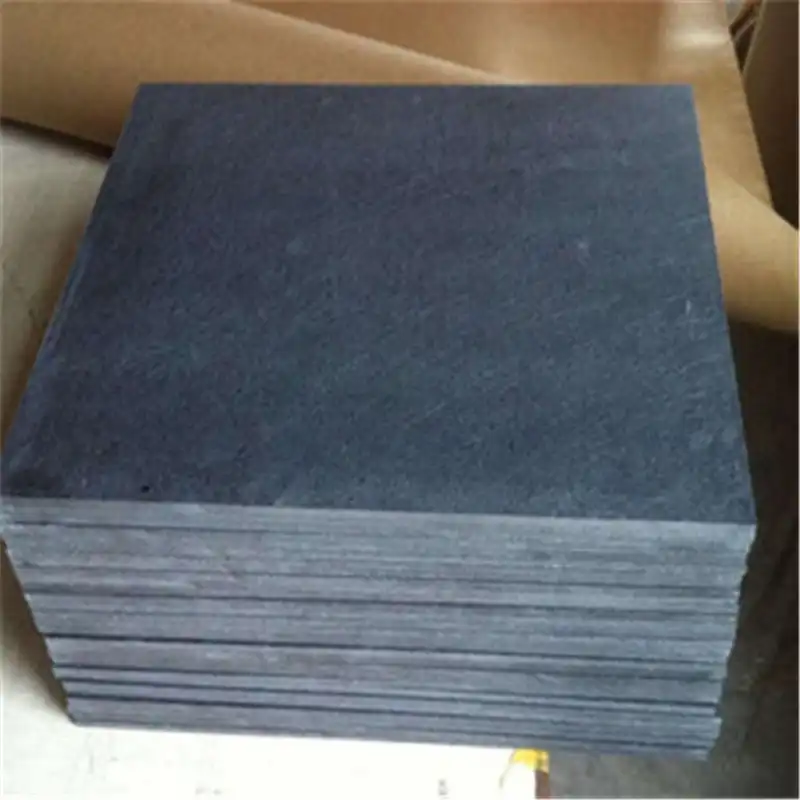
The way something is put together tells you more about it than its name. A high-temperature epoxy resin binder and fiber reinforcement are often used together in these panels. Some types have fillers that are made of chemicals, minerals, protective coats, or carbon. The fibers are added to make the stuff stiffer. You can change how it reacts to heat and electricity by adding fillers. The glue sets the highest temperature it can reach. Most black grades have carbon fillers in them that keep them from static. When boards have parts that are sensitive to ESD, this is important.
At the same time, you should check the material's ability to stay stiff, not expand too much, chemical resistance, electrical behavior, and ability to be machined. This is because getting ahead in one area might cost you in another. Find scientific proof of how well it fights fire, how clean it is, and whether it works with the way you clean and the flux you use.
Reading Temperature, Strength, and ESD Data
Sheets of numbers are only useful when you use them to compare how you do things. These amounts should be enough to get a good synthetic stone carbon fiber panel sheet most of the time.
- Heat: A standard high-grade sheet says it can be used at 260°C to 280°C all the time and for 10 to 20 seconds at 300°C to 350°C. About 0.25 W/m·K of thermal conductivity keeps heat from moving to safe parts of the board. Here is where you should look at the choice for the highest temperature and the stay time side by side.
- Mechanical: At room temperature, the panel has a tensile strength of more than 500 MPa. At 250°C, it has a tensile strength of more than 200 MPa. It can't be pushed down by heavy boards because of this. Most of the time, ASTM D790 is used to check how well something can bend. Check to see what kind of test was used to get the counts. A machine can also build walls that are as thin as 0.5 mm, and they won't break.
- Electrical and chemical: Surface resistance for ESD grades is between 10^5 and 10^9 ohms, which is good for systems based on ANSI/ESD S20.20 that deal with chemicals and electricity. Some weak acids, bases, and neutral solvents that mix with water won't hurt the resin. If the resin is soaked in strong alkaline saponifiers above pH 11 for a long time at high temperatures, it may break down over time.
You should look at a sample that has been looked at under your own profile if you want to know the real answer.
Specifying, Comparing, and Designing Your Panel
The way the material looks and where it is used will tell you if it works for your line.
How to Choose Panel Thickness, Weight, and Dimensions?
If you don't need the largest sheet of synthetic stone carbon fiber panel, turn it off. You should pick the thickness based on the PCB's size, the part's height, the need for support, the depth of the machining, and the amount of thermal deformation that you expect. Things that are thick are stiffer, but they also weigh more. Things with deep pockets still need enough matter to stay stiff. Finish goods that are lighter not only last longer, but they also make conveyor motors last longer.
First, find out how big the sheet is. Next, get rid of any pockets or holes. Before you know it, it will weigh a certain amount. Add the clamps and bolts. A written guarantee should be given for things like thickness, hole placement, flatness, parallelism, and the ability to be used again after thermal cycles. Give PCB plans, Gerber files, CAD data, and clear instructions on where to put parts and how much space they need between them to make sure the first price and the finished part match.
Comparing Synthetic Stone Carbon Fiber Panels with Alternative Materials
I think about the job when I have to choose between two answers on a test. This metal is heavy and can keep solder joints from getting hot. But it's simple to work with and good at moving heat around. Clay is strong, but it is also fragile, and if you hit it, it will break. It is stiff and light, but it conducts electricity, so we need to keep a close eye on how it works with ESD and insulation. It is easy to break ground stone because it is heavy. If you heat FR4 to 260°C over and over, it can turn into carbon more quickly.
Many reflow carriers can benefit from a synthetic stone carbon fiber panel since it is thin, light, exact, and stays in shape. Make sure the material works with your oven, board, and number of cycles.
Designing Panels for Reflow Soldering
Things that were thought of when the panel was created affect how well it works in production. At the same time, you should plan the handling zones, pockets, openings, conveyor connections, controlled board movement, component clearance, and PCB support points. How well the bag was made is just as important as how big it is. You should look for edges that don't have burrs, corner angles that are just right, and lines that look like they belong.
The source should look over part-height maps, 2D models, 3D CAD files, Gerber data, and reflow information before starting to make the parts. I think the example should be okay and the plan should be looked over by a real person. When you stop a line or start from scratch, it costs more than that step.
Manufacturing, Quality Checks, and Daily Care
It's great when your group puts together a panel and then takes care of it.
Manufacturing Process and Quality Verification
Before sending the composite to a customer, a good provider makes sure the raw materials are correct, shapes it, cures or heat treats it, cleans it, checks the measurements, puts it together for the first time, and packs it up. Because it has fibers in it, the material is rough. To machine it, you will need solid carbide, diamond-like carbon-covered, or PCD tools, along with a way to clean up the dust.
You can look at a batch's material grade, mass, glue or filler data, moisture level, and appearance to see how regular it is. It's important to check how smooth something is, how well holes fit, how well it works with conveyors, and how it changes shape after being heated a few times. How did the surface resistance for the ESD grades get measured? ASTM D257 spells out the steps. A reflow simulation with real-life temperature, dwell time, cooling, flux, and cycle count is a better way to show something than a catalog rating. You can tell if a solder joint is done by reading IPC-A-610 and IPC-7530A.
Installation, Use, and Cleaning
Before the first run with a synthetic stone carbon fiber panel, check that the machine is in the right place and that there is enough space for the conveyor, the locating pin, and the sensors. They should also be shown how to load safely. If you found deep fibers while cutting the fastener, bake it for a short time before the first heat cycle to get rid of any water that it took in. Some grades of synthetic stone carbon fiber panel say they soak up less than 0.2% water, but it's still a good idea to keep them dry.
To clean it, use products that won't hurt the glue or finish. Sometimes it's okay to use alcohol-based cleaners and flux at the same time. Strong alkaline saponifiers, on the other hand, need to be rinsed off and diluted to get rid of any soap that is still there. Cycle life is based on how often the flux is cleaned and how busy it is. So, I keep track of how many times each panel has been turned on and off and compare that number to the right data that the provider gives me.
Inspection, Storage, and Replacement
Clean, dry, and avoid bumps, dirt, and water should stay away from the panels. This is also the best way to ship them. Often check them for cracks, chips, delamination, bending, worn-out holes for mounting, broken supports, and changes in how the PCB fits. Don't guess about how flat something is; use the source image.
The structure is broken, or the soldering keeps going wrong after you've checked the steps. It's safer to get a new one. There is an extra panel with the same revision and batch record, so the line won't have to stop while the new one is being made. Don't forget to write down what each check found. Over time, small changes can often tell you when something is about to break before it does.
Choosing a Supplier and Avoiding Costly Mistakes
Even a well-specified panel fails if the supplier cannot repeat it.
How to Choose a Synthetic Stone Carbon Fiber Panel Manufacturer or Supplier
Suppliers include companies that make fixtures, OEM factories, and wholesalers that sell goods abroad. There are also suppliers that make composites and do CNC cutting. The best ones know a lot about the materials they work with and how to precisely machine them. They can also stay in touch with engineers, help with prototypes, and pack their goods with care. Discover the temperature ranges, tolerances, data types that are accepted, inspection reports, minimum order amounts, wait times, Incoterms, and shipping choices.
I believe you should use the sample-first way. Look over the design, put a prototype through a few normal reflow cycles, and then decide if it's good enough based on how well it works. After that, you can either order more or order in bulk. J&Q has been making and selling insulation sheets for more than 20 years. Another thing is that we've done business abroad for over 10 years and have our own shipping company, which lets us send and receive goods.
Selection Priorities for Different B2B Buyers
Everyone who buys something looks at different things. Pay attention to how well the fixtures work with PCBs, how long they last, and how well they fit into the line when you are making electronics. There should be a steady supply, low total prices, quality that doesn't change, and wait times that buying managers can count on. People who buy and sell goods should look at the range of goods, whether they can ship, the packaging, whether they offer OEM support, and how well the goods work with repeat sales.
OEM and contract manufacturing clients may also want privacy, to be able to make changes to plans, to be able to keep track of each batch, and to be able to accept changes easily. Some people who buy cars and appliances also like to have them shipped quickly and with stable quality. This list will help you make sure that all of your needs are met when it comes to the price, samples, material, temperature, size, cleaning, and service after the sale.
Common Mistakes When Selecting Synthetic Stone Carbon Fiber Panels
If you look at something, how much carbon fiber it has, or how much it costs, most people will make the wrong choice. There's a chance that decorative and general-use synthetic stone carbon fiber panels aren't clean enough, thermally stable enough, machineable accurately enough, or durable enough to be used over and over again. To make sure it's right, you should also check the dwell time, heating rate, cooling rate, and total cycle count.
There are also buyers who don't check the designs, which leads to mistakes on the drawings. There are records for each batch, identification marks, models that can't be changed, and a plan for extra screens to make sure that supply and tracking are safe in the long term. When something is on sale, you should be careful with it before you buy it.
Conclusion
We don't pick a synthetic stone carbon fiber panel based on its name when we use reflow soldering. Instead, we look at how well it works with the whole process. The limits are set by the resin system, the reinforcement, and the temperature grade. It is important to make sure that the values in the datasheet match up with your profile and dwell time. If you want to know something, you can look at its steady temperature, short peak exposure, flexural strength, and ESD resistance. You should look at the PCB size, the support spans, and how much it changes when heated to get an idea of the thickness, weight, and gaps. Carbon fiber, FR4, clay, natural stone, and aluminum are all put up against each other to show that they are all good at different things. Fixtures can last a long time if they are well thought out, crafted with care, inspected often, and looked over by manufacturers beginning with a trial. In real life, this means fewer bent carriers, easier tracking, and fewer mistakes that could have been cut out.
FAQ
Can any carbon fiber sheet go through reflow?
No. Some sheets have plastics that melt, turn into carbon, or give off gas when heated to enough of a temperature for soldering. When you are making something, check the reflow test results, the sheet's steady and high temperature rates, and the resin system.
How do I choose the right thickness?
Look at the PCB size, the unsupported width, the component height, and the depth of the grind to figure out what to do. It's best to put a sample under your real shape to be sure. A bigger sheet is stronger, but it also weighs more.
Does fire resistance prove soldering performance?
You can tell how something burns by trying it at different temperatures and seeing how stable the dimensions are. How well it solders depends on how clean the joint is and how stable the dimensions are. There needs to be proof of both fire and reflow.
What should I send for a quotation?
What kind of inspections do you need? Send your reflow profile, the width, the number of boards or fixtures, and where they need to go. When there is more information, it takes less time to look it over and make changes.
How should I compare costs?
Compare more than just the unit price. Look at the total cost, which includes things like repair, downtime, cycle life, and how often the parts need to be replaced. A green panel that stays flat and lasts longer might cost less each time it is used.
Request a Custom Synthetic Stone Carbon Fiber Panel Quote from J&Q
You can email info@jhd-material.com with your PCB's size, reflow profile, thickness, CAD or Gerber files, number, and location, and J&Q will take a look. They will do this as part of an engineering test. We take care of everything for you as a source of synthetic stone carbon fiber panels. Sheets that keep heat in have been made by us for over 20 years. We also run our own transportation company and have done business with other countries for more than 10 years. To learn more, go to jhd-material.com.
References
1. IPC/JEDEC J-STD-020E, Moisture/Reflow Sensitivity Classification for Nonhermetic Surface Mount Devices, 2014
2. IPC-7530A, Guidelines for Temperature Profiling for Mass Soldering Processes (Reflow and Wave), 2017
3. IPC-A-610H, Acceptability of Electronic Assemblies, 2020
4. ANSI/ESD S20.20, Protection of Electrical and Electronic Parts, Assemblies and Equipment, 2021
5. ASTM D790, Standard Test Methods for Flexural Properties of Unreinforced and Reinforced Plastics and Electrical Insulating Materials, 2017
6. ASTM D257, Standard Test Methods for DC Resistance or Conductance of Insulating Materials, 2014