Epoxy Resin Rigid Laminate for High-Voltage Insulation Components
2026-11-06 17:24:22
Epoxy resin rigid laminate is a glass-reinforced insulation sheet that keeps high-voltage parts electrically isolated while holding its shape under load and heat. Manufacturers press woven glass cloth and epoxy resin into a dense board. Machinists then cut it into barriers, spacers, supports, and mounting plates. Common grades include G10, FR4, and FR5. The right choice depends on voltage, temperature, moisture, mechanical stress, and fabrication needs, not on dielectric strength alone. At J&Q, we have supplied insulating sheets for more than 20 years, and this guide shows how to match a sheet to your application.
Why Epoxy Resin Rigid Laminate Matters in High-Voltage Systems?
What Is Epoxy Resin Rigid Laminate?
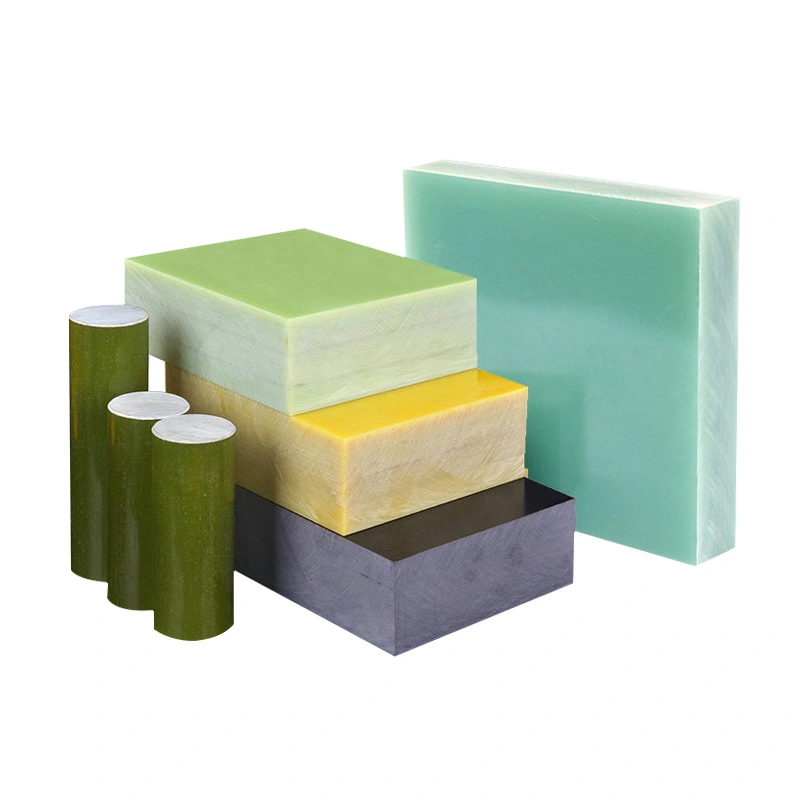
Epoxy resin rigid laminate is mixed with woven glass cloth by manufacturers. The layers are then stacked and cured with specific amounts of heat and pressure. The thick sheet that is made stays the same size and strength over time. It's not the same as epoxy resin rigid laminate that hasn't been strengthened, bent plastic, or flexible insulation film. It is held together by the resin, which also stops the flow of electricity. The glass cloth holds the mechanical load. When a sheet is well pressed, it can handle being bent, compressed, and stressed over and over again by swapping tools. Poor performance is caused by not having enough fillers and weak ties. That's why controlling the press and how the resin is spread out are just as important as the raw materials. People who want to buy something should always look at the most recent technical papers to make sure they understand the resin system, strengthening, test methods, and thickness tolerance before they sign off on a sheet.
G10, FR4, FR5, and 3240 Epoxy Board
There are quotes around some grade names. G10 is the normal grade of epoxy-glass in the NEMA LI 1 standard. FR4 is made of the same basic building blocks, but it doesn't catch fire and usually has a UL 94 V-0 grade. Some types of G11 don't catch fire, and FR5 is made to be used in hotter places. When people buy something, they also see 3240 epoxy resin rigid laminate, which is another name for insulation sheets made in China and is often compared to G10-class material. Names vary between suppliers and standards, so two sheets that have the same title might not work the same way. Low-Tg types of FR4 have a glass transition temperature (Tg) below 130–140°C, while high-Tg types have a Tg above 170°C. I think you should look at the specs instead of believing the name.
Who Uses It and Why?
There are five main groups that buy insulating sheets from us. PCBs, switches, and motor parts are made on FR4 and 3240 epoxy resin rigid laminates by companies that make electronics. They are interested in how well it stands up to heat, how strong it is electrically, and how simple it is to cut on a CNC machine. Machine builders use epoxy resin rigid laminates and phenolic cotton sheets for wear parts, spacers, and gears that need to be able to handle loads and sizes of different types. Arc barriers, heat safety, and coil insulation that doesn't catch fire are things that people who buy power and energy need to have. FR4 and phenolic sheets are used by auto suppliers to make barriers for battery packs and insulation pads. As they use Bakelite and resin sheets for motor brackets and insulation frames, people who make products keep an eye on cost and delivery time.
Epoxy Resin Rigid Laminate Properties for High-Voltage Insulation
Electrical Properties
Dielectric strength gets a lot of attention, but it's just a number. ASTM D149 talks about the dielectric breakdown test. The answers depend on how thick the material is and how the test is done. You shouldn't compare datasheets unless the ways they were made are the same. Your insulator resistance, volume resistivity, and dissipation factor can show how the epoxy resin rigid laminate acts when it is under steady stress. Comparative tracking index (CTI) tests done under IEC 60112 show that surfaces don't track well when they are dirty or wet. Arc resistance is a key part of switches. IEC 60664-1 tells you how much space you need between the lines and how much creepage and gap you can have. To fail, a sheet doesn't need to have a high electrical strength. All that needs to happen is surface tracking or contamination.
Mechanical and Thermal Performance
Plastics that aren't reinforced aren't as strong when they are bent, compressed, or hit as when glass is added to epoxy resin rigid laminate. Check to see if the plates can bend well, the busbar supports can hold their shape well, and the sizes don't change when the temperature changes. The temperature at which the glass change happens, the temperature at which it works all the time, and thermal aging are all issues that have to do with heat. While the exact range depends on the material, FR4's Tg range is between 130°C and 180°C. You should ask for aging data because short-term heat tolerance doesn't tell you much about how well something will work in the long run. To be safe, I think you should test the sheet with the real power, temperature, and load of the product.
Moisture, Chemical, and UV Considerations
When the room is damp, low water absorption helps keep the resistance of the insulation steady. That's one reason why a lot of electronics use epoxy-glass sheets instead of paper-phenolic. The ASTM D570 test checks how much water a substance can hold. The cut edges show the glass fibers, so it's important that the edges are in good shape for wet use. It also counts to be near chemicals. Transformer oil, cleaning agents, and coolants can damage some materials, so make sure they are safe to use together before putting parts that will touch each other together. UV light can make epoxy turn yellow and chalky, so parts that will be outside need to be covered or protected. Talk to your supplier about these right away, because they will change the grade and finish you need to order.
How Epoxy Resin Rigid Laminate Supports High-Voltage Insulation Components?
Panels, Switchgear, and Busbar Supports
In electrical panels and switchgear, epoxy resin rigid laminate is used to make phase barriers, arc chutes, mounting plates, and busbar supports. When there is a problem, these parts stop the insulation from getting too long, the lines from getting twisted, and the mechanical force from working. It is important that the busbar is strong and rigid because it helps with tightening the face clamp and sudden short-circuit forces. It's important to look at arc performance and tracking resistance when tracking close to live parts. Also, clean drilling is important because fixing holes and slots tells you where to put things. FR4 is often used here because it has a UL 94 V-0 flame rating. If you want to use FR4 for structural insulation, you should make sure you get the right sheet. Some FR4 sheets are made for PCB use.
Transformers and Power Equipment
Transformers and other power-moving equipment use laminated materials for coil insulation, barriers, end supports, and spacers. Heat aging, oil suitability, and physical stability are the most important things on the list. Spacers and supports are always clamped down, so it's important how well they can bend. It is also important to keep the moisture level down because insulation that has water on it doesn't work as well. People who buy power also want goods that won't catch fire, will work the same way at different temperatures, and will come from sellers whose quality systems have been approved. They can use test reports and batch records to figure out what went wrong with a production lot. Both of these things are important for long-term supply plans: each lot should be the same.
PCB Tooling, Machinery, Automotive, and Appliance Parts
These tips are useful for everyone, not just those getting power tools. For PCB test stands and tools, sheets need to be flat and stable, easy to machine, and not wear down quickly. The way that machine makers cut gears, wear parts, and gaps depends on how well they fit and how much weight they can hold. They make heat-resistant fixtures, battery pack barriers, and insulation pads for the auto industry, and they expect each batch to be of the same high quality. Parts that keep heat away from frames, motors, and motor clamps are made of glue and Bakelite sheets. In this case, price and time of delivery are important. Parts that will get wet or have high voltage should be made of epoxy-glass. Parts that will wear out or have gears should be made of phenolic cotton sheets. You can avoid paying too much if you match grade to duty.
Manufacturing, Grade Comparison, and Selection of Epoxy Resin Rigid Laminate
Manufacturing Process and Quality Control
To make epoxy resin rigid laminates that are always the same, you need to follow carefully planned steps. These steps include getting the reinforcements ready, adding the resin, stacking, hot pressing, curing, and curing again afterward. Controlling the viscosity and spread of the resin is important to avoid gaps, delamination, differences in thickness, and warping. Cut the sheets to size, flatten them out, and use CNC machines to drill, mill, cut, or route them once they are dry. That's why machinists use tools with carbide or diamond coatings, the right feed rates, and dust separation. Glass makes the material rough. To find out if something is good, you should look at its size, appearance, electrical strength, resistance to insulation, tensile strength, and ability to absorb water. You can add flame, tracking, or chemical tests when the job calls for them. With batch tracking, you can find the test record for every package.
Grade Comparison: Epoxy-Glass, Phenolic, and Generic Fiberglass
Compare laminate groups based on what they are used for, how strong they are, how well they handle flames, how they conduct electricity, and how they are reinforced. When someone quotes you, make sure they explain what kind of "Fiberglass laminate" they mean. It might be epoxy, polyester, or a different kind of resin. It's cheaper than Bakelite and works well for parts that don't get used very often, like appliance frames. In general, epoxy-glass is stronger, more stable in terms of size, and better able to handle heat and water. G10 doesn't stop flames, but FR4 does, and FR5 can handle higher temperatures. The test methods and data sheets are matched to make sure the comparison is fair.
Selecting Grade and Thickness
Start by writing down the working profile. This should include the frequency, fault conditions, rated and impulse voltage, temperature, humidity, smog, altitude, chemicals, and whether the device will be used inside or outside. Then, make a list of the noises, temperature changes, tightening pressure, and short-circuit forces. Thickness has an impact on things like stiffness, support span, weight, and space. To cut down on wait time, custom thicknesses may be better than standard thicknesses. Standard thicknesses may also save time and money when making tools. Being thicker doesn't always make things safer because it adds weight, takes longer to machine, and can make things not fit right. Write down on the drawing what the acceptable ranges are for thickness, flatness, warping, surface quality, and edge condition. When the risk is high, you should get samples and test parts that are typical of the whole.
Buying Guide for Epoxy Resin Rigid Laminate Sheets and Custom Parts
Writing an Effective RFQ
There are fewer emails that need to be sent when the RFQ is clear. Name the grade or performance class, sheet size, thickness, quantity, annual demand, tolerance, surface finish, packaging, delivery schedule, and place where the goods will be delivered. You can choose the type of epoxy resin rigid laminate, blank that is cut to size, or part that has been fully machined. Machined parts are more expensive per piece, but they can cut down on waste, extra work, and differences in how things are put together. Prices depend on the type of resin and glass used, the flame or heat grade, the size, the work that needs to be done, the inspection, the packing, the freight, the taxes, and the paperwork. Create approval samples, a way to handle lots that don't meet OEM program requirements, change control, labeling, and a way to check the first article.
Evaluating a Manufacturer or Supplier
A good supplier controls how the resins are mixed, how the reinforcements are handled, how the parts are pressed, cured, milled, inspected, and tracked. Ask for inspection reports, certificates, and records of each batch. You should also see proof that the sizes and electricity are being managed. As you look over the export paperwork, Incoterms, payment terms, lead times, and dry packaging, make sure everything checks out. J&Q has made and sold insulation sheets for over 20 years. They have also worked with trading companies from other countries to do business with them for more than 10 years. We can ship items and provide materials because we have our own transportation business. Buyers are the ones who need to let us know about samples, cut-to-size needs, and any other unique requests.
Common Mistakes to Avoid
Most of the time, people buy the wrong one because of the name alone. G10, FR4, epoxy resin rigid laminate, and fiberglass laminate can't be used with each other. You might also be wrong if you only look at the dielectric strength. Things like CTI, creepage, contamination, moisture, temperature, and age can also change how well something works at high voltage. When you machine something wrong, you can get delamination, cracks, burrs, and holes that are the wrong size. A lot of people also get short-term heat defense and long-term thermal grade mixed up. Yield, machining time, inspection needs, delivery reliability, documentation, and the total landed cost are often more important than the sheet price when trying to figure out what will happen. This makes it hard to understand what the unit price means. Bugs in big purchases can be found before they happen with a pilot order and a supplier scorecard.
Conclusion
Epoxy resin rigid laminate safeguards high-voltage equipment by fusing strength and electrical safety. It is made of epoxy glue and glass cloth that has been heated and pressed together. Epoxy resin rigid laminate with grades like G10, FR4, FR5, and 3240 sound alike but are not the same. Charts and tests can help you figure out what works best for a job. Temperature aging, moisture, chemical exposure, load, tracking resistance, and creepage and clearance are some of the other things that can change performance along with dielectric strength. These are useful for many things, like fixing PCBs, making machinery parts, making battery pack barriers, and making device frames. Good quality requires careful pressing and curing, accurate cutting, and inspection records that can be found and used. It is better for buyers to know about the voltage, temperature, thickness, tolerance, and quantity. They should also look at the supplier's controls and try out samples first. Unit price alone can hide costs in output, machining, and shipping.
FAQ
What is the difference between G10 and FR4?
One is an epoxy-glass laminate, and the other is an FR4 laminate. They are both about the same strength. G10 doesn't have a flame suppressant in it, but FR4 does have a UL 94 V-0 grade.
Can FR4 be used outdoors?
Epoxy can turn yellow and chalky when exposed to UV light. Parts that are outside need a case or coating to protect them.
How should I machine epoxy-glass sheets?
The glass makes the sheet rough. To avoid tearing and delamination as much as possible, use carbide- or diamond-coated tools, make sure the feed rates are right, and clean up the dust.
Does voltage alone set the thickness?
No, the shape of the part, its moving mass, space, and mechanical force are also important.
Which documents should I request?
To keep track of each batch, you should ask for datasheets, certificates of conformity, inspection reports, packing lists, and the ability to see what was checked. Test parts that are meant to be examples of designs that need to be safe.
Request a Specification Review or Custom Epoxy Resin Rigid Laminate Quote from J&Q
Email J&Q at info@jhd-material.com with the type of material you need, the voltage, the temperature, the grade, the thickness, the measurements, the tolerances, the drawings, the amount, and the address of where the material is going. For more than 20 years, we've sold epoxy resin rigid laminate. We've been trading with other countries for over 10 years and have our own transportation business, so we can handle everything, from the sheet to the shipment. You can visit jhd-material.com to learn more about the product, and we will look over your needs.
References
1. NEMA LI 1, Industrial Laminated Thermosetting Products, 1998
2. IEC 60893-1, Insulating Materials – Industrial Rigid Laminated Sheets Based on Thermosetting Resins for Electrical Purposes – Part 1: Definitions, Designations and General Requirements, 2004
3. UL 94, Tests for Flammability of Plastic Materials for Parts in Devices and Appliances, 2013
4. ASTM D149, Standard Test Method for Dielectric Breakdown Voltage and Dielectric Strength of Solid Electrical Insulating Materials at Commercial Power Frequencies, 2020
5. IEC 60664-1, Insulation Coordination for Equipment Within Low-Voltage Supply Systems – Part 1: Principles, Requirements and Tests, 2020
6. IEC 60112, Method for the Determination of the Proof and the Comparative Tracking Indices of Solid Insulating Materials, 2020