Phenolic Cotton Board for Electrical Panels and Insulating Supports
2026-11-06 17:24:25
Phenolic cotton board is a rigid laminate made from cotton cloth and phenolic resin, pressed under heat and pressure. It suits electrical panels and insulating supports because it combines electrical insulation, mechanical strength, wear resistance, and easy machining. I recommend it for barriers, mounting plates, spacers, and brackets when the service temperature stays within the grade rating, and moisture stays under control. This guide explains grades, technical data, applications, and buying checks, so engineers and purchasing teams can choose the right sheet with confidence.
What Is Phenolic Cotton Board?
Construction and Core Properties
It is made up of layers of woven cotton fabric that are joined together with hardened phenolic resin. Phenolic cotton board is sometimes called phenolic cotton cloth board. If you heat the layers and press them together, they turn into a thick thermoset sheet. When you heat this sheet again, it doesn't melt. Because it is made of knitted cloth, the sheet is stronger than phenolic laminates made from paper when it comes to impact. Different types of cotton cloth are often given a specific gravity of 1.35 to 1.45 g/cm³ on datasheets. It costs less than some glass-fiber laminates most of the time. It's a good choice for parts that need to be tough but don't need the best thermal grade because of this.
Common Grades: 3025 and 3026
Since each supplier gives a different name to each grade, I always check the weave first. The 3025 phenolic cotton board is made from fine-weave cotton cloth that weighs less than 130 g/m². It makes edges, teeth, and threads that are smooth and clean when you machine it. The 3026 grade costs less, has a rougher weave, and can handle heavy impact well, but it looks rougher after it has been machined. 3025 is a lot like NEMA grade LE and IEC PF CC 202, just to give you an idea. I tell buyers to look at more than just the grade number on the paper because designations change from place to place.
How the Board Is Made?
To begin the making process, cotton fabric and phenolic resin are used. After being soaked in resin, the cloth is dried until it's partly set, stacked, and then hot-pressed. Temperature and pressure affect bonding, the number of holes, the consistency of thickness, and the flatness. It is possible to grind, cut, drill, or CNC machine the sheets to a drawing once they are dry. A good service provider checks the size, surface, warping, and delamination before sending. J&Q has been making and selling insulation sheets for over 20 years. Because of this, we check each order in a different way. That is when process control is most important, since an uneven batch in terms of thickness or density makes it hard to put things together.
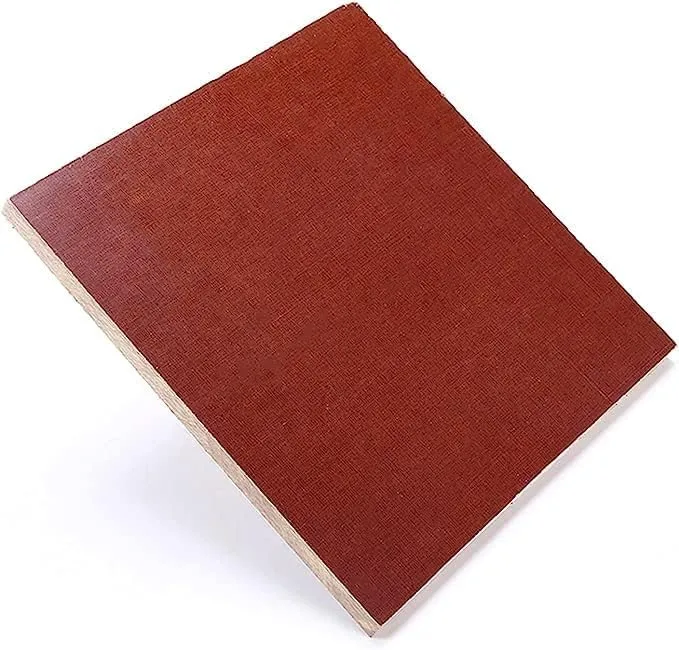
Phenolic Cotton Board Technical Specifications
Electrical Performance
The dielectric strength, the insulator resistance, and the volume resistivity are the most important parts of any electrical document. The CE type of electrical cotton has a voltage of about 5.5 kV/mm in oil, which means it can be used for medium-voltage tasks. You can't just look at one number because the outcome depends on the test's direction, thickness, humidity, and temperature. When someone wants to buy something, I tell them to ask for a test record that shows the standard (like ASTM D149 for dielectric breakdown) and the conditions that were used. Then, look at reports that were made under the same conditions by different providers. When the board goes into a panel, this habit makes sure nothing is a surprise.
Mechanical and Physical Data
Mechanical data tells you if a phenolic cotton board support will hold up when you put weight on it. The datasheets for grade C cotton-cloth board say that it can usually bend more than 100 MPa and can withstand an impact of at least 8.8 kJ/m² in a flat direction. Why is this stuff good for making gears, spacers, and building supports? These pictures show you. I also check the sheets to make sure they are the right thickness and flat. Sheets that aren't flat put stress on the bolts that hold them down. Machine builders like the material because it doesn't break when drilled, tapped, or cut as some glass-epoxy laminates do. You should also check the interlaminar and compression values of the heavy-duty part.
Temperature, Moisture, and Chemical Limits
The board can handle 120°C because it scores as Class E insulation. The plastic can turn into carbon if you run above that for a long time. This makes the board weak and easy to break. Because phenolics soak up water, being in high humidity or water for a long time can make them less insulating and cause them to slightly swell. The Grade CE data says that less than 1.6% of the thickness of 1.5 mm is absorbed by water. Strong acids will break down the glue, but mineral oil, solvents, and weak acids will not. I think you should test a sample first before placing a large order for projects in the US that will be wet or outside.
Applications in Electrical Panels and Insulating Supports
Electrical Panels and Switchgear
The board is used as a barrier to keep electricity from flowing, as mounting plates, as busbar supports, as terminal supports, and as partition panels in switchgear and panels. If engineers want to pick a grade, they should think about the fault conditions, temperature rise, clearances, and creepage distances. There may be less space between the edges after cutting and drilling, so you should check the creepage again after mounting and grinding. Electronics and electrical goods makers often need UL or RoHS paperwork. Tell your service provider right away so they can make sure they have the right papers for your grade. When bolts and brackets are used to load the part, the cotton reinforcement makes it stronger than laminates made of paper.
Transformers and Motors
Companies that make power equipment use the board to make coil supports, support rings, blocks, binding parts, and structural spacers. It doesn't hurt the plastic, and the board makes places stiffer where moderate dielectric strength is enough, like the supports and terminal plates inside units that are full of oil. Still, each idea needs to be tested to see if it works with oil and if it can handle thermal cycles. The board in motors is made up of brackets, spacers, and terminal parts that get hot and shake. You should check the hot-spot temperatures before you place your order since Class E grades end at 120°C.
Machinery, Automotive, and Appliance Uses
Phenolic cotton board 3025 isn't just used for panels; it's also used for other things. It is also used for reduction and timing gears in textile and car tools. It's used to make gears that don't scratch or make noise, and it doesn't damage metal gears that fit together. It is used in steel rolling mills and on ship propeller shafts as a bearing or bushing material. You can grease it with either water or oil. Parts for appliances like motor brackets, insulation frames, and thermal separation are all made from the same sheets. For mass production, these parts need to be made quickly and consistently well. This temperature grade should match FR4 before it is used for battery pack dividers or high-heat parts in cars.
Choosing Phenolic Cotton Board Against Other Insulation Sheets
Compared with Phenolic Paper Board
It costs less and works well for dry, flat parts when phenolic cotton board is compared to paper board, but paper breaks more easily. The added cotton makes the fabric stronger, better at handling impacts, and simpler to machine. That helps with gears, holes with threads, and parts that need to be put together more than once. I like paper grades for simple punched insulators. When I need to hit, vibrate, or machine a part very precisely, I like cotton grades. When you compare datasheets, make sure they all use the same test method. This is because the results of different products depend on how much glue and mass they have.
Compared with FR4, 3240, and Nylon
There is a better chance that FR4 and 3240 epoxy glass laminates will keep heat, water, and fire out. Most of the time, they work in different ways and cost more. Nylon is tough and easy to move, but it gets bigger and soaks up more water. The middle is phenolic cotton board. It is cheaper than glass-fiber laminates and stronger than paper grades. It is also quiet when used in machines. FR4 might be a better choice if your plan needs to be able to handle high humidity or fire. In a simple grid, it's easy to decide what to do when you look at cost, power, weather, load, humidity, and tolerance.
Selection Checklist
First, write down the duty cycle. Then, match the grade to the most important need. To make sure the choice stays firm, do these three things:
- Document the operating conditions. Write down the rules for how to work. Make a list of the voltage, frequency, temperature (both steady and peak), mechanical load, vibration, impact, humidity, chemical exposure, and the place where the installation will happen. This is important because a part with small peaks will act differently than a part that stays hot all day. Based on this record, providers can quickly suggest a grade.
- Match the grade to the main requirement. Make sure the grade fits the main need. If you want pure insulation, pick based on dielectric performance. For structural supports, pick based on how strong they are in both bending and pressing. If you need precise parts, choose by weave. Pick sites based on moisture data if they are wet. 3025 is usually used for small teeth or threads, while 3026 might be enough for heavy impact parts.
- Request documents and samples. Ask for examples and papers. For your project, you should ask for the technical datasheet, the inspection report, information on the test method, and any RoHS, REACH, or quality documents. You need to send sketches, numbers, hole patterns, tolerances, and the surface you want for pieces that are made just for you. After that, agree to a sample before you place a big order.
These steps make sure that every quote is good and cut down on the work that needs to be done again.
Buying, Machining, and Handling Phenolic Cotton Board
Price Factors and Supplier Evaluation
The price depends on the grade, thickness, sheet size, order number, testing, packing, location, wait time, and the work that needs to be done. Standard sheets work well when you buy a lot of them, but custom sizes can help you cut down on waste and work. To find out if the parts are in stock or made to order, as well as any minimum order amounts. When I judge a supplier, I look at how well they can make things, how much experience they have exporting, how well they can keep an eye on quality, how helpful they are with technical issues, and how consistent their batches are. Compare more than just unit prices. Before you place your order, agree on delivery terms and who will be in charge of communicating. J&Q has done business with other countries for more than 10 years, and our own shipping company takes care of everything. In other words, one team is in charge of the whole process.
Machining and Handling
The phenolic glue is rough, even though cotton is soft. Use sharp tungsten carbide tools to cut it. If you cut quickly but feed slowly, heat won't build up, and edges won't come apart. Test some of the more difficult parts before you make a lot of them. If you're putting something together, don't use too much torque, sharp notches, or gaps between the edges. Use washers to spread out the load for you instead. Before the parts are put together, make sure that the clearances and creepage distances are still legal. Boards should be kept clean, flat, and dry, away from water, bumps, and the sun. Before you carefully go over the material again, give it some time to get used to its new home. The next step is to look for cracks, bending, and delamination.
Common Selection Mistakes
Many people choose phenolic cotton boards based only on price, believe all of them are the same, don't check for moisture or temperature, don't look at tolerances, and compare dielectric numbers without test conditions. It could crack, deform, or lose its ability to insulate if you don't describe the sheet correctly, which would mean more work and time off. I don't have to worry about these things because I compare full datasheets that list the grade, resin system, reinforcement, density, conditioning, and test standard. Before I make a lot of them, I need to test some and make sure they can withstand being installed outside, in damp places, with transformers, or under a lot of stress.
Conclusion
Phenolic cotton board is made from phenolic resin that has been dried and woven with cotton support. It is strong, doesn't let electricity flow through it, and is simple to machine into panels, supports, transformers, motors, and other machine parts. It's best to use the 3025 grade for fine cutting and the 3026 grade for hard hitting. The specific gravity ranges from 1.35 to 1.45 g/cm³, it has a bending strength of more than 100 MPa, and it has a Class E grade at 120°C. It still has problems with water and strong acids. Paper laminates wear out faster and cost more than this. FR4 or 3240 epoxy, on the other hand, keeps heat and moisture better. The choice of sound is based on written down operating conditions, test reports that match, careful machining, and proof of samples.
FAQ
What is the difference between 3025 and 3026 phenolic cotton board?
3025 makes teeth or threads that are smooth and precise with fine-weave cloth. This 3026 cloth is rough, but it costs less and works well for heavy-duty parts. However, it makes polished areas look rougher.
Can phenolic cotton board work in humid places?
Yes, but be careful. Being around phenolics for a long time lowers their insulation values and makes them swell slightly compared to FR4. This is because they soak up water and humidity. First, check out the samples.
What temperature can it handle?
The board says that it is up to 120°C for Class E. The glue turns into carbon if it stays above that for a long time. This makes the board easy to break.
What should I send for a quotation?
Send the application, grade, thickness, size, quantity, tolerances, documents needed, answer to the question "where are the goods going?" and "when do they need to be there?"
Request Phenolic Cotton Board for Electrical Panels and Insulating Supports from J&Q
For more than 20 years, J&Q has sold insulation sheets. For more than 10 years, they have also done business with other countries. We offer phenolic cotton board and also run our own shipping company, so we can handle everything, from the sample to moving the goods. To info@jhd-material.com, you can send your drawings, grade, thickness, and amount. You can also visit jhd-material.com to learn more.
References
1. ASTM D709 Standard Specification for Laminated Thermosetting Materials, 2017
2. ASTM D149 Standard Test Method for Dielectric Breakdown Voltage and Dielectric Strength of Solid Electrical Insulating Materials at Commercial Power Frequencies, 2020
3. IEC 60893-1 Insulating Materials: Industrial Rigid Laminated Sheets Based on Thermosetting Resins for Electrical Purposes, Part 1, 2004
4. IEC 60085 Electrical Insulation: Thermal Evaluation and Designation, 2007
5. NEMA LI 1 Industrial Laminated Thermosetting Products, 1998
6. Handbook of Thermoset Plastics, 2014