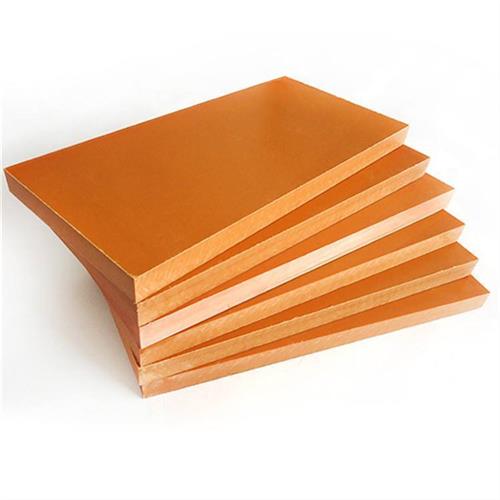
How CE Phenolic Sheets Perform in Machined Industrial Parts
2026-10-16 17:16:00
CE phenolic sheets are high-pressure industrial laminates produced by impregnating cotton canvas fabric with phenolic resin, then bonding it under heat and pressure. The result is a dense, machinable panel with measurable mechanical toughness, moderate electrical insulation, and strong resistance to wear and industrial fluids. For engineering managers, OEM sourcing teams, and procurement specialists selecting materials for machined components, understanding how this laminate grade performs under real operating conditions directly affects part quality, machine reliability, and total lifecycle cost.
Understanding CE Phenolic Sheets and Their Key Properties
It's helpful to know what this laminate grade is and why it's always used for tough-made parts before you compare materials or place an order.
Material Composition and Manufacturing Process
This CE Phenolic Sheet is in the NEMA LI-1 Grade CE group, which is also known as "Canvas Electrical." It starts with a base of medium to coarse woven cotton that is usually heavier than 4 oz/sq yd. After soaking the base in phenolic glue, it is pressed together using controlled heat and pressure. A thermoset material with a specific gravity of 1.34 to 1.36 and a Rockwell Hardness (M Scale) of about 105 is made this way.
Key Physical and Electrical Properties
The panel can bend more than 15,000 psi along its length and can take an impact of about 1.6 ft-lb/in notch. This is a lot more than phenolic grades made from paper. From the laminate plane to the dielectric breakdown voltage, it is about 35–40 kV. This means it can be used for light electrical shielding jobs where it also has to carry structural load.
Thickness Range and Dimensional Options
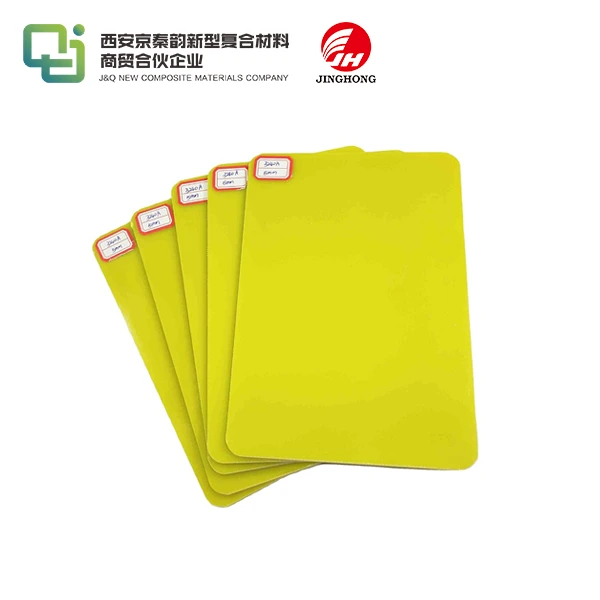
J&Q sells Hongda brand canvas phenolic laminate in sheets that are 1220 mm x 2020 mm and have a thickness of 0.5 mm to 100 mm. If you want, you can ask for different sizes. This way, engineers can pick the best cross-section for gears, spacers, wear pads, or contact plates without having to think too much about how heavy the material is.

Performance Analysis of CE Phenolic Sheets in Machined Industrial Parts
Material datasheets tell part of the story. What matters most to production teams is how the material actually behaves once it enters the machine shop and then the end application.
Mechanical Strength Under Load
The cotton canvas reinforcement gives Grade CE its defining characteristic: impact absorption. In heavy industry gear trains, CE Phenolic Sheet is used to manufacture phenolic canvas gears that reduce noise levels by up to 50% compared to all-metal alternatives while acting as a sacrificial element that protects the more costly metal mating gear. Crushers, mills, and drive assemblies across manufacturing plants have used this behavior to extend scheduled maintenance intervals.
Thermal and Chemical Stability
Continuous service temperature for this laminate grade sits between 115°C and 125°C. The phenolic resin matrix resists common solvents, mild acids, and lubricating oils — conditions found in transformer housings, switchboard panels, and automotive insulation fixtures. Note that alkalis can degrade the resin over time, so applications involving caustic environments warrant a different laminate grade.
Machinability in Precision Fabrication
Grade CE machines cleanly on CNC equipment. Carbide-tipped tools are the standard recommendation because phenolic resin is abrasive over extended tool life. Proper dust extraction is mandatory during machining — phenolic dust is both a respiratory hazard and combustible. Within those safety parameters, the material holds tight tolerances across drilled holes, milled slots, and turned profiles, which is why it appears regularly in insulator blanks, gear blanks, pulleys, bushings, and wear pads.
Comparative Insights: CE Phenolic Sheets vs Alternative Materials
Procurement teams frequently evaluate canvas phenolic laminate alongside other sheet materials. Here is how the comparison plays out across three common categories.
CE Phenolic vs MDF and Plywood
MDF and plywood absorb moisture, swell dimensionally, and lack the thermal resistance required for electrical enclosures or motor compartments. Grade CE maintains its geometry and mechanical properties in humid or elevated-temperature conditions that would cause wood-based panels to fail within months.
CE Phenolic vs Plastic Laminates and HPL
High-pressure decorative laminates and thermoplastic sheet materials offer surface aesthetics, but CE Phenolic Sheet materials provide the structural strength and heat resistance required for demanding electrical applications. When switchgear plates must support heavy busbars and resist arc flash exposure simultaneously, HPL is not a viable substitute for phenolic canvas laminates.
CE Phenolic vs Epoxy Glass Laminate (FR-4)
FR-4 epoxy glass laminate surpasses Grade CE in dielectric strength, moisture resistance, and flame retardancy — and is the preferred choice for PCB substrates and high-frequency electrical applications. However, FR-4 has lower impact strength and is more brittle in thick sections. For gears, structural spacers, and wear components where toughness matters more than dielectric precision, canvas phenolic laminate remains the more practical selection.
Practical Guidance for Procurement and Application
First, make the right choice during buying. This is the first step to getting good work in the field.
Selecting Thickness and Sheet Format
To make the thickness of the CE Phenolic Sheet match the cross-section of the finished part, you need to allow extra stock for cutting. Most gear flats and solid plates are made from sections that are 20 mm to 100 mm thick. Thinner sheets, ranging from 0.5 mm to 10 mm, can be used to manufacture insulation pads, shims, and gasket-like components. J&Q has a minimum order quantity of 500 kg and accepts T/T payments. Depending on the required delivery time, shipments can be arranged by sea, land, or air freight.
Machining and Fabrication Best Practices
When engineers make canvas phenolic laminate, these are the main things they should do: To work with the rough plastic matrix and keep the edges sharp during production runs, use cutting tools with carbide tips.
—Clean out the cutting point of dust before you start any work. Phenolic dust is bad for your health and can cause fires in machine shops that are closed off.
- Use carbide-tipped cutting tools to manage the abrasive character of the resin matrix and maintain sharp edges throughout production runs.
- Install dust extraction at the cutting point before any operation begins — phenolic dust creates both a health hazard and a fire risk in enclosed machine shops.
- Clamp workpieces firmly without exceeding clamping pressure that could crack thinner sections, particularly when drilling cross-grain.
- Avoid coolant flooding with water-based fluids on long cuts; compressed air or light oil mist is preferable to minimize moisture absorption at cut edges.
By constantly following these rules, both the machinists and the accuracy of the finished parts' measurements are protected. This lowers the number of scraps and the cost of repairs across production runs.
Quality Certifications to Verify Before Ordering
ISO 9001, UL (Underwriters Laboratories), and ASTM D578 all say that the cloth phenolic veneer from J&Q is good. The laminate grade on the material approval should match either NEMA LI-1 Grade CE or the similar MIL-I-24768/14 (Type FBG) name. Check the supplier's paperwork to make sure of this. A lot of the time, electrical and mechanical systems fail in the field because the grades were not identified correctly.
Trusted Suppliers and Brand Selection in the CE Phenolic Sheet Market
You shouldn't just choose a supplier based on price; you should also look at how reliable they are, how well they keep records, and how well they can handle logistics.
J&Q has added some new composite materials. For more than 20 years, the business has been making and selling insulation sheets. For more than ten of those years, they have done business in other countries. The company does not hire outside freight agents to handle its freight by sea, land, and air; instead, it manages its own fleet of vehicles. Up to 13,000 tons of goods can be made at the factory every year. This means that there is a steady supply for both big OEM orders and small custom orders.
Canopic sheets from the Hongda brand come in black or brown, but you can also ask for other colors. Sheets come in one size, 1220 mm × 2020 mm, but they can be cut to any size you need. Pallet security is used in shipping to keep the edges of the packages from getting broken. When a customer wants OEM-branded goods or the best thickness options for their needs, J&Q's technical team works directly with the client engineers to set standards before production.
Conclusion
CE Phenolic Sheet is a type of canvas phenolic laminate suitable for parts that require high strength, precise machining, and electrical insulation. With excellent impact resistance, dimensional stability at temperatures up to 125°C, and good CNC machinability, this material is widely used in power tools, electronics, automotive components, and industrial machinery. When selecting a suitable grade, buyers should check the material specifications, certification documents, and the supplier's ability to maintain consistent production quality. For reliable supply chain operations, J&Q provides the necessary documentation, certifications, and direct technical support to help customers meet their procurement and application requirements.
FAQ
What is the difference between CE and LE phenolic sheet grades?
CE uses coarser canvas fabric for higher impact strength and mechanical toughness. LE uses fine-weave linen for better surface finish and moisture resistance. Select CE for gears, structural plates, and wear components; select LE when fine electrical insulation detail and low moisture absorption are the priority.
What is the continuous operating temperature for canvas phenolic laminate?
The continuous service rating is approximately 115°C to 125°C. Exceeding this threshold causes the cotton reinforcement to carbonize and the mechanical properties to degrade. For higher temperature demands, epoxy glass laminates should be considered instead.
Does J&Q offer custom sizes and thicknesses?
Yes. J&Q supplies sheets from 0.5 mm to 100 mm thick with a standard size of 1220 mm × 2020 mm. Custom dimensions and OEM configurations are available on request, with a minimum order of 500 kg.
Is standard Grade CE flame-retardant?
Standard NEMA Grade CE does not carry a UL 94 V-0 flame-retardant rating. If your application requires that classification, request a specific flame-retardant formulation or consider FR-4 epoxy glass laminate.
Can canvas phenolic laminate be used in submerged water environments?
Grade CE absorbs more moisture than glass epoxy grades and may swell slightly in long-term submerged conditions. It performs well in oil-lubricated environments. For precision parts in continuous water immersion, acetal or marine-grade micarta is typically preferred.
Request a Quote from J&Q — CE Phenolic Sheet Supplier
J&Q has added some new composite materials. The business is licensed by ISO 9001 and UL and sells canvas phenolic laminate. They can make 13,000 tons of it every year and help with direct shipping by land, sea, or air. We can help you whether you need regular sheets or sheets that are cut to the exact size of a machined part. Feel free to email us at info@jhd-material.com or visit jhd-material.com to get a sample or a price for production.
References
1. National Electrical Manufacturers Association. NEMA Standards Publication LI 1: Industrial Laminating Thermosetting Products. NEMA, 2020.
2. ASTM International. ASTM D709: Standard Specification for Laminated Thermosetting Materials. ASTM International, 2021.
3. Harper, C. A. Handbook of Plastics Technologies. McGraw-Hill, 2006.
4. Rosato, D. V., and Rosato, M. G. Plastics Technology Handbook. CRC Press, 2012.
5. Military Specification MIL-I-24768/14: Insulating Material, Plastic, Laminated Thermosetting, Type FBG. U.S. Department of Defense, 2018.
6. Brydson, J. A. Plastics Materials, 7th ed. Butterworth-Heinemann, 1999.
_1732777843529.webp)