How Epoxy Fiberglass Tubes Perform in Industrial Support Structures
2026-10-21 17:28:25
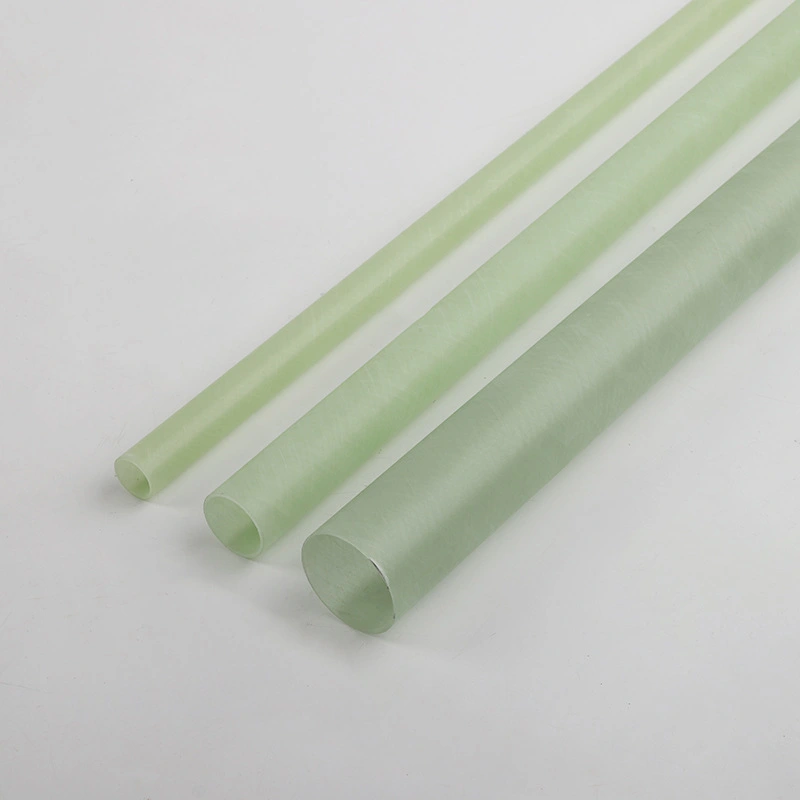
Epoxy fiberglass tubes deliver consistent, measurable performance in industrial support structures by combining glass fiber reinforcement with a thermosetting epoxy resin matrix. These composite tubes meet NEMA grades G10, FR4, and G11 standards, offering a tensile strength that can exceed 40,000 psi alongside a dielectric strength suitable for high-voltage environments. Whether used in transformer coil supports, switchgear frames, or structural spacers in automated machinery, the epoxy fiberglass tube resists corrosion, maintains dimensional stability, and keeps weight far below comparable steel assemblies—making it a practical, specification-driven choice for engineering and procurement teams across multiple industries.
Understanding Epoxy Fiberglass Tubes and Their Key Properties
What Makes the Material Structure Work?
It is possible to roll, wind, or push a fiberglass tube made of resin through a die. This is how the thermosetting epoxy glue and the glass fiber cloth that doesn't contain any alkali are mixed. Then, heat and pressure are used to make the mix set. They make a thick, void-free laminate that doesn't break down and keeps its shape even after being loaded and unloaded many times.
Electrical Insulation and Thermal Tolerance
These tubes can protect against arcs, hold fuse housings, and hold up tap changers. They have a dielectric strength of 20 to 40 kV/mm. They can be used continuously in temps below -50°F and up to about 250°F (121°C). Some G11-grade versions can handle higher temperatures. Engineers who work with motor parts and PCBs use it all the time.
Chemical Resistance and Corrosion Prevention
Epoxy and fiberglass tubes made of metal don't rust when they come in touch with weak acids, chlorinated water, or salt water. Because of this, they can be used to protect equipment in the sea and hold up pipes in chemical plants. It doesn't soak up a lot of water, so it stays in shape in wet places where metal frames and screws would break after a few months.
Comparing Epoxy Fiberglass Tubes with Alternative Materials
Versus Steel and Aluminum
It's not heavy; Epoxy Fiberglass Tube weighs about 75% less than steel and 25% less than aluminum. Many times, a fiberglass structural sleeve can be used instead of a steel one that needs a crane to lift it. One technician is able to do this. Shipping costs and construction work are both cut down by this weight loss. The people in charge of OEM buying and mechanical engineering pay close attention to this when making a lot of units at once.
Versus Carbon Fiber and Kevlar
It costs a lot more per meter and needs to be worked with in a certain way. Carbon fiber is easier to shape. You can't cut Kevlar straight, but it can take a lot of damage. This is a good choice if you only need a small amount of epoxy fiberglass composite tube. It is strong enough for most structural insulation, spacer, and roller uses, and it doesn't cost too much. More often than not, fiberglass epoxy tubing is the better choice for industrial support because it is stronger for the money.
Versus PVC and Pure Epoxy Resin Tubes
PVC tubes are cheaper and lighter, but they aren't strong enough to be used in electrical enclosures and can't handle long-term mechanical loads. The lack of fibers makes pure epoxy resin tubes weak and easy to break when they hit something. The Epoxy Fiberglass Tube fiber version can take 40 ft-lbs of Izod impact force and still stay round while being moved, cut, and put in place in the field. This can't be done with PVC and epoxy that isn't reinforced.
| Material | Weight | Corrosion Resistance | Dielectric Strength | Cost |
|---|---|---|---|---|
| Epoxy Fiberglass | Low | Excellent | High | Moderate |
| Steel | High | Poor | None | Moderate |
| Carbon Fiber | Low | Excellent | High | High |
| PVC | Very Low | Good | Low | Low |
Industrial Applications and Benefits of Epoxy Fiberglass Tubes
Electrical and Power Infrastructure
In high-voltage grids, these tubes make arcs in circuit breakers and fuse tubes. Arcing with a lot of energy doesn't make them carbonize or track, which isn't possible with most plastics. In the US, people who work with electricity and people who make transformers use G10 and G11 tubes to protect against sparks and hold up coil insulation. A broken arc in one tube can hurt many things at the same time.
Industrial Machinery and Precision Equipment
People who build machines mostly use fiberglass epoxy tubing where below:
This is an idler roller for a paper mill. The tube doesn't twist because it can keep its shape even when the temperature changes. This keeps the paper web straight and avoids unplanned downtime.
When it comes to high-speed robotic cells, having low weight lowers inertia. This makes cycles more accurate and lowers the load on the motor. It is possible to use mechanical spaces and structural frames instead of metal designs that are already in use because the wall thickness standards are the same. This means that the parts don't need to be made differently.
- Idler rollers in paper mills: The tube's dimensional stability under thermal fluctuation prevents warping that would cause paper web misalignment and unplanned downtime.
- Hydraulic cylinder sleeves: Low weight reduces inertia in high-speed robotic cells, improving cycle accuracy and reducing motor load.
- Mechanical spacers and structural frames: Consistent wall thickness tolerances allow direct substitution into existing metal designs without retooling fixtures.
The two main things that mechanical engineers and OEM buying managers worry about are how stable the load-bearing is and how the sizes stay the same from batch to batch. These tools solve these two issues right away.
Automotive and Specialty Markets
Tier 1 automakers use Epoxy Fiberglass Tube to make parts for EV platforms, battery pack barriers, and insulation fixings that can handle heat. Most plastics can't keep their shape after being heated and cooled many times between -40°F and 200°F. This one can. Radio sticks, high-performance fishing rod blanks, and downhole instrument housings for oil and gas drilling tools are all made of the same fiber-resin building block. This shows that the stuff can be used for different things and with different loads.
Procurement Guide: How to Source Quality Epoxy Fiberglass Tubes?
Certifications and Standards to Require
When you are shopping for something, it is important to make sure that it is approved as NEMA G10, FR4, or G11. In order to be sold in the U.S., electrical goods must be approved by UL and follow RoHS rules. Also, providers should make lots that can be tracked so that engineering teams can be sure that the materials in each production batch are the right ones.
Custom Options and MOQ Flexibility
Standard wall thicknesses, inner sizes, and lengths work for a lot of different types of structural insulation. However, you might need to use different sizes for some projects. The least amount of tubes you need to buy from a good Epoxy Fiberglass Tube maker is one that lets you choose whether the thread is wound or pultruded. Before you order the whole run, ask for some sample pieces. You can see how well it fits, how smooth the surface is, and if it can be made in-house based on your engineering ideas.
Logistics and Lead Times
Before signing contracts with suppliers in the U.S., teams that need to buy things should make sure they understand the lead times, packaging standards, and freight options. A seller who also runs their own business can better predict when items will arrive than one who only works with freight companies. Early on, tell the seller how much you plan to use in a year. When you buy more of something, the price per unit generally goes down.
Ensuring Optimal Performance: Installation and Maintenance Tips
Handling and Cutting Best Practices
Diamond grit wheels or saw blades with carbide tips are the best ways to cut Epoxy Fiberglass Tubes. A lot of steel blades break easily and have rough edges that get torn when they are used. When you cut or sand fiberglass, you should always wear a mask because the dust can hurt your lungs. Parts with thin walls will bend over time if you lay tubes flat on padding supports.
Inspection and Protective Measures
A check-up that can be done every six months is enough to meet most of the needs of a support system. See if the surface has cracks, the ends of the tube are coming apart, or the color changes near heat sources. Use an epoxy or gel coat that is resistant to UV light on projects that will be outside or in direct sunlight. This will keep the resin from chalking, which weakens the surface over time. Use an epoxy repair compound that works with fibers to fix any mechanical damage right away, before water gets in.
When to Replace Rather Than Repair
Do not try to fix the tube if the tear covers more than 10% of its cross-section. Instead, get a new one. If you use a tube for electricity and can see carbon trails on it, you should throw it away right away. This is because the barrier that keeps heat in breaks down when you go along the surface. Instead of fixing things after they break, work with your supplier's expert team to set levels for checks and replacements. This will save you money in the long run.
Conclusion
Epoxy Fiberglass Tubes are useful in industrial support structures because they have particular, measurable qualities like high dielectric strength, rust resistance, low weight compared to metals, and the capacity to keep their shape under mechanical and heat load. People use these parts in their cars, to make electricity, in factories, and in the infrastructure for electricity. Parts will last longer if the people who buy them choose the correct NEMA grade, check the licenses, and make sure there are clear rules for checking. This stuff can't be used to fix every part of a structure, but it works well for support structures that need to be both rust-proof and electrically safe.
FAQ
What is the difference between an epoxy fiberglass tube and a standard fiberglass tube?
A standard fiberglass tube may use polyester or vinyl ester resin as its matrix. An epoxy fiberglass tube uses thermosetting epoxy resin, which produces higher mechanical strength, better adhesion between fiber layers, and superior electrical insulation. For industrial support structures that must meet UL or NEMA standards, the epoxy matrix version is generally the specified grade.
What temperature range can these tubes handle continuously?
Most G10-grade tubes operate reliably from below –50°F up to 250°F. G11-grade variants handle higher continuous temperatures and are preferred in transformer and motor applications where ambient heat is sustained over long periods.
What are typical lead times and minimum order quantities for custom sizes?
Lead times for standard sizes are generally two to four weeks. Custom dimensions—specific wall thickness, bore diameter, or length—may require four to six weeks depending on tooling requirements. Minimum order quantities vary by supplier; request this information alongside sample availability before placing a production order.
Can epoxy fiberglass composite tubing be CNC machined?
Yes. The material machines cleanly with carbide tooling. It supports drilling, turning, and milling operations, which makes it suitable for precision spacers, bushings, and structural brackets that require tight dimensional tolerances.
Get a Custom Quote from J&Q — Trusted Epoxy Fiberglass Tube Supplier
J&Q has been making insulation goods for more than 20 years, and for more than 10 years, they have been sending them directly to buyers in the US and other countries. We can make any size Epoxy Fiberglass Tube because we only sell it. We only use approved materials and ship it ourselves, so you know it will get to you quickly and on time. To get samples or talk about placing a large order, call our team at info@jhd-material.com or go to jhd-material.com right now.
References
1. Mazumdar, S. K. Composites Manufacturing: Materials, Product, and Process Engineering. CRC Press, 2001.
2. Harper, C. A. Handbook of Plastics Technologies. McGraw-Hill, 2006.
3. NEMA Standards Publication LI 1. Industrial Laminating Thermosetting Products. National Electrical Manufacturers Association, 2020.
4. Rosato, D. V., & Rosato, M. G. Reinforced Plastics Handbook. Elsevier, 2004.
5. Strong, A. B. Fundamentals of Composites Manufacturing: Materials, Methods, and Applications. Society of Manufacturing Engineers, 2008.
6. UL 746C. Polymeric Materials — Use in Electrical Equipment Evaluations. Underwriters Laboratories, 2022.