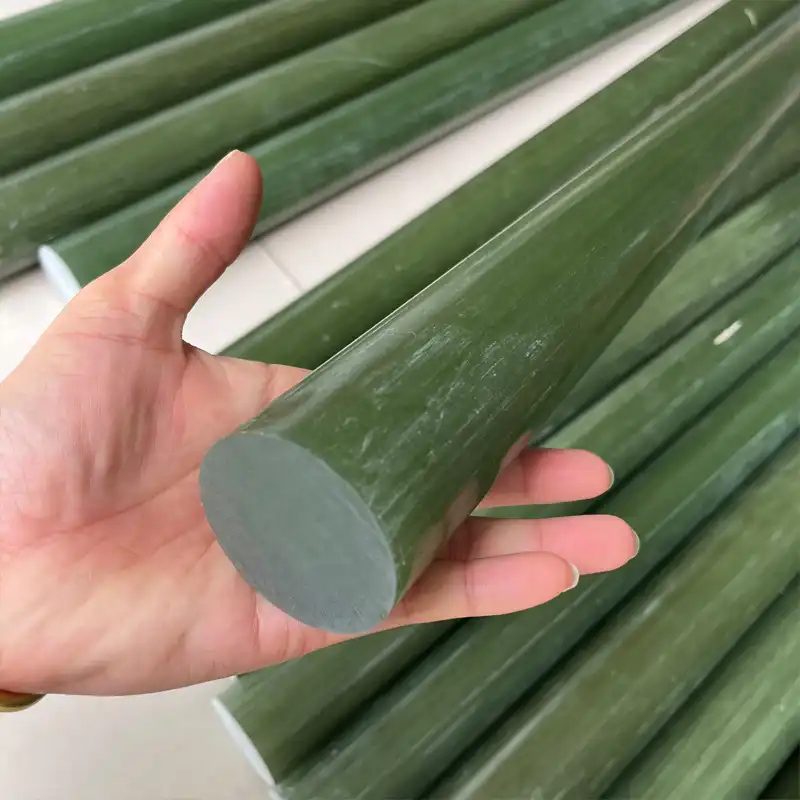
FR4 Epoxy Fiberglass Rod for Electrical Standoffs and Insulators
2026-10-21 17:28:22
When engineers and procurement teams search for a structurally sound, electrically safe insulating rod, the FR4 Epoxy Fiberglass Rod consistently appears at the top of the list. Made from woven fiberglass cloth impregnated with flame-retardant epoxy resin, this rod delivers a rare combination of mechanical toughness, strong dielectric performance, and chemical stability. Whether you are specifying parts for switchgear, transformer assemblies, PCB test fixtures, or motor insulation, this material handles the load reliably. This guide is written for engineering managers, OEM sourcing teams, and technical procurement specialists who need clear, factual information before placing a bulk order.
Understanding FR4 Epoxy Fiberglass Rod: Composition and Technical Specifications
What Makes Up the Material
This is FR4 Epoxy Fiberglass Rod, which is a thermoset material. It is made of a continuous woven fiberglass fabric with at least 80% fiber content that is bonded together with an epoxy resin system that has flame retardants based on bromine. Flame Retardant is what "FR" stands for in FR4, and this material is UL94 V-0 classified, which means it puts out fires on its own within 10 seconds of being removed from a source of ignition. This is a must for electrical cabinets and high-voltage enclosures that are closed off.
Key Technical Parameters
The following performance numbers have been confirmed for Jinghong's resin insulator rods:
- Tensile Strength: ≥1,200 MPa — significantly higher than standard thermoplastics
- Flexural Strength: ≥900 MPa; Thermal Flexural Strength ≥300 MPa
- Compressive Strength: 950 MPa
- Volume Resistivity: ≥10¹⁰ Ω·m
- Power Frequency Voltage: ≥50 kV; Full Wave Impulse Voltage ≥100 kV
- Flame Retardancy: V-0 per UL94
- Stress Corrosion Resistance: ≥96 hours
Size Range and Product Format
Jinghong makes these rods with outside sizes ranging from ʆ5 mm to φ2000 mm. A normal rod length is 1 meter. Its natural color is green, and it can be produced in quantities of up to 100 tons per year. Shipping can be done by sea, land, or air freight, and it can be used for both domestic and international purchases.
FR4 vs. G10 and Other Alternatives
G10 is the closest substitute for an FR4 Epoxy Fiberglass Rod, offering similar mechanical and dielectric properties. The main difference is that G10 does not contain bromine-based flame-retardant additives, meaning it can continue burning when exposed to fire. Carbon fiber rods offer greater stiffness but are electrically conductive, making them unsuitable for electrical insulation applications. CEM-1 rods have lower mechanical strength and are therefore better suited to low-stress applications. Compared with carbon fiber, an FR4 Epoxy Fiberglass Rod provides better electrical insulation and flame resistance, along with good mechanical strength and cost-effectiveness.
Advantages of FR4 Epoxy Fiberglass Rod for Electrical Standoffs and Insulators
How well this material works in real life, not just on a datasheet, is what determines whether it should be used instead of others.
Here are the main benefits that procurement teams always check before giving the go-ahead:
- High dielectric strength (~500 V/mil): The rod maintains electrical isolation even under voltage spikes, which is essential in switchgear standoffs and transformer tap changer shafts where arc events are a known risk.
- Moisture resistance: Water absorption stays below 0.2%, keeping dielectric performance stable in humid factory environments, outdoor enclosures, and even transformer oil immersion — a property confirmed in IEC and GB/T test standards.
- CNC machinability: Unlike ceramic insulators, these rods can be turned, drilled, and milled using carbide tooling. This allows OEM clients to achieve tight tolerances for standoff pins, guide rods, and insulator cores without secondary outsourcing.
- Chemical and corrosion resistance: The epoxy matrix resists acids, alkalis, and industrial solvents, extending service life in chemical processing and power distribution environments.
There is a high dielectric strength (about 500 V/mil): Even during voltage spikes, the rod keeps the electricity from connecting to anything else. This is very important in places like switchgear standoffs and transformer tap changer shafts where arcs are known to happen.
How to Choose the Right FR4 Epoxy Fiberglass Rod for Your Application
Selecting the correct rod requires matching material properties to your operating environment, not simply ordering the most popular diameter.
Match the Diameter to the Load Path
For structural standoffs in motor housings or switchgear frames, a FR4 Epoxy Fiberglass Rod must have sufficient compressive and flexural strength to withstand the applied loads, which determine the minimum cross-section required. Jinghong's diameter range of φ5 mm to φ2000 mm accommodates applications ranging from miniature PCB spacers to large insulator core rods used in lightning arresters.
Confirm the Thermal Class Required
Standard FR4 operates continuously at up to 130°C (Glass Transition Temperature, Tg). If your application involves transformer coil insulation or automotive battery pack barriers where operating temperatures exceed this range, confirm whether a high-Tg variant is needed before ordering.
Evaluate Supplier Certification and Batch Consistency
For B2B procurement, single-sample approval is not enough. Buyers should request test reports covering dielectric breakdown voltage (per ASTM D149 or GB/T standards), flammability verification, and dimensional tolerance records across multiple production batches. With over 20 years of production experience and more than 10 years in international trade, J&Q maintains documented quality records that procurement teams can review before committing to long-term supply agreements.
Procurement Best Practices: Sourcing FR4 Epoxy Fiberglass Rod Efficiently
Verify Certifications Before Negotiating Price
The first step in any responsible buying process is to verify that the supplier has the required certifications and can provide proof of traceability for its FR4 Epoxy Fiberglass Rod products. This includes confirming UL 94 V-0 flammability ratings, reviewing volume resistivity test reports, and checking records of dimensional tolerances. These certifications and test documents help buyers avoid non-conforming materials that may look acceptable but fail to meet performance requirements in actual applications.
Plan Order Quantities Around Lead Time
When you buy in bulk from a company that can make 100 tons of goods a year, you can plan your restocking rounds. Set up a rolling plan with your seller so that you can keep your safety stock levels steady without tying up extra cash. J&Q ships by sea, land, and air, which gives buying teams the freedom to balance cost and speed.
Use OEM Customization to Reduce Secondary Processing
When you order rods that are already cut to the right lengths or diameters, you save money on labor costs in your own facility. Because J&Q does its own production and logistics, it can handle custom orders without going through a lot of middlemen. This cuts down on lead times and handling risk.
FR4 Epoxy Fiberglass Rod vs Alternatives: Making the Rational Choice
G10 costs slightly less but lacks flame retardancy, which disqualifies it from most enclosed electrical assemblies in the US market where UL listing is expected. Carbon fiber provides higher stiffness-to-weight ratios but conducts electricity — a disqualifying property for any insulation application. Phenolic cotton rods offer lower cost for mechanical spacers but degrade faster in humid or chemically active environments compared to FR4. For teams that need a single material to cover standoff insulators, structural spacers, and arc barriers across multiple product lines, epoxy fiberglass rod in FR4 grade remains the most technically defensible choice. The data supports it: ≥1,200 MPa tensile strength, ≥50 kV power frequency voltage, and V-0 flame rating make it the rational specification for demanding electrical and industrial applications.
Conclusion
FR4 Epoxy Fiberglass Rod isn't just any product. It has a confirmed tensile strength of ≥1,200 MPa, a volume resistivity of ≥10±⁰ Ω·m, and a V-0 flame grade, which means engineers can confidently use it for standoffs, insulators, structural spacers, and arc barriers. The three steps that separate a good purchasing decision from a problem that keeps happening in the field are choosing the right diameter, making sure of the thermal class, and getting the product from a certified manufacturer whose batches are consistently made. This type of material should be carefully considered if you need a high-performance insulating stick that has been shown to be safe for electrical, industrial, and fire use.
FAQ
Q1: What is the difference between FR4 and G10 epoxy rods?
Both materials share similar mechanical and electrical properties. The key difference is that FR4 contains bromine-based flame-retardant additives, allowing it to meet UL94 V-0 ratings. G10 lacks these additives and will sustain combustion when ignited. For applications inside electrical enclosures or where fire safety codes apply, FR4 is the correct choice.
Q2: Can these rods be machined with standard shop tools?
Fiberglass content makes the material highly abrasive. Standard high-speed steel tooling wears out quickly. Carbide or diamond-tipped cutting tools are required, along with dust extraction or wet machining to manage airborne fiberglass particles safely.
Q3: What is the maximum continuous operating temperature?
Standard FR4 rod operates continuously at up to 130°C, determined by the epoxy resin's Glass Transition Temperature (Tg). Specialized high-Tg variants can handle temperatures above 170°C for more demanding thermal environments.
Q4: Does moisture affect the rod's insulating performance?
FR4 epoxy fiberglass rod maintains strong insulation resistance in humid conditions due to its hydrophobic epoxy matrix and treated glass fibers. Water absorption stays below 0.2%, and the material is suitable for use in transformer oil immersion environments.
Q5: What diameters and lengths are available?
Jinghong produces rods from φ5 mm to φ2000 mm in outer diameter, with a standard length of 1 meter. Custom lengths and OEM specifications are available upon request.
Get Your FR4 Epoxy Fiberglass Rod Quote from J&Q Today
For more than 20 years, J&Q has sold approved FR4 Epoxy Fiberglass Rod to electrical makers, OEM machinery builders, and clients in the power sector. We can make up to 100 tons of products a year, offer full customization, and have our own logistics network that handles ocean, land, and air freight. This means that we can take care of everything, from the order to the delivery. To get a sample or start your buying question right away, email your specs to info@jhd-material.com or go to jhd-material.com.
References
1. NEMA Publication LI 1 — Industrial Laminated Thermosetting Products, National Electrical Manufacturers Association, 2020.
2. ASTM D709 — Standard Specification for Laminated Thermosetting Materials, ASTM International, 2021.
3. UL 94 — Standard for Tests for Flammability of Plastic Materials for Parts in Devices and Appliances, Underwriters Laboratories, 2023.
4. ASTM D149 — Standard Test Method for Dielectric Breakdown Voltage and Dielectric Strength of Solid Electrical Insulating Materials, ASTM International, 2020.
5. IEC 60893-3-2 — Industrial Rigid Laminated Sheets Based on Epoxy Resin: Specification for Sheets Based on Woven Glass Fabric, International Electrotechnical Commission, 2018.
6. Harper, C. A. — Handbook of Plastics Technologies, McGraw-Hill, 2006.