How FR4 Epoxy Fiberglass Rods Support Custom CNC Components
2026-10-19 17:26:09
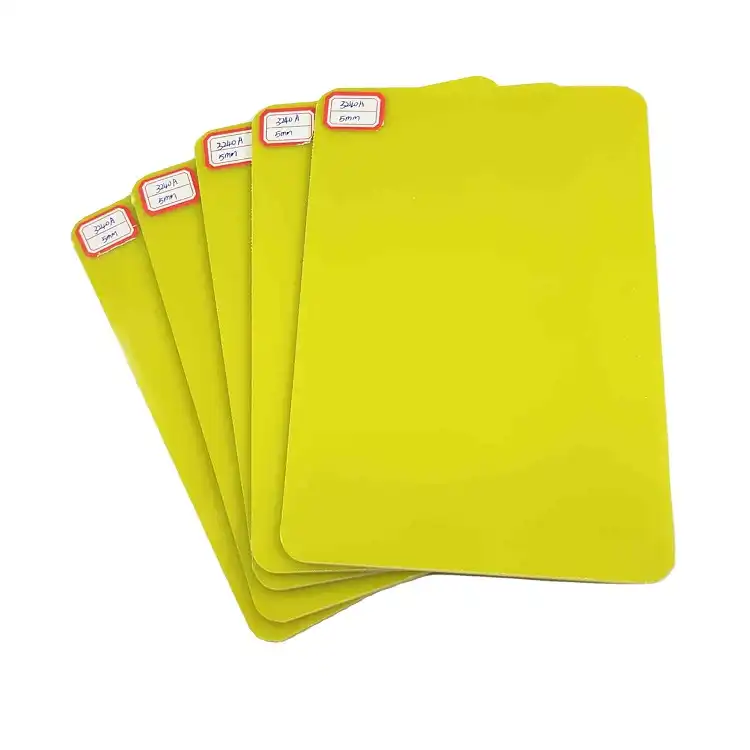
FR4 epoxy fiberglass rods give engineers a material that genuinely performs across mechanical, thermal, and electrical demands at once. Built from woven glass fibers bonded within a flame-retardant epoxy resin matrix, the FR4 epoxy fiberglass rod carries a UL94 V-0 flame rating, a glass transition temperature of 130°C–140°C, and flexural strength exceeding 350 MPa. These properties make it a go-to choice for custom CNC-machined parts — from insulating spacers in PCB assemblies to structural supports inside power distribution equipment. This guide walks procurement teams and engineers through everything they need to know before placing an order.
Understanding FR4 Epoxy Fiberglass Rods and Their Core Properties
What is this stuff used for? That will help you decide whether to buy in bulk or compare sellers. You can't just call FR4 rods "fiberglass sticks." The conditions for laminating and curing are carefully controlled while the composites are being made. The properties of your finished CNC parts have a direct effect on how they work in the field.
Composition and Structure
The backbone of the rod is made of a fiberglass fabric that is woven all the way through and filled with an epoxy resin system that has been strengthened with bromine. The amount of fiber is usually at least 80% of the weight. FR4 is different from its predecessor, G10, because it has bromine added to it. Along with UL94 V-0, which is a safety measure that can't be skipped in electrical cabinets and switching boxes, it lets FR4 put itself out.
Mechanical and Electrical Specifications
The FR4 resin insulator bars that Jinghong makes are made to strict standards that can be checked. The strength to stretch is at least 1,200 MPa, the strength to squeeze is at least 950 MPa, and the resistance in the volume is at least 10²⁰ ©·m. The rod also passes a power frequency voltage test at ≥50 kV and a full-wave impulse voltage test at ≥100 kV. As you can see from these numbers, it can be used for more than just high-voltage shielding work and light-duty electronics.
Size Range and Availability
When it comes to outside sizes, Jinghong has everything from ʆ5 mm to φ2,000 mm. A rod's standard length is 1 m. Green is the color by itself. The business can make up to 100 tons of goods a year and send them by land, sea, or air freight. This gives procurement teams the freedom to plan their schedules however they want for both small runs of prototypes and big orders.

Why FR4 Epoxy Fiberglass Rods Excel in Custom CNC Manufacturing
There are things that can look good on paper but be hard to work with in real life. FR4 rods can work well in both of these places, which is why engineers keep asking CNC work for them.
Machinability Without Delamination
FR4 is easy to cut with normal carbide or diamond-tipped tools when they are used with the right dust extraction or wet-machining methods. The woven fiber design stops the fibers from coming apart when you turn, mill, or drill insulating washers or standoffs that need to fit together perfectly. The usual way to get ISO h8/h9 diameter specs is to centerless grind good FR4 rod stock.
Thermal and Electrical Stability Under Load
As long as the temperature stays between 130°C and 140°C, standard FR4 rods will stay the same size through most industrial duty cycles. Some high-Tg mixes can be used in transformer coil supports or car battery barrier mounts because they can handle temperatures above 170°C. Because of this and the fact that it absorbs less than 0.15% water, the rod keeps its dielectric properties even after being used in water.
A Clear Advantage Over Alternative Materials
Ceramics work well for electrical insulation, but they are difficult to machine and can crack under vibration. Thermoplastics are easier to process, but they may deform under sustained mechanical loads. Phenolic cotton rods offer good moisture resistance, but their fire resistance is limited. FR4 epoxy fiberglass rods provide a balanced alternative, combining ease of machining, flame resistance, dimensional stability under load, and RoHS compliance. Few alternative materials can meet all five requirements simultaneously.
Epoxy fiberglass rods are great for holding PCBs, keeping motor parts cool, using as spacers in power tools to keep power equipment cool, and making parts for car systems that can handle heat.
Purchase Considerations for FR4 Epoxy Fiberglass Rods in Bulk CNC Production
Getting the right stuff isn't enough. A supply chain that works makes sure that everything is done on time, as planned, and to the same high standard in each batch.
Purchasing teams should check the following things about a seller before placing a large order with them:
- Certifications and traceability: Confirm UL94 V-0 flame classification, RoHS compliance, and whether the supplier can provide batch-level test records. Jinghong controls product quality against GB/T standards and documents results including density, flexural strength, and stress corrosion resistance (≥96 hours).
- Dimensional consistency: Internal voids, ovality, or diameter drift between production runs cause scrap and rework. Ask for nondestructive testing data and diameter tolerance documentation before approving a supplier.
- Moisture absorption verification: ASTM D570 testing should confirm absorption below 0.2%. Rods that absorb excess moisture in transit or storage lose dielectric strength — a risk in humid warehouse environments.
- Lead time and logistics alignment: Jinghong ships via ocean, land, and air. For procurement teams running lean schedules, the ability to choose freight mode by urgency is a practical advantage worth confirming at the quotation stage.
Most of the time, ordering FR4 Epoxy Fiberglass Rod in bulk saves you money per unit, while also ensuring a consistent supply that integrates seamlessly into your CNC process and prevents stock shortages during production and quality inspections.
How to Choose the Best FR4 Epoxy Fiberglass Rod for Your CNC Components
If you ask yourself three questions, the picking process is easy to understand. What weight will the rod hold? What temperature will it be? What level of electricity does the job need?
Define Your Mechanical Requirements First
Be sure that the flexural and compressive strength ratings are a good bit higher than the worst-case load scenario if the rod is going to be used as a structural spacer and be mechanically cycled over and over again. It is ≥900 MPa for Jinghong's rods to bend, and it is 950 MPa for them to be compressed. It's safe to say that these numbers are good for tough industrial uses.
Match Thermal Grade to Application Temperature
Standard FR4 can handle continuous service at 130°C. FR4 Epoxy Fiberglass Rod is suitable for transformer insulation, high-cycle motor brackets, and under-the-hood automotive applications when a high-Tg grade is required. Be sure to specify the appropriate Tg grade when placing your order, as it should not be changed after the order has been confirmed.
Confirm Electrical Ratings Against System Requirements
Find the difference between the rod's dielectric breakdown voltage and your device's maximum voltage plus any safety gaps that may be present. The rods made by Jinghong pass tests for impulse voltage at ≥100 kV. This means they can be used in most medium-voltage transformer and switchgear situations without any changes.
Future Prospects: The Role of FR4 Rods in Advanced CNC Manufacturing
Things keep getting better in the field of material science when it comes to epoxy laminates. Because of tougher RoHS and REACH rules in the US and Europe, people who make resins are working on flame-retardant systems with less or no halogen that keep the V-0 grade but are better for the environment.
CNC production has made it possible to make parts with more complicated shapes and tighter tolerances. This makes it more important for materials to be isotropic and stable in their dimensions. These needs can be better met by sellers who spend money making sure that the quality of the glue and the direction of the fibers are always the same. Engineering teams can learn more about material growth when they buy FR4 Epoxy Fiberglass Rod from qualified makers over a long period of time. This is something they can't get if they only buy something once.
Conclusion
In custom CNC production, FR4 Epoxy Fiberglass Rod is selected for its reliable performance rather than marketing claims. Available in sizes ranging from φ5 mm to φ2,000 mm, it offers a tensile strength of over 900 MPa and can withstand shock voltages of up to 100 kV. These properties make it suitable for a wide range of thermal, electrical, and mechanical applications. To avoid production delays, buyers should select the appropriate rod specifications, verify the supplier's qualifications, and confirm that all technical requirements can be met before placing the first order.
FAQ
Q1: Can FR4 rods handle high-voltage electrical insulation applications?
It is true that Jinghong's rods pass tests for full-wave impulse voltage at ≥100 kV and power frequency voltage at ≥50 kV. Because the volume resistivity is less than or equal to 10±⁰ Ω·m, it can be used to insulate medium-voltage parts like switchgear, transformers, and motor assemblies.
Q2: What customization options are available?
Sizes range from φ5 mm to φ2,000 mm. A rod is usually 1 m long. We can cut to particular lengths and make forms that are already made if you ask. So that production plans don't clash, buying teams should make sure that exact requirements are met during the quotation stage.
Q3: How does FR4 compare to G10 in terms of flame safety?
The mechanical and electrical properties of G10 and FR4 are the same, but G10 will catch fire because it is not flame-retardant.
Q4: Will the rod lose dielectric performance in humid conditions?
When FR4 comes in contact with water, it only soaks up about 0.15% of its weight. The dielectric properties of the epoxy matrix stay the same even after being exposed to water. Even after being submerged in water, the stick keeps more than half of its insulating strength. This makes it a good choice for places of work that get wet.
Q5: What tooling is required for CNC machining FR4 rods?
You will need tools with carbide or diamond tips. Because fiberglass is so rough, regular HSS tools don't work well with it. You need to use proper dust extraction or wet cutting to get rid of small particles and keep people and tools safe.
Request a Quote from J&Q — Trusted FR4 Epoxy Fiberglass Rod Supplier
For more than 20 years, J&Q has been making soundproofing products. For more than 10 years, they have also done business in other countries. We help procurement teams that need stable materials, consistent high-quality paperwork, and on-time delivery by making up to 100 tons of goods per year, offering multiple shipping options, and running our own transportation company that can handle everything. To get a price quote on our FR4 Epoxy Fiberglass Rod items, please email info@jhd-material.com or visit jhd-material.com.
References
1. NEMA LI 1-1998 — Industrial Laminating Thermosetting Products, National Electrical Manufacturers Association, 1998.
2. ASTM D709 — Standard Specification for Laminated Thermosetting Materials, ASTM International, 2017.
3. UL 94 — Standard for Tests for Flammability of Plastic Materials for Parts in Devices and Appliances, Underwriters Laboratories, 2013.
4. ASTM D149 — Standard Test Method for Dielectric Breakdown Voltage and Dielectric Strength of Solid Electrical Insulating Materials, ASTM International, 2020.
5. ASTM D570 — Standard Test Method for Water Absorption of Plastics, ASTM International, 2018.
6. Harper, C.A. — Handbook of Plastics Technologies, McGraw-Hill, 2006.