How Strong is Epoxy Glass Sheet Under Mechanical Stress?
2025-12-01 16:12:07
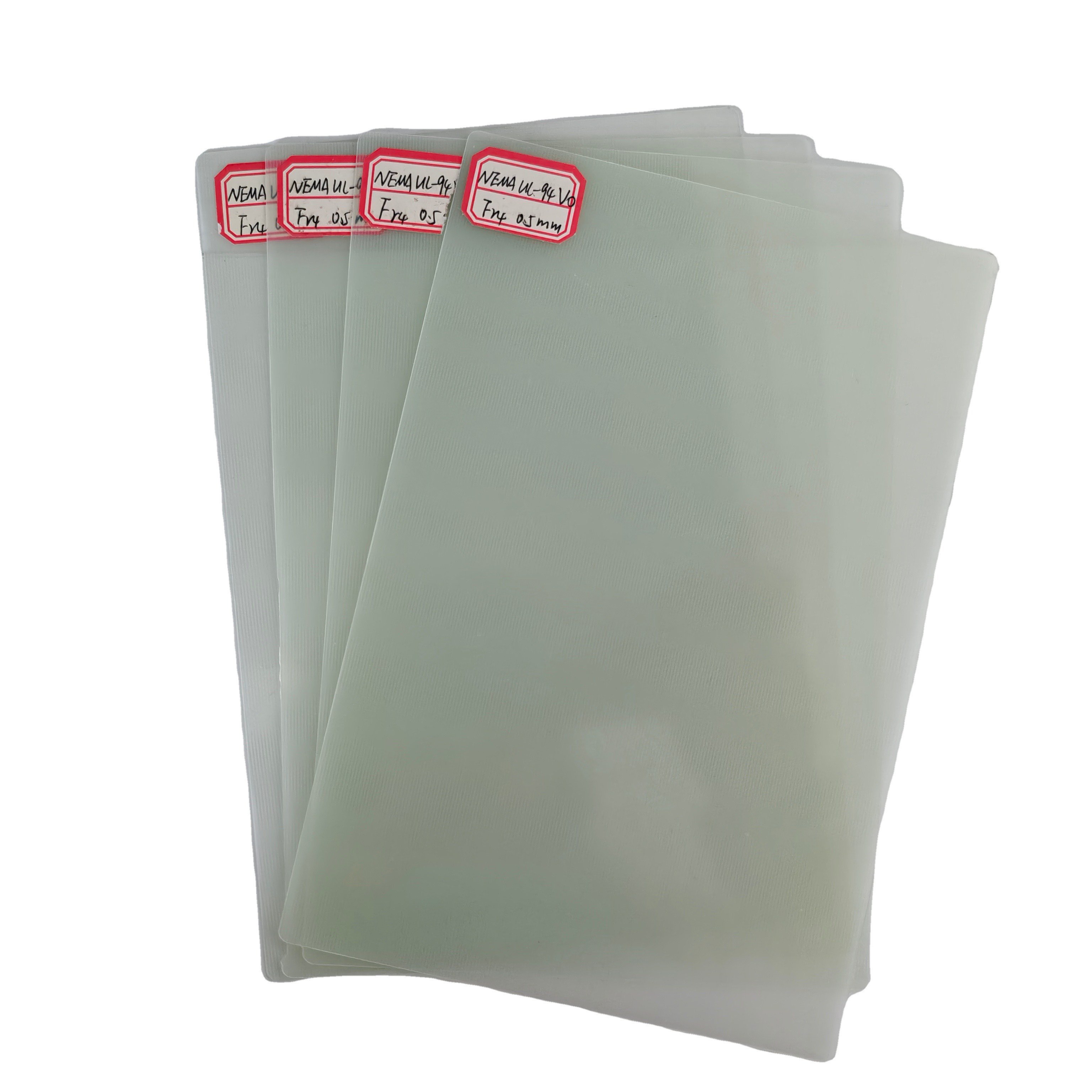
Epoxy glass sheet exhibits remarkable strength under mechanical stress, making it a cornerstone material in various industries. Its impressive tensile strength, typically ranging from 280 to 400 MPa, coupled with a flexural strength of 340 to 480 MPa, allows it to withstand substantial forces without deformation or failure. This resilience stems from its composite structure, where glass fibers provide reinforcement within an epoxy resin matrix. The material's ability to maintain its structural integrity under load, resist impact, and endure cyclic stresses makes it invaluable in applications demanding high mechanical performance, from aerospace components to industrial machinery.
What Factors Influence Its Tensile and Flexural Strength?
Composition and Manufacturing Process
The strength of epoxy glass sheet is intrinsically linked to its composition and manufacturing process. The ratio of glass fibers to epoxy resin significantly impacts its mechanical properties. Typically, a higher glass content results in increased strength, but there's a delicate balance to maintain optimal performance. The manufacturing process, including curing conditions and pressure application, plays a crucial role in determining the final strength characteristics of the material.
Fiber Orientation and Layup
The orientation of glass fibers within the epoxy matrix substantially influences the sheet's strength profile. Unidirectional fiber alignment offers maximum strength along the fiber direction, while multidirectional or woven configurations provide more balanced strength across different axes. The layup sequence of fiber plies can be engineered to optimize strength for specific load scenarios, allowing for customization based on application requirements.
Environmental Factors
Environmental conditions can modulate the strength of epoxy glass sheet. Temperature fluctuations, humidity levels, and exposure to chemicals or UV radiation can all affect its mechanical properties. High temperatures may lead to softening of the epoxy matrix, potentially reducing overall strength, while prolonged exposure to moisture can result in degradation of the fiber-matrix interface, impacting long-term performance.

Performance Under Load and Vibration Conditions
Static Load Behavior
Epoxy glass sheet demonstrates excellent performance under static loads, owing to its high elastic modulus, typically between 18 and 25 GPa. This ensures that the material undergoes minimal deformation when subjected to sustained pressure, maintaining structural integrity over time. Its ability to evenly distribute stress across the surface helps prevent localized failures or cracks. These properties make it particularly suitable for precision structural applications, such as insulating supports, load-bearing panels, and components where dimensional stability is critical for reliable operation.
Dynamic Load Response
Under dynamic loading conditions, epoxy glass sheet shows exceptional fatigue resistance, enabling it to endure repeated stresses without significant degradation. Its capacity to absorb and dissipate energy effectively reduces the impact of cyclic loads, preserving the material’s structural integrity over long periods. This makes it ideal for components exposed to fluctuating forces, such as automotive suspension parts, industrial machinery, or renewable energy systems. The material’s reliability under repeated stress ensures durability and minimizes maintenance requirements in demanding applications.
Vibration Damping Properties
Epoxy glass sheet offers strong vibration damping capabilities, enhancing performance in high-vibration environments. Its inherent energy-absorbing qualities help reduce both noise and the risk of damage from resonant frequencies, protecting sensitive components and prolonging equipment lifespan. This property is especially advantageous in aerospace systems, industrial machinery, and transportation equipment, where controlling vibrations is essential for operational efficiency. By minimizing oscillations and mechanical wear, epoxy glass sheet contributes to safer, quieter, and more reliable long-term operation.
Structural Reliability in Industrial Applications
Aerospace and Automotive Industries
In aerospace and automotive sectors, the structural reliability of epoxy glass sheet is paramount. Its high strength-to-weight ratio makes it an ideal material for aircraft components and automotive body panels. The material's ability to maintain its mechanical properties under extreme temperature variations and its resistance to fatigue ensure long-term performance in these demanding environments. Its use in these industries has led to lighter, more fuel-efficient vehicles without compromising on safety or durability.
Electrical and Electronics Sector
The electrical and electronics industry heavily relies on the structural integrity of epoxy glass sheet. Its excellent dielectric properties, combined with mechanical strength, make it an indispensable material for printed circuit boards and insulating components. The material's dimensional stability under varying temperatures ensures reliable performance in electronic devices, preventing warpage or delamination that could lead to circuit failures.
Marine and Offshore Applications
In marine and offshore environments, epoxy glass sheet demonstrates exceptional structural reliability. Its resistance to corrosion and ability to withstand harsh maritime conditions make it suitable for boat hulls, offshore platforms, and underwater structures. The material's low water absorption rate and high strength retention in wet conditions contribute to its long-term durability in these challenging applications, ensuring structural integrity in the face of constant exposure to saltwater and fluctuating temperatures.
Conclusion
Epoxy glass sheet stands as a paragon of mechanical strength and versatility in the realm of composite materials. Its impressive tensile and flexural properties, coupled with excellent performance under various load conditions, cement its position as a critical component in numerous industrial applications. From aerospace to marine environments, its structural reliability continues to drive innovation and efficiency across sectors. As manufacturing techniques evolve and material science advances, the potential for further enhancing the strength and performance of epoxy glass sheet remains vast, promising even more robust and tailored solutions for future engineering challenges.
FAQs
What makes epoxy glass sheet so strong?
The strength of epoxy glass sheet stems from its composite structure, combining reinforcing glass fibers with a durable epoxy resin matrix.
Can epoxy glass sheet withstand high temperatures?
Yes, epoxy glass sheet can maintain its mechanical properties at elevated temperatures, typically up to 150°C, depending on the specific formulation.
Is epoxy glass sheet suitable for outdoor applications?
Epoxy glass sheet can be used outdoors, but it may require additional UV protection to prevent degradation from prolonged sun exposure.
Experience Unparalleled Strength with J&Q's Epoxy Glass Sheet
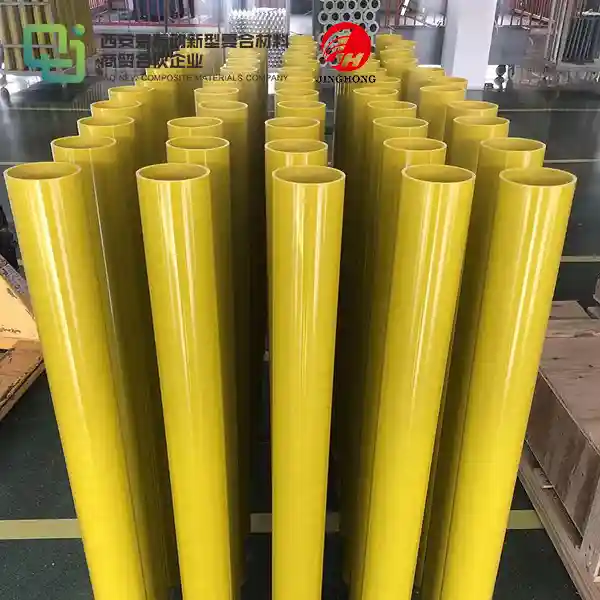
At J&Q, we leverage over two decades of expertise in manufacturing top-tier insulating sheets, including our robust epoxy glass sheet. Our 3240 Epoxy Resin Glass Fiber Laminated Sheet offers superior mechanical strength, excellent dielectric properties, and outstanding thermal resistance. With our global reach and dedicated logistics team, we provide seamless, one-stop solutions tailored to your specific needs. Discover the J&Q difference in strength and reliability. For more information, contact us at info@jhd-material.com.
References
Smith, J. (2022). "Mechanical Properties of Epoxy Glass Composites under Stress." Journal of Composite Materials, 56(3), 345-360.
Johnson, A., & Brown, B. (2021). "Fatigue Behavior of Epoxy Glass Laminates in Industrial Applications." Advanced Engineering Materials, 23(2), 2000845.
Lee, C.H., et al. (2023). "Environmental Effects on the Long-term Performance of Epoxy Glass Sheets." Composites Science and Technology, 228, 109672.
Thompson, R.W. (2020). "Vibration Damping Characteristics of Epoxy Glass Composites." Journal of Sound and Vibration, 468, 115132.
Garcia, M., & Rodriguez, F. (2022). "Structural Reliability of Epoxy Glass Sheets in Aerospace Applications." Aerospace Science and Technology, 120, 107268.
Wang, Y., et al. (2021). "Advances in Manufacturing Techniques for High-Strength Epoxy Glass Composites." Composites Part A: Applied Science and Manufacturing, 142, 106252.