How to Select Glass Epoxy Sheets for CNC Machined Industrial Parts
2026-10-23 17:27:10
Selecting the right glass epoxy sheet for CNC-machined parts directly affects component performance, longevity, and production efficiency. A glass epoxy sheet is a high-pressure thermosetting laminate made from woven glass cloth impregnated with epoxy resin, classified under NEMA grades such as G10, G11, FR4, and FR5. The right grade depends on your operating temperature, dielectric requirements, mechanical load, and machining tolerances. This guide walks engineering managers, OEM sourcing teams, and procurement specialists through every key decision point—so you choose confidently and avoid costly rework.
Understanding Glass Epoxy Sheets – Key Properties and Manufacturing Process
What Makes This Material Different?
Woven fiberglass cloth and a thermoset epoxy binder are mixed together to make glass epoxy laminates. These are then heated and pressed together to harden them. Because of this, the solid doesn't melt, stays the same size, and only takes a small amount of water. Unlike phenolic paper laminates, epoxy glass materials keep their dielectric strength even after being wet for a long time. One of the best things about switchgear, motor parts, and PCB surfaces is this.
Key Technical Parameters
There are standards that can be used to check how well epoxy glass laminates work. Along the length of the material, the flexural strength is usually more than 340 MPa. The breakdown voltage of the dielectric is about 40–50 kV when connected to the laminate. The glass transition temperature (Tg) ranges from 130°C for normal G10/FR4 grades to 180°C for G11/FR5 grades. The flame resistance standards set by NEMA LI-1, IEC 60893, and UL94 V-0 are met by these numbers. Engineering teams can check this on their own.
Manufacturing Quality and Certification
Companies with a good reputation use quality systems that are ISO-certified to press laminates. Each batch is checked to make sure it meets the standards for thickness, surface flatness, and dielectric consistency. Environmentally friendly ways of making things have also become more common. For instance, all U.S. technology supply lines must now follow RoHS rules. Making sure that your source has clear certifications will help you avoid getting materials that aren't up to par and will break while they're being made.
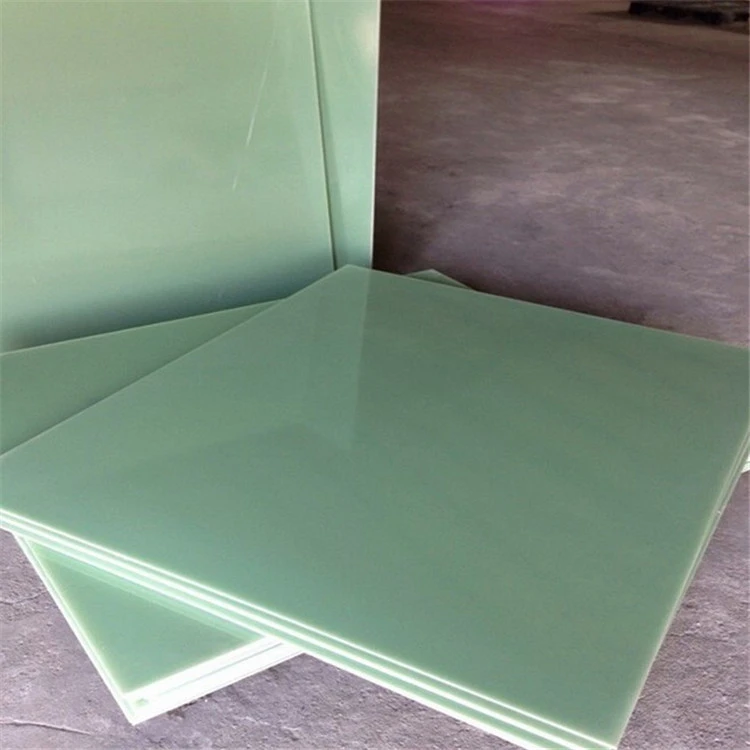
Criteria for Selecting the Optimal Glass Epoxy Sheet for CNC Machining
Assess Your Operating Environment First
Make a list of what your application needs before you give it a grade. G11 or FR5 should be used for temperatures over 150°C. If you need to put something outside or in a place with a lot of humidity, you need grades that don't soak up water easily. Most industrial chemicals won't hurt standard G10, and it won't break down when it comes into contact with acids or solvents.
Mechanical and Electrical Requirements
Parts that are CNC-made from a Glass Epoxy Sheet often have to carry both mechanical and electrical loads at the same time. When it comes to industrial machinery, the most important properties for structural spacers or gears are their tensile strength and resistance to impact. The tracking resistance and dielectric strength of a PCB show whether it is used as a support or an arc shield for power transfer. In order to avoid over-engineering and keep material costs low, it is important to match the grade to the most important performance need.
Balancing Cost Against Performance
Sheets of better materials, like FR5, cost more than sheets of regular G10. Choose the wrong grade, though, and the product might not work; you might have to file a warranty claim, or production might have to stop. All of these things cost a lot more. As you shop, you should think about the price per unit, the minimum order quantity, and the wait time for each seller. For large production runs of home goods or car parts, batch quality that stays the same is just as important as unit price.
Comparing Glass Epoxy Sheets with Alternative Materials for CNC Machined Parts
Engineers often look at a number of other materials and compare epoxy glass laminates to them before making a final choice. This is how the main options compare to the most important factors for people who want to buy a business:
- Phenolic cotton laminate (CE/LE grade): Lower cost and easier to machine than glass epoxy, but absorbs more moisture and loses mechanical strength above 120°C. Suitable for low-load mechanical spacers in dry, ambient environments—not recommended where dielectric stability is critical.
- Standard G10 / FR4 glass epoxy: The most widely used grade across PCB fabrication, electrical insulation panels, and switchgear components. FR4 adds UL94 V-0 flame retardancy. Dielectric strength of 500–800 V/mil makes it a reliable choice for most U.S. electronics and power applications.
- G11 / FR5 high-temperature glass epoxy: Retains mechanical and electrical properties up to 180°C. The preferred choice for transformer insulation, motor components, and automotive battery pack barriers where thermal cycling is severe.
- Carbon fiber laminate: Delivers a superior strength-to-weight ratio and suits aerospace structural parts, but conducts electricity—which disqualifies it from any electrical insulation role. It also costs significantly more than epoxy glass grades.
The film is CE/LE grade and made of phenolic cotton. It's easier to work with and costs less than glass epoxy, but it sticks together less well above 120°C and soaks up more water. It shouldn't be used in situations where dielectric stability is very important, but it can be used for dry, low-load mechanical spacers.
Procurement Best Practices for Glass Epoxy Sheets in Industrial Manufacturing
Verify Supplier Certifications Thoroughly
At the very least, you should be certified to ISO 9001. Every package that people in the US buy should have proof that it meets RoHS and UL standards. To be sure of the dielectric values, thickness tolerance, and flexural strength for each production batch, ask for mill test reports (MTRs). There is a risk in the supply chain if the provider won't give you written proof that can be verified.
Order Strategy: Custom Cutting and MOQ Planning
It's best for programs that make a lot of parts with stable shapes from a Glass Epoxy Sheet to buy sheets in bulk. Custom-cut sheets help keep track of supplies better during tests or low-volume runs and reduce the amount of material that is wasted. Check with the seller to make sure that the minimum order amounts are in line with how much you plan to make. This way, you won't run out of stock or have too much stock, which would slow down production.
Why J&Q's Supply Infrastructure Matters
For more than 20 years, J&Q has made and sold insulating laminates. For more than ten years, they have also sent their products directly to international markets. We have our own transportation business, so we can take care of the whole supply chain, from making the goods to delivering them. This cuts down on lead times and gets rid of the problems that come up when more than one party is involved in a freight arrangement. This service takes care of the whole process, so procurement teams only need to talk to one person about questions about quality, shipping schedules, and help after the sale.
Practical Tips and Common Pitfalls When Selecting Glass Epoxy Sheets
Don't Rely on Grade Name Alone
A lot of the time, "G10" and "FR4" mean the same thing. However, UL94 V-0 is a flame-retardant standard that only applies to FR4, not G10. You should always look at the full material data sheet instead of simply reading the labels. Getting the wrong grade is one of the most common mistakes people make when they buy parts for electronics production that can be avoided.
Test Samples Before Full Commitment
Procurement teams that have done this before always ask for sample sheets before placing large orders. Try out the samples the way you plan to make them. How smooth the surface is and how accurate the measurements are depend on the spinning speed, the coolant type, and the shape of the cut. When the right tools are used, epoxy glass laminates can be machined cleanly. However, the cutting results can be different from one supplier to the next because the material's density can vary.
Plan for Scalability
A lot of the time, material needs go up as a product line gets better. If you work with a provider from the start and agree on things like quality standards, wait times, and grades that are always in stock, you won't have to rush to find goods when you need them. By writing down the specs for the approved materials, it will be easier to do audits and find qualified sellers in the future.
Conclusion
Not just product details can help you choose the right type of Glass Epoxy Sheet. You need to compare the temperature, mechanical, and insulation needs of your application to real material data as well. FR4 is good for most PCB and switchgear uses, G11/FR5 is good for places with a lot of heat, and phenolic choices are only useful when moisture and heat don't matter. When picking the right material type, it's important to look at things like the supplier's certification, how consistent the amounts are, and how reliable the transportation is. If your team takes the time to think about all of these things, they will save a lot of money and time over the life of the product.
FAQ
What thickness ranges are available for CNC machined glass epoxy sheets?
Most commercial sheets are between 0.5 mm and 100 mm thick. CNC can be used to cut all of this range, but at the ends, the tools need to be set up differently. They can make the right thickness for you if they have fine pressing tools.
How does glass epoxy insulation compare to phenolic laminate electrically?
It is better for glass epoxy types than phenolic laminates when it comes to dielectric strength, resistance to moisture, and resistance to tracking. The dielectric breakdown voltages for FR4 are between 40 and 50 kV. The voltages for phenolic paper laminates are generally less than 20 kV, and they break down more quickly when they get wet.
Can sheets be custom-cut to specific part dimensions?
Yes. A waterjet, a CNC router, or a precision saw can be used by most qualified providers to cut to customer plans. For easy shapes, lead times can be as short as a few days. For close-tolerance profiles, they can be as long as two or three weeks.
Which grade is best for automotive battery pack barriers?
If you want the best insulation, choose G11 or FR5. They have a higher Tg (up to 180°C) and keep their strength even after being heated and cooled many times. If the temperature is low, FR4 might be enough, but just to be safe, automotive R&D teams usually ask for the higher-temperature grade.
Partner with J&Q for Your Glass Epoxy Sheet Supply
This is something that J&Q has known how to do for more than 20 years and uses on every order. We can be counted on to give you Glass Epoxy Sheet. We sell materials that are ISO-certified, do custom cutting, and handle shipping directly for buyers all over the United States. Our team is ready to help you whether you need regular FR4 panels or G11 panels that can handle high temperatures. We can be reached at info@jhd-material.com or jhd-material.com if you want to get samples or a project quote right away.
References
1. National Electrical Manufacturers Association (NEMA). NEMA LI 1: Industrial Laminating Thermosetting Products. NEMA, 2020.
2. IEC. IEC 60893: Insulating Materials – Industrial Rigid Laminated Sheets Based on Thermosetting Resins. International Electrotechnical Commission, 2019.
3. UL. UL 94: Standard for Tests for Flammability of Plastic Materials for Parts in Devices and Appliances. Underwriters Laboratories, 2018.
4. ASTM International. ASTM D709: Standard Specification for Laminated Thermosetting Materials. ASTM International, 2021.
5. Mohan, R. Printed Circuit Board Materials Handbook. McGraw-Hill, 1997.
6. Blythe, A.R., & Bloor, D. Electrical Properties of Polymers. Cambridge University Press, 2005.