Phenolic Cotton Board for CNC Fixtures and Precision Jigs
2026-10-30 17:28:07
Phenolic cotton board is machinable and performs well with CNC tools and precision jigs. Epoxy resin and knitted cotton cloth make it up. They keep its shape, cover the edges, and let a CNC machine cut it cleanly. Making small to medium amounts of finder plates, clamping pads, soft jaws, and inspection nests is easy to do with this machine. This guide talks about grades, specs, how to buy materials, how they work when they are machined, and how to compare them. For more than 20 years, J&Q has sold these sheets. Before they place an order, people in the US should look for these things.
Why Phenolic Cotton Board Fits CNC Fixtures and Precision Jigs?
What Phenolic Cotton Board Is?
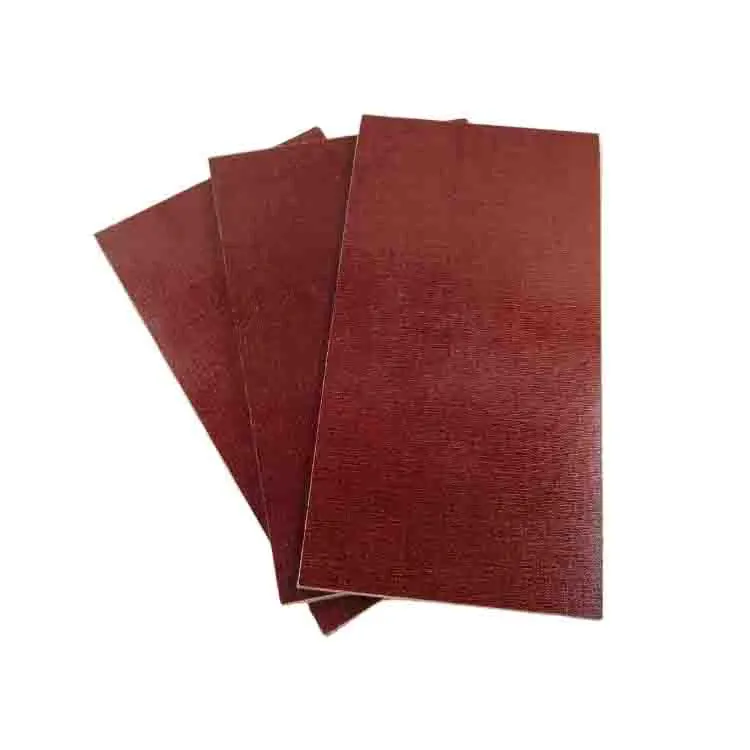
This thermoset stuff is made from phenolic cotton board. Things that are hot and heavy are used to stack and press cotton cloth that is full. The phenolic resin is then poured on top of it. People who make the sheet cut it, finish it, and check it once it's dry. It's tough and easy to work with because it's made of cotton. It stays stiff and strong in hot weather because of the resin. "Phenolic cotton cloth board" may also come up. A grade of PF CC is given by IEC, and a grade of canvas or linen is given by NEMA. Before placing an order, people who want to buy something should always make sure they know the exact grade, thickness limit, moisture performance, and standard numbers. This is because not every grade is the same.
Benefits for Fixtures and Jigs
What the fixture is made of determines how well it holds the workpiece, keeps it safe, and works again and again. Phenolic cotton board is a good option because it's affordable, strong, simple to work with, and doesn't let electricity flow through it. Because the surfaces don't feel as hard as steel, they are less likely to scratch parts that are painted, coated, or polished. If the holes and dowel tips are marked properly, you can always put each piece together in the same way. The board might also keep parts away from tools and metal buildings, depending on the grade. As a prototype, small run, or OEM tool made just for you, it might cost less than metal or advanced laminates.
Grades 3025 and 3026
Two grades come up a lot when I talk to people. Fine-weave cotton cloth that weighs less than 130 g/m² is used for both IEC PFCC202 and NEMA Grade LE. This is also what Grade 3025 does. If you grind it, you can make the end smooth. For small teeth, threads, and full pockets, this method works well. Cloth with a coarse weave is used for grade 3026. It costs less and can hold a lot of weight, but it makes the surface harder after it's been worn down. When someone asks me about precise jigs with tight parts, I always tell them to look at 3025. For heavy base plates and gaps, 3026 is a good choice if the finish doesn't matter too much.
Phenolic Cotton Board Specifications and CNC Machining Behavior
Key Specifications to Request
To begin, check out the length, width, sheet size, and how flat the sheet is. Then ask about the parts that are warm and cold. In most datasheets, the specific gravity is given as 1.35 to 1.45 g/cm³. In a flat direction, this Grade C board can take at least 8.8 kJ/m³ of force and can usually bend more than 100 MPa. Grade CE says that it absorbs less than 1.6% water and has an oil dielectric strength of about 5.5 kV/mm because it is 1.5 mm thick. The board is rated Class E for temperatures up to 120°C. The plastic can turn into carbon if it stays that hot for a long time. Standards, like ASTM D709 and IS 2046, tell us how to carry out tests. Always check them against the batch description.
How do the Board Machines work?
Sharp tungsten carbide tools can be used to cut, drill, route, and turn phenolic cotton board. Most people don't realise how quickly tools wear out. This is because cotton is soft and resin is rough. To keep the edges from coming apart, it's best to use high cutting speeds and low feed rates. To keep holes straight and prevent them from coming apart, practise drilling and use a strong backing board. It's important that the plate doesn't bend, so make sure the pressure is just right and that any thin parts are well supported. When sawing, pressing, or cutting, phenolic cotton board is less likely to come apart than glass-epoxy board. Because of this, you can set stricter rules. Run a test part first for plans that need to be just right.
Dust Control and Inspection
Sharp tungsten carbide tools can be used to cut, drill, route, and turn phenolic cotton board. Most people don't realise how quickly tools wear out. This is because cotton is soft and resin is rough. To keep the edges from coming apart, it's best to use high cutting speeds and low feed rates. To keep holes straight and prevent them from coming apart, practise drilling and use a strong backing board. It's important that the plate doesn't bend, so make sure the pressure is just right and that any thin parts are well supported. When sawing, pressing, or cutting, phenolic cotton board is less likely to come apart than glass-epoxy board. Because of this, you can set stricter rules. Run a test part first for plans that need to be just right.
Phenolic Cotton Board Compared with Other Fixture Materials
Versus Phenolic Paper Board
Instead of being made of fabric, paper-based phenolic is made up of layers of paper. Polyvinyl cotton board is less likely to chip, shake, and break when clamped over and over again because the cotton cloth holds the tension force. That's important for thin ribs, screw holes, and edges that get hit when the part is loaded. Even though it doesn't get hit very often, paperboard can still be used for light-duty spacers and flat insulating barriers. I think you should protect your device with cotton in case it gets dropped, shaken, or worn out. You shouldn't buy something just because it has a name. You should also read the summary. The way each grade and maker works is different.
Versus Fiberglass and Epoxy Laminate
When the air is wet, FR4 and 3240 resin boards may be stiffer, hold less water, and conduct electricity better. Some people can do hard building work in hot places. But cutting tools get worn out faster, and you have to clean up more dust. It's possible that these boards cost more too. For making tools, phenolic cotton board is usually less expensive and easy to work with. When I need something to be very hard, wet, or electrically charged, I always use epoxy glass. PVC cotton board is what I choose when price, ease of cutting, and toughness are more important.
Versus Nylon
Polyester is strong and easy to slide, so it is often used for wear parts and guides. You can also soak it in water, which can change its size, which is a problem for precision jigs with holes that are close together. To find parts, phenolic cotton board is better because its surface is harder and more rigid. It can also handle water, mineral oils, and weak acids. But strong acids can hurt it. You should think about how much it costs, how stiff it is, how much it wears, the temperature, how well it insulates, how much water it holds, and the tolerances before making a choice. Based on what it does well and what it could do better, choose the right material for the role.
Applications of Phenolic Cotton Board Across Industries
CNC and Inspection Tooling
Phenolic cotton board is used to make support blocks, drill guides, assembly templates, and inspection nests in machine shops. It's also used to make support blocks, binding pads, and soft jaws. The touch sides protect the finished pieces, and the board can be cut into any form without any special tools. Because of this, it's good for making samples, small amounts of goods, and tools for automating things. It's also used for OEM projects and tools that support aircraft that need a connection that isn't made of metal. We can talk about the right grades and sizes if you send us your models or 3D files.
Electrical, Electronics, and Power Uses
On top of that, it's used to make switching panels, coil supports, junction plates, and building supports for transformers. Grade 3025 can be used in places with mineral oil and average electrical strength, but the building has to be strong. Production teams also use it to make tools for putting together insulation and circuitry. Make sure that the grade gives you the right amount of heat and power. Let us know right away if your project needs UL and RoHS paperwork or grades for flame safety. We can look it over first before setting a price.
Machinery, Automotive, and Appliance Uses
Heavy machinery makers cut this stuff to make timing gears and reduction gears for clothes and car gear. Without these gears, metal gears can't grind against each other. The board is used as a bearing material in steel mills and on the shafts of ships' propellers. It works whether it's dry or wet, and it can hold heavy things that are pressed down. Guide parts, wear pads, and gears all do the same thing. The people who make appliances also use phenolic cotton board to make motor brackets and frames for protection. Before you build up, make sure you know the wide limit and batch accuracy in case any of these things happen.
How to Select and Buy Phenolic Cotton Board?
Choosing Grade and Thickness
First, check out the level of humidity, temperature, chemicals, oils, coolants, and electricity in the place where you work. The next step is to figure out how heavy the thing is, how long it will be hung, how hard it will hit, and how much it can move. You can measure load in more than just 3 mm, 5 mm, and 10 mm thicknesses. First, choose the right mechanical, electrical, or fine-weave grade. Next, use a datasheet and a sample to check your work. Your model should have numbers, a smooth surface, a finish, an edge state, and limits written down. You should order blanks that are too big so that you have room to cut them down when you get to working on the CNC.
Pricing, Custom Orders, and Supplier Evaluation
Price is based on grade, thickness, sheet size, tolerance, surface finish, quantity, testing, packaging, goods, duties, and terms of delivery. People who want to buy something should not only look at the price per unit. In a good RFQ, there should be details about the size, annual demand, use, destination, Incoterms, certificates needed, and drawings. When you look at a provider, you should think about how they handle quality control, testing, paperwork, shipping, and how stable they are when you keep ordering from them. For more than 20 years, J&Q has made and sold soundproofing sheets. For more than 10 years, they've done business with other countries. The fact that we also ship things means that we can help you choose sheets and ship them all in one place.
Common Mistakes and Validation Before Production
Often, when people buy something, they only think about the width and not the weight, the length, or the shaking. Some people think that phenolic cotton board, paper, fibreglass, and epoxy laminates are all the same, or they make general comments instead of using proven datasheets. People also forget to think about things like moisture, thermal expansion, chemical exposure, and hole alignment a lot of the time. Instead, make a copy of the plan and make sure the holes are lined up right and the edges are smooth. Next, check to see how well it lasts, how it wears, and how it handles heat. Before you order a lot of them, you should accept the first one that fits the controlled drawing and inspection plan.
Conclusion
Phenolic cotton board is suitable for CNC clamps and precision jigs because it is strong, simple to work with, insulating, and won't damage finished parts when it touches them. For small things, grade 3025 bits and pieces are used. Grade 3026 bits for big parts that are likely to get hit are used. It's best to look at something's datasheet before you use it. This will tell you about its specific gravity (1.35 to 1.45 g/cm³), Class E rating (120°C), and how it responds to water. If you compare phenolic cotton board to paper board, fibreglass, epoxy, and nylon, it is the most cost-effective, toughest, and easiest to work with. To choose which one to use, look at the load, spread, environment, and tolerance. Before a lot of them are made, the product should work well. As an example, a first-article check and source paperwork can all be used to do this.
FAQ
Is phenolic cotton board suitable for CNC machining?
Yes, the best diamond tools are those that are very sharp, cut quickly, have low feed rates, test holes, and pull in dust.
How do I choose thickness for a jig?
You should choose the base's width based on how much weight the part has, how long it can be suspended, and how much it can move. Start with 3 mm, 5 mm, or 10 mm. Use a prototype to be sure.
Is phenolic cotton board better than fiberglass?
Not all the time. It is easier to work with phenolic cotton board, and it costs less than fibreglass most of the time. Glass fibre is stronger and doesn't soak up water as much. A lot of things play a role, such as cost, load, weather, wetness, wear, and so on.
Can J&Q supply custom sizes?
Yes. We will send you a price based on the drawings you send us, along with the grade, thickness, size, use, number, and where the goods are going.
Request a Phenolic Cotton Board Quote from J&Q
J&Q has produced and sold insulating sheets for more than 20 years and has exported for over 10 years. As a phenolic cotton board supplier with its own logistics company, we handle material selection, custom cutting, and delivery in one service. Send your grade, thickness, dimensions, application, quantity, and destination to info@jhd-material.com, and visit jhd-material.com for details. I will help you match the right phenolic cotton board to your fixture.
References
1. NEMA LI 1 Industrial Laminated Thermosetting Products, National Electrical Manufacturers Association, 1998
2. ASTM D709 Standard Specification for Laminated Thermosetting Materials, ASTM International, 2017
3. ASTM D229 Standard Test Methods for Rigid Sheet and Plate Materials Used for Electrical Insulation, ASTM International, 2019
4. IEC 60893-1 Insulating Materials: Industrial Rigid Laminated Sheets Based on Thermosetting Resins for Electrical Purposes, International Electrotechnical Commission, 2004
5. Handbook of Thermoset Plastics, William Andrew Publishing, 2014
6. Machinery's Handbook, Industrial Press, 2020