Phenolic Paper Laminates: 5 Specs to Check Before Bulk Ordering
2026-10-30 17:28:04
The five specs to check before bulk ordering phenolic paper laminates are material grade and resin system, electrical insulation performance, temperature resistance, mechanical strength with machinability, and moisture and chemical resistance. A sample that looks good on a desk can still fail on a production line if resin distribution, thickness, or moisture uptake changes from batch to batch. At J&Q, we have supplied insulating sheets for more than 20 years. We see the same pattern: buyers who confirm these five points in writing avoid most rework, scrap, and late shipments. This guide covers each spec in plain terms.
Five Specs to Verify on Phenolic Paper Laminates
When you buy tools, parts, motors, switches, or motors, you should always check these five things. Any of them will give you a test method or paper.
Spec One: Material Grade and Resin System
In general, the grade tells you how well phenolic paper laminates will do their job. Based on the NEMA LI 1, Grade X is for mechanical strength, Grade XX is for general electrical use, and Grade XXX is the best because it has more resin and doesn't get wet. In IEC 60893, the PF CP number is used for paper sheets that are similar to phenolic sheets.
You can only get from one class to another this way. A Grade X sheet could leak current that a Grade XXX sheet would handle if the hardware box is wet. Ask for the technical data sheet, the standard that was used, proof that the product meets the standards, and the records of the most recent batch check. So, make sure you like a sample that was made the same way as your big order. In some places, "Bakelite sheet" can mean different things. Also, see if it can be milled, drilled, and used for CNC work.
Spec Two: Electrical Insulation Performance
The test settings are more important than the product number. In short-term tests done on the laminates, some paper-based phenolic sheets have a dielectric strength of 500 to 700 V/mil. For each grade and thickness, the value is different.
What did the service company do that was in line with ASTM D149? Was the test done in air or oil? Was it going straight or curved? Check out these things along with the tracking behavior, arc resistance, volume, and surface resistivity. Things like water, weather, and pollution can change how things turn out. I believe you should test prototypes of the terminal boards, transformer supports, and coil formers after they have been cut out and put together. Use the power and humidity that the part will be put to use with.
Spec Three: Temperature Resistance and Thermal Stability
Keep the temperature for long-term contact and the temperature for work that needs to be done right away separate. There are a lot of thermal Class E phenolic types made from paper. This means they can handle heat up to 120°C. Some grades can handle a little more heat, up to 130°C for a short time. The picture only shows the sheet, not the person as a whole.
It is a good idea to add heat from things like friction, electrical load, nearby parts, and thermal cycling. Plastic can become soft and break easily if it gets too hot. It can also change its shape, color, and level of protection. Find out about changes in size and thermal aging. Find out what the exact UL 94 rating is for your item to make sure it is safe around fire. Machines that keep the temperature low can use standard sheets. If the motor, heater, or other part gets very hot, you might want to use epoxy glass resin instead.
Spec Four: Mechanical Strength, Machinability, and Dimensional Stability
You should look at how well it bends, pushes, and hits, as well as how strong it is and how well it holds up against wear. A simple way to find out how much something bends is to use ASTM D790. Second, look at how easy it is to make. The prices of all the parts will change because of this.
When it comes to cutting, phenolic paper laminates are better than glass fiber sheets, and the tools tend to last longer. To keep thick sheets from breaking, they are often heated to 80°C to 120°C before they are punched. On the buy order, write down the accepted ranges for length, width, thickness, being flat, square, and having good edges. Tolerances may need to be close to ±0.05 mm when used for precise jobs like making PCB backup boards. Find out what your source can handle by talking to them. Use your own tools to look at a sample and see if it cracks, chips, delaminates, holes, bends, or isn't straight.
Spec Five: Chemical Resistance, Moisture Absorption, and Environmental Durability
How well the resin fills the paper is shown by how much water it soaks up. Most of the time, ASTM D570 is used. About 4% of the time for Grade X and less than 1.3% of the time for Grade XXX at 0.062 inches thick. Some parts will soak up more water if they don't have enough resin. This could weaken the insulation, make it grow, and make it easier for the surface to move.
Choose whether the part will work inside a case, in mineral oil, or in a place that is wet, dirty, or full of solvents. Phenolic paper laminates perform well inside and outside of transformers that are full of oil. The weather and UV light make it chalk and crack, so I don't think it should be used outside. Polyester epoxy is better for places that will get a lot of water or chemicals.
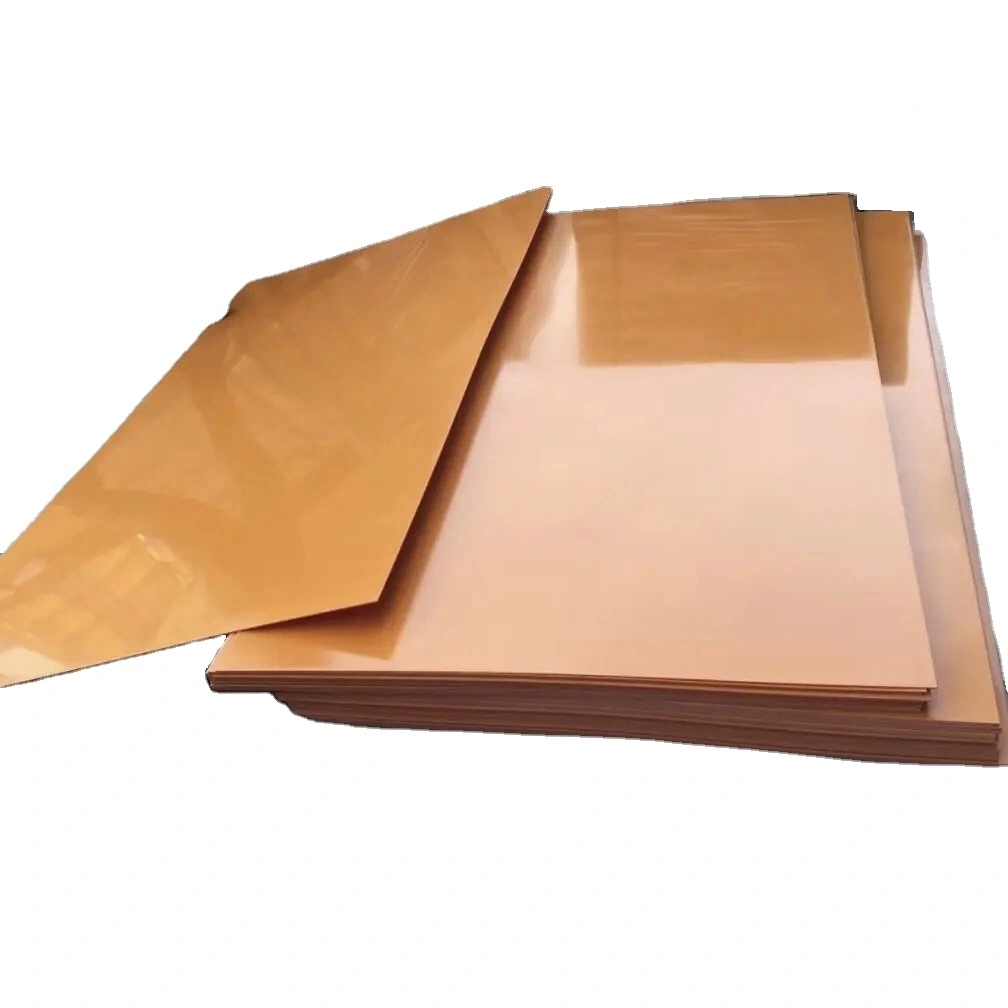
Compare Phenolic Paper Laminates With Other Insulation Materials
You shouldn't just choose a material based on its brand name or sheet price. Also, think about what the job calls for. You decide when to use phenolic paper laminates and when not to.
Phenolic Paper vs. Epoxy Glass (FR4 and 3240)
It is better to keep water out with epoxy glass laminates like FR4 and 3240 epoxy boards because they are stronger and more stable at high temperatures. Because they have glass fibers in them, they cost more, and cutting tools break down more quickly. Between thin insulation paper and glass-epoxy sheet, phenolic paper laminates are in the middle. They're good at stopping electricity flow and are simple to work with, which makes them good for low-voltage parts that need to be cheap. Epoxy glass is better if the part gets hot, stays wet all the time, or has a lot of weight on it. Phenolic paper laminates are often the best choice if you need to make a lot of punched shapes quickly and cheaply.
Phenolic Paper vs. Phenolic Cotton
Not paper is used for support when phenolic cotton is being made. People often sell this cotton as canvas or linen grade. It is stronger and less likely to break when hit, so machine builders use it to make gears, bushings, and wear parts. Phenolic paper laminates have a smoother surface and better energy flow through them. This makes it work better with insulation washers, terminal boards, and electrical supports. I believe you should talk about the load first in order to make a picture that is strong and safe from shock. This answer is correct if the design is meant to make electricity stronger or stop it from getting through.
Matching Material to Your Industry
Phenolic paper laminates are used for many things by companies that make computer and electrical parts. It is used for barrier boards, PCB cutting entry and backup boards, and terminal boards. Power is bought by people who use it to make oil tap switch parts and keep transformers running. It is used to make motor clamps, brush handles, and insulation frames, among other machine parts. When making auto parts, battery barriers and fixtures are often made of FR4 or phenolic grades because they can handle more heat. Phenolic paper laminates are used to insulate machinery, and phenolic cotton is used for parts that need to hold their own weight. To make these decisions fairer, a simple comparison grid is used. It shows how much it costs, how strong it is, how well it insulates, how well it resists water, and how easy it is to machine.
How to Evaluate a Supplier Before You Order?
It doesn't matter how good the data sheet is if the plant can't do the same thing again. Just as the specs protect your production plan, so do checks with the service.
Confirm Who Makes the Sheets
Ask the company for phenolic paper laminates if it is a factory, a manufacturer, an exporter, a distributor, or just a middleman in a trade deal. Each model can work, but they all find different answers to scientific questions. Find out more about how to manage the pouring of the resin, pressing it while it's still hot, cutting, and final inspection. Someone in the company knows why a batch changed and how to fix it. You can also find out about options for milling, drilling, private marking, cutting to size, and CNC turning. Make sure that these skills are written down before you sign off on a sample. This will make the big order the same as the small one.
Review Documents and Traceability
It's easy to find and fix a quality problem. You should get a batch number, a certificate of conformity, and test reports for dielectric strength and water absorption every time something is shipped. If a customer from the U.S. asks for RoHS or UL paperwork, make sure they know which grades it meets. Also, find out what the provider does when they don't meet requirements. It should say how to report issues, get new ones, and how long that takes. Copy one part of the first piece that was accepted and keep it. Look at the color, width, flatness, and condition of the edges of each new batch and compare them to the old ones.
Check Capacity, Lead Time, and Logistics
You can get samples, but that doesn't mean the bulk capacity is stable. Write down the minimum order quantity (MOQ), the number of items that can be bought more than once, the lead time, and the ways that you will support planned releases. Prices and shipping times can also change. It's been a long time since J&Q did business with both countries, and it's been more than 10 years since they did business with another country. We also have our own shipping business, so the work can be checked, packed, and sent by one group. Thus, if you need to ask something about your gift, you will only need to talk to one person instead of several sellers.
Bulk-Ordering Process, Mistakes, and Checklist
A set process helps us turn the five specs into a purchase order that works for both of us. Don't make the same mistakes before you sign. Take the time to read the list and follow the steps.
Steps From Requirement to Purchase Order
To begin, write down the part's voltage, temperature, humidity, chemical exposure, mechanical load, expected service life, and what it does. Next, make a list of the standards, the tolerances, the grade, the size, the type of surface, the packaging, and the labels. To compare prices fairly, it's best to get quotes from suppliers that list the prices of materials, processing, packing, freight, and tax. Before samples are accepted, they should be checked for their look, size, electrical, heat, mechanical parts, and the environment. Then, write your first article with the help of a model one. Also, make sure that the purchase order has all the checks for the new batch, as well as all the requirements that have been approved and the inspection documents.
Common Mistakes to Avoid
If you just hear the word "Bakelite," that could mean a lot of different phenolic structures. But people often choose one just because it has that name. Some people compare dielectric values without checking the test conditions or things like chemical contact and dampness. Some only say how wide they are and not how flat, square, or good the edges are. Cutting costs on phenolic paper laminates sheets can also cause issues in the field, broken tools, and waste. There are not as many of these risks if you ask for all the technical information, compare tests that are the same, accept samples that are typical, and write down the rules for review. Before you ship the first item, make sure you know the MOQ, capacity, lead time, and replacement terms.
Final Specification Checklist
Before you sign off on an order, make sure that engineering and procurement agree on each item below:
- Type, glue system, use, and conditions for operation
- The way things move, how they carry electricity, and what happens when they get wet
- Dimensions, tolerances, standards, and inspection methods
- Things that need to be looked at are the supplier's state, batch papers, sample approval, minimum order number (MOQ), wait time, packing, and how to handle problems that don't meet standards.
To find the total cost of landing, start with the performance that is needed, then move on to the steady supply, and finally the total cost. It's not a good idea to choose a cheaper grade if it leads to more waste when cutting, changes in output, or the chance of electricity or heat failure.
Conclusion
People who buy a lot of phenolic paper laminates need to look at five things: the grade and glue system, how well it resists poisons and water, how well it can handle high temperatures, and how well it stops electricity from moving through it. Each NEMA type X, XX, and XXX has a different amount of resin and can handle humidity in a different way, so it is best for a different purpose. Test results like ASTM D149, D570, and D790 will be the same if everything else stays the same. It's not about price or brand name when you put epoxy glass and phenolic cotton next to each other. What matters is the heat, the load, and the environment. When it comes to logistics, capacity, production control, and tracking, supplier checks serve the same purpose. When there is a clear purchase order based on approved samples, there is less waste, delay, and trouble in the field.
FAQ
What is the difference between NEMA Grades X, XX, and XXX?
Grade X is good when it comes to strength. Grade XX energy can be used for most things. It keeps water out and moves energy through best because Grade XXX has the most resin.
Can phenolic paper laminates be used outdoors?
Most of the time, no. The weather and UV light can damage and crack it. These sheets can be used inside, in a sealed space, or where there is a lot of oil.
Is a Bakelite sheet the same as phenolic paper laminates?
Not all the time. "Bakelite sheet" can refer to a number of different phenolic materials, such as cotton and paper supports. Before you fill in, make sure you know the grade and the extra help.
What should I send when I request a quote?
Send the grade or purpose, the sheet size, the thickness, the bounds, the amount, the place where the goods are going, and when they need to get there. This report should have information about power, temperature, humidity, chemical exposure, drawings, and any ASTM, UL, or customer standards.
Request Phenolic Paper Laminates Specs Review and a Quote From J&Q
J&Q supplies phenolic paper laminates backed by more than 20 years in insulating sheets and over 10 years in foreign trade. Our own logistics company allows one-stop service from production to delivery. If you want a phenolic paper laminates supplier who reviews your grade, tolerances, and test needs before you commit, send your drawings and quantities to info@jhd-material.com or visit jhd-material.com.
References
1. NEMA LI 1 Industrial Laminated Thermosetting Products, 1998
2. ASTM D149 Standard Test Method for Dielectric Breakdown Voltage and Dielectric Strength of Solid Electrical Insulating Materials at Commercial Power Frequencies, 2020
3. ASTM D570 Standard Test Method for Water Absorption of Plastics, 2022
4. ASTM D790 Standard Test Methods for Flexural Properties of Unreinforced and Reinforced Plastics and Electrical Insulating Materials, 2017
5. IEC 60893-1 Insulating Materials – Industrial Rigid Laminated Sheets Based on Thermosetting Resins for Electrical Purposes, 2004
6. UL 94 Standard for Tests for Flammability of Plastic Materials for Parts in Devices and Appliances, 2013