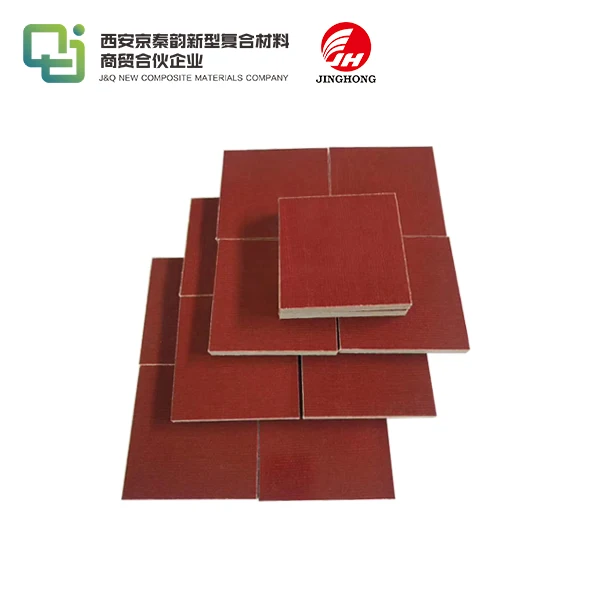
Phenolic Cotton Cloth Board for Mechanical Insulation in Transformers and Electrical Equipment
2026-10-10 16:59:35
If you work in transformer manufacturing, electrical equipment production, or industrial machinery, you already know that insulation material selection directly affects equipment lifespan and operational safety. Phenolic cotton cloth board — a composite laminate made from cotton fabric impregnated with phenolic resin — has earned consistent trust across these industries for decades. Its balance of mechanical toughness, dielectric strength, and CNC machinability makes it a go-to choice for engineers who cannot afford insulation failure in the field.
Understanding Phenolic Cotton Cloth Board: Properties and Manufacturing
What Is It Made Of?
To make this material, layers of knitted cotton cloth are soaked in phenolic resin, and then the whole thing is cured at high temperatures and controlled pressures. This makes a thermosetting laminate that weighs between 1.35 and 1.45 grams per cubic centimeter. The braided cotton base gives it real impact protection without breaking easily, which is something that paper-based phenolics can't do.
Key Physical and Electrical Properties
The board has a flexural strength of more than 100 MPa and is technically classified as PF CC 201 under IEC standards or NEMA Grade C/CE. Grade CE (Canvas Electric) has a dielectric strength of about 5.5 kV/mm in oil and less than 1.6% moisture absorption at 1.5 mm thickness. Charpy has an impact strength of at least 8.8 kJ/m². It can be used for medium-voltage insulation and load-bearing mechanical uses, as shown by these numbers.
Quality Standards and Certifications
The ways things are made are in line with IS 2046 and ASTM D709 standards. Our line of products has been certified by UL (No. E310670) and also meets the requirements for RoHS and REACH. Before a material can be used in production, engineering managers and procurement teams have to make sure it meets regulatory requirements. This is where these certifications come in.
Why Choose Phenolic Cotton Cloth Board for Mechanical Insulation in Transformers?
Performance Under Electrical Stress
Materials that stay in shape and don't lose their dielectric integrity at high temperatures are needed for transformer coil insulation, arc barriers, and slot wedges. Cotton-phenolic laminates keep their electrical properties fixed over Class B temperature ranges. This makes them perfect for use in constant-temperature distribution transformers and medium-voltage relays.
Mechanical Advantages Over Competing Materials
Cotton-phenolic laminates don't crack when they are hit by vibrations or mechanical shocks like mica or laminated paper boards do. This means that there will be fewer field failures and less maintenance for motor slot wedges and mechanical spacers. Manufacturers of transformers consistently report that mechanical insulation failures cause a lot of unplanned downtime. Choosing the right laminate material greatly lowers this risk.
Real-World Application Evidence
Major electrical equipment builders all over the United States use Phenolic Cotton Cloth Board cotton-phenolic boards for bearing parts, gears, and structural insulators. Three reasons why this material keeps replacing metal bearings in harsh environments are that it is quiet, doesn't need much lubrication in areas where it rubs against things, and machines precisely.
Comparing Phenolic Cotton Cloth Board with Alternative Materials: A B2B Decision-Making Guide
Material-by-Material Comparison
Before deciding on a material, procurement workers usually look at a number of different choices. In this case, cotton-phenolic laminates do not measure up:
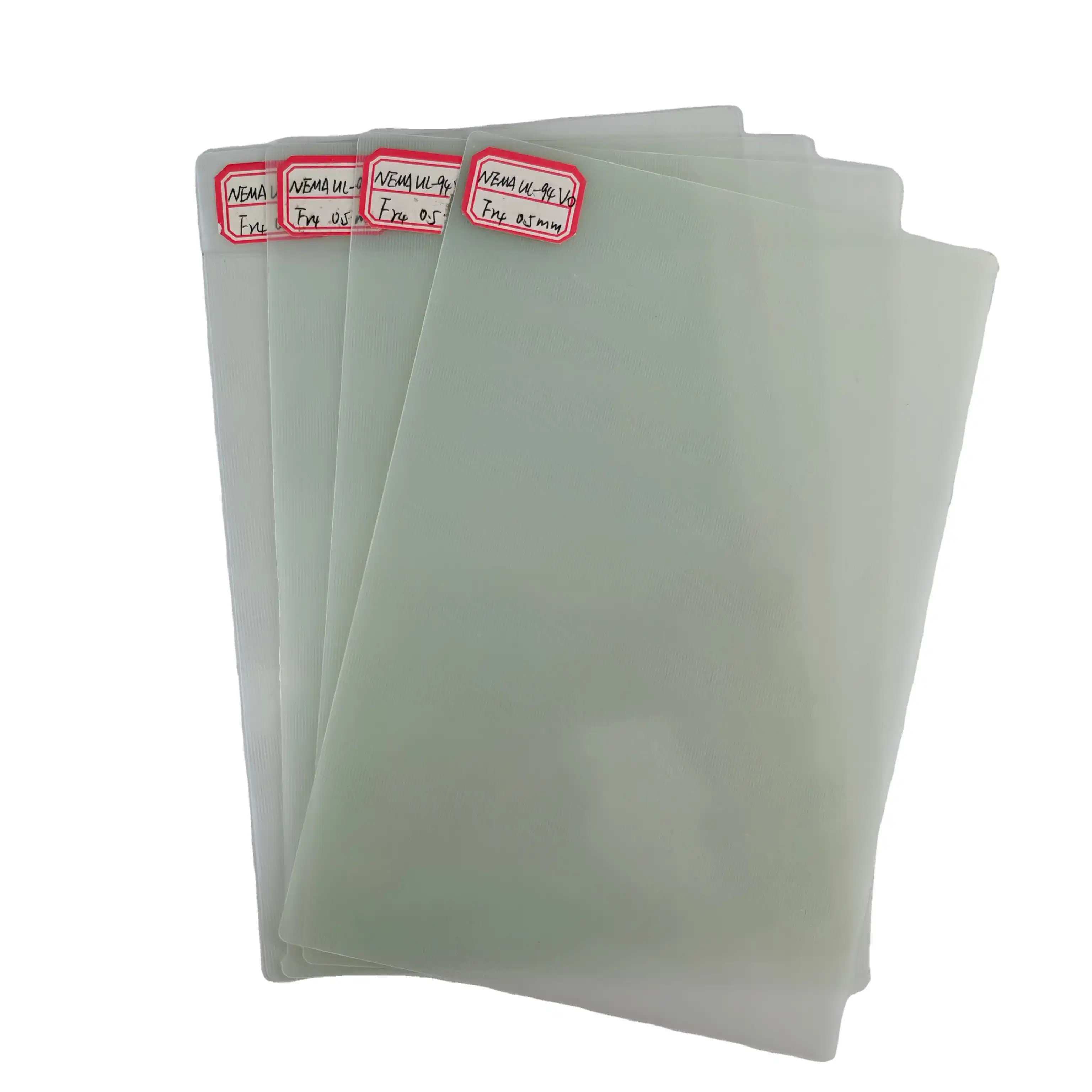
- vs. Fiberglass/FR4: FR4 offers superior dielectric properties at high frequency but is brittle under mechanical shock. Cotton-phenolic boards machine more cleanly, reducing tool wear and delamination risk during CNC operations.
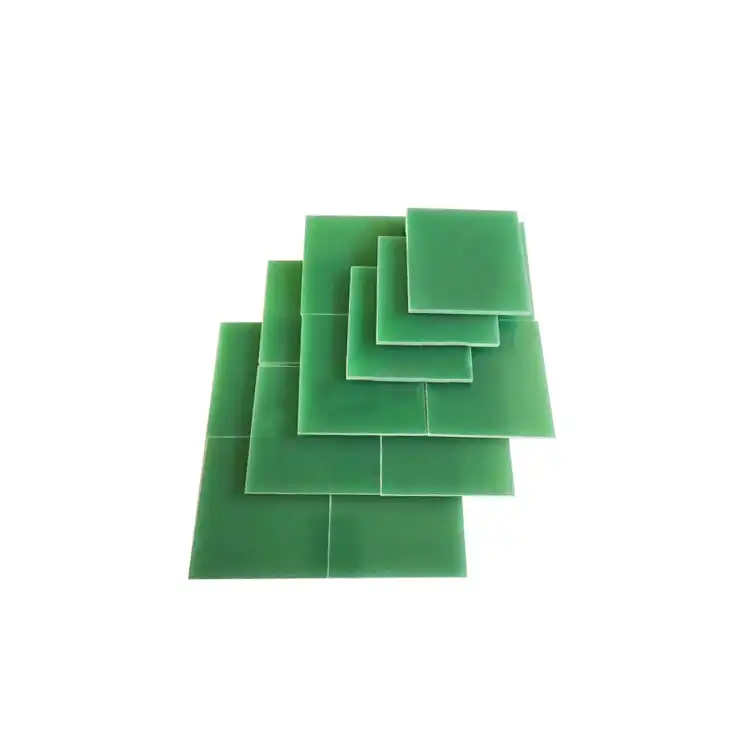
- vs. Epoxy glass laminates: Epoxy boards perform better in high-humidity environments, but cotton-phenolic grades offer better impact resistance and are more cost-effective for purely mechanical insulation roles such as gears, spacers, and rollers.
- vs. Mica boards: Mica delivers exceptional thermal resistance but is fragile under bending loads. Cotton-phenolic boards handle structural loads far better, making them preferable for transformer clamping structures and mechanical brackets.
Each material has its place, but cotton-phenolic always has the better overall profile for uses that need both mechanical load-bearing and moderate electrical insulation.
Thickness, Tolerance, and Customization
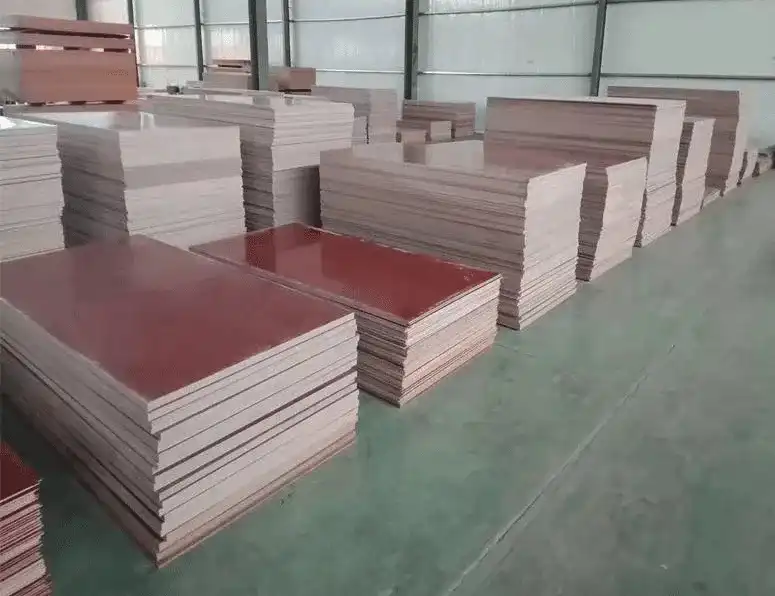
Standard sheet thicknesses are between 0.5 mm and 100 mm, and our production follows ASTM D709, which says that dimensions must be kept very close to each other. To meet OEM assembly needs, buyers can ask for custom sheet widths, precision-machined parts, or certain thickness combinations. It is very important to have accurate thickness tolerances when cutting gears and making bearings, because differences in size can cause wear and shaking.
Supplier Selection Criteria
When looking at providers, the most important things to look for are proof of UL/RoHS approval, proven CNC machining capabilities, MOQ flexibility, and supply chain openness. When it comes to predicting lead times, suppliers with in-house logistics have a clear advantage. This is something that directly affects the production schedules of large buyers.
Procurement Insights: How to Buy Phenolic Cotton Cloth Board Efficiently?
Specifying Your Technical Requirements
When you place an order, be sure to be clear about the grade of Phenolic Cotton Cloth Board you need (C for mechanical applications and CE for electrical ones), the sheet size, the thickness tolerance, and any additional machining that you need. When buyers set these guidelines up front, they avoid expensive back-and-forth and cut wait times by a large amount.
Bulk Purchasing and OEM Options
When you buy in bulk, you can usually get better unit prices and more flexible schedules for production. OEM clients who need branded or custom-sized parts should work directly with makers who have their own production sites instead of trading companies that add extra costs without adding any technical value.
Lead Times and Logistics
Standard sheet sales usually ship between 7 and 15 business days, but this depends on how many you order and how much you customize them. International buyers can be more sure of when their goods will arrive if they work with a supplier that also handles the logistics. We handle our own shipping and freight, so there is only one person to talk to from the time an order is confirmed until it is delivered. There are no gaps in communication between the office and handling parties.
Ensuring Long-Term Value: Maintenance, Durability, and Future Trends
Handling and Storage Best Practices
Keep sheets flat in a dry place out of direct sunlight and away from solvents. Strong alkalis can break down the phenolic resin core over time, so don't leave it exposed to them for long periods of time. To keep the surface from splintering during installation, use sharp tools and slow cutting speeds.
Common Degradation Modes and Prevention
The two main ways that something breaks down are thermal fatigue from repeated cycles of high and low temperatures and chemical wear from being exposed to oil or solvents. If you choose Grade CE for oil-filled areas, it will absorb a lot less water and resist chemical attack much better. Checking insulation parts in areas with a lot of vibrations on a regular basis lets problems be found early, before they cause the structure to fail.
Evolving Standards and Sustainability
The business world is moving toward stricter environmental rules. Because our material already meets the standards for RoHS and REACH, buyers don't have to move suppliers when new regulations come out. Phenolic cotton laminates are also easier to recycle than some options that are reinforced with glass. This is in line with the goals for sustainable purchasing that are now common in large corporate supply chains.
Conclusion
In the production of transformers, switchgear, industrial machinery, and power distribution systems, Phenolic Cotton Cloth Board has demonstrated its dependability. Its toughness, stable dielectric performance, and exact machinability solve the real problems that procurement teams face when they have to choose insulation materials for tough settings. Picking the right grade (C for structural and mechanical uses, CE for electrical insulation in oil environments) and working with a qualified, experienced maker cuts down on technical risk and overall cost by a large amount. For business-to-business buyers who care about stable supplies, clear quality standards, and quick expert help, this material and a skilled supplier work well together.
FAQ
What is the operating temperature range for this material?
Up to Class B (130°C) continuous working temperatures, standard phenolic cotton cloth laminates work consistently. Within this range, Grade CE boards keep their dielectric and mechanical qualities, so they can be used for most transformer and motor insulation tasks in normal settings.
Can I order custom thicknesses and sizes?
Yes. We offer sheets with thicknesses ranging from 0.5 mm to 100 mm, and we can make sheets to any size to meet the needs of an OEM or project. On request, machined parts like gears, spacers, and bearing covers are available, and tight dimensional standards are kept throughout production.
How does cotton-phenolic compare to fiberglass on chemical resistance?
Mineral oils and organic solvents don't stick to either material very well. However, cotton-phenolic laminates work better in weakly acidic environments, while fiberglass boards work better in alkaline ones. When it comes to transformer oil environments, Grade CE cotton-phenolic provides great resistance and is also easier to machine.
Request a Quote from J&Q — Trusted Phenolic Cotton Cloth Board Supplier
J&Q has been making insulating sheets for more than 20 years and has been selling them directly to people all over the United States for more than 10 years. We are a real company that makes Phenolic Cotton Cloth Board, and we are UL certified and follow RoHS and REACH rules. We offer a full service from production to storage through our own logistics business. Today, send your specs to info@jhd-material.com or go to jhd-material.com to get a sample or a reasonable price.
References
1. ASTM International. ASTM D709: Standard Specification for Laminated Thermosetting Materials. ASTM International, 2021.
2. IEC. IEC 60893: Specification for Industrial Rigid Laminated Sheets Based on Thermosetting Resins for Electrical Purposes. International Electrotechnical Commission, 2019.
3. NEMA. NEMA LI 1: Industrial Laminating Thermosetting Products. National Electrical Manufacturers Association, 2020.
4. Bureau of Indian Standards. IS 2046: Specification for Decorative Thermosetting Synthetic Resin Bonded Laminated Sheets. BIS, 2018.
5. Dissado, L. A., & Fothergill, J. C. Electrical Degradation and Breakdown in Polymers. IET, 1992.
6. Tanaka, T., & Greenwood, A. Advanced Power Cable Technology: Volume I. CRC Press, 1983.