Wear Resistant Phenolic Cotton Cloth Board Guide
2026-05-19 16:56:11
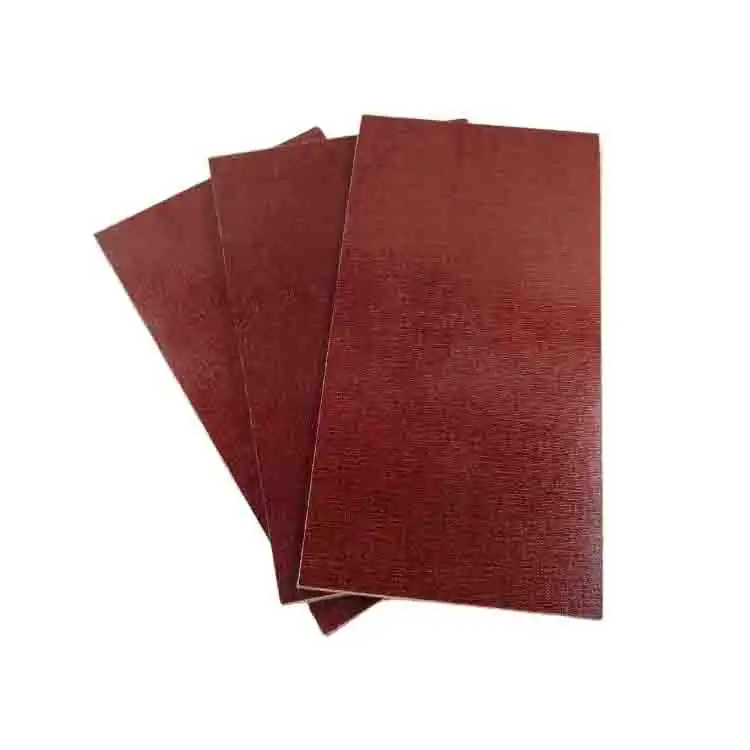
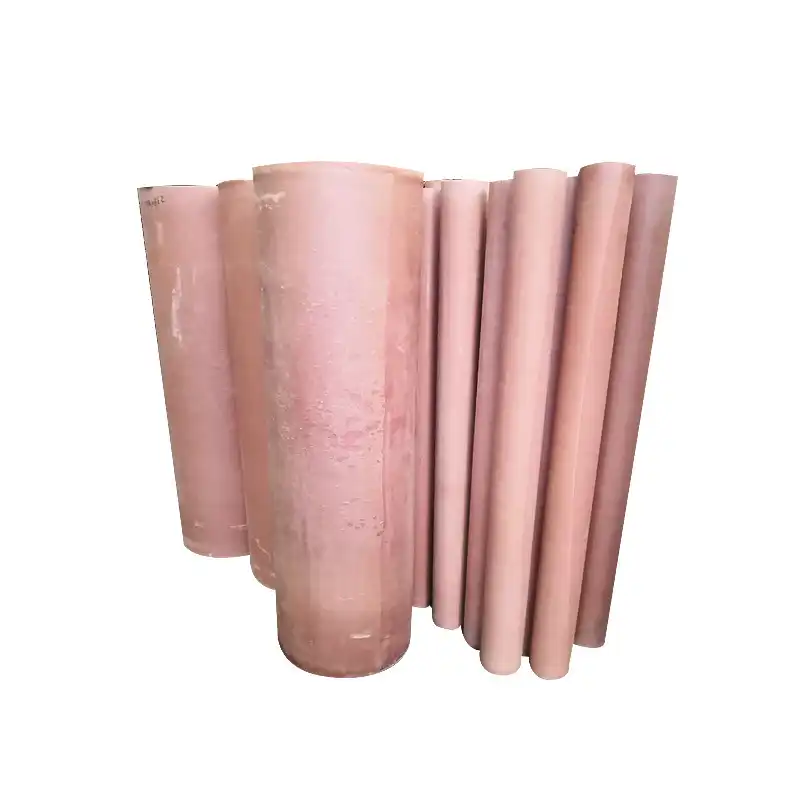
When purchasing and engineering managers look at materials for places with a lot of contact, phenolic cotton cloth board is a tried-and-true choice because it is both strong and good at keeping heat in. This laminated material is made by injecting phenolic resin into woven cotton cloth while controlling the heat and pressure. It has great wear protection and can be used in electrical, machinery, and automobile settings. Knowing what the company can do technically and what to think about when buying allows buyers to make choices with confidence that cut down on downtime and extend the lifecycles of parts in harsh industrial settings.
What is Phenolic Cotton Cloth Board?
Material Composition and Manufacturing Process
Phenolic cotton cloth board is made by carefully coating high-quality cotton fabric with phenolic resin that hardens at high temperatures. Several layers of this cloth are stacked and then heated to 150 to 170°C while being under hydraulic pressure greater than 10 MPa. The bonding process connects the molecules of the resin while keeping the tensile strength of the cotton weave. This makes a stiff material that doesn't delaminate even when put under a lot of mechanical stress. The cloth support is better at absorbing impacts and resisting cracks than phenolic grades made from paper.
Technical Specifications and Standards Compliance
The material meets a number of foreign standards, such as IEC standard PF CC 201 and NEMA grades C (coarse weave) and CE (fine weave). Standard sheet sizes run from 1000x1220mm to 1000x2440mm, and thicknesses from 0.5mm to 100mm are available to meet a wide range of needs. Under constant exposure, the operating temperature range is usually from -40°C to 120°C, but short peaks can hit 140°C. The dielectric strength of the boards is more than 10 kV/mm perpendicular to the laminates, and the volume resistance is more than 10^9 Ω·cm. J&Q's product line has UL certification (E310670) and is also compliant with ROHS and REACH. This meets the legal standards that procurement teams look for when they are choosing manufacturers. These approvals prove that the material is safe for use in electrical tools that people will use and in manufacturing that will be sent abroad.
Mechanical and Physical Properties
The crosswise tensile strength is 80 to 100 MPa, which is much higher than normal phenolic paper versions. With flexural strengths between 110 and 140 MPa, the material can be used as structural parts instead of just insulation walls. The rate of water absorption stays below 1.5% after 24 hours of soaking, so the dimensions stay stable in wet working conditions. Surface hardness, as measured by the Shore D scale, is usually between 75 and 85. This means that the material can handle being repeatedly touched by metal parts without denting.
Key Uses and Advantages of Wear Resistant Phenolic Cotton Cloth Board
Primary Industrial Applications
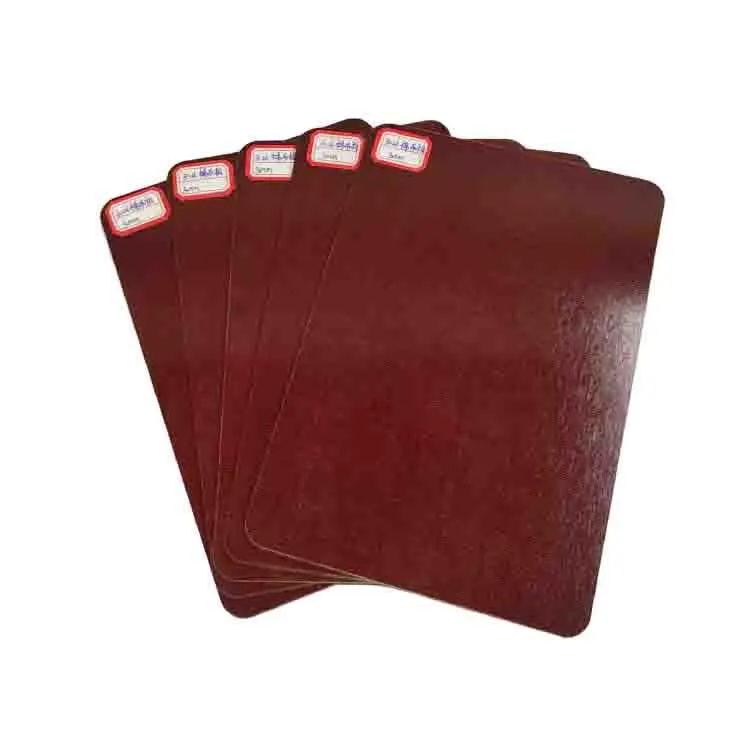
In manufacturing settings, phenolic cotton cloth board is used in a number of important areas where mechanical loads, electrical fields, and friction all come together. The material is used as bearing surfaces, push washers, and gear parts in machinery systems that don't need much oil to work. Compared to metal-on-metal interfaces, the vibration-damping features make less noise, which is useful in device motors and power tool assemblies. These boards act as arc shields and phase separators in electrical switchgear, keeping people and equipment safe from fault situations. Manufacturers of transformers cut custom forms for structural spacers and coil insulation that keep the windings in place when electromagnetic forces act on them. More and more, automotive battery pack systems use phenolic cotton cloth board as mounting plates and heat shields. The electrical resistance of the material stops short circuits and it can handle the stresses of assembly.
The material can withstand being submerged in water for a long time without swelling or losing strength, which makes it useful for underwater bearing uses in naval equipment and hydropower systems. Thinner types are used for insulating standoffs and mounting panels in telecommunications equipment that needs non-conductive structural parts to avoid radio frequency interference.
Performance Advantages Over Alternative Materials
When you compare phenolic cotton cloth board to fiberglass-reinforced epoxy (FR4), you can see that they have different performance patterns. At higher frequencies, FR4 has better dielectric strength, but phenolic cotton cloth board is better at resisting impacts and being easy to machine. The cloth support stops the brittle cracks that happen in glass laminates when they are hit with edges or shock loads during installation. Most mineral oils, weak acids, and alkaline solutions are chemically resistant. However, strong oxidizing agents or chlorine solvents should not be exposed for long periods of time.
Temperature stability is better than a lot of thermoplastic options. Phenolic boards keep their mechanical qualities over a bigger range of temperatures without expanding or contracting like nylon or acetal parts do. The natural resistance of the material to fungus growth and water entry is better than that of wood-based composites. This means that the product will last longer in wet environments. Phenolic cotton cloth board is better for the environment than metal parts in weight-sensitive situations because it has a density of 1.3 to 1.4 g/cm³, while steel has a density of 7.8 g/cm³. This lower weight means cheaper shipping and less stress on the structure of equipment that has already been put together.
Economic Value and Maintenance Reduction
In production settings, the costs of downtime are often many times higher than the costs of materials. Phenolic cotton cloth board parts make things more reliable by preventing wear on joining surfaces by lubricating themselves. Metal gears need to be oiled all the time, but gears made from this material only need to be greased every so often to keep working well. Because the material is conformable, it can handle small misalignments without galling or sticking, which means that it doesn't need to be replaced as often.
When changes need to be made in the field, maintenance teams like how easy the material is to work with. Standard carbide tools can be used for cutting, drilling, and turning without the need for special tools. This processing freedom lets you make quick prototypes and small batches that are exactly what you want without having to buy expensive tools. If a part does break, it doesn't cost as much to repair as high-performance industrial plastics like PEEK or reinforced composites.
How to Choose the Right Phenolic Cotton Cloth Board for Your Needs
Application-Specific Performance Criteria
The first step in choosing the right phenolic cotton cloth board grades is to look at the operating stresses. In rough places where particles are present, pieces need to be thicker to make sure they last long enough before key dimensions change. In situations where chemicals are present, it is important to make sure that certain solvents or cleaning agents won't damage the phenolic matrix. To avoid early fails, it is best to ask providers for exposure compatibility data. The choice of phenolic resin depends on the temperature. For example, resin formulas that improve heat deflection may be better for higher working temperatures close to the 120°C continuous limit.
Tracking resistance and arc resistance grades need to be paid close attention to in electrical applications, especially in outdoor or high-humidity settings where surface contamination could cause leakage paths. Buyers should say whether parts are exposed to voltage stress all the time or only sometimes, as this affects the grade choice. The minimum thickness needs to be determined by a mechanical load analysis. For bearing applications with constant radial loads, engineering estimates are needed to include safety margins against creep deformation over the expected service life.
Thickness, Size, and Grade Selection
Usually, thicknesses are increased by 0.5 mm every 3 mm, then by 1 mm every 10 mm, with bigger increases possible in thicker parts. When normal measurements don't meet the needs of the design, custom thickness grinding can handle tight tolerances. Choosing the right sheet size means finding a balance between how much material is used and how easy it is to handle. Larger forms cut down on waste during CNC machining, but they need the right storing and cutting tools.
Differences in grades within phenolic cotton cloth board groups are mostly caused by differences in the density and amount of resin in the cloth. For structural uses where electrical qualities are not very important, coarse weave grades (NEMA C, PF CC 201) offer the best balance of mechanical strength and cost-effectiveness. Fine weave versions (NEMA CE) have smoother surfaces and tighter physical standards, making them good for uses where the finish on the surface affects how well the seal works or how it looks.
Supplier Credibility and Quality Assurance
Comparing prices is only one part of evaluating possible providers. You also need to look at how consistent their production is and how well they can help with technical issues. Companies that have ISO 9001 approval show that they are dedicated to process controls that make sure that each batch is the same. Requesting certification papers for UL recognition and material compliance reports is a way to make sure that new materials meet requirements without having to be destroyed.
J&Q has been making insulating laminates for 20 years, which gives buyers trust in the company's process maturity and ability to solve problems. Our quality control methods include testing of incoming raw materials, keeping an eye on the resin content and cure cycles during the process, and a final check of the dimensions before shipping. This multi-stage verification lowers the chance that non-conforming materials will mess up output plans. Having access to engineering support helps procurement teams make decisions about which grades to use. Instead of just filling orders, providers should offer application talks that turn working conditions into material specs.
Procurement Guide: Buying Phenolic Cotton Cloth Board for B2B Clients
Sourcing Strategies and Platform Considerations
There are three main ways for B2B buyers to find products: they can deal directly with makers, buy from industrial distributors, or use online procurement sites. Direct ties with manufacturers are helpful when you need to talk about customization and account management on a large scale. It is faster and easier to make changes to engineering specifications and make direct communications with production teams instead of going through layers of middlemen.
When multiple types of materials are needed at the same time, distributor networks can save you money by combining shipping, but this ease usually comes at a price. Online platforms give buyers more choices when it comes to suppliers, but buyers must carefully check the qualifications of sellers and the accuracy of materials. No matter which route you choose, asking for pre-production samples lets you make sure that the material's properties match what the documentation says they are before committing to big orders.
Pricing Considerations and Volume Economics
The price of phenolic cotton cloth board depends on the cost of the raw materials, how hard it is to make, and how many sheets are ordered. The price of base resin changes with the price of oil, while the price of cotton cloth changes with the price of farming commodities. Thickness has a big effect on the price per kilogram; sheets that are less than 1 mm thick need more care during processing and lower production flow, so they cost more. Cutting waste that comes with custom sizes is usually passed on to buyers by suppliers. This is why standard dimensions are better from an economic point of view when design freedom allows it.
Volume savings usually kick in when you buy at least 100–200 kg, and there are even bigger price cuts at 500 kg and 1000 kg. Blanket purchase orders that are released over six or twelve months usually get better prices than spot purchases and give you more product options. When making big promises, negotiating payment terms becomes important. Net-30 or net-60 terms are better for managing cash flow than the usual prepayment requirements that come with working with new providers.
Logistics and Delivery Considerations
Lead times for phenolic cotton cloth board depend on the width that is available and the level of customization that is needed. From stock, standard grades in common thicknesses usually ship within 5–10 business days. However, for custom thickness grinding or non-standard measurements, the time frame may be extended to 3–4 weeks. For international shipments, export paperwork and freight forwarding need to be coordinated. J&Q's combined logistics skills make this process easier by coordinating carriers and handling customs paperwork through our linked shipping services. This single point of responsibility makes it easier for procurement teams to manage a lot of foreign sources.
Edge harm and moisture exposure during transport can be avoided if the packaging is solid. Sheets should come in wooden boxes or heavy corrugated containers that are rated for the weight of the package, wrapped in moisture-barrier film and separated by interleaving paper to keep the surfaces from getting scratched. Asking for picture proof of the packing methods used before the first shipment helps make sure that the goods are properly protected. Production planning stays accurate as long as there is clear insight into delivery tracking and effective communication about shipping delays.
Conclusion
When choosing wear-resistant phenolic cotton cloth board, you have to weigh the needs for technical performance against costs and the stability of the source. The material's unique mix of chemical protection, electrical insulation, and mechanical toughness makes it useful in situations where other materials fail to do all three at the same time. For procurement to go well, application stressors must be clearly defined, the right grades and measurements must be specified, and partnerships must be made with makers who can show consistent quality and quick technical support. Industrial equipment needs more sturdy parts that can work in harsh conditions. Phenolic cotton cloth board keeps showing their worth by lasting longer and needing less upkeep, which makes the money spent on them worth it.
FAQ
What environments are best suited for cotton phenolic board applications?
When the temperature is between -40°C and 120°C and the humidity is mild, phenolic cotton cloth board works best. This is because they can handle both mechanical wear and electrical protection needs. Most mineral oils and weak chemicals that are common in machinery settings don't affect the material. Do not stay submerged in strong acids, bases above pH 10, or chlorine solvents for long periods of time. Ideal conditions are found in controlled environments inside factories, but they can also be used outside as long as the cut edges are properly sealed to keep wetness out.
How does cotton phenolic compare to FR4 fiberglass board for electrical insulation?
FR4 is better for PCB uses and high-frequency circuits because it has higher dielectric strength at radio frequencies and better protection to moisture. Phenolic cotton cloth board is better at resisting impacts, making it easier to machine, and working better in bearing situations where mechanical loads are the main force. The type of material used depends on whether the product needs good electrical performance or long-lasting mechanical performance.
Can I order custom sizes and bulk quantities directly?
Most makers can meet unique cutting and thickness requirements that go beyond what is listed in their catalogs. For special work, the minimum order quantity is usually between 50 and 100 kg, but this depends on how complicated the job is. When you commit to 500 kg or more, bulk price starts to look good. J&Q's production plan is flexible enough to handle both small numbers for prototypes and large volumes of production. Technical teams are also available to talk about specific size needs and delivery times.
Partner with J&Q for Your Cotton Phenolic Sheet Requirements
J&Q has been making high-quality phenolic cotton cloth board that meets the strict requirements of the electrical, machinery, and automobile industries for more than twenty years. Our UL-certified production plant combines strict quality control with the ability to make changes as needed. This lets us give you materials that will work successfully in even the toughest situations. As a fully integrated phenolic cotton cloth board provider, we oversee every step, from making the resin to inspecting the finished product. This gives purchasing teams the peace of mind they need to keep production plans on track.
In addition to high-quality products, our ten years of experience in foreign trade and committed logistics operations make sure that delivery to your building goes smoothly and that you can see the whole shipment at all times. Our engineering support team is ready to take your application needs and turn them into material specifications, whether you need standard sheets, custom thickness grinding, or expert advice on which grade to choose. Email us at info@jhd-material.com to talk about the needs of your project, get examples of the materials we offer, or get full quotes that are based on your volume needs. Find out how working with a well-known maker can help you get both high-quality materials and a reliable supply chain.
References
Harper, C.A. (2004). Handbook of Building Materials for Fire Protection. McGraw-Hill Professional Engineering Series.
MacDermott, C.P. & Kline, G.M. (1989). Plastics in Engineering: Fundamentals and Applications. Society of Plastics Engineers Monograph Series.
Mittal, K.L. (2018). Advances in Modeling and Design of Adhesively Bonded Systems. Polymer Science and Technology Series, Volume 93.
Richardson, T. (2003). Industrial Plastics: Theory and Applications. Delmar Cengage Learning Technical Education Series.
NEMA Standards Publication LI 1-1998. Industrial Laminated Thermosetting Products. National Electrical Manufacturers Association.
Tanaka, T. & Imai, T. (2013). Polymer Nanocomposites for Electrical Insulation Applications. IEEE Transactions on Dielectrics and Electrical Insulation, Technical Review Series.
.webp)