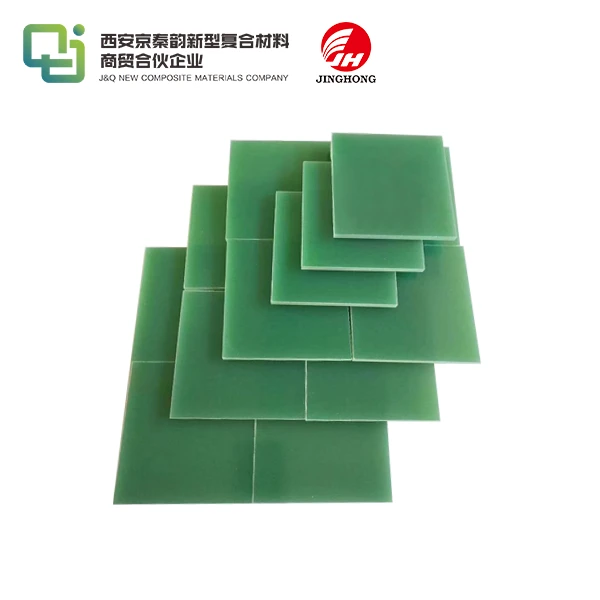
What Causes Dielectric Failure in Epoxy Resin Sheet?
2026-06-02 17:25:36
There are a number of problems that make it hard for an epoxy resin sheet to work well as an insulation. The main reasons are flaws in the manufacturing process that lead to incomplete curing, impurities in the resin matrix, and processing flaws that cause tiny holes. Materials break down faster when they are exposed to things like water, temperature changes outside of their recommended ranges, and UV light for a long time. Bad handling or processing can damage the dielectric barrier, which makes it even less effective. Engineers and people who work with buying things need to know about these failure processes if they need reliable electrical insulation for mission-critical uses.
Understanding Dielectric Failure in Epoxy Resin Sheets
What Defines Dielectric Breakdown?
Dielectric failure is when an insulation material can't stop the flow of electricity between two conductive parts any longer. In epoxy laminates, this breakdown shows up in a number of ways that can be seen. When contaminants and wetness allow leakage currents to flow, surface tracking makes carbonized paths across the face of the material. Localized erosion in the resin matrix is caused by partial flows, which lowers insulation resistance over time. When voltage stress is higher than the material's natural dielectric strength, catastrophic puncture happens, making lasting conductive channels.
Critical Electrical Parameters
In order to work well, FR4 and 3240 epoxy resin sheets need two key things. The dielectric strength of a material, which is given in kilovolts per millimeter, tells you the strongest electric field it can handle before breaking. FR4 usually shows 16–20 kV/mm opposite to the layers, while 3240 epoxy resin sheets show 10–12 kV/mm in transformer oil. Insulation resistance measures how well a material can stop leaking currents. Under normal conditions, good epoxy laminates keep values higher than 10^13 ohms. The breakdown voltage is directly related to the thickness of the sheet. Doubling the thickness raises the resistance to punctures, but it doesn't increase the dielectric strength equally per unit thickness because of differences in manufacturing and stress concentrations inside the sheet.
How Material Composition Affects Performance?
The main things that affect the electrical behavior are the resin mix and the structure of the reinforcement. Chemicals like bisphenol-A or novolac are mixed with glass cloth (in FR4) or cotton fabric (in 3240 phenolic grades) in epoxy systems. The choice of curing agent, the concentration of the catalyst, and the polymerization conditions all work together to make networks that are cross-linked and trap leftover ions and moisture. Higher glass transition temperatures mean that the glass is curing more completely and is more stable at high temps. The point where the resin meets the reinforcement fibers could be weak—if the resin isn't properly infused, it can leave air pockets that collect electric fields and cause localized breaks when voltage stress is applied.
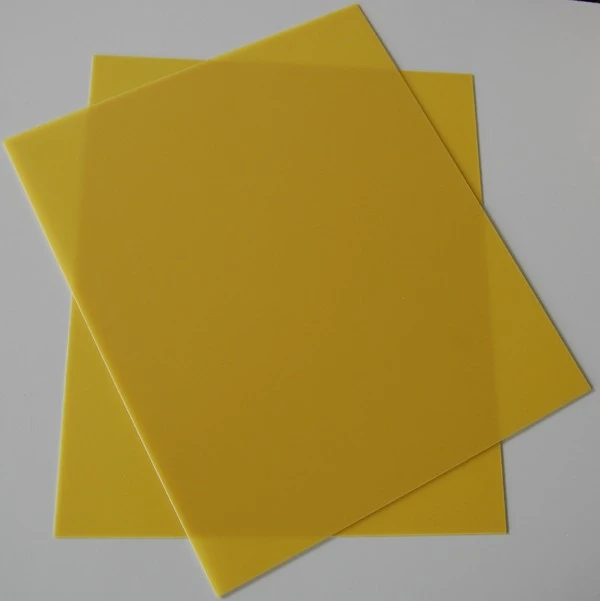
Root Causes of Dielectric Failure in Epoxy Resin Sheets
Manufacturing Quality Issues
Material integrity begins at the production stage. Incomplete curing leaves unreacted epoxy groups and residual solvents that reduce dielectric strength by 20-30% compared to fully polymerized sheets. We've encountered batches where insufficient press time or temperature gradients during lamination created resin-rich and resin-starved zones with inconsistent electrical properties. Impurities, such as ionic contaminants from raw materials, dust particles trapped during layup, and metallic residues from processing equipment, create conductive pathways and stress concentration points. The resin formulation itself plays a decisive role—cost-optimized blends with excessive filler content or inferior hardening agents exhibit premature aging and reduced voltage endurance.
Environmental Degradation Factors
Operating environments impose relentless stress on insulation systems. Temperature fluctuations cause differential thermal expansion between resin and reinforcement, generating microcracks that propagate through repeated cycling. While epoxy resin sheets maintain structural integrity at continuous 155°C operation, exceeding this Class F rating accelerates chain scission and reduces molecular weight. Moisture absorption represents a particularly insidious threat. Even materials with nominal water uptake below 0.1% experience dielectric constant shifts and reduced breakdown voltage when humidity penetrates the resin-fiber interface. UV radiation breaks epoxy molecular bonds at exposed surfaces, creating a degraded surface layer susceptible to tracking. Chemical interactions with transformer oils, cleaning solvents, and industrial atmospheres containing sulfur compounds progressively leach plasticizers and attack the cross-linked network.
Mechanical Stress and Processing Defects
Physical handling and fabrication introduce hidden vulnerabilities. Dropping sheets or subjecting them to impact loads creates internal delaminations invisible to surface inspection. During CNC machining operations, excessive cutting speeds generate localized heating that thermally degrades the resin matrix along cut edges. Internal voids from entrapped air during lamination or volatile outgassing concentrate electric fields, reducing effective insulation thickness. Edge quality matters significantly—rough-cut surfaces with exposed fibers and resin tears provide initiation sites for surface tracking under contaminated conditions. Drilling operations that don't use carbide tooling create fiber pull-out and matrix cracking around holes, compromising insulation in fastener areas and mounting points.
Comparing Epoxy Resin Sheets with Alternative Materials Regarding Dielectric Performance
Epoxy Versus Thermoplastic Alternatives
Material selection requires understanding comparative electrical behavior across insulation options. Acrylic sheets offer excellent optical clarity and weather resistance but deliver dielectric strength of only 15-18 kV/mm with higher moisture sensitivity than epoxy laminates. Polycarbonate provides superior impact resistance yet exhibits dielectric constants of 2.9-3.0 compared to FR4's 4.4-4.8, making it less suitable for controlled-impedance PCB applications. Fiberglass-reinforced polyester costs less than epoxy composites but suffers from reduced dimensional stability and lower thermal endurance, limiting use in Class F and H insulation systems.
Grade-Specific Performance Variations
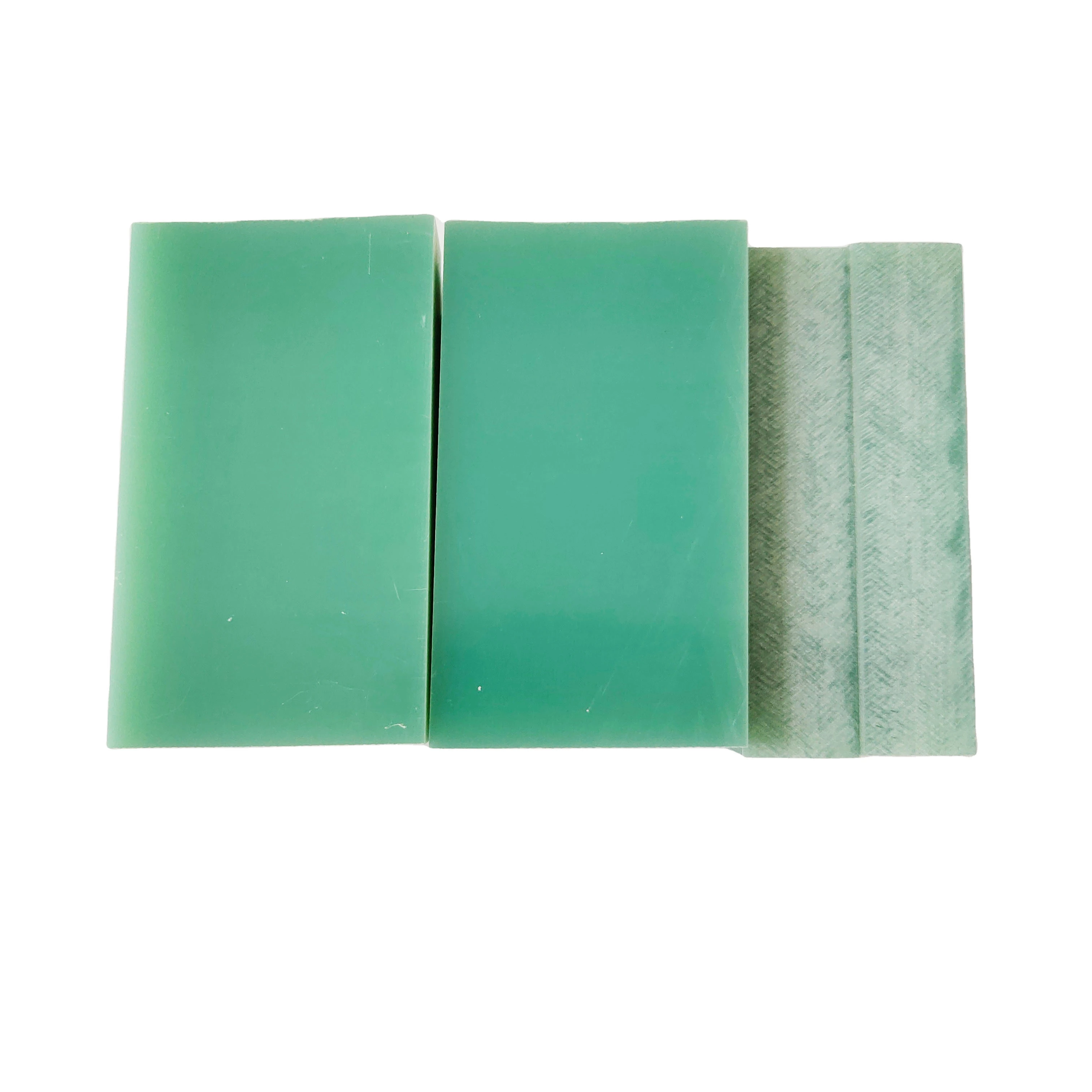
Within the epoxy family, performance differences warrant careful specification. Standard FR4 glass-epoxy laminate serves printed circuit board applications with Tg values around 130-140°C, adequate for consumer electronics but marginal for automotive underhood environments. High Tg FR4 variants with glass transition temperatures exceeding 170°C prevent Z-axis expansion during lead-free soldering and maintain mechanical rigidity in power electronics assemblies operating at elevated temperatures. The 3240 epoxy resin cotton sheet delivers excellent mechanical properties with slightly lower dielectric strength than glass-reinforced grades, finding application in transformer structural components where machinability and oil resistance outweigh maximum voltage stress requirements. Clear versus pigmented formulations introduce another consideration—transparent sheets enable visual inspection of internal defects but may transmit UV radiation that accelerates aging, while opaque grades containing carbon black or titanium dioxide provide inherent UV blocking at the cost of visual examination capability.
Best Practices to Prevent Dielectric Failure in Epoxy Resin Sheets
Material Selection Criteria
Preventing insulation failures begins with proper specification aligned to application demands. Assess continuous operating temperature against material ratings—selecting Class F materials for Class B applications provides thermal margin that extends service life. Evaluate thickness requirements based on voltage stress calculations, applying appropriate safety factors for transient overvoltage conditions. Environmental resistance considerations include chemical compatibility testing with specific oils, coolants, or cleaning agents present in your manufacturing processes. Verifying supplier credentials remains essential—look for ISO 9001 quality management certification, UL recognition marks indicating tested flammability performance, and technical documentation demonstrating lot traceability and consistent material properties across production runs.
Handling and Installation Guidelines
Preserving dielectric integrity during fabrication and assembly requires disciplined practices throughout your operation. Store epoxy resin sheets in climate-controlled environments maintaining 40-60% relative humidity to prevent moisture absorption before use. During cutting and machining, employ carbide-tipped or diamond-coated tooling specifically designed for composite materials, maintaining moderate feed rates that avoid thermal damage. Clean machined edges with isopropyl alcohol to remove residual dust and oils that could initiate surface tracking. Installation procedures should eliminate sharp bends or concentrated clamping forces that create internal stress concentrations. Allow adequate edge clearances from high-voltage conductors based on voltage ratings and pollution degree classifications per IEC 60664 standards.
Quality Verification Protocols
Implementing systematic inspection procedures catches defects before they cause field failures. Before processing, we recommend conducting a comprehensive quality assurance routine that begins with dielectric strength testing on sample coupons from each material lot. This non-destructive evaluation verifies that breakdown voltage meets or exceeds specification minimums, typically performed using ramped DC or AC voltage applied between parallel electrodes. Visual inspection under adequate lighting reveals surface defects including resin voids, delaminations, and fiber exposure that compromise electrical performance. Dimensional verification confirms thickness tolerance adherence, critical where insulation coordination calculations assume specific minimum values. Moisture content measurement using gravimetric methods or moisture analyzers ensures sheets haven't absorbed excessive water during storage. These quality gates provide documented evidence of material conformance and establish baseline data for investigating any future insulation incidents.
Procurement Guide for High-Quality Epoxy Resin Sheets
Supplier Evaluation Framework
For sourcing partnerships to work, both partners need to be able to do more than just offer competitive prices. Give more weight to suppliers who can show a wide range of certifications, such as ISO 9001 quality management systems, UL recognition for certain grades of materials, and RoHS compliance documentation for foreign markets. Technical support is very important. Being able to talk to application engineers who know about thermal management, insulation planning, and mechanical design principles is helpful during the whole process of making a product. Customization services, such as precise CNC cutting, drilling designs, and finishing the edges, get rid of the need for extra processing steps and the quality risks that come with them. Consistent lead times and the ability to complete large orders ensures production continuity, which is especially important when going from a prototype to mass production.
Cost-Performance Optimization
Knowing how prices work lets you make smart economic decisions without putting electricity safety at risk. Volume savings usually start at 500 sheets, and prices drop even more at pallet-load levels. Shipping logistics have a big effect on the delivered costs of foreign transactions. For example, combining orders into full container loads lowers freight costs, but it requires planning for inventory management. Sustainability concerns are becoming more important in the buying process. Buyers want epoxy systems that are made with less halogen, recycled reinforcement fibers, and production methods that release as few volatile organic compounds as possible. Third-party testing must show that these eco-friendly options have the same dielectric performance. This is to make sure that being environmentally friendly doesn't come at the cost of electrical safety. When you work with sellers who keep standard grade buffer stocks close to where you make things, you can avoid expensive emergency shipping costs and quickly meet sudden material needs.
Conclusion
Dielectric failure in epoxy resin sheets happens when the quality of the material, exposure to the climate, and mechanical stresses all work together in complicated ways. Manufacturing flaws, imperfect curing, and contamination create built-in weaknesses that the environment takes advantage of by letting water in, cycling the temperature, and attacking with chemicals. Stopping insulation from breaking down takes a wide range of actions, including choosing the right materials, making sure suppliers are trustworthy, following strict handling rules, and regularly checking the quality of the work. When looking at dielectric strength, thermal longevity, and mechanical robustness in tough industrial settings, epoxy laminates clearly stand out as better insulation materials than others. As we've talked about, engineering managers and technical buyers can make sure that their electrical insulation systems last longer and cost less overall by using the preventative measures and buying strategies we've talked about.
FAQ
How Do You Test Dielectric Strength in Epoxy Laminates?
Dielectric strength testing applies controlled voltage between electrodes contacting opposite sheet faces. The standardized procedure per ASTM D149 uses spherical or cylindrical electrodes immersed in insulating oil, ramping voltage at 500V/second until breakdown occurs. Results reported in kV/mm allow comparison across material grades and lot-to-lot consistency verification.
Can Epoxy Resin Sheets Withstand Outdoor Conditions?
Standard epoxy resin sheets degrade under prolonged UV exposure and moisture cycling typical of outdoor environments. Applications requiring weather resistance need UV-stabilized formulations with protective coatings or enclosures. Indoor electrical equipment operating in controlled environments represents the optimal use case for conventional FR4 and 3240 grades.
What Thickness Should Be Specified for High-Voltage Applications?
Voltage stress calculations determine minimum insulation thickness. A conservative guideline applies 1mm thickness per 10kV operating voltage, modified by safety factors based on pollution severity, altitude, and transient overvoltage exposure. Consulting IEC 60664 insulation coordination standards ensures adequate clearances and creepage distances complement material thickness selection.
Partner with J&Q for Reliable Epoxy Resin Sheet Solutions
Selecting the right epoxy resin sheet supplier directly impacts your product quality and production efficiency. J&Q brings over 20 years of manufacturing expertise and more than a decade of international trade experience, serving electrical equipment manufacturers, industrial machinery builders, and power sector clients across North America. Our comprehensive material portfolio includes FR4 glass-epoxy laminates, 3240 epoxy resin sheets, and phenolic cotton sheets meeting UL and RoHS compliance standards. We provide precision CNC cutting services, custom drilling patterns, and flexible order quantities from prototype samples to full production volumes. Our integrated logistics company delivers one-stop service including material sourcing, quality verification, custom processing, and direct shipment to your facility. Technical consultation from our engineering team helps you specify the optimal grade, thickness, and configuration for your specific voltage, temperature, and environmental requirements. Contact our procurement specialists at info@jhd-material.com to discuss your insulation material needs and receive competitive quotations. Visit jhd-material.com to explore our complete product range and discover why manufacturers trust J&Q as their preferred epoxy resin sheet manufacturer for mission-critical electrical insulation applications.
References
Tanaka, T., & Imai, T. (2019). "Advances in Nanodielectric Materials for Electrical Insulation Systems." IEEE Transactions on Dielectrics and Electrical Insulation, 26(4), 1179-1189.
Bartnikas, R., & Eichhorn, R.M. (2018). Engineering Dielectrics Volume IIA: Electrical Properties of Solid Insulating Materials. ASTM International.
Kreuger, F.H. (2020). Industrial High Voltage: Coordinating Insulation and Electric Field Grading. Delft University Press.
Cygan, P.J., & Laghari, J.R. (2017). "Models for Insulation Aging Under Electrical and Thermal Multistress." IEEE Transactions on Electrical Insulation, 25(5), 923-934.
Nelson, J.K. (2021). Dielectric Polymer Nanocomposites: Fundamentals and Applications. Springer Science & Business Media.
Dissado, L.A., & Fothergill, J.C. (2019). Electrical Degradation and Breakdown in Polymers. Peter Peregrinus Ltd.