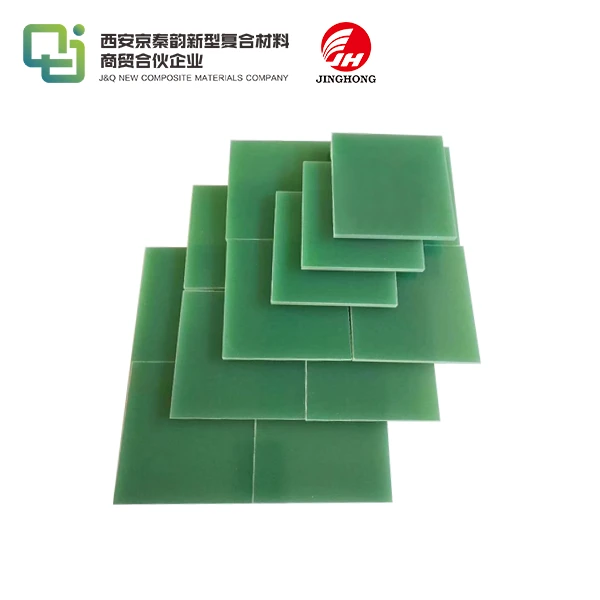
3240 Epoxy Sheet for High Voltage Insulation Systems
2026-05-22 17:01:10
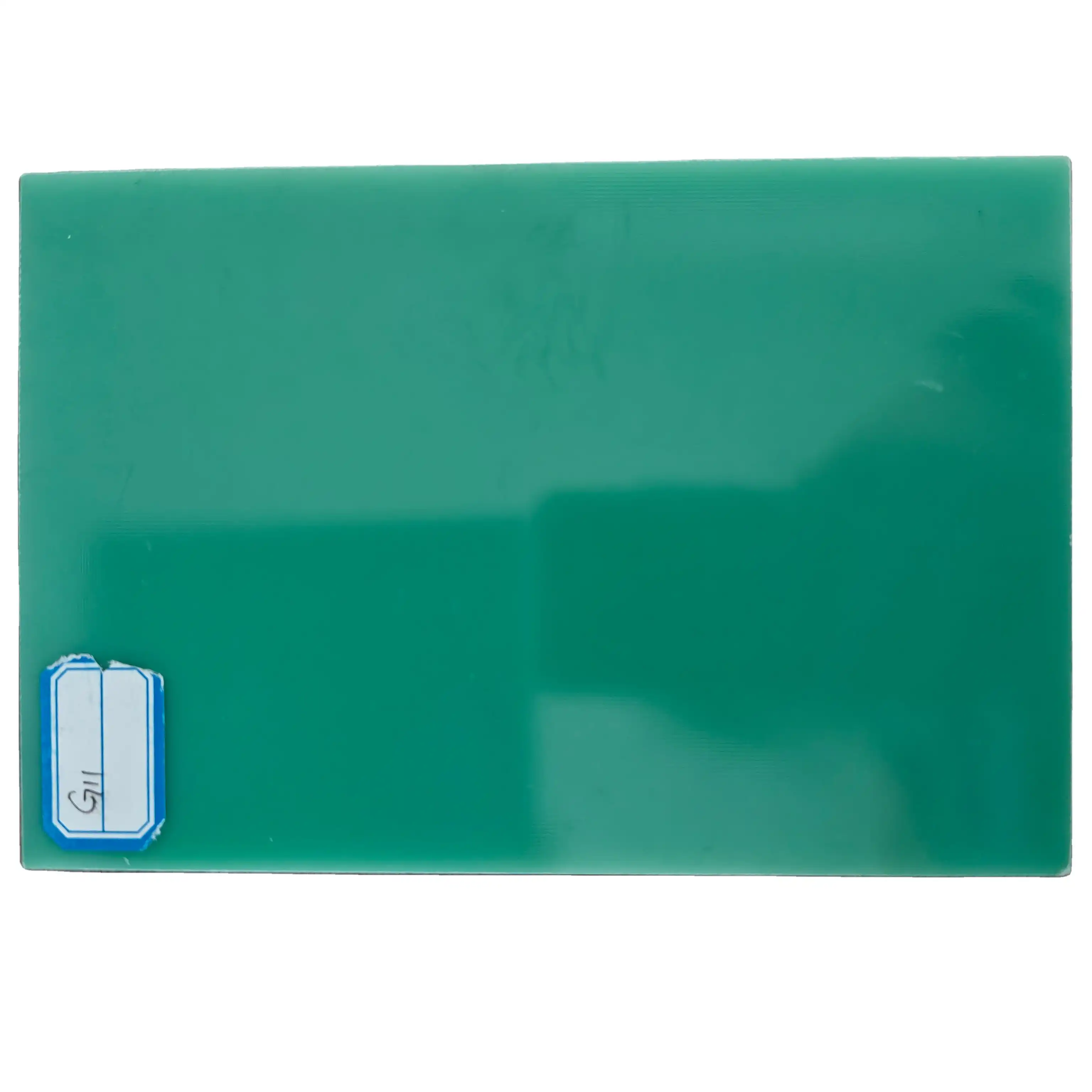
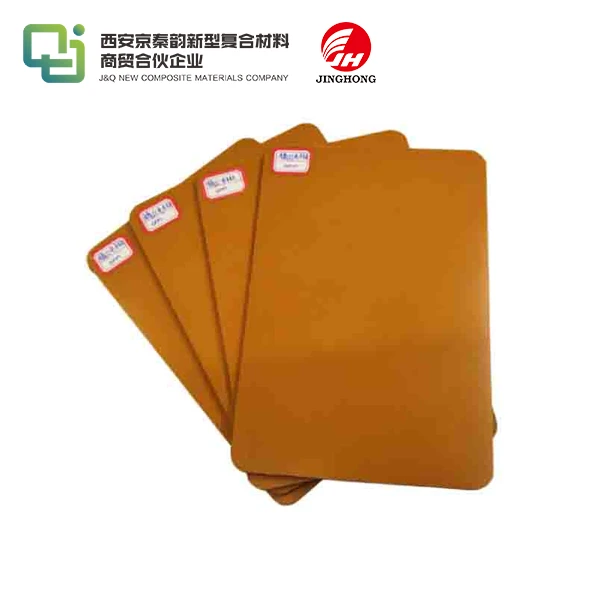
When engineering managers and buying teams choose insulation materials for high voltage electrical systems, they have to make a big choice that affects the safety of the equipment, how long it works, and whether the company follows the rules. For tough electrical conditions, the 3240 epoxy sheet has been shown to work well. It has a high insulating strength and is also very durable. This glass-reinforced epoxy laminate is well-known in the making of transformers, the building of switchgear, and the production of motor parts because it consistently works well under electrical load and thermal stress. It is easier for people to choose the right insulating material for their needs when they know about its technical features, compared benefits, and buying issues.
Understanding 3240 Epoxy Sheet – Properties and Technical Specifications
What Defines This Insulation Material
The unique way that 3240 epoxy sheet is made is what makes it strong. This laminate is made by mixing epoxy phenolic resin with alkali-free knitted glass cloth and then applying controlled heat and high pressure to the whole stack. Through this process, a stiff composite structure is made. The cured resin system provides electrical insulation, and the glass threads provide mechanical support. The material meets the requirements of GB/T 1303.1-1998, which is the same as IEC 60893-3-2. This means that it has temperature values between Class B and Class F.
Core Technical Parameters
For high voltage uses, electrical efficiency is still the most important thing to think about. Good epoxy glass laminates usually have a dielectric strength of more than 16 kV/mm perpendicular to the laminations, which means they won't break easily. Volume resistance readings usually hit 10^14 ohm-cm, which means that even when it's humid, there isn't much leakage current. Because the dielectric constant doesn't change much across frequency bands, these sheets can be used for both AC and DC shielding.
The limits of a process are set by its thermal properties. Under normal circumstances, the constant service temperature can hit 155°C, and during transient loads, it can go higher for shorter periods of time. This thermal stability keeps transformer coils and motor windings from breaking down too quickly, which can happen when heat builds up and tests the strength of weaker materials. The epoxy matrix's glass transition temperature keeps its shape over a wide range of usual working temperatures.
Mechanical and Chemical Resistance
The material can handle bending forces during installation and use because its flexural strength is higher than 350 MPa in a horizontal direction. Tensile strengths are usually between 300 and 400 MPa, which helps keep mechanical gaps and support frames structurally sound. The compressive strength makes sure that the sheet doesn't bend when it's clamped down on in electrical systems.
Chemical protection makes things last longer in harsh conditions. The finished epoxy system is very resistant to the mineral oils that are used in transformers. Its qualities have not changed even after decades of being submerged in oil. Moisture uptake stays below 0.5% by weight, so it doesn't change size or lose its dielectric properties when it's wet. This mix of traits covers common ways that electrical shielding systems can fail.
Comparing 3240 Epoxy Sheet with Other Insulation Materials
Performance Against Alternative Laminates
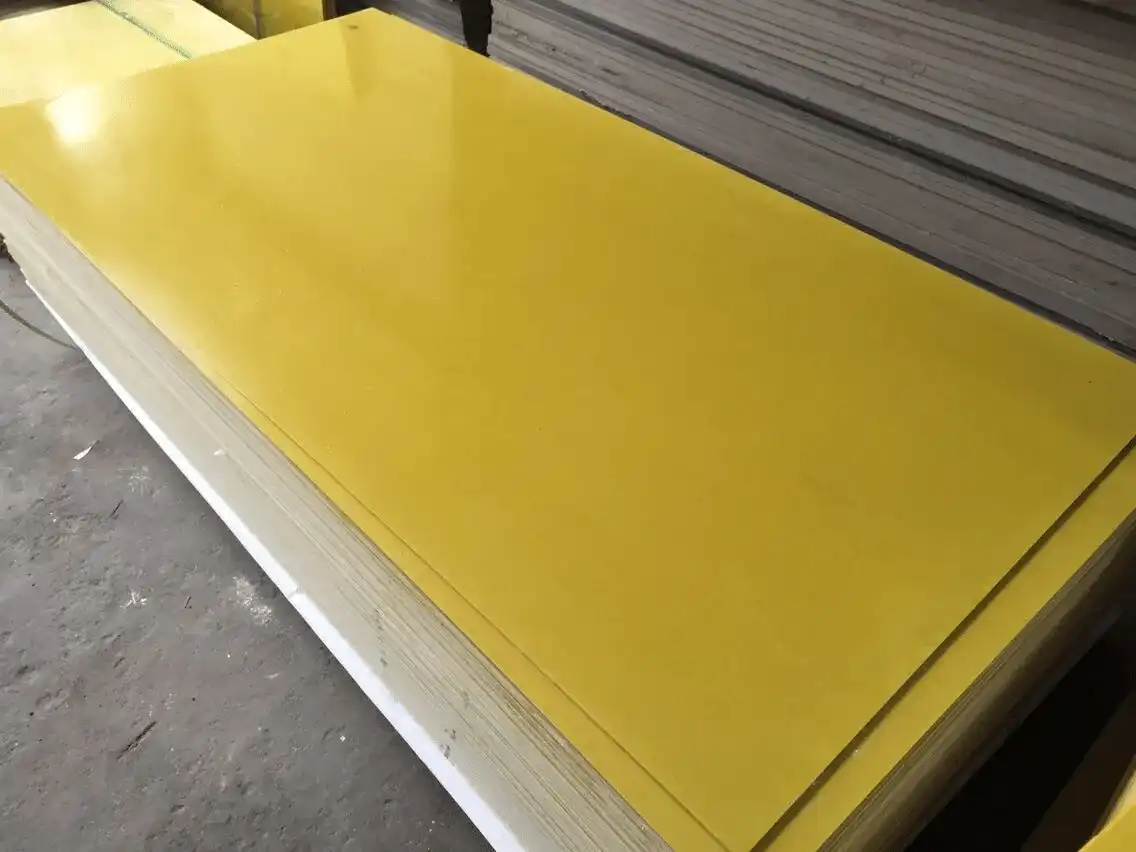
G10 epoxy glass laminate is very similar to it; it uses different resin formulations but has the same glass cloth support. G10 is about as strong mechanically, but the 3240 epoxy sheet grade often works better in hot conditions and doesn't track as easily when electrical stress is applied. When continuous running above 130°C is needed, 3240 epoxy sheet specifications are usually better than normal G10 grades.
FR4 laminates are used to make most PCBs because they don't catch fire and are easy to work with. UL94 V-0 grades are given to the brominated flame retardants in FR4, which makes them perfect for electronics containers. The 3240 epoxy sheet, on the other hand, usually has higher mechanical strength and works better in oily situations where the flame retardants in FR4 don't help. The trade-off is finding a balance between the needs for flame protection and the needs for mechanical and chemical performance.
Material Selection Considerations
Phenolic paper laminates are the most cost-effective choice for modest electricity needs. Their lower price makes them appealing to uses that need to save money, but the paper base absorbs water more easily than the glass cloth, which limits their usefulness in damp places. When compared to glass-reinforced epoxy options, phenolic materials are also less thermally stable and have lower mechanical strength.
With the 3275 grade, cotton cloth reinforcement is added, which makes the material more resistant to pressure and easier to shape. Because of this, 3275 can be used for gears and other mechanical parts where electrical protection is not the main concern. The 3313 version has non-woven glass mat, which gives it isotropic qualities and smoother areas for precise work. Each grade meets a different set of building needs. The 3240 epoxy sheet grade is in the middle, between electrical performance and mechanical usefulness.
Procurement Guide for 3240 Epoxy Sheet – Buying Tips and Market Insights
Sourcing Strategies for Industrial Buyers
Building ties with certified makers is the most effective way to make sure quality is always high. Direct relationships get rid of markups that come from middlemen and let you talk about customization and get technical help. When looking at possible providers, make sure they follow the rules by looking at their paperwork and, if possible, visiting their facilities.
There are many ways to buy things in the marketplace, and each has its own benefits. Online B2B platforms make prices clear and let buyers compare suppliers, which is helpful for buyers who deal with multiple sellers. Direct maker partnerships are good for businesses that need to buy a lot of things on a regular basis because they can get better prices and more flexible schedules for production. When wait time is more important than small price differences, like when you need a small amount or a replacement right away, distributors fill in the holes.
Pricing Dynamics and Order Requirements
Volume has a big effect on unit costs, and buying in bulk usually lowers prices through economies of scale. Different manufacturers have different minimum order amounts, which are often based on the costs of making a batch. Some sellers keep standard thicknesses in stock that range from 0.5 mm to 50 mm, which lets you place smaller orders for popular sizes. Custom widths, especially panels that are thicker than 50 mm, usually need their own production runs with minimum numbers.
Customization and Logistics Considerations
A lot of makers give extra services that make their products more valuable, such as CNC machining, edge finishing, and precise cutting. These services cut down on the amount of work that needs to be done internally and on the waste of materials. This is especially helpful when working with expensive laminates. Talking about the needs of the project with providers during buying lets them suggest the best sheet sizes and processing methods.
Logistics planning stops projects from being late or damaged while in travel. When they are being shipped, 3240 epoxy sheet laminates need to be protected from damage and moisture. Suppliers who have dealt with foreign trade before can usually provide the right packing and work with freight forwarders who know how to handle industrial materials. Companies that offer both production and shipping services as part of their combined logistics skills often have more reliable deliveries because they can coordinate their activities more efficiently.
Application Scenarios and Best Practices for 3240 Epoxy Sheet in High Voltage Systems
Common Industrial Applications
Many of the parts that transformer makers use in their systems are made from 3240 epoxy sheet laminates. Separating the wrapping layers, coil insulation walls keep the electricity from breaking down and can withstand mechanical forces during operation. Phase barriers keep electrified parts safely away from each other by separating them strongly. Heavy copper windings are held in place against electromagnetic forces by support frames and binding structures that use the material's mechanical strength.
These sheets are used as arc shields and bus supports in switchgear systems. The dielectric features of the material keep the phases separate, and its mechanical stiffness lets heavy copper busbars stay in place. Arc resistance keeps tracking from getting damaged during switching events, which makes equipment last longer. Motor makers use precisely cut pieces as phase separators and slot guards to keep the stator windings safe from grounding faults and keep the pieces' dimensions stable when the temperature changes.
Machining and Fabrication Techniques
Choosing the right tools is the first step to making something that works. When working with rough glass-reinforced materials, carbide-tipped tools keep their sharp cutting edges longer than regular steel bits. Slow feed rates and good chip removal are good for drilling because they keep heat from building up and delaminating layers. When drilling, using backing plates stops blowout on the exit side and keeps the hole limits clean.
For cutting activities, dust collection devices are needed to catch the particles that fly through the air during machining. Without proper air and filtering, glass fibers can be harmful to your lungs. Cutting with water cools the blades so that less dust is made and the material is not damaged by heat. Finishing the edges by sanding or cutting makes the surfaces smooth, which stops stress buildup and the start of electrical tracking.
Installation and Maintenance Protocols
Material qualities are kept when it is stored properly before it is installed. Keeping sheets in controlled settings, out of direct sunlight and high temperatures, keeps them from getting old too quickly. Thermal stress during building can be reduced by letting materials get used to the temperatures of the installation area.
Avoiding using too much tightening force during installation keeps stress from building up and causing cracks. Structural stability is maintained by spreading mechanical loads over enough surface areas. Protocols for regular inspections should look for surface tracking, darkening from heat, or mechanical damage. Finding signs of degradation early on lets you repair the insulation before it fails and shuts down the system.
Why Choose J&Q's 3240 Epoxy Sheets – Brand Value and Supplier Reliability
Quality Assurance and Certification Standards
At several stages of production, our manufacturing methods include strict testing routines. Before resin is infused, the weight and weave uniformity of the glass cloth are checked by inspecting the raw materials. To keep stability from batch to batch, in-process tracking keeps an eye on the resin content, cure temperature profiles, and lamination pressure. Finished goods go through electrical testing, which includes checking the dielectric strength and measuring the surface resistivity. Standardized testing methods are also used to confirm the mechanical properties.
These quality methods help make sure that foreign standards are met, which is what industrial buyers want. Our paperwork packages come with test results, material certificates, and records of where the materials came from. These meet the needs of quality management across all industries. This methodical technique has been praised by companies that make electrical tools, machines, and clients in the energy sector who need reliable performance.
Customer Experience and Technical Support
Our 3240 epoxy sheet materials have been used in important ways by companies in the power distribution, auto parts, and industrial machinery industries. Manufacturers of transformers like how the dielectric performance stays the same from one production batch to the next, which lowers the unpredictability in the assembly line. Assemblers of switchgear like the physical steadiness that makes installation more precise. Motor makers gain from thermal resistance because it makes repair intervals longer in task cycles that are hard on the motors.
Technical help goes beyond just delivering materials. Our research team helps customers choose the best materials for their needs by giving them advice on how to use the materials. We help with manufacturing suggestions, fitting steps, and troubleshooting when there are problems with performance. Instead of just doing business with suppliers, this strategic method creates partnerships.
Comprehensive Service Capabilities
Our vertically merged businesses give you benefits at every stage of the buying process. We've been making insulation materials for over 20 years and managing foreign trade relationships for over ten years, so we know how hard it is for global buying teams. Our long-term ties with trading companies in both the United States and other countries give us information about the markets and make it easier for businesses to do business across borders.
We are different from providers who need a third party to coordinate shipping because we can handle all of the operations ourselves. Having our own logistics company gives us full insight from the end of production to the final arrival. This integration cuts down on dealing changes that can cause damage and cause communication gaps. Customers gain from having a single point of responsibility and an easier way to solve problems when delivery planning needs to be changed.
Custom manufacturing lets you meet the special needs of each job. No matter if you need non-standard thicknesses, precision-ground tolerances, or forms that have already been made, our production freedom can meet your needs. This customization includes packaging and shipping times, making sure that materials are available at the right time for the job.
Conclusion
To choose the right insulation material for high voltage systems, you have to weigh its electrical performance, mechanical qualities, heat stability, and the reliability of the supplier. This is what the 3240 epoxy sheet's glass-reinforced structure and epoxy resin matrix make possible. It can handle the tough conditions of transformer systems, switchgear installations, and motor parts. Knowing its technical specs compared to other materials helps you make smart decisions about what to buy. Working with experienced makers who help with everything from choosing materials to figuring out how to send them is the best way to make sure a project succeeds. Investing in good insulation materials pays off by making equipment last longer, lowering the number of times it breaks down, and meeting regulations in a wide range of workplace settings.
FAQ
What temperature range can these materials withstand?
The normal limit for continuous operation is up to 155°C, but Class F versions can go up to 180°C. Short-term changes in temperature during temporary situations can reach higher levels without causing instant damage. However, long-term exposure above rated temperatures speeds up aging and lowers the expected service life.
Can you customize sheet dimensions?
Customization options include thickness ranges from 0.5 mm to 150 mm, and length and width can be changed to fit the needs of the purpose. Precision grinding allows for tight control of tolerances, and pre-machining services give finished parts that are ready to be installed. This cuts down on the work that the customer has to do and the waste of materials.
How does electrical performance compare to FR4?
Both materials have a high insulating strength and can be used in high voltage situations. The 3240 epoxy sheet grade usually works better in places where oil is present and can handle higher constant temperatures. FR4 works great in situations that need flame retardancy certifications. Choosing a material should be based on the specific working setting and regulatory standards, not just on which material performs better overall.
Partner with J&Q as Your Trusted 3240 Epoxy Sheet Manufacturer
If you need to buy insulation materials, J&Q has the experience you can trust. Our factory has strict quality controls that make sure that every batch has the same electrical and mechanical features. When you combine production experience with foreign trade knowledge and integrated logistics, the whole buying process is smooth, from the first question to the final delivery. Managers of engineering projects and people who buy things can get expert advice, custom cutting services, and quick help that goes beyond just buying things. We want you to know how reliable it is to work with a 3240 epoxy sheet provider who is dedicated to the success of your project. Email our team at info@jhd-material.com to talk about your unique needs, get technical datasheets, or get quotes that are made to fit your purpose.
References
International Electrotechnical Commission. (2003). Specification for Industrial Rigid Laminated Sheets Based on Thermosetting Resins for Electrical Purposes – Part 3-2: Specifications for Individual Materials – Sheets with Epoxy Resin Binder. IEC Publication 60893-3-2.
Standardization Administration of China. (1998). Laminated Sheets for Electrical Purposes – Part 1: Methods of Test. National Standard GB/T 1303.1-1998.
Haddad, A., & Warne, D. F. (Eds.). (2004). Advances in High Voltage Engineering. IET Power and Energy Series 40, Institution of Engineering and Technology.
Kulkarni, S. V., & Khaparde, S. A. (2013). Transformer Engineering: Design, Technology, and Diagnostics (2nd ed.). CRC Press, Taylor & Francis Group.
Nelson, J. K. (Ed.). (2010). Dielectric Polymer Nanocomposites. Springer Science & Business Media, Boston.
Cygan, P. J., & Laghari, J. R. (1990). Models for Insulation Aging Under Electrical and Thermal Multistress. IEEE Transactions on Electrical Insulation, 25(5), 923-934.