CNC Machining Tips for Bakelite Sheet Processing
2026-05-22 17:01:08
When cutting Bakelite sheet, you need to pay close attention to the tools you use, how fast you cut, and how you cool the sheet. This phenolic laminate is valued for its ability to conduct electricity and last a long time mechanically, but it is fragile and can chip if it is made incorrectly. Carbide tools, machine speeds between 8,000 and 12,000 RPM, controlled feed rates of 50 to 100 mm/min, and enough dust clearance to keep heat from building up are all important for CNC processing to go well. If you understand these basics, you can turn difficult phenolic cutting into a reliable output process that you can use again and again.
Understanding Bakelite Sheets: Properties and Applications
Composition and Fundamental Characteristics
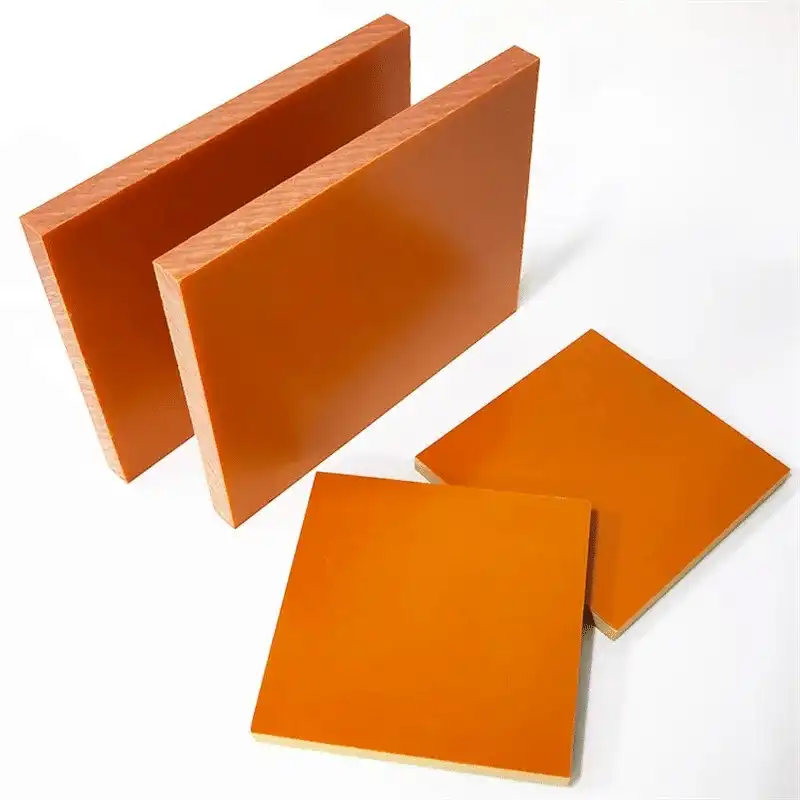
The official name for Bakelite sheet is phenolic paper laminate or SRBP (Synthetic Resin Bonded Paper). It is made up of layers of cellulose paper that have been saturated with phenol-formaldehyde resin and then hardened under heat and pressure. This thermoset structure is very different from thermoplastics because the cross-linked molecular links stop the material from melting or changing shape once it has hardened. The material has a dielectric strength of more than 12 kV/mm, can be used continuously at temperatures up to 300°F (149°C), and is very resistant to arcs. In contrast to later composites, phenolic laminates keep their shape even when the temperature changes, and they don't absorb more than 1.5% of their weight in water.
Industrial Applications Across Sectors
Phenolic laminates are used by electrical and electronics companies to make PCB support frames, switchgear housings, and commutator insulation that meets UL94 V-0 standards for flame protection. Because they don't move, these sheets are used as spark barriers in transformers and busbar isolators in power distribution systems. Suppliers of automotive parts use phenolic materials for battery pack barriers and heat-resistant parts in electric car systems. For gears that don't wear out, bearing guards, and structural spacers that are put under constant mechanical load, industrial machinery builders use stronger grades. Manufacturers of home appliances use thin phenolic sheets in motor frames and thermal separation parts to get the best protection for the least amount of money.
Material Variants and Performance Trade-offs
Standard paper-based grades have good electrical qualities and are cheap, so they are good for low-stress insulation jobs. SRBF or Tufnol forms of cotton cloth that have been reinforced give better impact resistance and can be machined easily, making them the best choice for mechanical parts like gears and structural spacers. Glass cloth phenolic laminates are better at withstanding high temperatures and being strong, but they are harder to machine. Fillers made of graphite or metal are added to custom formulas to make them more resistant to wear in friction uses. Teams in charge of buying things need to make sure that the grade they choose fits the job. For example, choosing XX grade for high-voltage insulation and CE grade for mechanical parts will ensure the best performance without spending extra money on materials that aren't needed.
CNC Machining Challenges with Bakelite Sheets and How to Overcome Them
Material Behavior During Cutting Operations
Because finished phenolic resin is weak, it breaks along the edges and cracks below the surface when cutting forces are too high. Around 350°F (177°C), thermal degradation starts. If frictional heat builds up faster than it disappears, it causes plastic to char and shapes to change. Paper-based laminates have different strengths in different directions; cutting them perpendicular to the lamination lines raises the chance of delamination. When the material is taken away, residual internal forces from the curing process can cause it to bend, especially in thin Bakelite sheet that are less than 3 mm thick. Machinists can avoid problems instead of fixing them when they happen when they know about these natural traits.
Tooling Selection and Geometry Optimization
When cutting phenolic fillers, which are rough, carbide cutting tools keep their sharp edges longer than high-speed steel tools. When used on long production runs, diamond-coated cutter bits make the surfaces smoother and triple the life of the tools. To slice cleanly instead of pressing material against the cutting edge, the shape of the tool needs positive rake angles between 10 and 15 degrees. It is important to have cutting edges that are very sharp, because dull tools make too much friction heat and pressing forces that spread cracks. Two-flute endmills are good for slotting because they balance chip removal with structural strength. Single-flute designs, on the other hand, are better for profile cutting because they reduce cutting pressure.
Here are proven tooling specifications that address common phenolic machining challenges:
- Carbide endmills with polished flutes: Lower the friction coefficient and heat production during long cutting operations. This makes the tool last longer and makes sure that the quality of each batch of parts is the same.
- Compression spiral bits: Push material toward the center of the sheet from both sides at the same time. This almost completely eliminates the problems of top-surface tearout and bottom-edge breakout that happen with regular up-cut or down-cut spiral tools.
- Diamond-coated router bits: Keep edges sharp to the micron level even after thousands of linear cutting meters. This gives uniform surface finishes that cut down on secondary finishing work in factories that make a lot of things.
These decisions about tools have a direct effect on the amount of waste and the time needed for extra processing. When switching from standard HSS tools to custom-designed carbide geometries, engineering managers report 40–60% fewer edge flaws. This means measurable cost saves in production settings that process phenolic components every day.
Machining Parameters and Process Control
Spindle speeds between 8,000 and 12,000 RPM are the best mix between cutting speed and heat production. Slower speeds crush materials, while faster speeds raise frictional temperatures close to the point where resin breaks down. Feed rates of 50 to 100 mm/min give each tooth enough chip load without putting too much horizontal force on material that is already fragile. The depth of cut should stay between 1 and 2 mm per pass so that heat can escape between layers of material removal. Climb milling (down-milling) direction sets up cutting forces to push down on laminate layers instead of lifting them, which lowers the chance of delamination. It's still not clear how to best use coolants. Air blasting gets rid of dust without adding water, which some phenolic grades can absorb, while mist coolant systems are better at getting rid of heat when working with thicker parts than 20 mm.
Real-World Parameter Optimization Case
A company that makes equipment that was using standard machining settings to cut 6mm paper-based phenolic sheets for insulation barriers kept running into edge chipping and 12% scrap rates. Edge flaws dropped below 2% after the spindle speed was raised to 10,000 RPM, the feed rate was sped up to 75 mm/min, the depth of cut was increased to 1.5 mm, and two-flute compression spiral bits were switched to. Adding cyclonic dust extraction kept the cutting zone visible and stopped heat from building up. These changes didn't require any new tools or capital, which shows that optimizing parameters can lead to instant quality gains without stopping production.
Selecting the Right Bakelite Sheet for CNC Machining
Grade Classification and Machinability Factors
International numbering systems are used for phenolic laminates. The XX grade has a paper base with a standard resin content that is best for electrical uses, and the XPC grade has flame-retardant chemicals that meet certain fire safety standards. It is easier to laminate CE grade cotton cloth than paper because the longer fibers make it less likely for cracks to spread. The amount of resin to filler affects how flimsy the material is. More resin makes it more resistant to impact, but it also makes it less tolerant of high temperatures. Consistency in thickness is very important; Bakelite sheet with tolerances of ±0.1mm cause tool contact problems that show up as surface waves. Specifications for buying things should clearly say the grade, the allowed width, and the standards that apply (MIL-I-24768, IEC 60893) to make sure that the materials are compatible with the machines that can be used and the needs of the end users.
Material Verification and Quality Indicators
Visual inspection shows signs of material quality—uniform coloring means consistent drying, while a blotchy look means areas with lots and lots of resin that don't machine evenly. The smoothness of the surface should look smooth, with no holes or other foreign objects that could cause tool deflection spots. When drilled, real phenolic laminates give off a certain smell. If you don't smell this phenolic smell, it could mean that the materials you're using aren't real and have worse electrical qualities. Reliable providers give test records that show the dielectric strength, flexural strength, and water absorption values for each production lot. Before making large purchases, engineering teams should ask for samples of the material to be machined to see if there are any problems. This way, problems can be found before they affect production plans.
Supplier Evaluation Criteria
Suppliers of phenolic sheets you can trust keep their ISO 9001 certification, which shows that they have consistent quality management systems. Production capacity is important—suppliers who can handle quick increases in volume keep production from being interrupted while production ramps up. There is a difference between commodity sellers and manufacturing partners when it comes to technical support. Suppliers who offer machining advice and material specs help cut down on the time needed to figure out problems when processing problems arise. Lead times and freight prices are affected by how close two factories are to each other. However, material quality and technical help often make it worth buying from established manufacturers even if it means traveling farther. Long-term purchasing partnerships allow for talks about customization, such as custom resin formulas or non-standard thickness options that meet the needs of a particular application.
Optimizing Procurement for Bakelite Sheets in Global B2B Markets
Strategic Sourcing Channels and Volume Considerations
Buyers can connect with authorized phenolic laminate makers through business-to-business (B2B) buying platforms. However, direct manufacturer ties usually lead to better prices for regular orders over 500 kg per month. Distributors are helpful for keeping extra goods on hand during development stages or times when demand is hard to predict. In exchange for being able to change order amounts, they charge more per unit. Regional wholesalers often keep popular grades in standard widths in stock, so replacement needs can be met quickly. Tiered pricing is made possible by making large purchases. For example, annual contracts that require minimum purchases every three months can get you 15–25% off of spot-market prices and ensure that you can get the Bakelite sheet even when supplies are low.
Cost Structure Analysis and Negotiation Leverage
Pricing is mostly based on the grade of the material; normal XX grade paper phenolic costs a lot less than specialized glass fabric or custom-filled versions. Thickness has a nonlinear effect on price; common sizes (3mm, 6mm, 10mm) benefit from economies of scale in production, while non-standard measurements cost more because they require more complex manufacturing setups. Sizes of sheets affect how much material is used. Making sure that the cut sizes match your stacked part plans reduces the amount of scrap that is wasted, which lowers the cost of the material. When you place a lot of orders, you have more negotiating power. When you buy multiple product lines together or organize purchases across business units, you show commitment, which sellers reward with better prices. Payment terms are important. Longer payment windows may be worth a small price increase if they help with managing cash flow.
Value-Added Services and Technical Partnership
When suppliers offer pre-machining services like waterjet cutting to near-net forms or CNC routing of repeated features, they move the processing work upstream, where there is more specialized equipment and more skilled workers. Transactional vendors are different from strategic partners when it comes to technical support. Having access to applications experts who can help with grade selection, machining troubleshooting, and material standard optimization saves a lot of money on costly trial-and-error processes. Customization makes performance better; sellers who mix their own resins or change the weight of the paper can make materials that are perfectly matched to the needs of an application. Just-in-time supply systems make sure that materials arrive at the right time for production, which cuts down on the costs of keeping inventory on hand while keeping production going. These services that add value usually make up for slightly higher material costs by increasing efficiency further down the line and lowering technical risk.
Best Practices to Ensure Quality and Efficiency in Bakelite CNC Machining
Pre-Machining Preparation and Material Handling
Before being machined, Bakelite sheet should be exposed to the shop's temperature and humidity for 24 to 48 hours. This lets the internal pressures settle down and stops the sheets from changing sizes in the middle of the process. The way you store things is important. For example, keeping sheets below 30% relative humidity keeps their electrical qualities. During pre-machining checking, surface flaws, differences in thickness, or damage to the edges that could spread during cutting are found. Care should be taken when holding work; vacuum tables make sure that pressing forces are spread out evenly across thin sheets so that they don't bend from too much clamp pressure. During through-cutting processes, protective backing boards under the object stop the bottom surface from coming off.
Optimized Machining Sequences and Finishing Protocols
During rough cutting, you should leave 0.5 to 1 mm of material for finish passes that get the end size and quality of the surface without building up heat from the tool being in place for too long. Multiple short passes work better than a single heavy cut because they spread out the heat creation over time, letting it escape between passes. Peck-drilling routines that return every so often to get rid of chips and heat help drilling operations because they keep the drill from sticking, which leads to breakout. Corner radii should be greater than 1.5 times the width of the material to avoid stress clusters that cause cracks when the material is loaded mechanically. Deburring with fine grit pads is part of finishing after cutting. Aggressive methods that damage the subsurface should not be used. Tumbling or mechanical finishing makes the edges smooth across large batches while keeping tight control over the sizes.
Quality Verification and Process Documentation
Using calibrated micrometers or CMM tools for dimensional checking makes sure that the product meets the requirements shown on the drawing. This stops process drift before it causes batches that don't meet the requirements. Profilometers evaluate surface roughness to give a number to the quality of the finish. This sets the standard for studies of process capability. Electrical tests on finished insulators (dielectric withstand voltage and surface resistance) show that the cutting processes haven't hurt the material's performance by heating it up or getting dust on it. Documenting the process, including tool life, setting changes, and quality measures, makes it possible for efforts to keep getting better. Statistical process control plans that keep track of important measurements show patterns that need to be fixed before scrap parts are made. These quality standards make sure that machined phenolic parts meet the high standards for electrical protection and mechanical performance needed in industry settings.
Conclusion
To get good at CNC cutting of phenolic laminates such as Bakelite sheet, you need to know a lot about material science and how to make the process run more smoothly. To get clean cuts without thermal degradation or mechanical damage, the brittle thermoset structure needs carbide tools that are very sharp, cutting settings that are very conservative, and good dust control. Choosing the right grade of Bakelite sheet based on the application needs (for example, electrical insulation vs. mechanical strength) keeps you from selecting too many expensive materials or too few poor ones. Strategic buying partnerships that offer technical help and the ability to customize change the way materials are sourced from a one-time transaction to a group effort to solve problems. Pre-machining preparation, improved cutting processes, and strict quality checks make sure that parts are consistently made without any flaws. With these combined methods, producers can get the most out of phenolic laminates' unique properties, which include electrical insulation, thermal stability, and mechanical sturdiness in a wide range of industrial settings.
FAQ
Can Bakelite sheet be machined using standard CNC equipment?
Standard three-axis CNC cutters and mills can cut phenolic laminates well if they have the right carbide tools and dust collection systems. Because the material is so fragile, it needs different settings than metals or thermoplastics, like slower feed rates and shorter depth cuts, but it doesn't need any special equipment. Shops that work with abrasive materials already have the right tools for phenolic cutting.
Why choose phenolic laminates over modern engineering plastics for electrical applications?
Phenolic materials stay strong and stable in shape over a wider range of temperatures than most thermoplastics, which is especially important for long-term uses close to 300°F. Their thermoset structure keeps them stiff over time and doesn't allow them to creep bend under long-term mechanical or electrical stress. The phenolic chemistry's arc resistance and ability to put out flames on its own meet strict electrical safety standards without the use of extra packages that break down over time. Phenolic standard is used in power distribution and industrial control systems because it is cost-effective and has been used for decades with good results.
What happens to machining scrap and can it be recycled?
Due to the way their molecules are joined, thermoset phenolic materials can't be remelted and remade like thermoplastics. Most machining waste ends up in industrial waste streams, but some makers use phenolic dust in energy recovery systems or as a filler in composite materials. It's more useful to try to reduce waste by using efficient nesting plans and buying things that are close to being in net shape than to try to recycle them. Fine particles must be caught by dust extraction systems so that workers don't get sick and work areas stay clean.
Partner with J&Q for Superior Bakelite Sheet Machining Solutions
J&Q is a trusted source for Bakelite sheet because they have been making insulation materials for over twenty years and offer full technical support for CNC machining uses. Our phenolic laminates are made to strict UL and ROHS standards and keep the tight thickness tolerances and uniform material qualities that are needed for precise manufacturing. We know what problems procurement managers and engineering teams have to deal with, like wait times that are hard to predict, materials that aren't always of good quality, and not enough expert support. Our combined transportation services make sure that delivery times are always reliable, and our applications engineers give you advice on the best machining parameters based on the shape of your part and the amount of your production. Email our team at info@jhd-material.com to talk about your phenolic laminate needs and find out how our customization options, low bulk prices, and one-stop service can help you improve your supply chain and get better results when you're cutting.
References
Baekeland, L.H. (1909). The Synthesis, Constitution, and Uses of Bakelite. Industrial & Engineering Chemistry Research, Volume 1, Issue 3.
Harper, C.A. (2002). Handbook of Plastics, Elastomers, and Composites (4th Edition). McGraw-Hill Professional Engineering.
Richardson, T. (2003). Industrial Plastics: Theory and Applications. Thomson Delmar Learning Technical Publications.
American Society for Testing and Materials (2018). ASTM D709-18: Standard Specification for Laminated Thermosetting Materials. ASTM International Standards.
Peters, E.N. (1996). Phenolic Resins: Chemistry, Applications, and Performance. Springer Advanced Manufacturing Series.
Society of Manufacturing Engineers (2015). CNC Machining Handbook: Optimizing Parameters for Composite Materials. SME Technical Publications.
_1755583592640.webp)