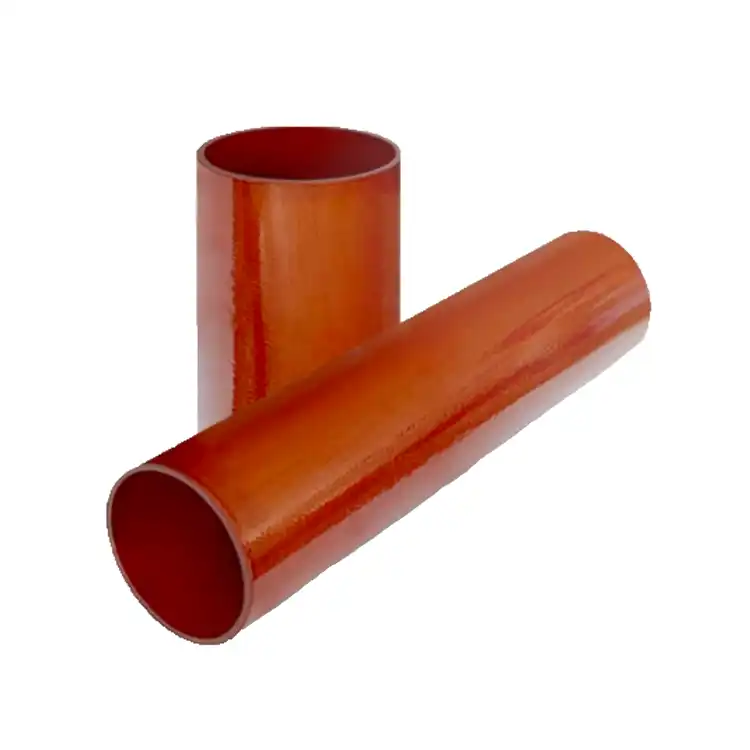
3526 Phenolic Cloth Laminated Tube for Transformer Insulation Systems
2026-07-23 17:20:21
When sourcing reliable insulation materials for transformer applications, the 3526 Phenolic Cloth Laminated Tube stands out as a proven solution. Manufactured using phenolic resin-impregnated cotton cloth through precise scouring, desizing, heating, rolling, and curing processes, this material combines robust mechanical properties with excellent dielectric performance. Its natural red color and customizable dimensions make it suitable for diverse electrical and power sector needs, offering engineers and procurement teams a dependable option for high-performance transformer insulation systems.
Understanding 3526 Phenolic Cloth Laminated Tubes: Properties and Technical Specifications
Manufacturing Process and Core Materials
To make 3526 Phenolic Cloth Laminated Tubes, high-quality cotton fabric is first scourged and then dessized to get rid of any flaws. After the cloth is ready, it is soaked in phenolic resin and heated, rolled, pressed, and baked in controlled processes. In the end, a thermosetting composite material with tightly bonded layers is created, which is stronger than most other types of insulation. This way of making things makes sure that the dimensions stay the same and that the performance stays the same across production batches, which is very important for buying officers who are in charge of big generator projects.
Critical Performance Parameters
Engineers can make better choices when they understand technical standards. The density of the material is between 1.04 and 1.20 g/cm³, which helps explain why it is both light and strong. At ≒4%, water absorption is still very low, which protects against damage caused by moisture in wet work settings. The lowest temperature at which it stays stable is 130°C, which means it will work reliably in conditions of constant operational heat. It can withstand bending forces of more than 80 MPa and compression forces of up to 45 MPa, so it can be used for structure insulation tasks that need mechanical toughness.
The electrical qualities are also very amazing. In normal conditions, the surface resistance is ≥1.0×10⁸ ©, and it stays at ≥1.0×10⁷ © even when it's wet. The volume resistivity is about the same, at ≥1.0×10⁷ Ω·m when it's dry and ≥1.0×10⁵ Ω·m when it's wet. The vertical layer direction electric strength reaches ≥3.5 MV/m when tested at 50Hz and 20°C in transformer oil. This is very good for protecting against electrical breakdown and is especially important for transformer use.
Dimensional Flexibility and Customization
One useful benefit for buying teams is the wide range of measurements that can be used. The inside diameters can be made from φ5mm to φ1500mm, and the outside diameters can be made from φ6mm to φ2000mm. The wall thickness starts at 0.5mm and goes up to 2000mm. The standard length of a tube is up to 2 meters, but buyers and makers can work out special lengths. This gives engineering teams the freedom to say exactly what their transformer designs need, without having to sacrifice material performance or settle for options that don't work well.

Advantages of 3526 Phenolic Cloth Laminated Tubes in Transformer Insulation Systems
Superior Electrical Insulation Properties
Because it has a high radial tensile strength and controlled dielectric qualities, the material is very useful for insulating generator coils and blocking arcs. The 3526 Phenolic Cloth Laminated Tube keeps its stable electrical resistance when it's working in transformer oil environments. This stops current leakage and keeps important parts safe from voltage stress. This dependability directly leads to longer generator life and fewer repair needs, which gives procurement managers real cost savings over the lifecycle.
Thermal Management and Chemical Resistance
When they're working, transformer systems make a lot of heat, so they need to be thermally stable. Because the material has a Class E thermal grade, it stays structurally and electrically sound at temperatures of 130°C and higher. In contrast to some polymer options that break down or soften when heated, phenolic laminates keep their shape and strength. The material is also resistant to transformer oils, acids, and industrial chemicals, which means it won't break down when it comes into contact with the fluids that are usually found in power delivery equipment.
Mechanical Strength and Machinability
The material's ability to resist industrial processing is something that engineering teams like. Because it has a high rotational tensile strength and a high compressive strength, it can be used as solid insulation parts that can handle mechanical loads without breaking. The material can be precisely cut, drilled, threaded, and made, which allows for custom fitting when putting together a generator. This ability to be machined cuts down on production time and lets design changes be made without having to come up with completely new material specifications.
When these traits come together, they offer measured benefits. Manufacturers of transformers say that when they use quality 3526 Phenolic Cloth Laminated Tubes, there are fewer insulation failures, less downtime during repair rounds, and better system stability overall. Procurement professionals are confident in using this material for important power infrastructure projects because it has been used successfully in harsh industrial settings.
Comparing 3526 Phenolic Cloth Laminated Tubes with Alternative Insulation Materials
Phenolic vs. Epoxy Glass Cloth Tubes
Epoxy glass cloth tubes can handle higher temperatures, usually Class F (155°C), and in some situations have a slightly higher dynamic strength. 3526 Phenolic Cloth Laminated Tubes, on the other hand, are more cost-effective for uses where high temperatures change often. In normal transformer working conditions, the phenolic choice works very well and costs less than the other options. When procurement teams are on a tight budget, they often find that phenolic materials give them the performance they need without the high cost of epoxy alternatives.
Phenolic vs. Fiberglass Reinforced Materials
Fibreglass tubes work well in corrosive settings and have good electrical qualities. However, 3526 Phenolic Cloth Laminated Tubes usually make them easier to work with and keep their shape. The cotton cloth reinforcement in phenolic tubes makes the structure more uniform and predictable during machining, which cuts down on waste and boosts production efficiency. When engineers make phenolic parts instead of abrasive fibreglass ones, they like how the cutting properties are consistent, and the tool wear is lower.
Material Selection Considerations
Which insulation material to use varies on the needs of the product. 3526 Phenolic Cloth Laminated Tubes are the best choice for projects that need solid electrical protection, good mechanical qualities, good thermal performance, and solutions that don't break the bank. This balanced performance profile is often good for medium-voltage transformers, power distribution equipment, and industrial electrical systems. Knowing these trade-offs helps procurement teams choose materials that meet technical needs without being too specific, which would raise project costs for no reason.
Procurement Guide: How to Source 3526 Phenolic Cloth Laminated Tubes Efficiently?
Identifying Qualified Suppliers
Evaluating suppliers is the first step to successful buying. Look for companies that have quality management systems that are written down and have at least ISO 9001:2015 certification. Check to see how much they can make. If their yearly productivity is around 100 tonnes, that means they have a well-established manufacturing system that can handle big orders. Check that the material meets basic performance standards for transformer applications by making sure it meets relevant standards like GB/T 5132 and international equivalents.
Ask for technical datasheets that list the product's physical and electrical properties as well as any size or shape restrictions. Suppliers with a good reputation give a lot of information, like test methods, quality control processes, and material licenses. Because of this, engineering teams can make sure that the specs match the needs of the project before making big purchases.
Negotiating Terms and Customization
Standard goods can be used in a lot of different situations, but unique specs often make performance and installation more efficient. Talk about the size needs early on in the buying process. Usually, the inner diameter, outer diameter, wall thickness, and length can be changed as long as they don't affect the making process. Make sure everyone understands the minimum order amounts, wait times, and price structures for different order amounts.
When planning project timelines, transportation freedom is important. Logistics flexibility is provided by suppliers who offer a range of shipping choices, such as ocean freight for big orders, air transport for urgent needs, and land shipping for deliveries within the same area. Make sure that the packaging standards protect the materials while they're being shipped. This is especially important to keep them from absorbing moisture, which could damage the electrical properties.
Building Long-Term Supplier Relationships
Supply chain security is achieved by building partnerships with dependable makers. Companies that have been making things for decades and have done a lot of business with other countries know the rules for overseas purchasing and communication. They usually keep better track of their inventory, offer quick technical support, and make sure that the quality of their products is the same from one order to the next. These things lower the risks of buying things and make the process of reordering things for ongoing projects easier.
Application Insights: Using 3526 Phenolic Cloth Laminated Tubes in Transformer Insulation
Core Insulation Applications in Transformers
3526 Phenolic Cloth Laminated Tubes play several important roles in the building of transformers. They keep conductive parts from touching each other electrically, which stops short circuits and voltage drops. The tubes hold up the coils and keep their exact shape while they are being assembled and used. Because they are so strong, they can be used as structural spacers to keep oil flow lines open for cooling while also absorbing vibration and heat expansion forces.
The balanced qualities of the material are especially useful for distribution transformers. Medium-voltage applications need materials that are strong enough in terms of dielectric strength, thermal stability, and mechanical resilience. These materials meet those needs without the high cost of exotic materials. Engineers in the power sector choose these tubes for uses like pad-mounted transformers and junction equipment where stable long-term performance is important.
Best Practices for Handling and Machining
The performance of a material is maximised when it is processed correctly. Because phenolic laminates don't conduct heat well, they need to be machined in a certain way. For example, you need to use low feed rates and high cutting speeds to keep heat from building up and damaging the surface or delaminating the laminate. It is better to use dry machining methods instead of wet cutting with coolants, which can change the dielectric qualities and add wetness that hurts electrical performance.
Applying insulating varnish to cut surfaces after cutting protects them from moisture, which is especially important for parts that work in wet places. Keep finished parts in their original packaging in dry, well-ventilated areas that are away from sources of fire. When stored properly, materials have a shelf life of twelve months after they are made. This lets procurement teams keep reasonable inventory levels without quality going down.
The dust and smells that are made during machining need to be properly ventilated, and workers need to be protected. Plan the steps in the production process so that they meet these safety standards while still being efficient.
Emerging Trends and Future Developments
The insulation materials business keeps moving forward with new reinforcement methods and better resin formulas. Premium options are more expensive than enhanced phenolic resins, but they can handle higher temperatures for longer. New technologies in manufacturing make dimensions more consistent and cut down on output differences, which helps users who need tight tolerances. Environmental concerns lead to the creation of more environmentally friendly production methods and materials that can be recycled.
By keeping up with these changes, procurement teams can predict when specifications will change and find ways to make future transformer designs perform better. Working with makers with a lot of experience can give you access to technical information and new product choices that could give you a competitive edge.
Conclusion
The 3526 Phenolic Cloth Laminated Tube is a safe choice for transformer insulation because it has the right amount of electrical, thermal, mechanical, and chemical qualities. Procurement success depends on knowing its technical specs, comparing it correctly with other materials, and getting it from reliable manufacturers. The material has a history of working well in power distribution equipment, is cost-effective, and can be easily customised. These factors make it a good choice for engineering teams that need to define insulation components. The material's natural benefits are maximised when it is installed and maintained correctly, which adds to the total stability of the transformer system.
FAQ
What temperature range can 3526 Phenolic Cloth Laminated Tubes withstand?
These tubes stay stable at temperatures above 130°C, making them good for Class E uses. This temperature grade is based on how transformers usually work, but each installation should be looked at separately based on the temperature of the area, the number of load cycles, and how well the cooling system works.
How can I verify the quality and authenticity of purchased materials?
Ask for all the scientific information you need, such as test results that meet GB/T 5132 standards. If you need to, get independent testing to make sure of the physical properties. Check the density (1.04–1.20 g/cm³), water absorption (≤4%), and electrical strength (≥3.5 MV/m in transformer oil). Reliable providers keep quality records for each batch of production and issue certifications as needed.
Can dimensions be customized for specific transformer designs?
Manufacturers can meet unique requirements as long as they are within their production limits. It is possible to have inner diameters between φ5mm and φ1500mm and outer diameters between φ6mm and φ2000mm. The wall thickness can start at 0.5mm. Talk about specific needs during the buying process to make sure it's possible and to find out how much it will cost for non-standard measurements.
Partner with J&Q for Your 3526 Phenolic Cloth Laminated Tube Requirements
When it comes to buying things, J&Q has more than 20 years of experience making insulation materials and more than 10 years of experience trading with other countries. Our long-term relationships with business companies in both the United States and other countries show that we are dedicated to providing steady quality and on-time delivery. When you buy 3526 Phenolic Cloth Laminated Tube from J&Q, you get full expert help, a lot of customisation choices, and easy logistics management thanks to our integrated shipping services. Email our team at info@jhd-material.com to talk about the insulation needs for your transformers, get full technical datasheets, or get quotes for your future projects.
References
1. Smith, R.J. (2019). Insulation Materials for Power Transformers: Selection and Application. Technical Press International.
2. Chen, W. & Martinez, L. (2021). "Phenolic Laminate Performance in High-Voltage Environments." Journal of Electrical Insulation Engineering, Vol. 34, Issue 2, pp. 145-162.
3. Anderson, K.P. (2020). Industrial Composite Materials: Properties, Processing, and Applications. Engineering Materials Publishing.
4. International Electrotechnical Commission (2018). IEC 60641: Specification for Pressboard and Presspaper for Electrical Purposes. Geneva: IEC Publications.
5. Zhang, H., Thompson, D. & Kumar, S. (2022). "Comparative Analysis of Transformer Insulation Systems." IEEE Transactions on Dielectrics and Electrical Insulation, Vol. 29, No. 3, pp. 892-908.
6. National Electrical Manufacturers Association (2017). NEMA Standards for Industrial Laminated Thermosetting Products. Rosslyn: NEMA Publications.