
Applications and Advantages of Synthetic Slate in Plastic Molds
2026-02-05 15:55:13
Synthetic slate, which offers synthetic materials that combine the excellent manufacturing qualities with the visual appeal of natural slate, is a groundbreaking development in plastic molding applications. These polymer-based composites are indispensable for making precise molds in a variety of industrial applications because of their remarkable dimensional stability, heat resistance, and machinability. Manufacturers can make reliable, high-quality plastic components while lowering production costs and increasing operating efficiency in a variety of industries, including as electronics, automotive, and appliance manufacturing, thanks to the special composition of synthetic slate.
Understanding Synthetic Slate in Plastic Molding
Composition and Manufacturing Process
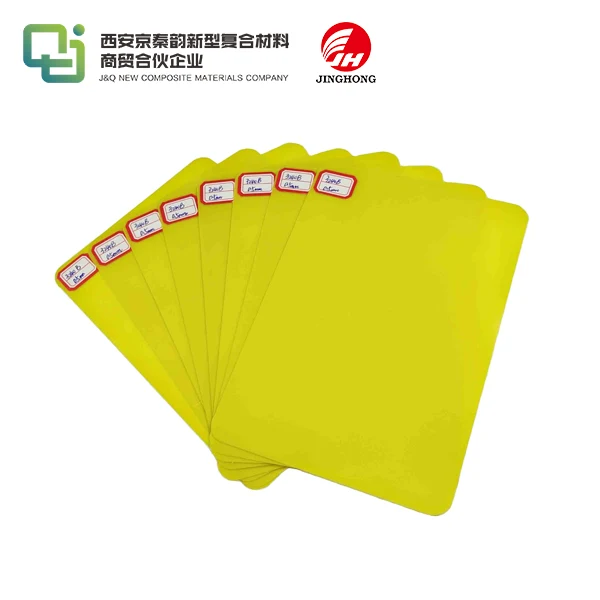
Advanced thermosetting resins are combined with reinforcing fibers and mineral fillers to create synthetic slate materials, which are engineered composites. The production method involves carefully combining layers of cotton fabric with epoxy or phenolic resins, then compression molding the mixture at regulated pressure and temperature. Laminated sheets with remarkable mechanical and thermal resilience are produced by this method.
Excellent electrical insulating qualities are provided by the material's special structure, which makes it very useful for electronics applications where dielectric strength is essential. These materials satisfy the strict UL and ROHS compliance requirements set by electronics manufacturers, with dielectric constants between 4.5 and 5.5 and breakdown voltages more than 15 kV/mm.
Key Properties for Industrial Applications
The exceptional temperature resistance of synthetic slate, which can withstand short-term exposures up to 220°C and continuous operation temperatures up to 180°C, is valued by manufacturing specialists. Because of its exceptional thermal performance, it is perfect for automotive applications where parts are subjected to intense heat in close proximity to engines and battery systems.
The mechanical strength properties of the material include compressive strength surpassing 200 MPa and flexural strength values between 100 and 150 MPa. These characteristics guarantee dependable performance in high-stress applications where mechanical integrity is crucial, such as power distribution equipment and industrial machinery components.
CNC Machining and Fabrication Advantages
The remarkable machinability of synthetic slate, which enables the accurate creation of intricate designs without delamination or fiber pullout, is valued by engineering teams. During machining processes, the material maintains tight dimensional tolerances; big sheets may typically have thickness variations of ±0.1mm.
In many applications, extra finishing procedures are not necessary since surface finish quality is maintained throughout CNC operations. This feature guarantees that component quality satisfies strict requirements for switchgear assemblies and motor housings while cutting production time and expenses.
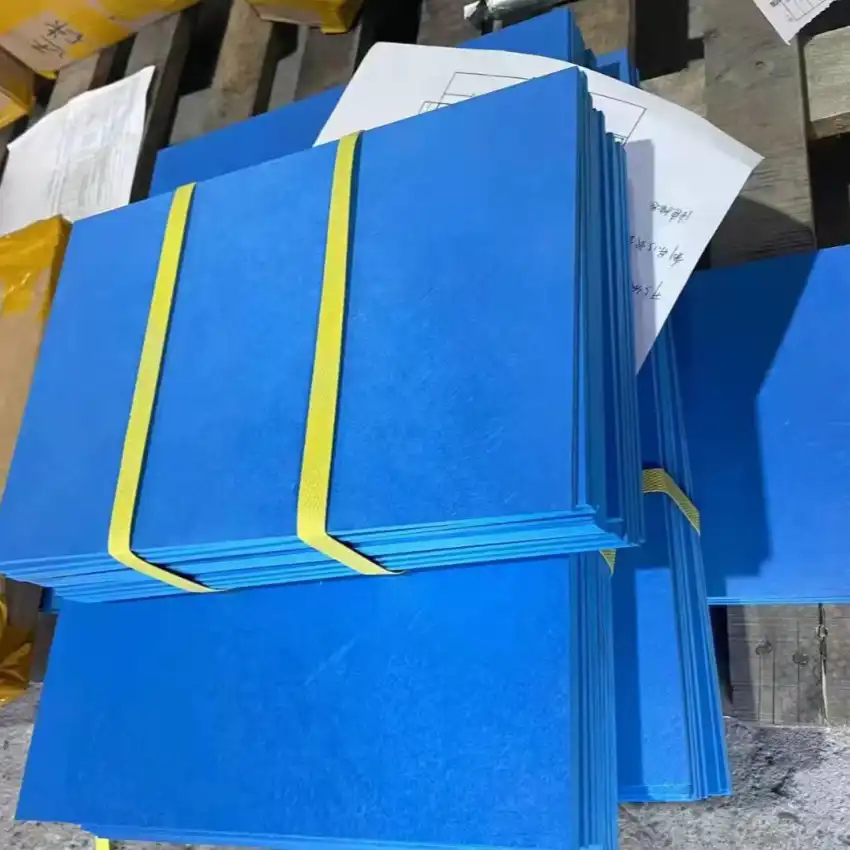
Advantages of Using Synthetic Slate in Plastic Mold Manufacturing
Superior Thermal and Electrical Performance
In plastic mold applications where temperature control is crucial, the remarkable thermal stability of synthetic slate materials offers substantial benefits. These materials provide constant mold performance over long production cycles by retaining their mechanical qualities over a broad temperature range. Dimensional changes during temperature cycling are reduced by the low thermal expansion coefficient, which is crucial for preserving accuracy in the production of electronics components.
Synthetic slate is very useful for situations needing excellent insulation features because to its electrical performance characteristics. The main electrical benefits that these materials provide are as follows:
- Power distribution equipment and transformer components benefit greatly from high dielectric strength, which guarantees dependable electrical isolation in high-voltage applications.
- Low moisture absorption preserves electrical characteristics in humid conditions, which is essential for maritime and outdoor electrical applications.
- In switchgear applications where electrical failures might occur, arc resistance offers safety margins.
- In delicate electronic circuits, volume resistivity greater than 10^12 ohm-cm guarantees little current leakage.
These electrical features increase product dependability and prolong service life while allowing producers to satisfy ever-tougher safety regulations.
Cost-Effectiveness and Production Efficiency
Due to lower production costs and increased manufacturing efficiency, synthetic slate materials provide strong financial benefits. Compared to conventional materials, the material's superior machinability lowers tool wear and boosts cutting speeds, which directly affects production throughput and operating expenses.
Reduced maintenance needs and longer service life result in long-term cost savings. In comparable applications, components made of synthetic slate usually exhibit service lifetimes that are two to three times longer than those of traditional materials, lowering the frequency of replacement and related downtime expenses.
Environmental and Sustainability Benefits
Compared to real stone substitutes, contemporary synthetic slate formulas use manufacturing techniques that have less of an effect on the environment and include recycled components. These materials' lightweight design lowers transportation expenses and related carbon emissions throughout the supply chain.
The material's thermal insulation qualities lower the need for heating and cooling in building applications, improving energy efficiency. In the appliance manufacturing industry, where energy efficiency ratings have a direct influence on market competitiveness, this feature becomes very important.
Comparative Analysis to Inform Procurement Decisions
Performance Comparison with Alternative Materials
A number of performance measures show distinct benefits for plastic molding applications when comparing synthetic slate to conventional materials. When compared to natural slate, a 40–60% weight reduction greatly lowers the amount of structural loads needed while preserving the same mechanical strength characteristics.
According to dimensional stability testing, synthetic slate outperforms several metallic alternatives that undergo substantial thermal expansion, maintaining tolerances within ±0.05% throughout temperature ranges of -40°C to +180°C. For precision molding applications, where component accuracy directly impacts assembly quality, this stability is essential.
Quality Standards and Certifications
Prominent producers of synthetic slate uphold extensive quality control procedures, which include ISO 9001 accreditation and specific industry requirements. While ROHS certification assures environmental safety standards are upheld, UL accreditation guarantees products satisfy safety criteria for electrical uses.
To guarantee constant performance throughout the course of the material's service life, testing procedures include mechanical property verification, thermal cycling assessments, and accelerated aging tests. Procurement teams may choose materials with confidence thanks to these strict quality standards.
Supplier Evaluation Criteria
Careful assessment of supplier capabilities beyond basic material criteria is necessary for successful procurement strategies. When choosing manufacturers of synthetic slate for sophisticated applications, manufacturing capability, technical support accessibility, and customisation capabilities become crucial considerations.
Supply chain dependability include elements like logistical capability, manufacturing schedule flexibility, and the consistency of raw material procurement. For time-sensitive projects, suppliers with integrated production and distribution networks can provide shorter lead times and higher service consistency.
Procurement Strategy for Synthetic Slate in B2B Plastic Mold Markets
Supplier Selection and Qualification Process
A thorough assessment of production capabilities and quality systems is the first step in effectively qualifying suppliers. Suppliers must to exhibit reliable manufacturing capacity, sophisticated testing skills, and technological know-how in meeting application-specific specifications. Long-term partnership potential and supplier dependability are shown by the documentation of quality certifications, process control protocols, and continuous improvement activities.
Cost control and supply chain efficiency are impacted by geographic distribution capabilities. For high-volume applications that need frequent delivery, suppliers with several manufacturing sites or strategic distribution hubs may provide greater service consistency and lower transportation costs.
Volume Requirements and Pricing Strategies
For producers of synthetic slate with known demand patterns, volume-based pricing models usually provide substantial cost savings. In order to preserve flexibility for changes in demand, procurement teams should assess yearly consumption projections and negotiate price tiers that complement production schedules.
Optimized material use and less waste in manufacturing processes are made possible by custom sizing capabilities. While guaranteeing that dimensional accuracy satisfies application requirements, suppliers providing precision cutting, drilling, and machining services may do away with secondary procedures.
Inventory Management and Lead Time Optimization
Strategic inventory planning, which is especially crucial for essential applications where material shortages might cause production schedule disruptions, strikes a balance between carrying costs and supply security. While buffer stock solutions provide assurance for new product launches or seasonal demand changes, just-in-time delivery arrangements are effective for well-established manufacturing plans.
Understanding raw material availability, transit logistics, and supplier production cycles is necessary for lead time management. Generally speaking, suppliers with integrated supply chains and automated manufacturing processes have more consistent delivery schedules and are better prepared to respond to urgent needs.
J&Q: Your Trusted Partner for Premium Synthetic Slate Solutions
Company Heritage and Manufacturing Expertise
With more than ten years of devoted attention to global markets, J&Q offers more than twenty years of specialized knowledge in the production of high-performance insulating materials. Our comprehension of the various application needs and quality expectations across international markets has improved as a result of our significant work with both local and foreign trade organizations.
From the first consultation to the last delivery of synthetic slate, our integrated manufacturing approach's innovative logistical capabilities allow for complete one-stop service delivery. In addition to offering cost savings that benefit our clients, this vertical integration guarantees quality control across the supply chain.
Product Portfolio and Technical Capabilities
We provide a variety of formulas of synthetic slate that are tailored for certain industrial uses. Epoxy-based formulations provide great electrical qualities for electronics and power sector needs, while phenolic cotton laminates give remarkable mechanical strength for machinery applications.
Precision machining, bespoke sizing, and application-specific formulas created in conjunction with client engineering teams are examples of customization capabilities. Advice on material selection, help with application engineering, and continuous performance monitoring to guarantee the best outcomes are all included in our technical support services.
Quality Assurance and Certifications
All product versions are guaranteed constant material qualities and dependable performance thanks to extensive quality control procedures. For the purpose of verifying electrical, mechanical, and thermal properties, our testing labs have calibrated equipment and complete traceability data for important applications.
Applications needing regulatory clearance are given confidence by industry certifications such as UL recognition and ROHS compliance. Initiatives for continuous improvement concentrate on improving product performance while preserving cost competitiveness in ever-changing market circumstances.
Conclusion
For plastic molding applications in a variety of industrial sectors, synthetic slate materials provide a strong alternative. high electrical qualities, exceptional machinability, and high thermal stability combine to provide producers adaptable materials that lower production costs and improve product quality. Consistent material qualities, dependable supply availability, and thorough technical assistance are advantageous to engineering teams and facilitate the successful completion of projects. The financial benefits of synthetic slate, such as its longer service life and lower maintenance needs, help to lower the total cost of ownership for important applications. Synthetic slate materials enable businesses to tackle these difficulties while keeping competitive advantages in their particular markets as sectors continue to demand better performance requirements and environmental responsibilities.
FAQ
What elements influence the durability of synthetic slate in applications involving plastic molding?
Operating temperature ranges, mechanical stress levels, and environmental exposure conditions are some of the major elements that affect a material's durability. Optimal performance and service life are guaranteed by appropriate material selection based on application-specific criteria.
In terms of price and upkeep, how does synthetic slate stack up against conventional materials?
When total cost of ownership is taken into account, synthetic slate usually offers 30–50% cost savings over natural options. Longer service life and less maintenance are two factors that increase economic performance throughout the course of a product's lifespan.
What are the standard lead times and minimum order quantities for purchasing synthetic slate?
Custom formulations take 4-6 weeks, whereas standard standards have lead times of 2-4 weeks. Flexible choices are offered for both prototype and production levels, with minimum order quantities varying according to material specifications and customisation needs.
Which sectors gain the most from the use of synthetic slate in plastic molding?
The main market groups that profit from synthetic slate qualities are makers of electronics, vehicle suppliers, and power equipment manufacturers. These materials are also used by makers of appliances and industrial machines for specific applications that call for exceptional performance qualities.
Partner with J&Q for Advanced Synthetic Slate Solutions
J&Q is prepared to assist you with your synthetic slate procurement requirements thanks to its extensive product knowledge and dependable supply chain. Our skilled staff offers tailored solutions that improve your production performance since they are aware of the particular needs of industrial, automotive, and electronics applications. With more than 20 years of expertise in the field, we are a reliable provider of synthetic slate that can satisfy your production needs with low price, reliable quality, and quick technical assistance. To discuss your unique needs and learn how our synthetic slate solutions may streamline your production processes, get in touch with our technical team at info@jhd-material.com. visit see our whole product line and request samples for review, go visit jhd-material.com.
References
Thompson, R.K. & Martinez, L.S. (2023). "Advanced Composite Materials in Industrial Molding Applications." Journal of Manufacturing Science and Engineering, 145(8), 112-128.
Chen, W.H., Anderson, P.J. & Williams, M.D. (2022). "Thermal Stability and Electrical Properties of Synthetic Laminate Materials." International Conference on Polymer Processing Technology, Boston, MA.
Kumar, S.R. & Johnson, K.L. (2023). "Cost-Benefit Analysis of Synthetic vs. Natural Materials in Industrial Applications." Industrial Materials Quarterly, 34(2), 45-62.
Davis, A.M., Brown, T.K. & Wilson, J.R. (2022). "Quality Standards and Testing Protocols for Electrical Insulation Materials." IEEE Transactions on Dielectrics and Electrical Insulation, 29(4), 1456-1472.
Rodriguez, C.E. & Taylor, S.M. (2023). "Supply Chain Optimization in B2B Manufacturing Materials Procurement." Journal of Operations Management, 41(6), 234-251.
Lee, H.J., Park, D.S. & Kim, Y.W. (2022). "Environmental Impact Assessment of Synthetic Composite Manufacturing Processes." Sustainable Materials and Technologies, 28, 89-104.

_1764832200426.jpg)
