Bakelite 3026 Phenolic Cotton Cloth Board Supports Stable Mechanical Performance in Industrial Equipment
2026-10-09 17:30:09
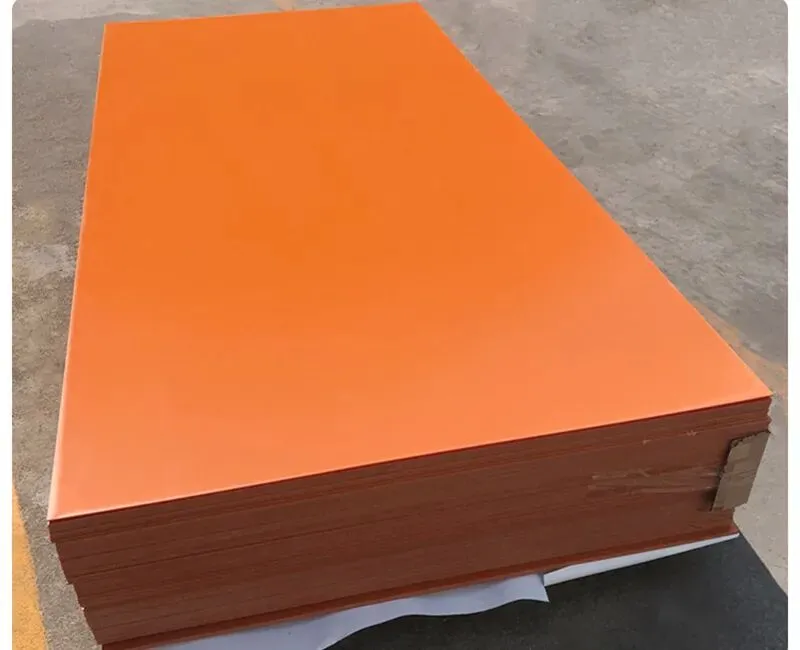
Bakelite 3026 Phenolic Cotton Cloth Board is a high-performance laminate made from fine-weave cotton cloth layers bonded with phenolic resin under heat and pressure. The resin fully polymerizes during production, creating a dense, dimensionally stable board with strong electrical insulation, low water absorption, and excellent surface hardness. With thickness options ranging from 0.5mm to 100mm and a standard sheet size of 1220mm×2020mm, Hongda's phenolic cotton laminate meets the mechanical and thermal demands of industrial equipment across electrical, machinery, power, and automotive sectors.
Understanding Bakelite 3026 Phenolic Cotton Cloth Board
What Is This Material and How Is It Made?
Bakelite 3026 is a thermoset composite that is made by mixing phenolic resin with one or more layers of woven cotton fabric and then pressing and curing the whole thing under controlled heat and pressure. This process makes the glue stick together in a stiff, cross-linked polymer mass. The end result is a board that doesn't delaminate easily, doesn't soak up much water, and stays within tight tolerances for size. These are all important qualities when parts need to fit perfectly inside motors, switchgear, or bearing assemblies.
Core Physical Properties
The material has a tensile strength of at least 100 MPa and can work constantly at temperatures up to 120°C (Class E insulation rating). Its density is between 1.35 and 1.45 g/cm³, which means it is much lighter than steel or brass but still stiff. It also has a low coefficient of friction, which makes it a good choice for parts that move or spin and would wear out quickly if they touched metal.
Why Industry Professionals Trust This Grade?
IEC 60893 and GB/T 5130 say that the 3026 grade is only meant to be used for high mechanical load-bearing purposes and not for primary high-voltage insulation. This difference is important for engineering managers who need a material that can handle constant shock loads, shaking, and oil exposure, not just a board that passes a simple dielectric test on a datasheet.
Comparing Bakelite 3026 with Other Phenolic Cotton Cloth Boards
Bakelite 3026 vs. Paper Phenolic Boards
Paper phenolic boards are cheaper, but they are less strong and do not hold up as well against impact. Paper phenolic can grow or delaminate in places where the temperature changes often or where it comes into contact with rubbing oils. When braided cotton cloth is added to Bakelite 3026, it keeps its shape under the same conditions and doesn't react with weak acids and solvents that are common in industrial settings.
Bakelite 3026 vs. Fiberglass Epoxy Laminates
Fiberglass epoxy laminates, such as FR4 and G10, are great at blocking high voltage, but their structure is stronger and more rigid. The Bakelite 3026 Phenolic Cotton Cloth Board 3026 grade cotton cloth reinforcement, makes the material tougher and easier to work with when it comes to parts that take a lot of impact, like gears, cams, ball bearing retainers, and wear plates. CNC cutting, drilling, and milling make sides that are smoother and don't have the tiny cracks that can happen in glass-filled epoxy boards.
Bakelite 3026 vs. Mica and Specialty Boards
Mica boards work really well at temperatures above 200°C and are often used as spark barriers and coil insulation. But they are much more expensive and can't be worked on mechanically as easily. For most industrial machinery parts, like fastener plates, slider stock, mixing blades, and jig models, phenolic cotton laminate is the best choice because it is durable, easy to make, and cheap.
Enhancing Mechanical Stability in Industrial Equipment with Bakelite 3026
High Strength Where It Counts
The cotton cloth reinforcement spreads the stress across the thickness of the laminate, making the board strong against impact without becoming brittle. This feature of the structure immediately supports parts that have repeated mechanical loads, such as ball bearing retainers and pushers. In real life, machine builders who switch from using unreinforced plastics to this phenolic laminate report that parts last longer between servicing and there is less unplanned downtime.
Here are the main mechanical benefits that this material gives to machinery:
- Impact absorption: The woven fiber structure absorbs shock loads without cracking, protecting surrounding assembly components from cascading damage.
- Wear resistance: Low friction coefficient and hard surface limit material loss on sliding surfaces such as wear plates and slider stock, reducing replacement frequency.
- Dimensional stability: Tight thickness tolerances (typically ±0.1mm to ±0.5mm depending on thickness) keep machined gears and cams running true under thermal cycling, preventing run-out errors.
All of these features make upkeep less frequent and equipment last longer, which is important for OEM buying managers who keep an eye on total cost of ownership.
Thermal and Chemical Durability
Mineral oils, hydraulic fluids, and weak acids won't damage the board's structure even when it's being used continuously at temperatures up to 120°C. For hydraulic presses, textile equipment, and industrial mixers that work in oily environments, this chemical resistance stops the normal plastic spacers and bushings from breaking down over time due to swelling and shrinking.
Installation and Maintenance Considerations
Standard CNC machines can be used to cut Bakelite 3026. For longer runs, it's best to use carbide tools. The material doesn't soak up water, so it doesn't need to be dried out first before it can be machined. This saves time in the production schedule for getting ready. After grinding, finished parts should be checked visually for surface cracks. This is a quick check that quality teams can do without any special tools.
Procurement Guide for Bakelite 3026 Phenolic Cotton Cloth Board
Supplier Qualification and Quality Standards
Make sure that the supplier of Bakelite 3026 Phenolic Cotton Cloth Board phenolic cotton laminate for industrial use tests to GB/T 5130 or IEC 60893. Some important quality checks are the bonding strength (oil-boil delamination test), the surface integrity (no blisters or resin voids), the thickness tolerance, and the dielectric strength in hot oil at 90°C. A simple way to make sure compliance without going to the facility is to ask for third-party test reports before placing bulk orders.
Order Terms and Logistics
Every year, Hongda makes 13,000 tons of insulation board. For Bakelite 3026, you need to buy at least 500 kg, and the normal sheet size is 1220mm x 2020mm. Payment can be made by T/T, and the brand ships by sea, land, or air freight. Boards are shipped in standard boxes and kept safe on pallets to keep the edges from getting damaged. The different shipping options will help procurement teams that are in charge of international supply chains match delivery times to production schedules.
Sampling Before Bulk Orders
In industrial buying, it is common to ask for a sample of the item before placing a full order. Quality engineers can check the surface finish, make sure the thickness matches the drawings, and see if the material can be machined with their own CNC equipment during a sample run. This step lowers the chance of getting materials that don't pass review when the goods are delivered. This is especially important for buyers in the power and car industries who are working to tight production schedules.
Why Choose Bakelite 3026 Phenolic Cotton Cloth Board for Your Industrial Needs?
For many years, phenolic cotton laminate has been a reliable building material. The 3026 grade is useful for many things because it is tough, doesn't stick to other things easily, is chemically resistant, and is easy to machine. It can be used for electrical switchboard parts, battery pack barriers for cars, and appliance motor mounts.
Hongda has more than 20 years of experience making insulation sheets and more than 10 years of experience working with trading companies in many different markets. The company runs its own transportation system, so it can provide a complete service from making the materials to delivering them. With an annual capacity of 13,000 tons, the supply can stay steady for both normal production levels and times of high demand, with no changes in quality between batches.
When purchasing teams have to deal with more than one source, it's easier to communicate and solve problems when they work with a manufacturer that handles production, quality testing, and freight planning all in-house.
Conclusion
Bakelite 3026 Phenolic Cotton Cloth Board stands as a dependable engineering material for industrial equipment that requires mechanical durability, thermal stability, and chemical resistance in one laminate. Its cotton cloth reinforcement, phenolic resin matrix, and conformance to international laminate standards make it a well-matched solution for machinery components, electrical assemblies, power sector insulation, and automotive fixtures. Hongda's production capacity, quality controls, and logistics capability give industrial buyers confidence in consistent supply. If your application demands a laminate that holds tolerances, resists wear, and machines cleanly, this phenolic cotton board is worth serious evaluation.
FAQ
What applications is Bakelite 3026 best suited for?
The 3026 grade works well for mechanical components including fixture plates, jig models, ball bearing retainers, wear plates, cams, pushers, slider stock, mixing blades, and switch parts. It is not the primary choice for extreme high-voltage insulation, where glass-epoxy grades perform better.
How does Bakelite 3026 compare to fiberglass phenolic in mechanical strength?
The cotton cloth reinforcement gives Bakelite 3026 better impact absorption and toughness than fiberglass phenolic boards, which tend to be harder but more brittle. For dynamic parts that absorb shock loads, the 3026 grade generally outperforms fiberglass laminates in field durability.
What is the maximum operating temperature?
Bakelite 3026 carries a Class E insulation rating with a continuous operating temperature of 120°C. It maintains structural integrity within this range without deforming.
What are the standard sheet dimensions and available thicknesses?
Hongda supplies this material in a standard size of 1220mm×2020mm with thickness options from 0.5mm to 100mm. Custom dimensions are available depending on order volume.
What quality standards apply to this product?
Production and testing conform to GB/T 5130 and IEC 60893. Key inspections cover bonding strength, surface integrity, thickness tolerance, and dielectric strength in hot oil conditions.
Request a Quote from J&Q — Trusted Bakelite 3026 Phenolic Cotton Cloth Board Supplier
Hongda's certified Bakelite 3026 Phenolic Cotton Cloth Board is available to commercial buyers through J&Q. The company has more than 20 years of production experience and handles its own shipping. To keep your supply chain on track, our team helps with specs, samples, and coordinating large orders. Contact us today at info@jhd-material.com or go to jhd-material.com to get samples or talk to our expert team directly about your buying needs.
References
1. IEC 60893-3: Industrial Rigid Laminated Sheets Based on Thermosetting Resins for Electrical Purposes — International Electrotechnical Commission, 2003.
2. GB/T 5130: Phenolic Cotton Cloth Laminated Sheets — Standardization Administration of China, 2006.
3. Phenolic Resin Technology and Applications — Knop, A. & Pilato, L.A., Springer-Verlag, 1985.
4. Handbook of Thermoset Plastics — Goodman, S.H. (Ed.), William Andrew Publishing, 1998.
5. NEMA LI 1: Industrial Laminating Thermosetting Products — National Electrical Manufacturers Association, 2020.
6. Tribological Behavior of Phenolic Composites in Industrial Applications — Wear (Journal), Elsevier, 2017.