G10 ESD Epoxy Board Provides Static Control for Electronics Manufacturing
2026-09-30 16:46:45
When assembling sensitive PCBs or handling microchips on the production floor, static electricity is one of the most damaging—and least visible—threats. A single electrostatic discharge event can destroy a component worth hundreds of dollars without leaving any visible mark. That's exactly where G10 ESD epoxy board earns its place. This static-dissipative composite material sits in the critical range of 10⁵ to 10⁹ ohms surface resistivity, safely bleeding off static charges before they reach your components. In this guide, I'll walk through what makes this material work, how it compares to alternatives, and how to procure it with confidence.
Understanding G10 ESD Epoxy Board and Its Role in Static Control
What Makes It Different from Standard G10?
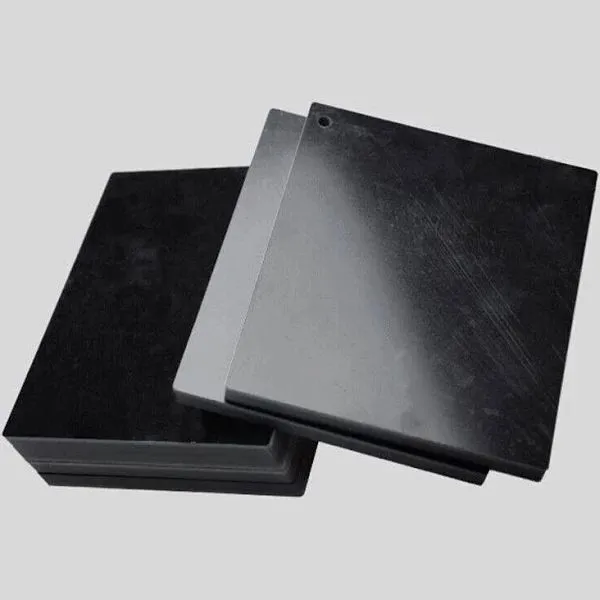
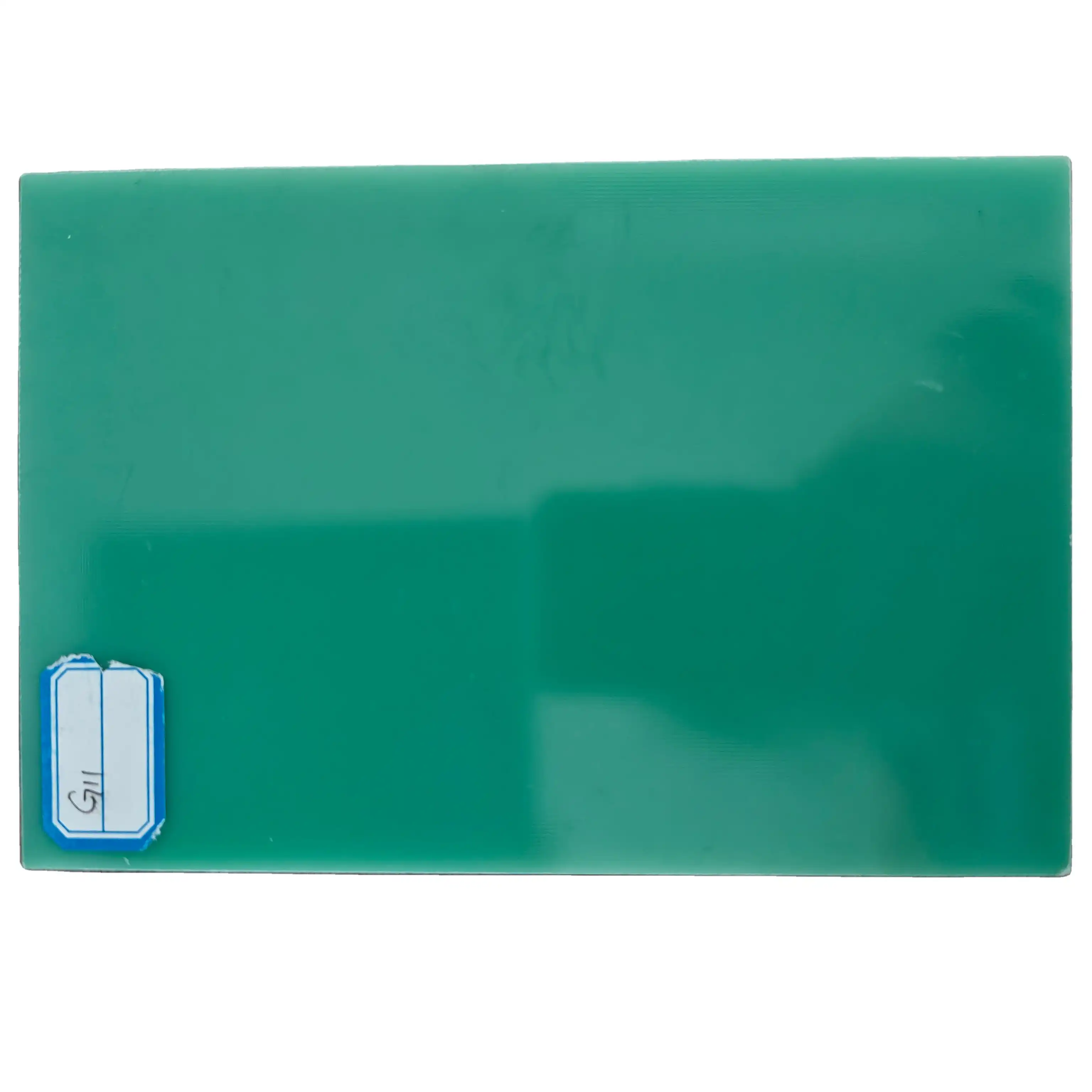
Standard G10 is a great electrical insulator, which is exactly what causes problems in places where ESD is a concern. An insulator keeps static charges in place instead of letting them go. The ESD variant fixes this by adding carbon-based conductive fillers to the epoxy resin matrix. This makes a path for volumetric dissipation that goes through the whole thickness of the material.
Material Composition and Key Properties
The base structure is still made of woven fiberglass cloth that is glued together with epoxy resin. This gives it the same chemical resistance and mechanical strength that engineers need. When conductive agents are added, the electrical behavior changes from protecting to dissipating static electricity. The bending strength stays the same, which is usually over 45,000 PSI.
Why Volumetric ESD Protection Matters?
In contrast to surface coats or anti-static sprays, a good G10 ESD board has ESD properties that run through the whole cross-section. The ability to dissipate static electricity stays the same whether you CNC machine it, drill through it, or cut custom profiles from it. This has to be done for all SMT pallets, test fixtures, and other surfaces that come into contact with components and are worked on over time.
Comparing G10 ESD Epoxy Board with Other Materials
When picking the right base material, you need to look at more than just the price per sheet. There are trade-offs between each type of material that depend on the purpose.
G10 ESD vs. Standard FR4
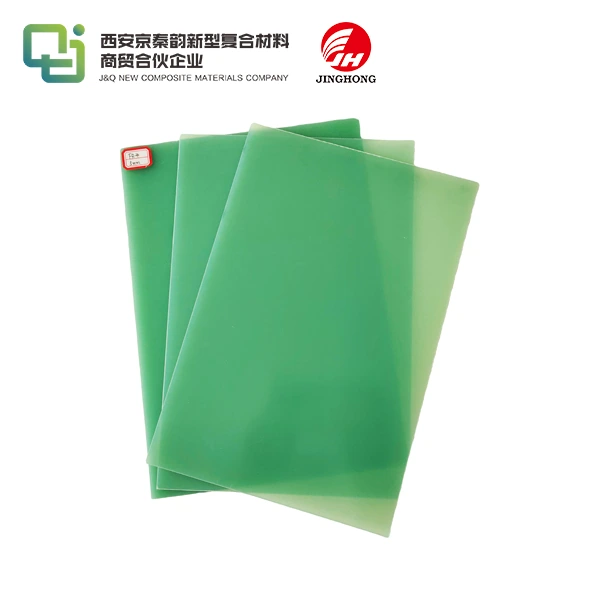
FR4 is the most popular PCB material in the world because it is strong and doesn't catch fire. FR4, on the other hand, is a clean insulator, so static electricity will build up on its surface. ANSI/ESD S20.20 says that FR4 does not meet the requirements for fixture use in ESD-protected areas (EPAs). The ESD-grade epoxy laminate fills that gap and keeps the same level of mechanical performance.
G10 ESD vs. Phenolic Cotton Sheet
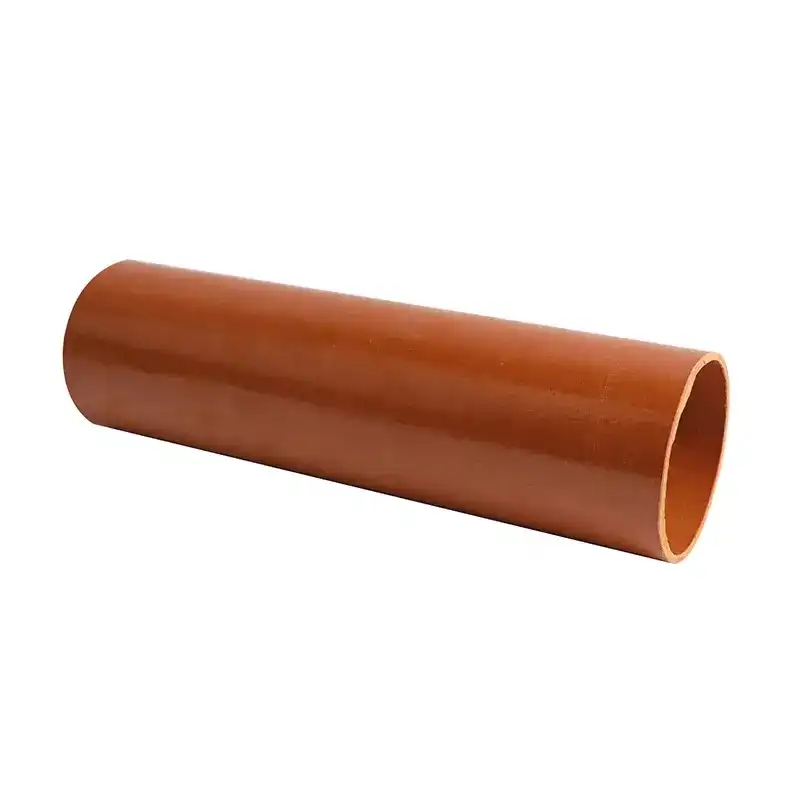
Phenolic cotton laminates are easier to work with and cost less, but they soak up water over time and don't stay the same size when they're under a lot of mechanical stress. Their surface resistivity isn't always the same, and they're not usually good for certified ESD environments, unlike a G10 ESD Epoxy Board. Phenolic is still useful for machinery builders who need structural insulation instead of static control. For tools for putting together technology, it's not good enough.
G10 ESD vs. Standard G10
There isn't much difference between the standard G10 and its ESD counterpart. They both have the same basic architecture, but one controls static electricity, and the other doesn't. Standard G10 doesn't protect against damage if your production line is in an EPA. Instead, it creates charges. The switch to ESD-grade material is not just a choice of materials; it is also a decision about how to control the process.
Technical Specifications and Testing Methods
Core Electrical Parameters
Surface and volume resistivity in the static-dissipative range of 10⁋ to 10 ohms, as measured by ANSI/ESD STM11.11 and STM11.12, are what make the specification. This range lets you control how fast the charge goes away—fast enough to keep it from building up and slow enough to keep it from damaging components with a quick release. Suppliers of good quality give batch-specific Certificates of Conformance (CoC) that show measured resistivity values, not just claims about what the values should be.
Mechanical and Thermal Testing
As per ASTM D790, numbers above 45,000 PSI should be confirmed by flexural strength tests. During normal operation, the temperature stays around 130°C, but it can rise briefly to 180°C. Thermal cycle tests show that resistivity stays the same after being heated and cooled many times. This is important for wave soldering carriers and reflow-adjacent clamps.
Certifications to Request from Suppliers
Before you place a large order, make sure you have proof that the products you want to buy are RoHS-compliant, UL-recognized (if needed), and made in a way that is ISO 9001-certified. A supplier that can't give you test results at the batch level is a risk in the buying process. Always make sure that the CoC includes measured values instead of just the ranges that were given.
Application Areas and Benefits of the ESD Epoxy Laminate
This stuff is used throughout the chain of making electronics, and it has a direct effect on yield rates and process consistency. Here are the main areas of use where it makes a real difference:
- SMT Solder Pallets and Wave Soldering Carriers: The low thermal mass of fiberglass-epoxy construction allows faster heat-up and cool-down cycles. The ESD property protects BGA and IC components from static shocks during the wash and transfer stages.
- ICT and Functional Test Fixtures: In bed-of-nails test setups, the board provides the structural base for pogo pins. Mechanical stiffness prevents flexing that causes false failures, while ESD protection shields the unit under test from discharge events generated by moving mechanical parts.
- Semiconductor Wafer Handling Trays: In cleanroom environments, low outgassing and resistance to chemical cleaning agents make this laminate compatible with ISO Class 5 and 6 environments. Static attraction of particulates is minimized.
- ESD-Safe Work Surfaces and Assembly Jigs: Any surface that contacts populated PCBs or bare dies in an EPA should meet ANSI/ESD S20.20 requirements. This material provides a compliant, durable, and machinable option for custom jig fabrication.
Because of these benefits of a G10 ESD Epoxy Board, there is less waste, fewer guarantee returns, and less work that needs to be redone. This is a real financial return that justifies the higher cost of the material compared to regular laminates.
Procuring G10 ESD Epoxy Board: What You Need to Know?
Supplier Qualification and Certification Verification
Look for manufacturers that have at least ISO 9001 certification and a written quality control process that includes testing of incoming raw materials and inspection of batches going out. Before placing a large order, ask for sample panels and use an accurate surface resistance meter to test the resistivity on your own. A trustworthy company that sells G10 ESD Epoxy Board will be happy with this process.
MOQ, Lead Times, and Custom Sizing
Standard sheet sizes are usually easy to find and can be sent out quickly. Longer lead times and higher MOQs are usually needed for custom thicknesses, non-standard panel sizes, and machined-to-print parts. Make these points clear right away during the discussion. If an engineering team is prototyping a new fixture, they should look into sample programs that let them try out small amounts without committing to full production.
Logistics and Supply Continuity
Working with a provider that handles their own transportation cuts down on mistakes during handoffs and makes delivery more reliable. Make sure your provider can give you the paperwork you need to get through customs, like compliance certificates and material safety data sheets. If you have ongoing production programs, a standing purchase order with agreed lead times will keep your schedule safe from shortages on the spot market.
Conclusion
Static-dissipative laminates are not a niche specialty item; they are needed for production control by any company that makes sensitive electronic parts. The G10 ESD Epoxy Board has a proven mix of mechanical strength, thermal stability, and consistent resistivity that other boards that have been treated on the outside can't match over time. You are not just buying a bit of fiberglass when you buy this material from a qualified seller who has proof of test results for each batch. You are investing in the reliability of the whole process.
FAQ
What is the difference between a G10 ESD board and an anti-static coating?
Because there are electrical layers in the resin matrix, the static-dissipative property of a G10 ESD board is spread throughout the whole material. Anti-static coatings are only on the surface; grinding or abrasion will take them off completely. Integral ESD is the only reliable choice for any fixture that needs to be reworked, drilled, or profiled.
Does humidity affect the resistivity of this material?
No matter how wet the air is, high-quality carbon-filled epoxy systems keep their resistance the same. When there isn't enough moisture in the air, cheaper versions that use surfactant-based anti-static agents can stop working. This is a regular problem in dry winter conditions or climate-controlled cleanrooms.
Can it withstand reflow oven temperatures?
It can work at temperatures of 130°C to 140°C all the time. This is good enough for standard wave soldering and carrier tasks. For lead-free reflow processes that keep temperatures above 260°C, you need better materials, like ESD-grade high-Tg composites.
Why do some boards measure as insulators after purchase?
This usually means that a surface-only treatment has worn off or that the electrical filler wasn't spread out evenly during production. Before receiving a delivery, you should always ask for a COC with batch-specific resistivity readings.
Partner with J&Q for Your Static Control Material Needs
Every order that J&Q fills is backed by more than 20 years of experience making insulating sheets and more than ten years of direct international trade. As a reliable G10 ESD Epoxy Board provider, we back up every shipment with test results for each batch, RoHS compliance, and our own transportation network to make sure it gets delivered on time. If you need regular panels or parts that are specially made for you, email us at info@jhd-material.com or go to jhd-material.com to get an example or talk to our engineering team about your needs.
References
1. ESD Association. ANSI/ESD S20.20: Protection of Electrical and Electronic Parts, Assemblies and Equipment. ESD Association, 2021.
2. IPC – Association Connecting Electronics Industries. IPC-A-610: Acceptability of Electronic Assemblies. IPC, 2020.
3. NEMA (National Electrical Manufacturers Association). NEMA LI 1: Industrial Laminating Thermosetting Products. NEMA, 2019.
4. Licari, James J., and Dale W. Swanson. Adhesives Technology for Electronic Applications. William Andrew Publishing, 2011.
5. Ott, Henry W. Electromagnetic Compatibility Engineering. Wiley, 2009.
6. Harper, Charles A. Electronic Materials and Processes Handbook. McGraw-Hill, 2004.
.webp)