Phenolic Paper Laminate Offers Cost-Effective Insulation for Electrical Parts
2026-09-29 17:11:35
If you work in electrical manufacturing or industrial procurement, you already know that choosing the right insulation material directly affects product safety, production cost, and long-term reliability. Phenolic paper laminate — a rigid thermosetting composite built from cellulose paper layers bonded with phenolic resin under high heat and pressure — hits a practical balance that many other materials simply cannot match at scale. It delivers solid dielectric strength, good thermal stability, and reliable machinability without pushing your budget into FR4 territory. This guide walks through everything a B2B buyer needs to know: material properties, real-world electrical applications, laminate comparisons, and sourcing strategy.
Understanding Phenolic Paper Laminate and Its Key Properties
What Is It Made Of?
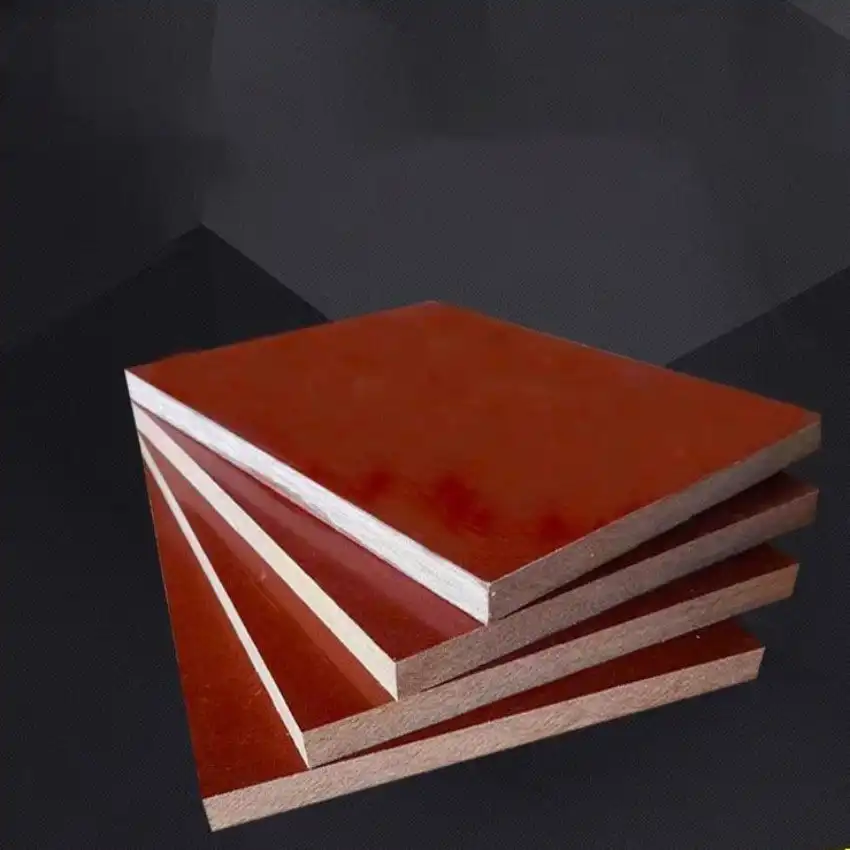
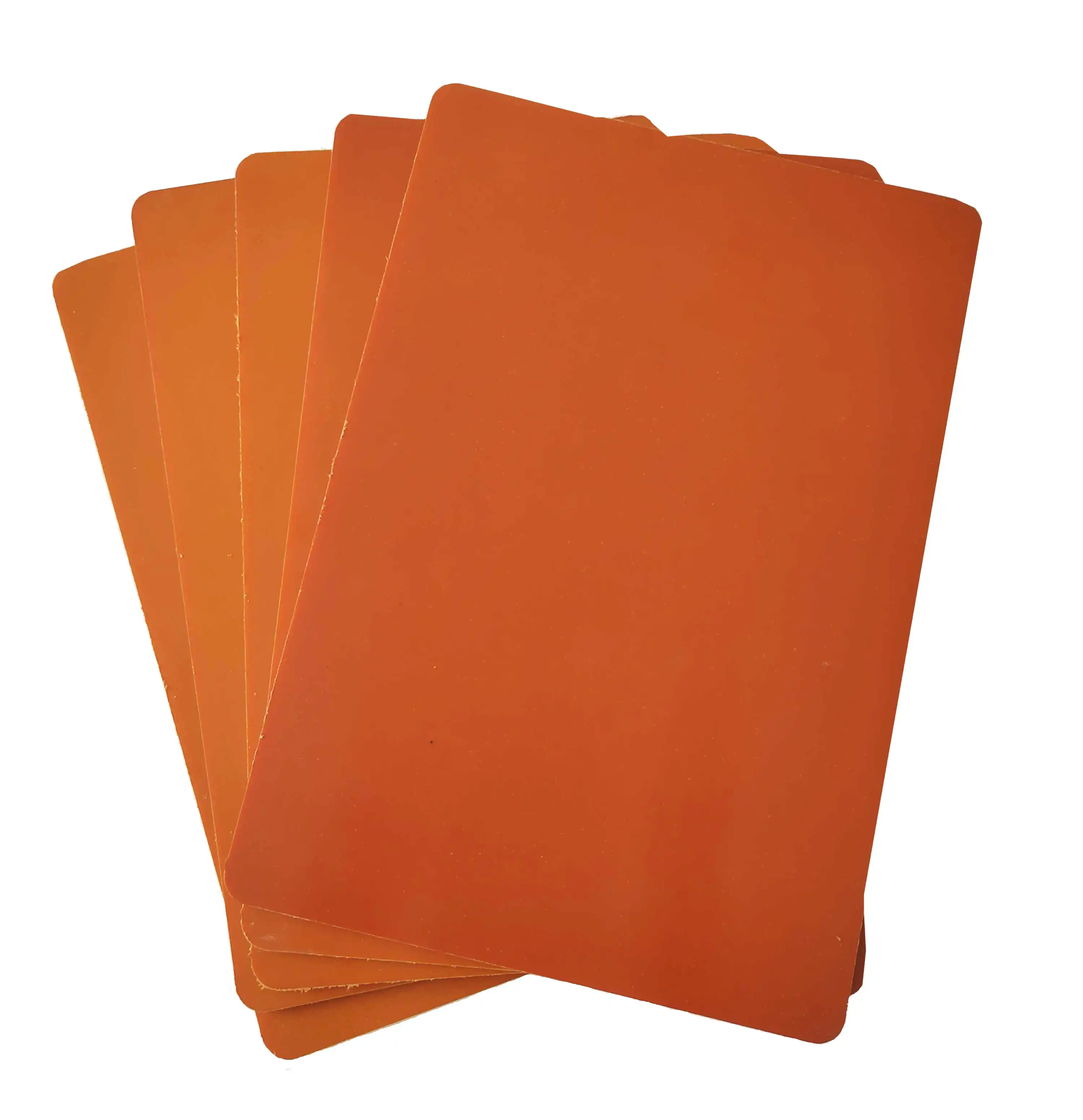
The base structure is made up of sheets of wood-pulp craft paper that were soaked with phenolic resin and then pressed together under high pressure to make a thick, void-free composite sheet. As a result, the material has a specific gravity of 1.30 to 1.45 g/cm³ and a flexural strength of more than 100 MPa for premium grades. The paper base in this material makes it less likely to absorb water than cotton-fabric laminates. It also improves electrical conductivity, which is important in places like transformers and switchgear.
NEMA Grade Differences You Need to Know
NEMA LI-1 lists six normal grades for paper: X, XX, XXX, XP, XXP, and XXXP. For structural use, Grade X puts mechanical power first. Grade XX is used for general electrical tasks. Grade XXX has the most resin, so it doesn't absorb more than 1.0% water and is better at keeping out heat in damp places. This makes it the best choice for coil insulation and arc barriers. The "P" suffix grades (XP, XXP, and XXXP) have plasticizers that let you punch them cold or warm without the edges cracking, which is very important for lines that stamp a lot of parts.
Core Electrical and Thermal Ratings
ASTM D709 and IEC 60893 (Types PF CP 201/202/203) are both met by the material. When tested in oil, the dielectric strength perpendicular to the laminations is usually between 300 and 500 V/mil (12 and 20 kV/mm), which is enough for ongoing service ratings of Class E (120°C) and Class B (130°C). A UL 94 HB flame rating is given to standard grades. Chemically changed FR-1 and FR-2 paper phenolic grades are available for uses that need them to be self-extinguishing, but they need to be clearly stated.
Phenolic Paper Laminate in Electrical Insulation Applications
Transformers and Switchgear
Paper-based Phenolic Paper Laminate is often chosen by transformer makers for oil-immersed barriers, coil spacers, and wound supports. Because it doesn't react with mineral oils or chlorinated hydrocarbons, the material stays stable in its shape for years inside sealed transformer tanks. In switchgear systems, the same chemical resistance and arc-barrier ability make it work consistently even when fault currents happen over and over again.
Motor Components and Terminal Boards
Epoxy paper sheets are used by motor builders for terminal board bases, end-ring spacers, and slot liners. The constant thickness limit of the material, which can be reached through controlled high-pressure lamination, lets it fit perfectly in tight motor housings without the need for extra machining. Manufacturers of terminal boards like this material because it has a non-conductive surface and is easy to drill with a machine at high production speeds.
Circuit Protection and Relay Bases
Phenolic Paper Laminates are used a lot in circuit breaker parts, relay bases, and fuse cases where 50/60 Hz medium-voltage separation is needed. Compared to glass-epoxy FR4, paper phenolic makes CNC routing and cutting tools last longer, which lowers the cost of machining each part by a large amount. This is important when making tens of thousands of parts every month.
Comparing Phenolic Paper Laminate with Other Laminates for Electrical Use
To pick the right type of laminate, you need to be honest about what each material does well and what it doesn't do so well. B2B procurement teams always have to weigh these main trade-offs:
- Paper Phenolic vs. FR4 (Glass-Epoxy): FR4 outperforms on impact resistance, high-frequency dielectric properties, and dimensional stability in wet conditions. However, paper phenolic costs substantially less per sheet, machines faster, and extends cutting-tool life — making it the rational choice for standard-frequency insulation where FR4 would be over-specified.
- Paper Phenolic vs. Cotton-Fabric Phenolic: Cotton grades offer better impact and flexural toughness but absorb more moisture and cost more per unit area. Paper grades win on electrical insulation consistency and price when the application does not demand shock resistance.
- Paper Phenolic vs. Melamine Laminate: Melamine laminates have a harder surface finish but lower thermal ratings and weaker oil resistance. For oil-immersed electrical environments, paper phenolic remains the appropriate selection.
These trade-offs show that paper phenolic fits into a clear niche: medium-voltage, standard-frequency electrical insulation where cost-effectiveness, resistance to oil, and ease of machining are more important than peak mechanical performance. To avoid over-engineering and wasteful budget spending, it is important to understand this stance.
Procurement Guide: Sourcing Phenolic Paper Laminate for Electrical Insulation
Certifications and Compliance Verification
Make sure that your supplier's Phenolic Paper Laminate products have NEMA LI-1, IEC 60893, and ASTM D709 paperwork before you place an order. If your final product needs to be listed with UL, it's important that the grade and thickness are recognized by UL for the US market. Request test results from a third party instead of just self-declarations, and make sure that quality records for each batch can be found upon request.
Custom Sizing and Thickness Tolerances
In the US market, standard sheet sizes are 36" x 48" and 48" x 96". Thicknesses range from 1/32" to over 2". Suppliers you can trust can cut to specific sizes with tight standards, which cuts down on the waste of materials and work needed for extra processing. Check with your supplier to see if they offer CNC-cut blanks or punched profiles. This will shorten the time it takes to make a lot of parts.
Evaluating Supplier Capability and Lead Times
If a supplier has its own factory, quality lab, and logistics department, wait times are shorter, and batches are more consistent than if the supplier was just a middleman and didn't control production. Compare your production ability to the amount of goods you need each year. For large orders, make sure you know the minimum order quantity, packaging requirements, and freight terms ahead of time so that you don't get any surprises when you get the bill. Suppliers who have been in international trade for more than ten years usually have established freight routes that make delivery more predictable.
Why Choose Phenolic Paper Laminate for Your Electrical Insulation Needs?
When it comes to medium-voltage electrical uses, paper phenolic laminates have a great value for the money. Their ability to be machined lowers the cost of processing, their resistance to oil and chemicals increases the service life of sealed parts, and their NEMA/IEC grade system gives buying teams a clear, standardized way to talk about what they need. As resin chemistry improves, newer formulations are making thermal class ratings better while keeping the cost advantages.
At J&Q, we've been making insulation sheets for more than 20 years and doing business with other countries for more than 10 years. Along with FR4 sheets, epoxy laminates, and Bakelite boards, our product line also includes Phenolic Paper Laminates in all NEMA grades. Because we run our own transportation business, we take care of your shipment from the production floor to the receiving dock. This single-source setup makes it easier for procurement teams across the US market to coordinate and lowers the risk of delivery.
Conclusion
Paper-based Phenolic Paper Laminate is still one of the most useful ways to insulate medium-voltage electrical parts. The NEMA grading system makes it easy to buy them; they can be machined, which lowers production costs, and they are resistant to oil and chemicals, which means they will last a long time in transformer and switchgear applications. This type of material has been shown to be a good choice for B2B buyers who need to balance performance with price. The best results for your supply chain will always come from choosing the right grade, making sure the certifications are valid, and working with a seller who handles both production and transportation.
FAQ
What Is the Difference Between Grade XX and Grade XXX Paper Phenolic?
Grade XX is a general-purpose electrical grade with a moderate amount of resin that can be used for normal dry insulation tasks. Grade XXX has a higher resin saturation and can absorb less than 1% water. This makes it suitable for electrical settings with a lot of dampness and oil-immersed transformer uses that need to tightly control moisture entry.
Can These Sheets Be Cold Punched on a Production Line?
To keep the edges from breaking, standard X, XX, and XXX grades need to be heated to between 40°C and 80°C before they can be punched. The "P" types (XP, XXP, and XXXP) have plasticizers that let them be punched cold or warm and still have clean, chip-free edges. This makes them perfect for automatic stamping operations that do a lot of work.
What Are Typical Lead Times and Minimum Order Quantities?
Standard sheets in stocked grades usually ship within 7–15 business days for orders in the US. Lead times depend on grade, thickness, and custom cutting needs. The minimum order amount is based on the grade and size of the sheet. Get correct wait time and price information for your program by calling your provider and giving them information about the thickness, grade, and yearly volume.
How Should These Sheets Be Stored to Prevent Warping?
Lay sheets out flat on boxes that support the whole area and store them that way. Keep the temperature and humidity in the warehouse close to 20°C and below 50%. Differential expansion of a sheet's faces due to uneven moisture absorption causes it to bow. Controlled storage stops this from happening and keeps the sheet's dimensions accurate before it is made.
Get a Quote From J&Q — Trusted Phenolic Paper Laminate Supplier
J&Q has been making insulating sheets for more than 20 years and has a specialized transportation team that works on every order. Our team is ready to help you with your needs, whether you need normal NEMA-grade stock or custom-cut Phenolic Paper Laminate sheets for electrical protection. Please email us at info@jhd-material.com or go to jhd-material.com to get a sample or quote right away.
References
1. National Electrical Manufacturers Association. NEMA LI-1: Industrial Laminating Thermosetting Products. NEMA, 2020.
2. International Electrotechnical Commission. IEC 60893: Insulating Materials — Industrial Rigid Laminated Sheets Based on Thermosetting Resins. IEC, 2019.
3. ASTM International. ASTM D709: Standard Specification for Laminated Thermosetting Materials. ASTM, 2021.
4. Brydson, J.A. Plastics Materials, 7th ed. Butterworth-Heinemann, 1999.
5. Harper, Charles A. Electronic Packaging and Interconnection Handbook, 4th ed. McGraw-Hill, 2004.
6. Mazur, Gene. "Selection of Insulating Laminates for Electrical Equipment." IEEE Electrical Insulation Magazine, vol. 18, no. 3, 2002, pp. 14–21.