
How Does Epoxy Glass Cloth Laminated Tube Improve Insulation Performance?
2026-09-18 17:08:25
Epoxy Glass Cloth Laminated Tube improves insulation performance by combining woven alkali-free glass cloth with epoxy resin under heat and pressure, producing a dense, void-free composite wall. This structure delivers a dielectric strength typically exceeding 15 kV/mm, low moisture absorption below 0.1%, and stable electrical properties across a wide service temperature range. The result is a tube that resists voltage breakdown, surface tracking, and chemical attack simultaneously—making it a dependable choice for engineers who need long-term insulation integrity in high-demand electrical and industrial systems.
Understanding Epoxy Glass Cloth Laminated Tube: Composition and Properties
What Goes Into the Material?
The alkali-free woven glass cloth that is used to make these tubes is soaked in epoxy glue and then wound around a mandrel under controlled strain. The piece is cured into a rigid plastic by heat and pressure. The fiber orientation, both axial and circumferential, spreads mechanical load evenly. This is why the finished product is much better at bending and compressing than plain epoxy castings.
Key Technical Properties
The standard grade, which is often called 3640 or G-10/FR-4 tube, has an insulation class of B, which means it can handle 130°C of continuous service. It is very stiff, has tight specs on its dimensions, and has a smooth outside that doesn't break when it goes through secondary machining. Because the link between the glass and resin leaves few open holes, water doesn't get in.
How It Compares to Alternative Insulation Tubes
The glass support is the same in plain fiberglass tubes, but polyester glue is usually used instead, which is less resistant to chemicals. Carbon fiber tubes are stiffer, but they also conduct electricity, which means they can't be used for most electrical insulation tasks. Phenolic cotton tubes are less expensive, but they soak up more water and soften faster when heated. It's easy to see that epoxy glass cloth tubes are strong, stable, and really not conductive in a lot of different situations.
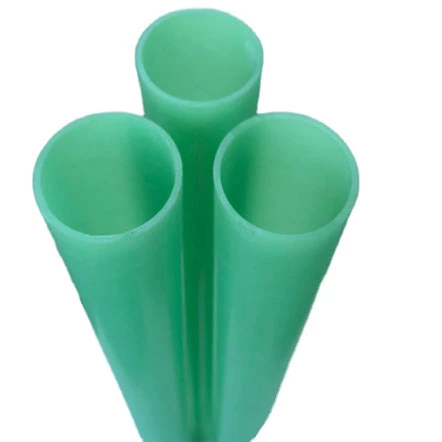
How Epoxy Glass Cloth Laminated Tubes Enhance Electrical Insulation?
Dielectric Strength and Voltage Withstand
The laminated glass-epoxy wall can handle voltages that would break thinner materials, so electric fields don't damage it. Tests done by different companies consistently show dielectric strengths above 15 kV/mm, which meets the needs of switchgear, motor coil supports, and bus bar spacers. This property stays the same over time, which gives engineers a safe estimate of how long the product will last.
Moisture and Chemical Resistance
Many plastics lose their insulating strength when water gets into them. Standard immersion testing on an Epoxy Glass Cloth Laminated Tube shows that these tubes don't absorb more than 0.1% by weight of water. This is because the glass cloth and finished epoxy matrix stick together tightly. Also, they don't react with weak acids and bases, which is important in places like transformer oil and factories where cleaning products often come into contact with insulation parts.
Compliance With Industry Standards
Electrical and electronics manufacturers in the U.S. market need FR-4 grade tubes to meet their documentation needs. These tubes have UL certification (UL94 V-0 flame rating) and pass RoHS and REACH screening. This record of compliance makes it easy for buying teams to qualify suppliers and go through regulatory checks.
Thermal Performance: Temperature Resistance and Stability
Operating Temperature Range
Everyday B-class tubes can work continuously at 130°C. For places with a lot of heat, the G-11 grade has solid mechanical strength between 155°C and 180°C. G-10 grade is used in cryogenic applications because it stays flexible and magnetic near absolute zero. Because of this, it is the best material for superconducting magnet supports and LNG pipeline fittings that need to keep thermal bridging to a minimum.
Managing Thermal Expansion
Because of the glass reinforcement, the coefficient of thermal expansion stays low and stable. When a motor or generator goes through a series of heat and cool cycles, the tube walls expand and contract within very tight limits. This lowers the chance of micro-cracking where they meet metal hardware. This stability in dimensions directly lowers the chance that mechanical fatigue will cause the insulation to fail.
Real-World Thermal Stress Evidence
Manufacturers of power transformers have shown that epoxy glass cloth insulator shafts that were submerged in hot mineral oil did not delaminate for decades. At the recommended working temperatures, these tubes don't soften enough to be used as supports for electric motor windings. The engineering and procurement teams can be sure that the predicted service life matches the actual performance thanks to these field records.
Practical Applications and Benefits in B2B Industries
Engineers always choose an Epoxy Glass Cloth Laminated Tube when the job needs performance in electrical, mechanical, and thermal areas all at the same time. Here are the main areas of use that you should know about:
- High-voltage switchgear and circuit breakers: The tube serves as an insulating operating rod or arc-extinguishing chamber wall. It withstands sudden pressure spikes during arc quenching while maintaining electrical isolation between live and grounded parts.
- Large power transformers: Tap changer insulation shafts and structural support columns made from these tubes survive long-term immersion in transformer oil without contaminating the dielectric fluid or losing dimensional accuracy.
- Dry-type transformer coil cylinders: The tube forms the winding mandrel and coil insulation cylinder, keeping winding-to-core clearance precise and electrically sound under continuous thermal cycling.
- Motor and generator insulation supports: End coil insulation rings and spacer sleeves keep winding geometry intact under vibration and thermal load.
- Cryogenic and scientific equipment: G-10 grade tubes prevent thermal bridging in superconducting magnet assemblies and LNG systems.
Switchgear and circuit breakers for high voltage: The tube can be used as an insulated working rod or a wall to put out an arc. It can handle rapid changes in pressure during arc cooling and keep live and grounded parts electrically separate.
Selecting the Right Tube: Procurement Tips and Supplier Guidance
Grade and Size Selection
Match the type of tube to the flame and temperature needs of the device. G-10 is good for normal industrial and cold use; FR-4 adds UL94 V-0 flame retardancy for electronics cases; and G-11 can handle temperatures above 130°C. Standard outer diameters start at about 14 mm, and the wall thickness and length can be changed based on project drawings. When precision assemblies have tighter inner diameter tolerances, they need less secondary machining time and less scrap.
Evaluating Supplier Credibility
Ask for proof that the materials are safe, like UL, RoHS, and REACH test results. Before placing a large order, ask for a sample batch so that your team can check the quality of the cut-end, surface finish, and tolerances for size. During production, reliable sources keep up-to-date air and dust-removal systems running. This keeps the laminate clean and free of any contaminants that could lower its dielectric performance.
Logistics and Lead Time Considerations
When production schedules are tight, it's important to find suppliers who can handle logistics in-house. This can cut down on lead times and make customs paperwork easier. J&Q has its own logistics company, which takes care of everything from placing an order to delivering it. This has helped manufacturers in Europe and North America get a steady supply of goods for more than 10 years of active export trading and more than 20 years of production experience.
Conclusion
Epoxy Glass Cloth Laminated Tubes are better at insulating because they have a high dielectric strength, don't absorb much water, stay stable at high temperatures, and have been tested and proven to last for a long time. The material always works well in tough conditions, whether it's used in a high-voltage switchgear rod, a transformer coil cylinder, or a cryogenic support structure. Buying an approved, well-made tube from a reputable source is an easy way for procurement teams and engineers building reliable systems to cut down on insulation-related problems and increase the life of equipment.
FAQ
What is the difference between FR-4 and G-10 epoxy glass cloth tubes?
Both grades share similar mechanical strength and dielectric properties. FR-4 contains a bromine-based flame retardant and carries a UL94 V-0 rating, which is required for most electrical enclosure and PCB support applications. G-10 does not include the flame retardant but often shows marginally better mechanical properties and is the standard choice for cryogenic environments.
How does the temperature rating of G-11 differ from G-10?
G-10 is rated for continuous service at 130°C. G-11 retains considerable mechanical strength up to 155°C–180°C, making it the preferred grade for high-heat environments such as power generation equipment and industrial motors that run near or above standard B-class limits.
Can these tubes be machined to custom dimensions?
Yes. The laminate machines well using carbide or diamond-tipped CNC tools with adequate dust extraction. Standard sizes start at 14 mm × 18 mm and 18 mm × 22 mm outer diameter, and custom inner diameters, wall thicknesses, and lengths are available to specification.
Does the tube degrade in transformer oil?
High-quality, fully cured epoxy glass cloth tubes are chemically inert to mineral transformer oils. Under-cured material can leach residual compounds that reduce oil breakdown voltage, which is why reputable suppliers use acetone extraction testing to verify full cure before shipment.
What are the storage requirements?
Store tubes horizontally on support cradles in a dry, room-temperature environment away from direct UV exposure. Correct horizontal storage prevents long-term creep or warping. Shelf life is indefinite under these conditions, though periodic re-testing is common after 12–24 months for critical applications.
Get Your Epoxy Glass Cloth Laminated Tube Quote From J&Q Today
J&Q has been making insulation materials for more than 20 years and has been exporting directly to manufacturers in the U.S. and other countries for more than ten years. Our Epoxy Glass Cloth Laminated Tube supplier catalog has UL, RoHS, and REACH paperwork, as well as standard and custom sizes. To get a sample, email your drawing or list of requirements to info@jhd-material.com or go to jhd-material.com. Our tech support team gets back to you quickly to help you find the right grade for your application.
References
1. ASTM International. Standard Specification for Glass-Fabric-Base Epoxy Laminates (ASTM D709). ASTM International, 2021.
2. IEC Technical Committee 15. Solid Electrical Insulating Materials — Methods of Test (IEC 60243-1). International Electrotechnical Commission, 2013.
3. National Electrical Manufacturers Association. NEMA LI 1: Industrial Laminated Thermosetting Products. NEMA, 2020.
4. Underwriters Laboratories. UL 94: Tests for Flammability of Plastic Materials for Parts in Devices and Appliances. UL Standards & Engagement, 2022.
5. Harper, Charles A. Handbook of Plastics Technologies. McGraw-Hill, 2006.
6. Dissado, L. A., and Fothergill, J. C. Electrical Degradation and Breakdown in Polymers. Peter Peregrinus Ltd. for the IEE, 1992.
