3641 Epoxy Glass Fiber Cloth Laminated Tube Enables Durable Electrical Structures
2026-09-21 17:28:28
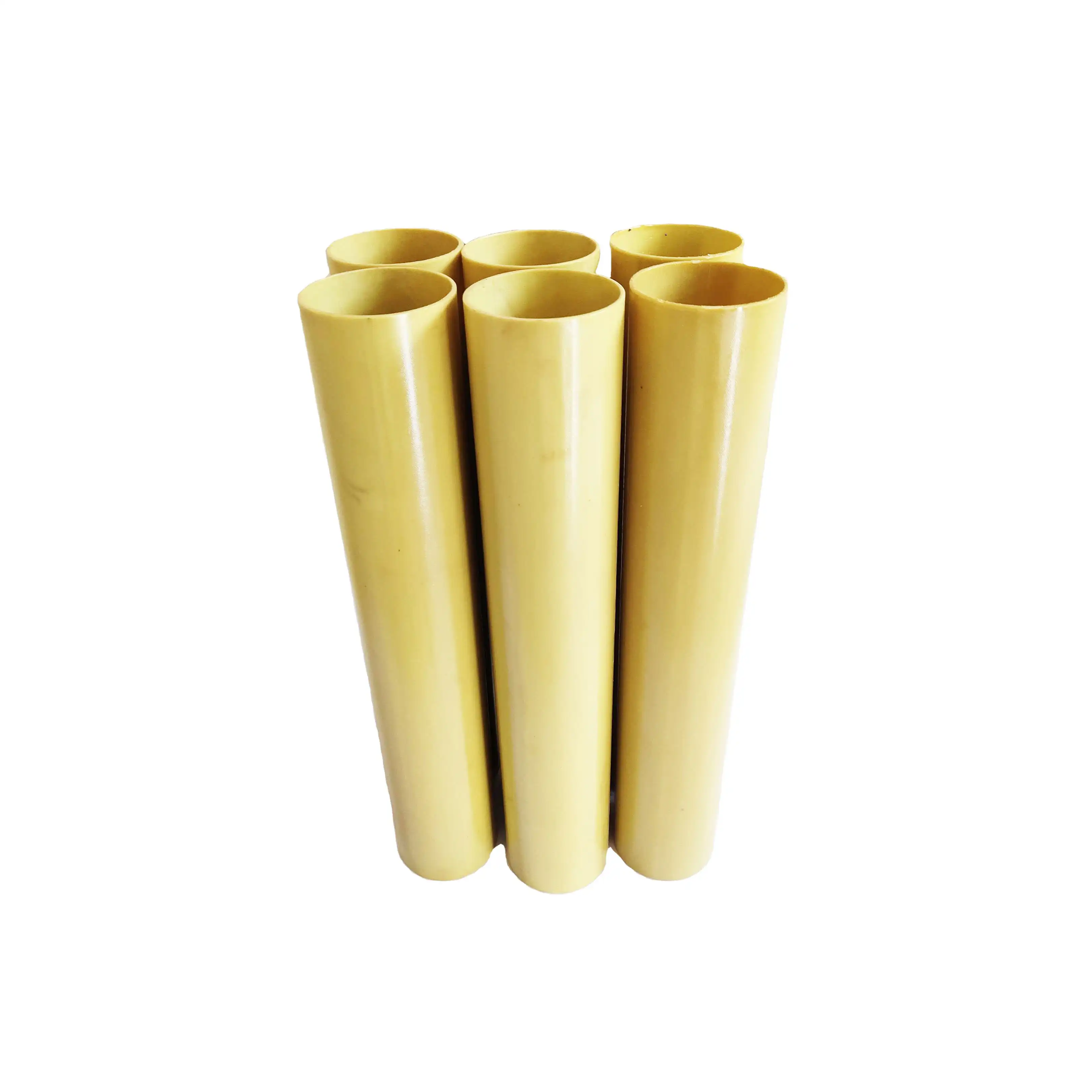
The 3641 Epoxy Glass Fiber Cloth Laminated Tube is a high-performance insulating component manufactured by hot-rolling alkali-free glass fiber cloth impregnated with modified epoxy phenolic resin, then heat-cured to achieve a rigid, dimensionally stable tube. Rated at Class F (155°C), it delivers strong dielectric strength, chemical resistance, and mechanical durability across electrical and industrial applications. Engineers and procurement teams in power, electronics, and machinery sectors rely on this material to prevent dielectric breakdown in humid conditions and resist deformation under high-torque loads — making it one of the most dependable structural insulation solutions available today.
Understanding the 3641 Epoxy Glass Fiber Cloth Laminated Tube
What It Is and How It's Made
To make this tube, alkali-free woven glass fabric that has already been saturated with an epoxy-phenolic resin system is wound around a wire. Far-infrared heat is then used to fix the wet-wound structure. This locks in the glass-resin matrix. The end result is a tube with a smooth surface, a uniform color, and tight tolerances on its dimensions. This is exactly what engineering managers and OEM buying teams need when they are looking for insulation parts that can be used in multiple production processes.
Core Technical Properties
The 3641 tube has a Class F heat protection grade, which means it stays intact at temperatures up to 155°C. It usually has a dielectric strength of more than 14 kV/mm, and it doesn't absorb much water, even when used in transformer oil or wet switchgear settings. These properties can be measured and are not just ideas; they are in line with IEC 60893 and GB/T 1303 standards, which means that procurement specialists can get the proof of compliance they need for regulated industries.
Why Structure Matters
Because it is reinforced with glass fiber cloth, this tube can bend much more easily than phenolic paper tubes. The laminated fiber structure doesn't crack or delaminate when there is a lot of force or shaking, which can happen in electric motors and metallurgical equipment. Longer service intervals and lower replacement costs are directly related to this structural advantage. This is important for both maintenance engineers and long-term procurement specialists who manage total cost of ownership.
Comparing 3641 Epoxy Tubes with Alternative Laminates
3641 vs. Phenolic Paper Tubes
Phenolic paper tubes are cheaper at first, but they soak up water more quickly and become soft at temperatures above 120°C. The 3641 Epoxy Glass Fiber Cloth Laminated Tube, on the other hand, maintains its dielectric integrity even when it is wet or submerged in oil, and it can withstand higher temperatures without dimensional changes. This difference is significant when it comes to generator winding supports or switchgear arc barriers, as it directly affects system safety and service life.
3641 vs. Carbon Fiber Tubes
Carbon fiber tubes are stronger for their weight, but they also conduct electricity, so they can't be used for most electrical shielding tasks. They cost a lot more per bit as well. As a practical matter, the 3641 epoxy glass fiber tube strikes a good balance: it has enough mechanical strength for structural insulation uses while still having the electrical separation qualities that carbon fiber can't offer.
3641 vs. Standard Fiberglass Tubes
Not every fiberglass tube is the same. Epoxy-based fiberglass tubes are more resistant to heat and chemicals than polyester-resin tubes. The improved epoxy phenolic resin system in 3641 tubes makes the bond between the resin and glass fiber stronger. This leads to better interlaminar shear strength and chemical inertness to mineral oils, which is something that regular fiberglass can't do in transformer uses that are submerged in oil.
Practical Applications and Usage Guidelines
Where 3641 Tubes Are Used
You can find these tubes in a lot of different tough places. Here are three of the most popular places where this information works well every time:
- High-voltage switchgear: The tube functions as arc-extinguishing chamber components, insulating pull rods, and contact supports. Its carbon-tracking resistance under arcing conditions makes it a safety-critical component in power grid infrastructure where dielectric failure is not an option.
- Oil-immersed transformers: Applied as tap changer shafts and winding cylinder supports inside oil-filled transformer tanks. The material remains chemically inert to mineral oils and maintains electrical isolation even when submerged at temperatures above 90°C, preventing internal short circuits over years of service.
- Heavy industrial and metallurgical equipment: Used as threaded insulating sleeves and thermal breaks in electric furnaces and rolling mills. In these settings, the tube performs a dual role — acting as both a thermal barrier rated to 155°C and a mechanical insulator that withstands intense vibration and compressive loads typical of heavy steel processing.
Because it can be used in these ways, engineers in the power, industrial, and electronics sectors always choose this material over lower-grade options. It's hard to find something else that can offer the same level of temperature stability and mechanical longevity for a similar price.
Installation and Handling Tips
Once the cutting is done, a protective finish should be applied to the cut ends of the 3641 Epoxy Glass Fiber Cloth Laminated Tube to keep water out. For precise cutting, alloy turning tools are best because they help prevent stress inside the laminate. The tubes should be kept in dry, cool, well-ventilated places away from open flames. Under these conditions, the maker states that the tubes will last for 12 months from the date they were made.
Maintenance and Service Life
Checking the ends of tubes regularly for surface cracks or delamination makes them more reliable. In generator use, checking the tube after changing the oil makes sure that the resin hasn't broken down. Since the epoxy matrix sticks strongly to the glass fiber reinforcement, damage is usually limited to a small area and easy to spot before it affects the electrical performance.
Procurement and Supply Chain Insights for 3641 Epoxy Laminated Tubes
Evaluating Qualified Suppliers
A reliable 3641 epoxy laminated tube provider should offer material approvals that can be tracked, clear dimensional limits, and proof that their products meet all electrical laminate standards. For controlled supply chains, buying teams need suppliers with UL recognition or ISO quality management systems so they can keep track of who has what. Tier-1 OEM sourcing managers usually check the consistency of each batch by looking at inspection data that comes in.
Ordering Channels and MOQ Considerations
Most makers let you choose between standard and unique inner and outer diameters. For 3641 Epoxy Glass Fiber Cloth Laminated Tube, bulk order pricing usually starts at volume levels that vary from supplier to supplier. However, it is common practice to ask for samples before committing to bigger quantities, which helps ensure the specifications match your requirements. Lead times for standard sizes are usually shorter than those for custom-machined tubes, and this is something that procurement teams should keep in mind when planning project timelines.
Customization and After-Sales Support
Reliable providers can handle CNC-machined special orders for uses that need a certain wall thickness, length, or surface finish. Support after the sale, such as technical advice on post-processing, varnish treatment, and storage, sets experienced manufacturers apart from generic distributors. With this amount of help, internal engineers don't have to spend as much time fixing problems with how materials work.
Why This Material Remains the Preferred Choice
The 3641 Epoxy Glass Fiber Cloth Laminated Tube is used in tough electrical and industrial settings because it solves real engineering problems: it doesn't lose its dielectric properties in damp conditions, can handle long-term thermal loads at Class F rating, and can be assembled precisely. Epoxy-glass laminate chemistry has been used for a long time in transformers, switchgear, and heavy machinery, which shows that engineers trust it. As resin formulation and fiber treatment keep getting better, this type of material's basic performance profile becomes more open to a wider range of uses and budgets.
Conclusion
The 3641 Epoxy Glass Fiber Cloth Laminated Tube meets real needs from companies that make electrical equipment, work on power systems, build industrial machinery, and sell car parts. Because it has a Class F thermal grade, good dielectric properties, and doesn't react chemically with transformer oil, it has been used for a long time to insulate structures in dangerous places. If you handle, store, and process this tube correctly, it will work well for a long time without breaking down. It will be a good long-term investment for procurement teams that put quality documentation, source knowledge, and the ability to customize high on their list of priorities.
FAQ
Is the 3641 tube suitable for use in transformer oil?
Yes. The epoxy phenolic resin matrix is chemically inert to mineral oils commonly used in power transformers. The tube maintains its dielectric properties and dimensional stability when fully submerged at operating temperatures above 90°C, making it a standard choice for tap changer shafts and winding cylinder supports inside oil-filled units.
How does the 3641 tube compare to phenolic cotton tubes for mechanical applications?
Phenolic cotton tubes offer adequate mechanical strength for moderate loads but absorb moisture more readily than epoxy glass fiber variants. In high-humidity or oil-immersed environments, the 3641 tube maintains structural integrity and dielectric performance over longer periods, making it the preferred option for demanding electrical applications.
Can this tube be machined to custom dimensions?
Yes. The material machines well with alloy turning tools, and suppliers can provide custom inner diameters, wall thicknesses, and cut lengths. After machining, applying insulating varnish to cut surfaces protects against moisture absorption during service.
What certifications should I request from a supplier?
Request documentation showing compliance with IEC 60893 or equivalent national standards, ISO quality management certification, and — where applicable — UL recognition. Batch test reports for dielectric strength, bending strength, and moisture absorption give procurement teams the data needed for incoming quality inspections.
Partner with J&Q for Your 3641 Epoxy Glass Fiber Cloth Laminated Tube Supply
J&Q has been making insulation materials for more than 20 years and has been exporting them directly for more than 10 years. As a reliable 3641 Epoxy Glass Fiber Cloth Laminated Tube maker, we offer custom sizes, bulk discounts, and fast shipping through our own transportation operations. Our team is ready to help people who work in engineering and purchasing with technical specs, samples, and order planning. To get a price right away, email us at info@jhd-material.com or go to jhd-material.com.
References
1. IEC 60893-3-2: Industrial Rigid Laminated Sheets Based on Thermosetting Resins for Electrical Purposes — International Electrotechnical Commission, 2003.
2. Electrical Insulation: Fundamentals and Applications — Eberhard Gockenbach, IEEE Press, 2012.
3. Handbook of Thermoset Plastics, 3rd Edition — Sidney H. Goodman, William Andrew Publishing, 2014.
4. Composite Materials: Engineering and Science — F.L. Matthews & R.D. Rawlings, Woodhead Publishing, 1999.
5. GB/T 1303.4: Epoxy Woven Glass Fabric Laminated Sheets — Standardization Administration of China, 2009.
6. Transformer Engineering: Design, Technology, and Diagnostics — S.V. Kulkarni & S.A. Khaparde, CRC Press, 2012.