
3641 Epoxy Glass Fiber Cloth Laminated Tube Supports High Voltage Insulation
2026-09-21 17:28:41
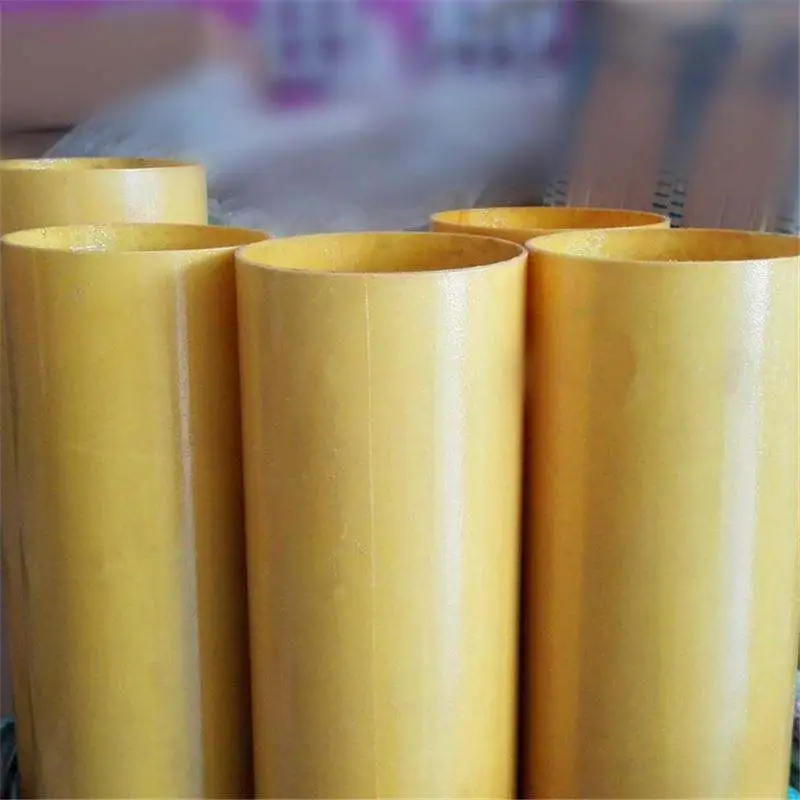
The 3641 Epoxy Glass Fiber Cloth Laminated Tube is a Class F (155°C) rigid insulating tube manufactured by hot-rolling alkali-free glass fiber cloth impregnated with modified epoxy phenolic resin, then heat-cured to achieve uniform density. It provides measurably high dielectric strength, resistance to arc tracking, and mechanical stability under load — properties that make it the go-to insulating component for switchgear assemblies, oil-immersed transformers, and heavy industrial equipment. For engineering teams and procurement managers sourcing high voltage insulation materials, this tube represents a technically sound and field-proven choice.
Understanding the 3641 Epoxy Glass Fiber Cloth Laminated Tube
Composition and Manufacturing Process
The tube starts with knitted glass fiber cloth that is free of alkalis and is treated with a Wolan binding agent. It is then filled with epoxy phenolic resin using a wet-winding method. Heating the structure with far-infrared light heals it evenly from the inside out. This way of making things gets rid of the internal gaps that often lead to partial discharge, which is one of the main reasons why shielding fails in high-voltage systems.
Key Material Properties
The end product gets high marks for three types of success. Its insulating strength always goes above the minimum requirements for Class F shielding. Its tensile strength is higher than that of regular phenolic paper tubes, even when they are under a lot of stress or shaking. This is because the woven glass fiber cloth reinforces it. It also doesn't break down when exposed to transformer mineral oil at 90°C for a long time.
Why Class F Rating Matters?
If the tube has a Class F thermal rating, it means it can work continuously at 155°C without changing shape or losing its ability to separate electricity. IEC 60085 says that materials with ratings below this level can't be used in enclosed transformers where the temperature regularly rises above 130°C. Choosing a tube with the right rating directly lowers the risk of insulation failing early in service.
Technical Insights and Specifications
Electrical Insulation Performance
The epoxy glass fiber laminated tube has a high dielectric strength when it is dry and when it is submerged in oil. 3641 Epoxy Glass Fiber Cloth Laminated Tube The epoxy glue structure is better at keeping out water than polyester-based composites, so the insulation resistance stays the same over long periods of use. In high-voltage switchgear, this means fewer breakdowns caused by arcs and longer periods between repairs.
Thermal and Chemical Resistance
The tube can handle short-term temperature jumps that happen when there is a fault, even above its constant rate of 155°C. It doesn't react chemically with mineral oils, common solvents, or weak acids. This is a big plus for transformer and motor uses where they have to come into touch with insulating fluids. It is suggested that the surface be impregnated with insulating varnish after machining to keep moisture out of the cut ends.
Dimensional Options and Customization
Standard wall thicknesses, inner diameters, and lengths are ready to ship, and custom sizes can be made from OEM drawings. Tight measurement limits are kept across production batches, which is very important for CNC-machined parts whose fit and concentricity affect the quality of the final assembly. When cutting, it's best to use alloy turning tools to keep the surface finish and stop delamination.
Comparing the 3641 Tube with Other Laminated Tubes
3641 vs. 3240 Grade Epoxy Boards and Other Tubes
The base chemistry of the 3240 epoxy glass laminated board and the 3641 tube is similar, but the tube version has benefits because of its shape. The 3641 tube comes ready to be installed as an insulation cylinder, coil formed, or arc chamber wall. This is different from flat sheets, which need to be secondary shaped or bonded in order to make cylindrical parts. This shortens the time it takes to make things and cuts down on waste in production settings.
Laminated Tube vs. Solid Rod in Structural Insulation
When deciding between layered tubes and solid insulating bars, these are the main differences you should think about:
- Weight efficiency: The hollow tube cross-section reduces component mass by 30–50% compared to a solid rod of equal outer diameter, which matters in mobile equipment and overhead switchgear where load ratings are defined.
- Thermal performance: The annular geometry allows airflow or oil circulation through the bore, improving heat dissipation around windings or contact assemblies.
- Machinability: Wall thickness can be selected to match the required mechanical load, avoiding over-engineering and reducing material cost per unit.
Because of these differences, tubes are the best choice for transformer tap changer shafts, arc extinguishing chambers, and insulating pull rods. 3641 Epoxy Glass Fiber Cloth Laminated Tube Solid rods would be heavier and less effective in these situations.
Supplier Considerations
It takes more than just looking at price sheets to find a good epoxy glass fiber cloth fused tube provider. Buyers should make sure that providers have up-to-date quality standards, keep the resin-to-cloth ratios the same from batch to batch, and can show proof of tracking. When experienced procurement specialists look at long-term supply relationships, they always give high marks to responsiveness after the sale, such as the ability to quickly provide replacement stock.
Procurement Guide for B2B Buyers
Sourcing Channels and Minimum Order Quantities
The market for epoxy laminated tubes in the US is served by both direct producer relationships and networks of approved distributors. When you buy directly from makers, you can usually get bigger custom orders with shorter lead times for sizes that aren't common. Distributors keep standard sizes in stock and can fill smaller orders more quickly by shipping them within the United States. Minimum order amounts depend on the specification and the thickness of the wall.
Pricing, Payment, and Lead Times
The price is based on the length, order amount, inner circle, and wall thickness. Lead times are longer for custom-sized orders than for normal stock things. Suppliers who offer combined logistics, such as in-house freight management, can offer more reliable arrival times and lower the risk of damage during transport. For established accounts with a proven track record of purchases, flexible payment terms are usually possible.
Protecting Product Quality During Shipping
Epoxy bonded tubes should be kept dry, cool, and well-ventilated, away from chemicals and open flames. Under the right storage conditions, it will last for 12 months from the date it was made. For shipments of imported goods, moisture-proof packaging and clearly written handling directions help keep the items' shape and finish while they are in transit and while they are stored in a warehouse.
Why the 3641 Tube Is the Preferred Choice for High Voltage Insulation?
The 3641 reinforced tube fixes failure modes that cause a lot of downtime and repair costs for people who run power plants and other heavy machinery. Most of the time, transformer and switchgear insulation systems fail because of dielectric breakdown in damp places and mechanical deformation under high-torque loads. Both of these ways of failing are immediately stopped by the epoxy glass fiber structure.
In real life, this is proven by the fact that 3641 tubes used as tap changer shafts and wound supports keep their electrical separation even after years of being submerged in mineral oil above 90°C. The tubes in high-voltage switchgear act as arc-suppressing chamber walls and insulating pull rods. Carbon tracking resistance is very important for grid safety in these applications.
When purchasing managers make long-term deals with manufacturers, they should look for ones with more than 20 years of experience and a well-established network of export operations. This lowers the risk in the supply chain and makes sure that each batch is the same.
Conclusion
The 3641 Epoxy Glass Fiber Cloth Laminated Tube is a good choice for high voltage insulation in the power, industrial, and electrical equipment sectors because it is dielectrically strong, thermally stable, chemically resistant, and mechanically sound. Because it has a Class F grade, can be machined on a CNC machine, and is compatible with transformer oil, it can be used for precision-engineered parts that are expected to last a long time. If your procurement team looks for certified, regularly made insulating materials, this tube is a reliable addition to the list of suppliers they can trust.
FAQ
What makes the 3641 tube better than standard phenolic paper tubes?
Phenolic paper tubes absorb moisture over time, which reduces dielectric strength in humid or oil-immersed environments. The 3641 tube uses alkali-free glass fiber cloth as reinforcement, which resists moisture absorption and maintains insulation resistance across a wider temperature range — up to 155°C continuously.
Can the 3641 tube be customized to specific dimensions?
Yes. Manufacturers can produce custom inner diameters, wall thicknesses, and lengths to match OEM drawings. Tight dimensional tolerances are maintained across production batches to support CNC machining and precision assembly requirements.
What certifications should I ask for when sourcing this product?
Request documentation covering quality management systems, material traceability records, and compliance with relevant IEC standards for laminated insulating materials. Suppliers serving the US market should also be able to provide product test data aligned with UL or equivalent electrical safety standards.
Is the tube suitable for use in transformer oil?
Yes. The epoxy resin matrix is chemically inert to mineral oils. The tube maintains its mechanical and electrical properties when submerged in transformer oil at temperatures above 90°C, making it suitable for tap changer shafts and winding support applications.
How should I store these tubes before use?
Store in a dry, cool, smoke-free, ventilated area away from direct sunlight and open flame. Recommended storage period is 12 months from the delivery date. After machining, apply insulating varnish to cut ends to prevent moisture absorption.
Request a Quote from J&Q — Trusted 3641 Epoxy Glass Fiber Cloth Laminated Tube Manufacturer
J&Q has been making insulation materials for more than 20 years and has been doing business internationally for more than 10 years. We are a direct 3641 Epoxy Glass Fiber Cloth Laminated Tube supplier, which means we handle production, quality control, and logistics all in-house. This means there are fewer weak spots in your supply chain. You can email our expert team at info@jhd-material.com or go to jhd-material.com to get prices on large orders, samples, or specifics.
References
1. IEC 60085 — Electrical Insulation — Thermal Evaluation and Designation, International Electrotechnical Commission, 2007.
2. ASTM D709 — Standard Specification for Laminated Thermosetting Materials, ASTM International, 2017.
3. Tanaka, T. & Greenwood, A. — Advanced Power Cable Technology, CRC Press, 1983.
4. IEC 60893 — Insulating Materials — Industrial Rigid Laminated Sheets Based on Thermosetting Resins for Electrical Purposes, International Electrotechnical Commission, 2003.
5. Gorur, R. S., Cherney, E. A. & Burnham, J. T. — Outdoor Insulators, Ravi S. Gorur Inc., 1999.
6. IEEE Std 1-2000 — IEEE Recommended Practice — General Principles for Temperature Limits in the Rating of Electrical Equipment, IEEE, 2000.
