How Does Bakelite Sheet Perform in Mechanical Insulation Applications?
2026-09-21 17:28:44
Bakelite Sheet delivers strong, consistent performance in mechanical insulation applications across multiple industries. As a thermoset phenolic laminate, it resists heat deformation, maintains dimensional stability under load, and provides reliable dielectric strength in high-voltage environments. Unlike standard thermoplastics that soften under thermal stress, phenolic sheet retains its structural integrity even at elevated operating temperatures. From switchgear components and motor brackets to mechanical spacers and transformer barriers, this material handles demanding conditions without failure—making it a practical choice for engineers and procurement teams who need dependable insulation at a reasonable cost.
Understanding Bakelite Sheet: Composition and Key Properties
What Is It Made From?
Using phenol-formaldehyde glue to soak layers of paper or knitted fabric in phenol-formaldehyde glue to make a phenolic laminated sheet. The stack is then cured under heat and pressure. During hardening, the resin cross-links forever, making a stiff matrix that is not easily broken down by chemicals. Paper-based grades are good at keeping electricity from leaking and don't absorb much water. Higher mechanical toughness and wear resistance are found in fabric-reinforced grades. For high-temperature uses, glass-fiber types offer better thermal stability.
Key Material Properties
This thermoset material has qualities that regular plastics don't have. Its dielectric strength can reach up to 15 kV/mm based on the grade, and its compression strength is usually more than 200 MPa. Less than 1% of water can get through it, so its size stays the same in damp industrial settings. These numbers come from laminate standards that are often used, like NEMA LI 1 and IEC 60893.
Available Grades and Formats
Sheets come in standard panel sizes and custom-cut sizes, with thicknesses ranging from 0.5 mm to 50 mm. Grades like NEMA XX are used for general electrical purposes, NEMA C is used for mechanical purposes, and Grade 3021 is used for fabric-based structural parts. Each grade is meant to perform within a certain range, so it is important to make sure that the grade is right for the job before placing an order.
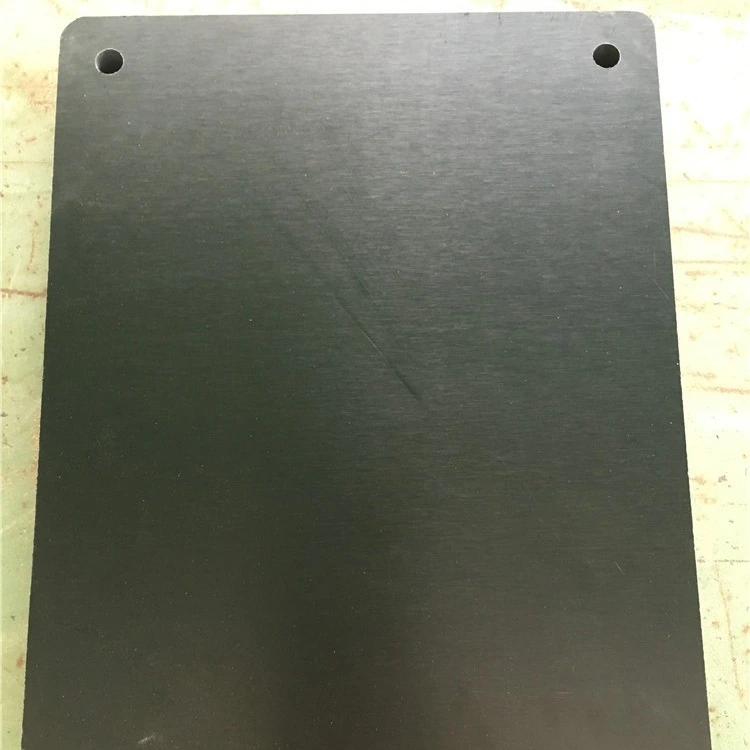
Performance of Bakelite Sheets in Mechanical Insulation Applications
Thermal Resistance in Service
Phenolic sheet can work constantly at temperatures up to 130°C and can handle short-term highs above 150°C without changing shape or twisting. Bakelite Sheet: Because it can stand up to heat, it can be used as motor insulation, coil barriers, and thermal separation pads where heat cycles happen often. It changes shape much less when heated than regular PVC or nylon does when the same load is applied.
Mechanical Strength Under Load
Many different loads can be put on the material, and its tensile and bending strengths stay the same. Fabric-reinforced grades, in particular, can take pressure and keep their surface from wearing down. This makes gear flats, mechanical spacers, and bearing housings last longer. This material is always chosen by engineering teams that make heavy machinery and automotive fixtures because it stays within tight production specifications from batch to batch.
Electrical Insulation Supporting Mechanical Safety
Arc tracking and leakage current can't happen in assemblies where electrical and mechanical functions overlap when the dielectric strength is high. This quality is very important for control panels, motor mounting frames, and battery pack dividers. When a mechanical insulation also poses an electrical risk, phenolic laminate meets both needs at the same time, cutting down on the need for extra insulating parts.
Comparing Bakelite Sheets with Alternative Mechanical Insulation Materials
Bakelite vs. Standard Plastics and Epoxy Laminates
Normal thermoplastics, like polypropylene and ABS, become less stiff above 80 to 100°C and soak up water more easily. Some epoxy laminates, like FR4, are better at conducting electricity and are preferred for use on printed circuit boards, but they cost more. Phenolic sheet is in the middle. It has a good dielectric strength, good mechanical performance, and a lower material cost, which is why OEM sourcing managers often ask for it for tasks other than PCB insulation.
Bakelite vs. Fiberglass and Mica
When temperatures are very high, above 200°C, fiberglass laminates and mica sheets work really well, especially for insulating generator windings and motor slots. They cost more, though, and are harder to make. It is easier to cleanly CNC-machine phenolic sheet; it holds its shape better when it is cut, and each panel costs less. It is still the more useful and cost-effective choice for uses where the temperature stays below 150°C.
Where Phenolic Sheet Wins on Value?
The material's ability to be machined, its resistance to chemicals, and its low cost-to-performance ratio make it a clear winner in situations where it doesn't need to meet the strict requirements of ceramics or mica. Bakelite Sheet. It also has a well-established global supply chain that cuts down on lead times and makes quality certification audits easier.
Selecting the Right Bakelite Sheet for Your Mechanical Insulation Needs
Matching Grade to Application
Before placing an order, engineering managers should make sure they know the application's operating temperature range, type of mechanical load, and chemical exposure profile. Electrical insulation plates and PCB support structures work well with grades that are made of paper. Gears, spacers, and structural machine parts work better with fabric-based grades. When more thermal cycling is expected, glass-based grades are the best choice.
Customization and Machining Considerations
Standard carbide tools can be used to cleanly cut phenolic laminates. This material can be used for CNC routing, drilling, and milling, which is why it is often chosen for parts with tight tolerances and custom profiles. Fine phenolic dust needs to be properly extracted, and workers' lungs need to be protected while cutting. Suppliers who offer sheets that are already cut or processed can cut down on the time it takes to process them in-house and the amount of scrap that is made.
Evaluating Suppliers for Certified Quality
When doing business-to-business (B2B) procurement, you should always ask for material test reports that show the product meets NEMA, IEC, or UL standards. Bakelite Sheet Reliable companies that make phenolic sheets use ISO 9001 quality systems and provide detailed records for each batch. A consistent sheet thickness error of about 0.1 mm is a useful way to tell if the production is good, especially for tight-assembly uses.
Procurement Strategies for Bakelite Sheets in Bulk and Custom Orders
Bulk Ordering and Pricing Structure
Buying more phenolic insulation sheets usually lowers the cost per unit and makes shipping easier. To get better prices, a lot of business-to-business buyers group orders together by grade and thickness. Pre-cut sheets slightly raise the cost per piece, but they cut down on waste and labor later on, which often results in a net cost advantage when added to the total cost of production.
Supply Chain Planning for OEMs
Managers of OEM sourcing should make clear agreements about wait times and keep extras of key grades on hand. Long-term supply contracts with a skilled phenolic sheet source keep production from stopping when demand for the material goes up. Line stoppages are less likely to happen when there is clear information about supply times, packaging standards, and quality documentation.
Managing Custom Orders Efficiently
Working directly with a maker who has in-house manufacturing capabilities shortens the response time when you need custom sizes or thicknesses. Giving detailed technical drawings early on in the quoting process helps keep specifications correct and speeds up the approval process. If a supplier owns their own logistics infrastructure, they can better control shipping times and make it easier to coordinate freight.
Conclusion
Phenolic laminated sheet performs well across the full range of mechanical insulation applications—from electrical switchgear and motor components to automotive fixtures and industrial machinery. Bakelite Sheet: Its thermal stability, mechanical strength, and dielectric properties make it a reliable choice when performance and cost must both be managed. With the right grade selection, a verified supplier, and a sound procurement plan, engineering teams can depend on this material to meet production demands consistently and without compromise.
FAQ
What temperature can Bakelite Sheet handle continuously?
Most grades of phenolic laminated sheet handle continuous service up to 130°C. Short-term exposure up to 150°C is generally acceptable without significant dimensional change. For higher sustained temperatures, glass-reinforced grades or mica-based materials may be more appropriate.
Is Bakelite Sheet easy to machine?
Yes. Phenolic sheet responds well to CNC routing, drilling, and milling with standard carbide tooling. It holds tight tolerances during cutting, which makes it suitable for precision parts. Proper dust extraction is required during machining due to the fine particulate generated.
How does phenolic sheet compare to FR4 for insulation applications?
FR4 epoxy laminate offers higher dielectric performance and suits PCB-level applications. Phenolic sheet costs less and machines more easily, making it a practical choice for structural insulation, spacers, and mechanical assemblies that do not require PCB-grade electrical specs.
What certifications should I request from a supplier?
Ask for material test reports confirming compliance with NEMA LI 1, IEC 60893, or relevant UL standards. ISO 9001 certification from the manufacturer confirms a documented quality management process.
Can phenolic sheets be ordered in custom sizes?
Yes. Most manufacturers offer custom cutting and machining to drawing specifications. Providing detailed dimensional drawings at the inquiry stage shortens lead time and reduces specification errors.
Get Your Bakelite Sheet Quote from J&Q Today
Need reliable phenolic laminated sheets for electrical insulation, mechanical components, or custom applications? J&Q provides quality Bakelite Sheets with flexible sizing options and professional support for bulk and customized orders.
Contact J&Q to discuss your material requirements and get a suitable solution:
Email: info@jhd-material.com
References
1. National Electrical Manufacturers Association (NEMA). NEMA LI 1: Industrial Laminating Thermosetting Products. NEMA, 2020.
2. International Electrotechnical Commission. IEC 60893: Insulating Materials — Industrial Rigid Laminated Sheets Based on Thermosetting Resins for Electrical Purposes. IEC, 2022.
3. Harper, Charles A. Handbook of Plastics Technologies. McGraw-Hill, 2006.
4. Brydson, J.A. Plastics Materials, 7th ed. Butterworth-Heinemann, 1999.
5. Shen, K.K., and David, R.A. Phenolic Resins: A Century of Progress. Springer, 2010.
6. Mark, James E. Polymer Data Handbook, 2nd ed. Oxford University Press, 2009.