Bakelite Sheet Supports Mechanical Parts Requiring Wear Resistance
2026-09-17 17:17:16
When mechanical components face constant friction, pressure, and thermal stress, the choice of material determines whether a part lasts months or years. Bakelite Sheet — a thermoset phenolic resin laminate reinforced with paper or fabric layers — delivers the wear resistance, dimensional stability, and electrical insulation that demanding industrial environments require. Across switchgear assemblies, motor housings, gear spacers, and PCB substrates, this material consistently outperforms standard thermoplastics where surface degradation would otherwise accelerate failure.
Understanding Bakelite Sheets and Their Wear Resistance Properties
The good name of Bakelite Sheets doesn't come from marketing claims, but from material science that can be measured. The cross-linked thermoset material doesn't deform when under compressive load, and fabric-reinforced types make them tougher in tension than paper-only versions.
Why Wear Resistance Matters in Industrial Applications?
Surface wear that can't be managed leads directly to changes in dimensions, more shaking, and unplanned downtime. Tribology studies show that phenolic composites have lower friction coefficients when they touch metal surfaces than most industrial thermoplastics. Harper (Handbook of Plastics Technologies, 2006) says that phenolic-based laminates have shear strengths between 200 and 350 MPa, depending on the grade of support. These numbers put them well above acetal, nylon, or polycarbonate in situations where they are supposed to hold weight.
Also, Bakelite Sheet doesn't absorb much water—usually less than 1%—so it keeps its measurements even in damp places. Because it can withstand temperatures up to 120°C for long periods of time, frictional heat from the surfaces does not soften the matrix and speed up wear, which is a typical way for polypropylene or ABS-based options to fail.
How It Compares to Other Sheet Materials?
When choosing materials, there are trade-offs that need to be understood so that costly mistakes don't happen. Here is a direct comparison of some choices that are often looked at:
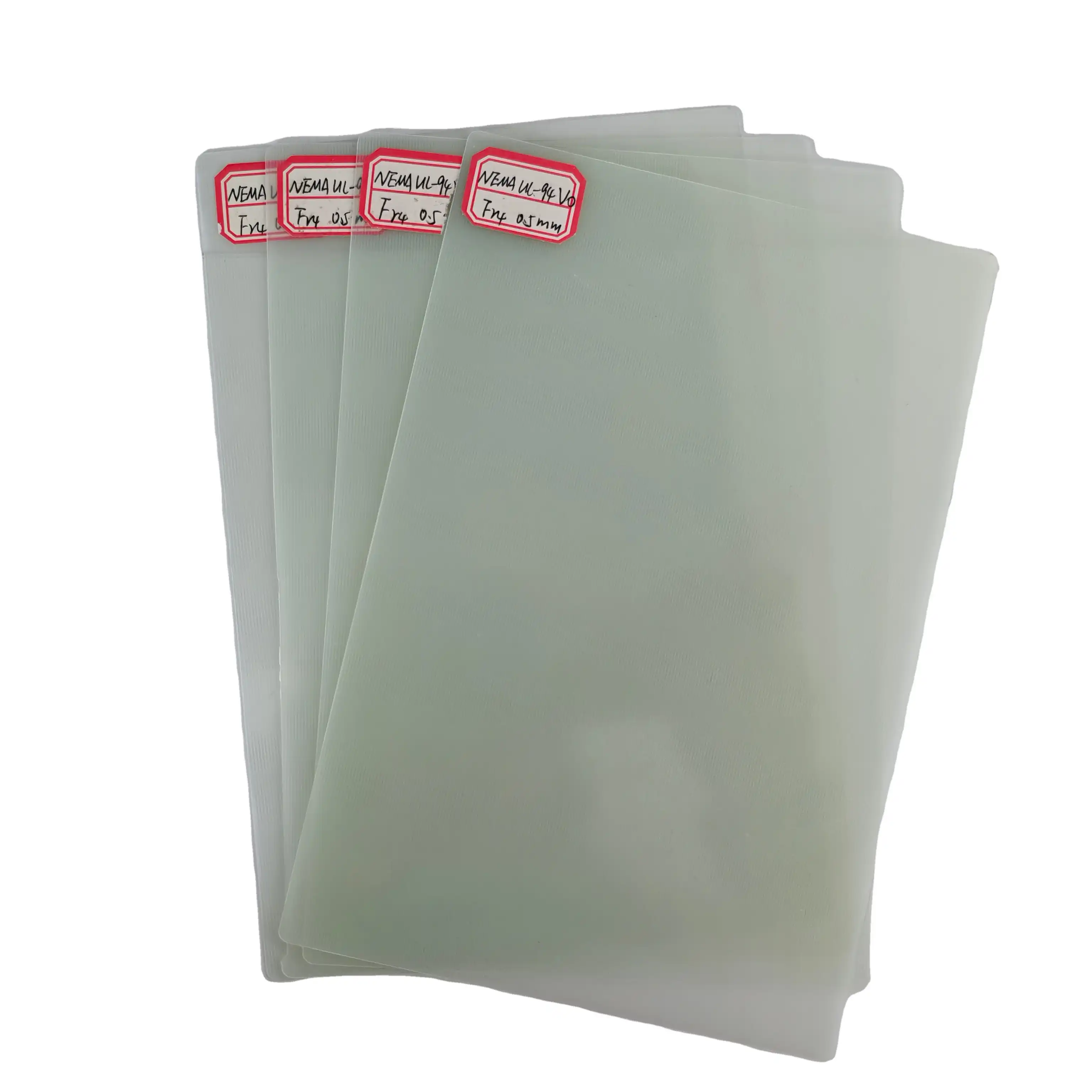
- Bakelite Sheet vs. Fiberglass (FR4): FR4 is better at resisting moisture and has higher dielectric strength, so it is the best choice for PCB supports. Fabric-reinforced phenolic sheets, on the other hand, are better than FR4 at resisting surface wear and are more cost-effective for mechanical uses like gears and spacers.
- Bakelite Sheet vs. Teflon (PTFE): PTFE has a very low friction coefficient, but it deforms under high compressive loads, which means it can't be used for structural wear parts. When there is more compressive stress, phenolic laminates don't creep.
- Bakelite Sheet vs. Epoxy Laminate (G10/FR4): Epoxy laminates work better electrically. If resistance to wear is more important than dielectric properties, phenolic cotton sheets offer the same level of mechanical strength at a lower cost.
- Bakelite Sheet vs. Engineering Plastics (Nylon, Acetal): These plastics are easy to machine and can take impact well, but they get softer above 80–100°C. Phenolic laminates stay stiff at temperatures where thermoplastics would bend or slide.
These differences help engineers and OEM sourcing managers make important choices based on real performance data instead of broad assumptions.
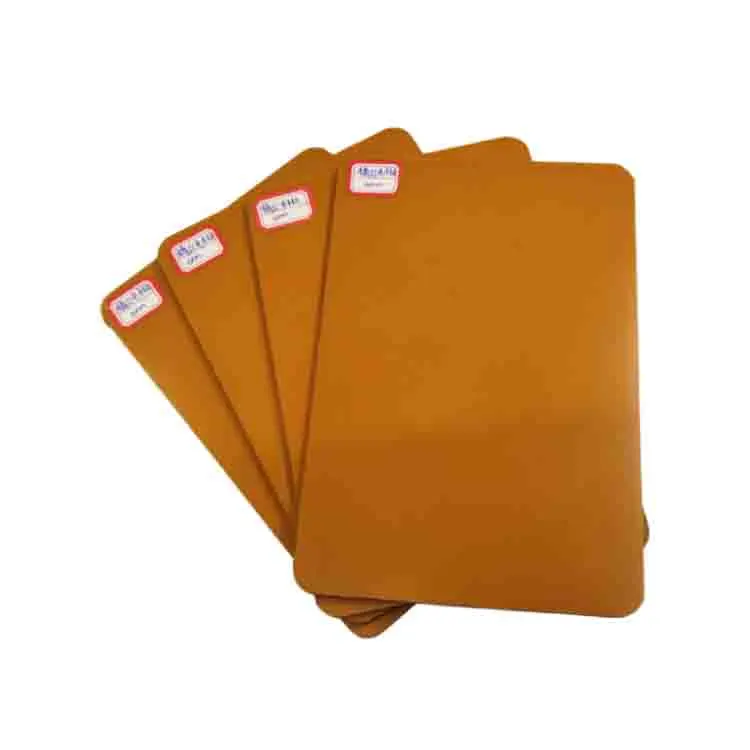
Technical Insights Into Machining and Application of Bakelite Sheets
CNC machining works well with Bakelite Sheets, but because the material is rough, it's important to be careful with the tools you use and the process settings.
Recommended Machining Practices
When cutting Bakelite Sheets, you have to use tools with diamond coating or carbide tips. High tool speeds and modest feed rates keep tolerances tight, usually within ±0.05 mm on CNC routing equipment. This stops chipping at the sides. During processing, dust extraction is required because phenolic resin particles can irritate the lungs. Active collection systems keep work areas clean and protect the people who are doing the processing.
Thickness Selection and Application Matching
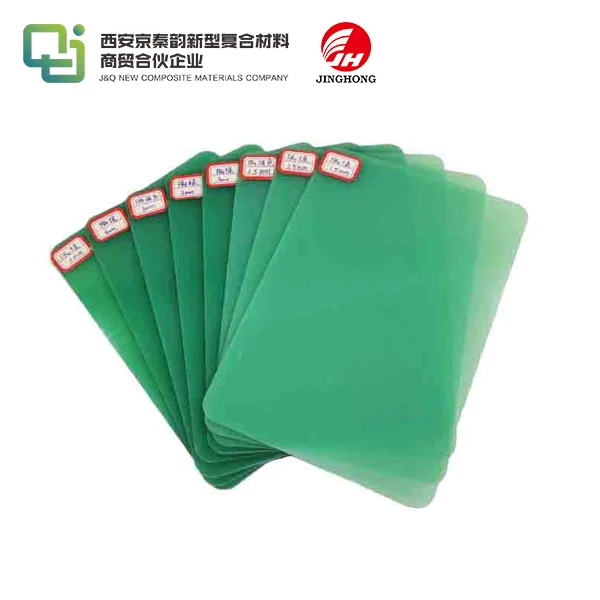
Bakelite Sheets with thicknesses ranging from 0.5 mm to 50 mm can be bought in stores. In automotive assemblies, thin sheets (0.5–3 mm) can be used for PCB backing, insulation pads, and battery separator barriers. Thicknesses in the middle (4–15 mm) are good for mechanical spacers, electrical parts, and motor insulation braces. For frame wear plates, gear flats, and load-bearing parts in industrial machinery, heavy-gauge sheets (16–50 mm) are required.
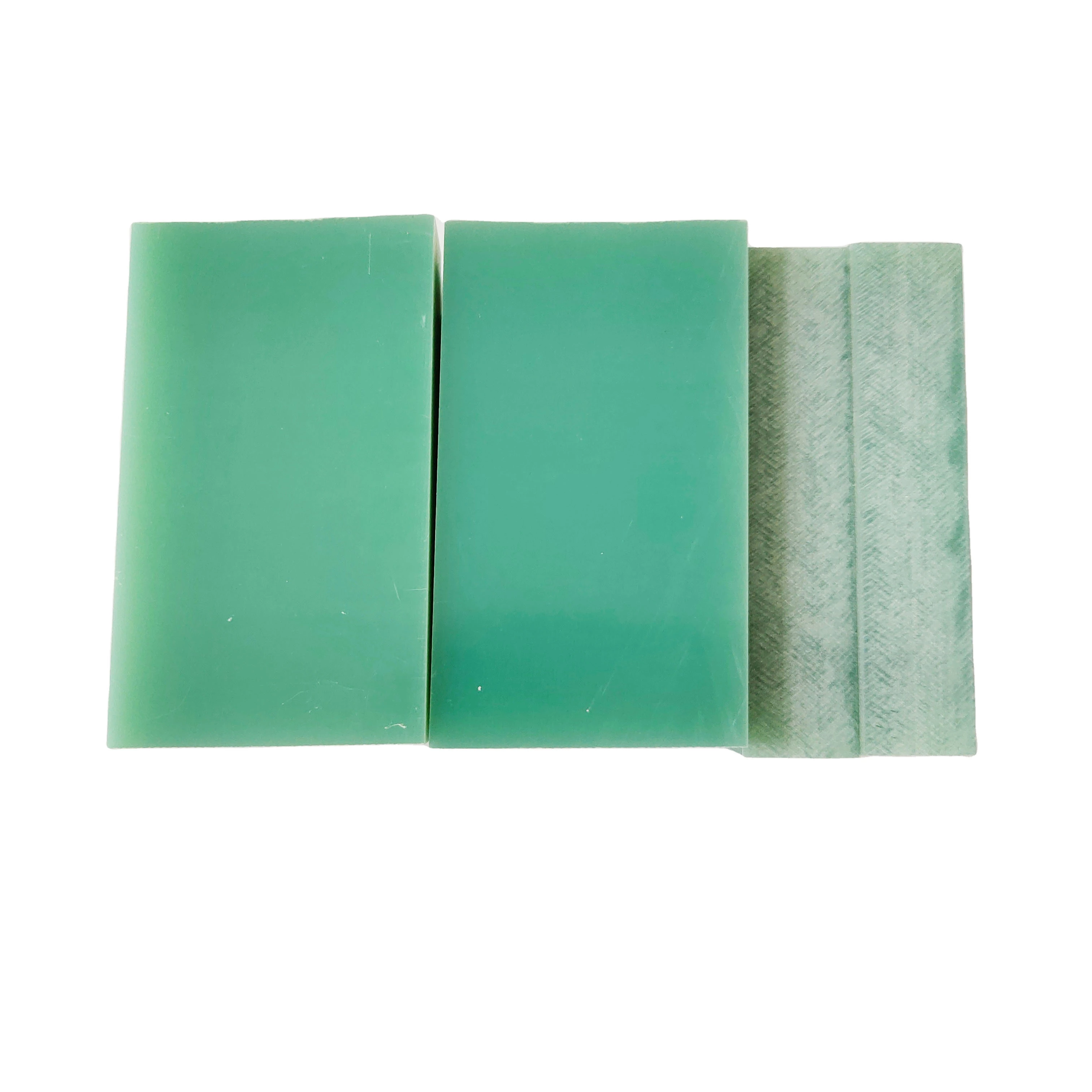
Fabric-reinforced grades, which are sometimes called phenolic cotton sheets, have a higher interlaminar shear strength than Bakelite Sheet variants. This makes them the best choice for uses that will be subject to repeated mechanical stress. When physical stability under voltage is the most important factor, paper-reinforced grades are used as electrical shielding.
Comparison and Decision-Making: Selecting the Right Sheet for Your Application
There is a lot of pressure on procurement managers and engineers to standardize on fewer material SKUs. A clear decision framework cuts down on design mistakes and speeds up the buying process.
The main picking factors that should be looked at are:
- Wear and friction requirements: Fabric-reinforced phenolic grades are best for sliding contact, while paper grades are best for protecting against static electricity.
- Operating temperature: Make sure that the constant service temperature does not go above 120°C for normal grades; for higher thermal needs, define different formulas.
- Electrical insulation requirements: Grade XXX phenolic has better protection against moisture and dielectric performance in electrical settings with a lot of moisture; Grade X puts mechanical strength first.
- Machinability: All phenolic types can be cut, drilled, and milled with a CNC, but fabric reinforcement makes tools wear out faster than paper reinforcement.
- Regulatory compliance: Check for UL, RoHS, or application-specific certifications when looking for electrical assemblies, auto parts, or equipment for the power sector.
The risk of batch-to-batch variation is lower when you buy from a well-known Bakelite Sheet manufacturer with well-documented quality management systems. This is a problem that often comes up when OEMs buy in large quantities.
Procurement Guidance for Bulk Buy and Custom Orders
Getting Bakelite Sheets quickly starts with giving clear technical details during the inquiry stage. Giving suppliers information about the thickness, sheet size, reinforcement grade, amount, and any certifications they need lets them give you correct prices and reasonable wait times.
Services like custom cutting, precision machining to net shape, and surface finishing can greatly lower the costs of processing that comes after. Procurement teams can avoid getting bad stock by asking suppliers about minimum order quantities, dimensional tolerancing documentation, and quality control certificates, such as material test reports, when they are evaluating suppliers.
Understanding shipping lead times and packaging guidelines for large-format sheet material is important for global supply chains to keep goods from getting damaged during travel. Long-term relationships with suppliers that include agreed-upon quality standards and technical help after the sale produce operational continuity that can't be achieved through buying on the spot market.
Future Trends and Performance Optimization
There are more changes coming in the Bakelite Sheet business. Researchers have found that modified glue mixtures that contain nano-fillers make the surface harder and last longer when tested in the lab. Modern CNC machines with high-frequency wheels can now make the surfaces of phenolic parts smoother, so they don't need to be ground down again.
Lean buying strategies, like combining grades, standardizing thickness ranges, and building up buffer stock with reliable sources, cut down on waste and speed up reaction times when production starts up. Sustainability is also becoming more important. Because phenolic laminates last a long time, they don't need to be replaced as often, which is in line with lifecycle-based procurement policies that are becoming more common in the power and automotive industries.
Conclusion
Bakelite Sheet is still a good choice for cheap mechanical parts that need to be resistant to wear, stable in size, and electrically insulated. Its thermoset structure doesn't deform at high temperatures, its fabric-reinforced grades can handle long-term mechanical loads, and it can be machined to make precision parts on a large scale. When standard plastics don't work well enough for engineers and procurement specialists in the electrical manufacturing, industrial machinery, power distribution, automobile, and gadget sectors, phenolic laminates continue to perform well.
FAQ
What thickness is best for high-wear mechanical parts?
Thicknesses in the middle, between 6 mm and 20 mm, are good for most high-wear mechanical uses, like spacers, wear plates, and gear flats. The exact width is determined by the compression load, the contact area, and the assembly's size limitations.
Can phenolic sheets be machined without surface chipping?
Yes, if you have the right tools. Chipping is kept to a minimum with high spindle speeds, controlled feed rates, and tools that are tipped with diamonds or carbides. Edge defects can be cut down even more by firmly supporting the sheet while it is being cut and using climb-milling techniques on CNC routers.
How does Bakelite Sheet compare to fiberglass in wear resistance?
Fabric-reinforced phenolic sheets usually have better surface wear resistance than regular fiberglass when they are moving against each other. Fiberglass laminates, such as FR4, are better for PCB and high-voltage electrical applications because they are stronger and don't get wet as easily.
What is the maximum operating temperature?
Standard Bakelite Sheets can work nonstop at temperatures up to 120°C. After this point, the resin matrix starts to turn into carbon, which weakens both its mechanical strength and its ability to insulate.
Is Bakelite Sheet RoHS-compliant?
There are a lot of business grades that meet RoHS standards, but you need to check the manufacturer's paperwork for each grade before using it in regulated situations.
Partner with J&Q for Reliable Bakelite Sheet Supply
J&Q has been making insulated sheets for more than 20 years and has worked with other countries to trade for more than 10 years. We are a reliable source for Bakelite Sheet, and we offer unique sizes, precision CNC-cut parts, certified grades, and full handling through our own freight infrastructure. You can get a sample, talk about bulk prices, or send us your unique specs at jhd-material.com. You can also email our technical team at info@jhd-material.com.
References
1. Harper, C. A. — Handbook of Plastics Technologies — McGraw-Hill, 2006
2. Brydson, J. A. — Plastics Materials (7th Edition) — Butterworth-Heinemann, 1999
3. IEC 60893 — Specification for Industrial Rigid Laminated Sheets Based on Thermosetting Resins — International Electrotechnical Commission, 2003
4. ASTM International — ASTM D709: Standard Specification for Laminated Thermosetting Materials — ASTM International, 2017
5. Rosato, D. V. & Rosato, M. G. — Reinforced Plastics Handbook (3rd Edition) — Elsevier, 2004
6. UL 746B — Standard for Polymeric Materials — Long Term Property Evaluations — Underwriters Laboratories, 2013