
Epoxy Glass Cloth Laminated Tube Enhances Durability in Industrial Equipment
2026-09-16 17:27:38
When industrial equipment breaks down, it's often because the protection isn't good enough. This weakness is directly fixed by an epoxy glass cloth laminated tube. This composite tube is made by mixing alkali-free woven glass cloth with epoxy resin, then hot-rolling it and letting it cure under controlled pressure. It has great mechanical strength, thermal stability up to 130°C (Class B insulation), and reliable dielectric performance. In circuits, transformer systems, and automatic machinery, engineers always choose this material because it keeps its shape in situations where other materials would break down. This guide has all the information you need to choose the right insulation tubing for important jobs.
Understanding Epoxy Glass Cloth Laminated Tubes and Their Key Properties
Core Composition and What Sets It Apart
The structure of an Epoxy Glass Cloth Laminated Tube starts with weaving glass cloth that doesn't have any alkalis in it. This is what holds the tube together. Epoxy resin is put into this cloth, which is then wrapped around a cylinder. Heat and pressure fix the resin. The end result is a thick wall with many layers where the resin and glass fabric can't be broken apart. In other words, the wall doesn't separate when it shakes or bend when pressure is applied all the time.
These pipes are not the same as phenolic cotton tubes or regular fibreglass pipes because they have a mix of qualities that work together. Its outside is smooth and stable in terms of size, so it can handle tight CNC standards. It also has a high tensile strength. It doesn't soak up much water and can stand up to weak acids and bases. The insulation class goes up to 130°C, and certified grades like FR-4 have UL94 V-0 flame-retardant ratings. Third-party testing has also shown that they fully comply with RoHS and REACH.
Manufacturing Precision That Procurement Teams Can Rely On
It's not enough to just do well; you also need to be consistent. Automatic systems wind and clean each tube on modern production lines, making sure they stay clean, dry, and the same thickness all the way through. From batch to batch, the cutting ends stay neat, the colour stays the same (usually yellow), and the thickness limits don't change. Global companies like Schneider Electric have accepted this type of product for use in their systems because it has this level of process control.
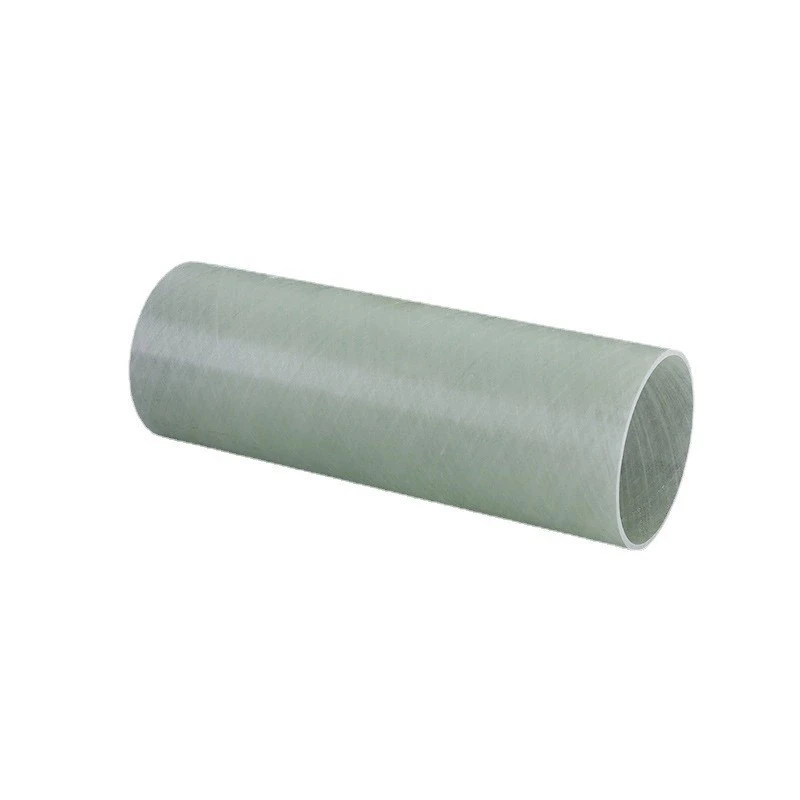
Why Epoxy Glass Cloth Laminated Tubes Are Ideal for Industrial Equipment?
Different temperatures, mechanical vibrations, and chemical exposure all happen at the same time in factories and break down normal materials very quickly. Because of these main performance benefits, an Epoxy Glass Cloth Laminated Tube is the best choice in many areas:
- High-voltage switchgear and circuit breakers: The tube cools the spark or acts as an insulation rod in SF6 and vacuum circuit breakers. It can withstand strong arc-quenching pressure and keep live parts electrically separate from each other.
- Big power transformer groups: This material can be used to make tap changer insulation shafts and structural support beams that can be buried in hot transformer oil for decades without contaminating the dielectric fluid or delaminating from the heat.
- Equipment for cryogenics and science: G-10 grade tubes stay flexible and magnetic at temperatures close to 0 degrees Celsius. This makes them necessary in superconducting magnets and LNG pipelines where thermal bridging is not allowed.
- Structure support for automation machinery: The material's stiffness and physical stability under constant cycle load make it ideal for mechanical spacers, guide tubes, and insulation columns in robotic and CNC systems.
Because of all of these benefits, equipment lasts longer and needs less maintenance than before. When it comes to moisture protection, epoxy glass fabric tubes are better than phenolic laminates. When it comes to price, they are more affordable than carbon fibre composites and work well enough for most industrial shielding needs. It is possible to measure the lifetime cost efficiency.
How to Choose the Right Epoxy Glass Cloth Laminated Tube for Your Needs?
Dimensions, Grades, and Thermal Requirements
To choose the right Epoxy Glass Cloth Laminated Tube, you must first know the tolerances for the wall thickness, inner diameter, and length. These are the parameters that have a direct effect on how well machined assemblies fit together and work. 14 mm x 18 mm and 18 mm x 22 mm cross-sections are popular reference sizes. A standard stock length is 1000 mm, but special lengths are often made. G-10 and FR-4 grades can continuously handle temperatures up to 130°C. G-11 has reliable mechanical strength in the 155°C–180°C range, which makes it the best choice for power generation environments.
Supplier Evaluation: Certifications and Batch Reliability
Before giving a seller the go-ahead, buying teams should look at their UL approval number, RoHS test results, and REACH compliance paperwork. For people in charge of sourcing for OEMs, consistency from batch to batch is a must. Request tolerance data sheets and sample proof before agreeing to large orders. A supplier that uses advanced ventilation and dust-control facilities during production shows that they care about quality on the inside, which protects the performance of the final product.
Procurement and Logistics: Securing High-Quality Epoxy Glass Cloth Laminated Tubes
To get a lot of Epoxy Glass Cloth Laminated Tubes, you need more than just a product specification. Standard stock can have short lead times, but custom-wound tubes—those with non-standard wall thickness, special resin grades, or precision-ground outer surfaces—need to be bought during set times. There is no substitution risk when you buy in bulk and agree to tolerances and batch specifications.
A trustworthy provider should offer a customisation process that includes choosing the right material grade, making sure the dimensions are correct, and making sure the surface is smooth and the ends are cut accurately. Cross-border buying is made a lot easier when you work with a transportation partner that takes care of export paperwork, combined shipping, and stock staging. J&Q has been making things for over 20 years and has its own specialised transportation network. They offer a one-stop service from design to delivery, which gets rid of the planning problems that slow down industrial buying projects.
Technical Specifications and Performance Metrics for Industrial Use
Engineers need accurate data to make sure that materials are compatible. Epoxy Glass Cloth Laminated Tubes that are good enough for production meet these requirements:
- Class of insulation: B class (continuous operating temperature of 130°C)
- Flame retardancy: FR-4 grade meets UL94 V-0; G-10 grade doesn't stop fires but has slightly better mechanical qualities.
- Mechanical strength: High tensile strength in both the axial and circumferential directions because the glass reinforcement is woven in two directions.
- Low water uptake; the thick resin structure stops water from getting in, even in hot work settings
- Chemical resistance: Can't be worn down or damaged by mild acids and alkalis; once fully cured, it doesn't react chemically with mineral transformer oils (tested with an Acetone Extraction test).
- Stability in dimensions: tight thickness tolerances, a flat and straight shape, and a smooth surface finish that can be used for close-tolerance CNC cutting with carbide or diamond-tipped tools.
- Checked by UL (No. E310670), RoHS, and REACH
These measurements show that the material is suitable for use in chemically aggressive service conditions, electrical insulation, and structural support. This information is enough for engineers who work with power transfer, car battery systems, and device motor units to confirm their designs.
Conclusion
Epoxy Glass Cloth Laminated Tubes are used in switches, transformers, automation equipment, and cold systems because they are strong, stable at low temperatures, and insulating against electricity. Few composite materials can match these qualities at a similar cost. The material's confirmed approvals, ability to be machined on a CNC, and chemical inertness make it a good choice for buying teams that need to balance performance and risk. If you work with the right supplier, one that offers consistent batch quality, easy customisation, and streamlined logistics, this material can be used to build long-lasting industrial equipment.
FAQ
What is the difference between FR-4 and G-10 grades?
Both grades share similar mechanical strength. FR-4 incorporates a bromine-based flame retardant achieving a UL94 V-0 rating, while G-10 carries no flame retardant but often delivers marginally better mechanical properties. Choose FR-4 where fire safety compliance is mandatory and G-10 where maximum structural performance takes priority.
Can these tubes be machined precisely?
Yes. The material machines well with carbide or diamond-tipped tooling on high-speed CNC equipment. Adequate dust extraction and cooling prevent delamination and protect operators from glass particulate. Tight tolerances are achievable on both inner and outer diameters.
Does the tube degrade inside transformer oil?
Fully cured, high-quality tubes remain chemically inert to mineral transformer oils. Under-cured material may leach compounds that reduce oil breakdown voltage. The Acetone Extraction test verifies full cure and is a standard quality checkpoint for transformer-grade material.
How should these tubes be stored?
Store horizontally on level supports in a dry, room-temperature environment away from direct UV exposure. Proper horizontal storage prevents long-term creep deformation. Chemically stable indefinitely, though re-testing is standard practice after 12–24 months in inventory.
What insulation temperature range is available?
Standard grades operate continuously at 130°C (Class B). G-11 grade maintains significant mechanical strength at 155°C–180°C and is the preferred option for high-temperature power generation applications.
Partner with J&Q for Certified Epoxy Glass Cloth Laminated Tube Supply
J&Q brings over 20 years of insulating materials manufacturing experience and more than a decade of dedicated export trade to procurement teams across the United States. As a trusted epoxy glass cloth laminated tube manufacturer, we offer UL-certified, RoHS-compliant product lines with flexible customization, tight tolerance guarantees, and integrated logistics through our own freight network. Request samples or bulk pricing today—reach our technical team directly at info@jhd-material.com or visit jhd-material.com.
References
1. ASTM International. ASTM D229: Standard Test Methods for Rigid Sheet and Plate Materials Used for Electrical Insulation. ASTM International, 2022.
2. IEC Technical Committee 15. IEC 60893: Specification for Industrial Rigid Laminated Sheets Based on Thermosetting Resins for Electrical Purposes. International Electrotechnical Commission, 2021.
3. UL Standards & Engagement. UL 94: Standard for Tests for Flammability of Plastic Materials for Parts in Devices and Appliances. Underwriters Laboratories, 2023.
4. Harper, Charles A. Handbook of Plastics Technologies. McGraw-Hill, 2006.
5. Brydson, J. A. Plastics Materials, 7th Edition. Butterworth-Heinemann, 1999.
6. National Electrical Manufacturers Association. NEMA LI 1: Industrial Laminating Thermosetting Products. NEMA, 2020.
