G10 ESD Epoxy Board Supports Precision Fixtures in Semiconductor Production
2026-09-17 17:17:19
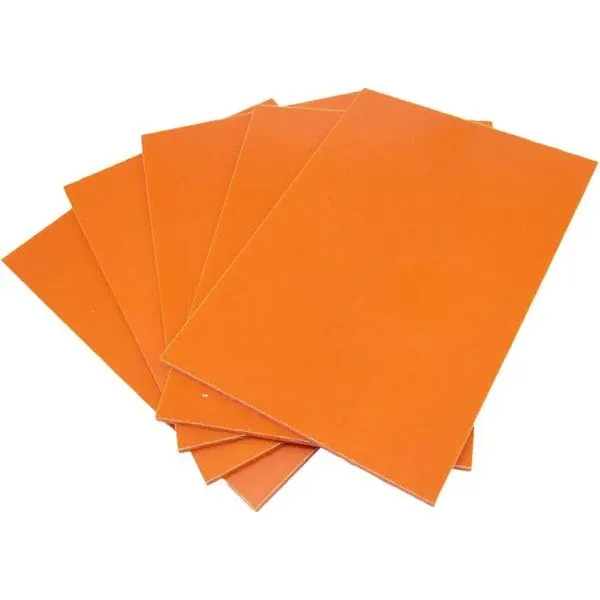
When it comes to semiconductor production, one invisible threat can compromise an entire batch of microchips: electrostatic discharge. G10 ESD epoxy board has emerged as a go-to structural material for precision fixtures precisely because it neutralizes that threat without sacrificing mechanical integrity. Built from woven fiberglass impregnated with a carbon-modified epoxy resin system, this material maintains a controlled surface resistivity between 10⁵ and 10⁹ Ohms — sitting firmly in the static-dissipative range defined by ANSI/ESD S20.20. This guide walks through its core properties, how it stacks up against alternatives, practical procurement strategies, and real-world validation — everything a technical procurement team needs to make a confident sourcing decision.
Understanding G10 ESD Epoxy Board and Its Role in Semiconductor Production
What Makes This Material Different at the Molecular Level?
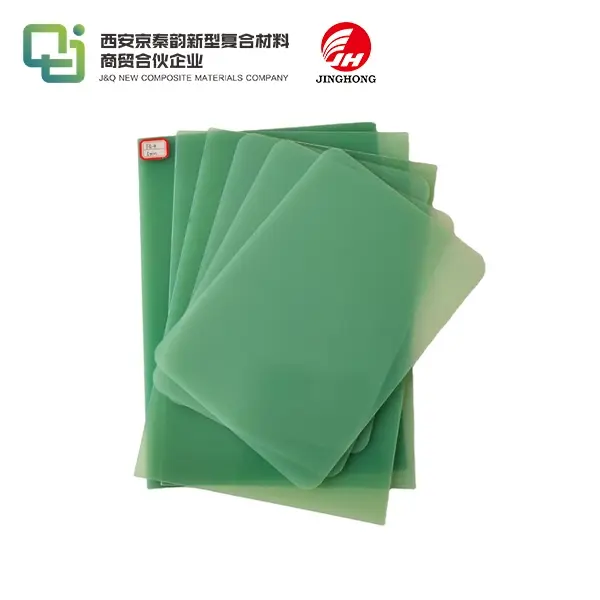
The normal G10/FR4 is an electrical insulator that can build up dangerous surface charges. The G10 ESD Epoxy Board, on the other hand, spreads static energy in a controlled, measured way. The conductivity comes from carbon fillers that are spread out evenly in the epoxy matrix, not from a coating that was added on top after the fact. In sterile settings, this difference is very important. The ESD performance stays the same across the whole cross-section of the board even if a fastener is cut, trimmed, or abraded during production.
The backbone of the machine stays strong. Flexural strength is usually higher than 45,000 PSI, and attachment tolerances stay tight even when temperatures change. This is very important when working with silicon chips that are measured in microns.
How Does It Protect Semiconductor Processes?
In semiconductor lines, precision fixtures hold wafers while they are being handled, guide parts through ICT bed-of-nails testing, and move PCBs through SMT soldering processes. Because it can hurt ICs or BGAs without making any obvious problems, uncontrolled static electricity is known in the industry as "the silent killer."
This is fixed by G10 ESD Epoxy Board, which gives built-up charge a controlled way to escape, keeping voltage spikes from reaching sensitive parts. Because it doesn't give off much gas and doesn't react with chemical cleaners that are often used in factories, the material fits in well with SEMI-compliant production environments.
Comparing G10 ESD Epoxy Board With Alternative Materials
Often, procurement teams compare this material to a number of other options. Each has real strengths, but trade-offs become clear when they are used in real production.
Here's a direct look at the most popular options side by side:
- Standard FR4: Standard FR4 has great mechanical strength and is easy to find, but it is only an insulator. Its surface builds up static electricity, so it can't be used for ESD-sensitive fastening uses. It is against the rules to use FR4 in a semiconductor lab.
- Surface-coated ESD boards: Some providers put anti-static coatings on common substrates. These have short-term ESD performance, but it gets worse when they are machined or worn. The protection is lost as soon as the coating is gone, which is a very important failure mode in high-cycle fixture environments.
- Ceramic-filled epoxy boards: These have better thermal resistance and are preferred for use in reflow ovens that go above 200°C. But they are much more fragile, harder to machine precisely, and cost more per unit, which puts a strain on large-scale procurement budgets.
- PEEK or Torlon-based materials: PEEK or Torlon-based materials are high-performance thermoplastics that are very resistant to chemicals. However, they don't have built-in ESD control unless they are specially compounded, and they can be hard to machine to tight tolerances.
The glass-epoxy ESD laminate is the best choice for standard semiconductor fixture uses because it is consistent in volumetric ESD, can be machined on a CNC, and can withstand constant use at temperatures of up to about 130°C to 140°C. When money is tight and performance needs are modest to high, the G10 ESD Epoxy Board gives you good value without sacrificing anything.
Procurement Guide: Sourcing High-Quality ESD Epoxy Laminates for Semiconductor Production
It takes more than looking at a spec sheet to find the right static-dissipative material. Here are the main things that every procurement team should check:
- Request batch-specific resistivity data: Ask for resistivity data that is specific to a batch. A Certificate of Conformance (CoC) with measured surface and volume resistivity values from the real production lot proves that the conductive fillers were spread out fairly. During production, agglomeration can lead to insulating pockets, a flaw that can only be found by testing each batch separately.
- Confirm volumetric ESD construction: Confirm volumetric ESD construction by making it clear whether the ESD trait is built into the G10 ESD Epoxy Board or only applied to the surface. This one question tells you the difference between sources you can trust and those who are just trying to save money on raw materials.
- Check RoHS compliance documentation: Check the paperwork for RoHS compliance. Customers of semiconductors and their original equipment manufacturer (OEM) partners often need materials that are RoHS-compliant. Make sure the seller gives you current safety certification and not just a statement that they follow the rules.
- Evaluate customization capability: Check to see if the product can be customized. Precision fixtures often need panel sizes that aren't standard, thickness standards that must be met, or shapes that have already been machined. When you buy from a provider with in-house CNC capabilities and flexible MOQ structures, your wait time and the cost of secondary processing go down.
- Assess delivery reliability: Check how reliable the delivery is. Unplanned downtime in semiconductor production lines costs a lot of money. You have more control over your supply plan if your buyer has their own logistics system and doesn't just use third-party freight brokers.
All of these steps of proof lower the risk of purchasing things and keep your production line safe from material failures that show up after parts have been put together.
Technical Usage and Maintenance Best Practices
Careful handling is needed to maintain the G10 ESD Epoxy Board performance while it is being machined, stored, and put together.
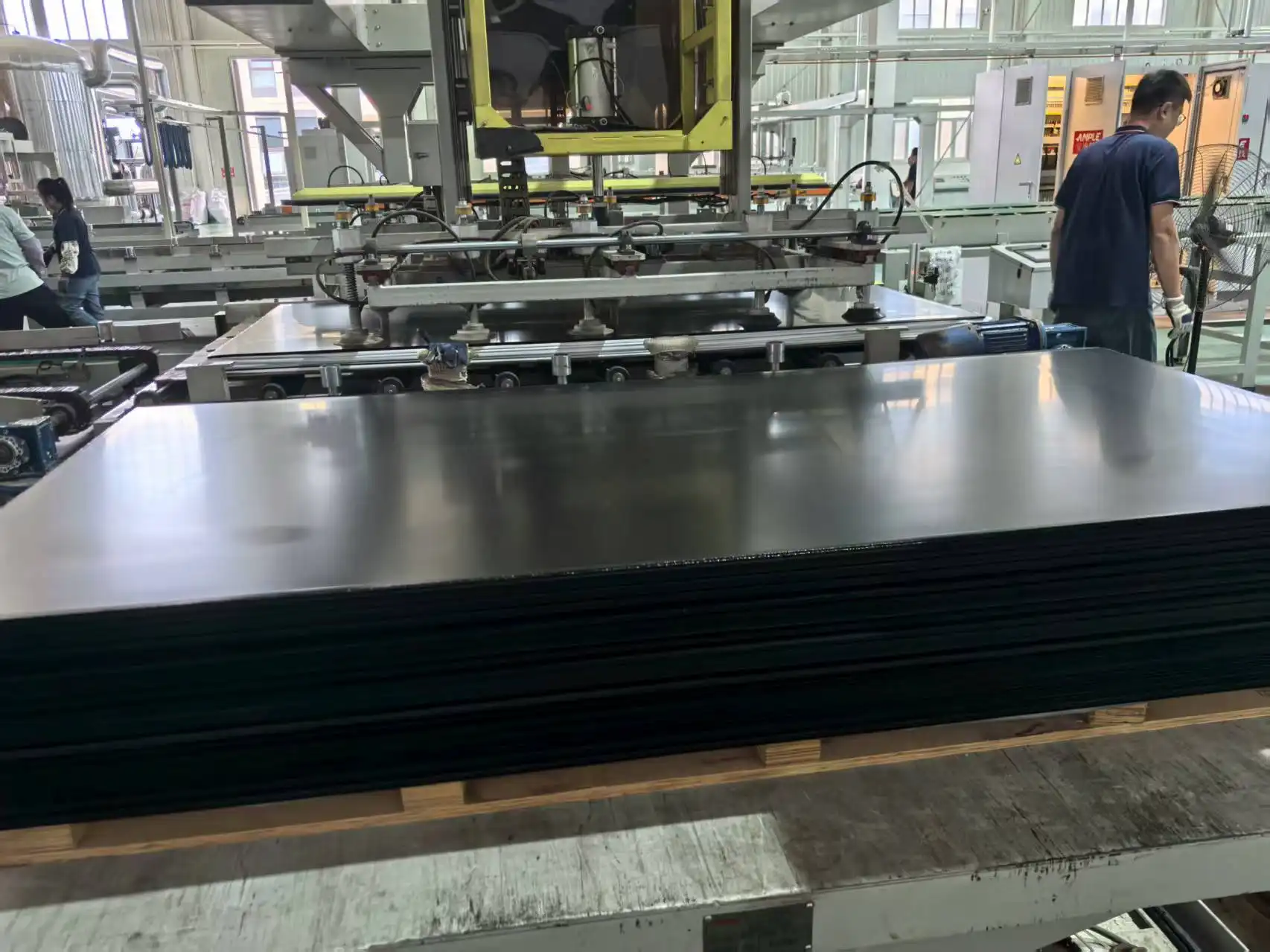
For CNC cutting of fiberglass epoxy laminates, you need tools with carbide or diamond tips. The woven glass is rough, and it will quickly wear down standard HSS tools, causing them to lose their shape and separate at the cut edges. The best method is dry machining with strong vacuum dust extraction. If these steps are not taken, the gritty particles that are made during cutting can contaminate cleanrooms and clog equipment.
When cutting, if liquid coolant is used, the board needs to be completely dry before resistance readings can be made. Even short-term moisture absorption can change surface resistivity readings and lead to false QC failures.
Panels should be stored in a safe, low-humidity area that is out of direct sunlight. Stack panels horizontally on flat surfaces to keep them from warping across larger sizes. When putting together parts, use ESD-compatible adhesives that don't create insulating walls between surfaces that are mating. Regular epoxy adhesives can create charge-trapping interfaces by accident.
Real-World Applications: Where This Material Proves Its Value?
A PCB assembly plant that works with high-density BGA parts moved its SMT carrier trays from protected ones to ones that are made of volumetric G10 ESD Epoxy Board laminates. Latent ESD-related failure rates on final boards dropped noticeably in just two production quarters. The most important thing was that the resistivity stayed the same across the surface of the tray even after being cleaned and heated many times. This was not possible with coated trays after the first 50 wash cycles.
An integrator of semiconductor equipment said that ESD-compliant fixture plates held better positional tolerances than their previous machined aluminum options. This was mostly because the lower thermal expansion coefficient of the epoxy laminate stopped thermal drift during long processing runs.
Based on these results, it looks like the material works well in the real world too, not just in controlled lab settings.
Conclusion
When it comes to designing semiconductor fixtures, G10 ESD Epoxy Board is just right. It's strong enough for structural precision work, stable enough to meet cleanroom standards, and consistent enough to keep sensitive parts safe from static damage over thousands of production cycles. Its volumetric ESD design makes it much more reliable than surface-treated options, and the fact that it can be machined keeps the costs of secondary processing low. If your buying team is trying to balance performance with budget responsibility, this material should be at the top of your list when choosing fitting materials.
FAQ
How does G10 ESD epoxy board differ from standard FR4 in electrical terms?
Standard FR4 is a pure insulator that doesn't have a controlled way for static electricity to escape. ESD-grade G10 ESD Epoxy Board has carbon fillers that are spread out in a way that keeps the surface resistance between 10⁵ and 10⁹ Ohms, which is a range that helps discharge static electricity. This means that energy leaks away safely instead of building up to dangerous voltage levels.
What certifications should I verify before purchasing?
Ask for a Certificate of Conformance that includes the resistance values for each batch, proof that the product meets RoHS standards, and confirmation that it meets ANSI/ESD S20.20 standards. Together, these three documents check the safety of the materials, the electrical performance of the electricity, and the compliance of the process.
Can resistivity remain stable across humidity changes?
No matter how humid the air is, high-quality volumetric ESD boards that use carbon-filled epoxy systems keep their resistivity the same. In low-humidity settings, boards that use migratory surfactant-based additives will show resistivity drift, which is a typical way for climate-controlled semiconductor factories to fail.
Is customization available for non-standard fixture dimensions?
Yes. Suppliers you can trust offer custom panel sizes, thickness tolerances, and profiles that have already been machined. Minimum order numbers (MOQs) that are flexible can handle both small amounts for prototypes and full production runs without any fines.
Partner With J&Q for Reliable ESD Laminate Supply
J&Q has been making insulating sheets for more than 20 years and has been trading with other countries for more than 10 years. As an official provider of G10 ESD Epoxy Board, we provide volumetric ESD laminates that are RoHS-compliant and come with batch-specific CoC documentation. Our MOQ is customizable, and we handle all of the operations from start to finish using our own freight infrastructure. For specifics and a quick price, email our expert team at info@jhd-material.com or go to jhd-material.com.
References
1. Journal of Electronic Packaging — ASME, 2019
2. ESD Control in Electronics Manufacturing — ESD Association (ESDA), 2020
3. SEMI Standard E78: Guide to Assess and Control Electrostatic Discharge (ESD) and Electrostatic Attraction (ESA) for Equipment — SEMI, 2021
4. Printed Circuit Handbook, 7th Edition — McGraw-Hill, 2017
5. ANSI/ESD S20.20: Protection of Electrical and Electronic Parts, Assemblies and Equipment — ESD Association, 2021
6. Materials Science and Engineering: An Introduction, 10th Edition — Wiley, 2018