Bakelite Sheets: The Complete Guide to Industrial-Grade Phenolic Laminates
2026-04-15 17:17:09
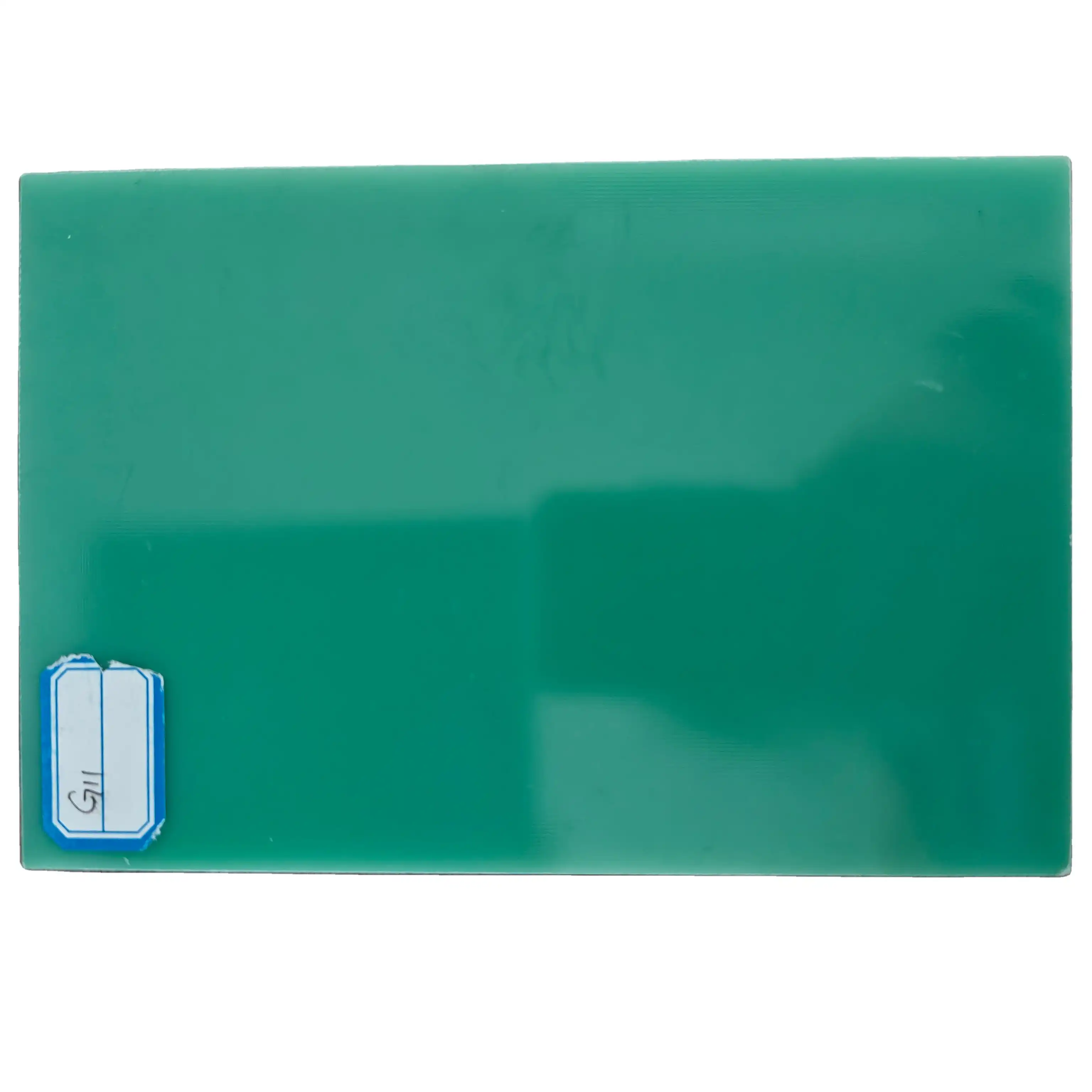
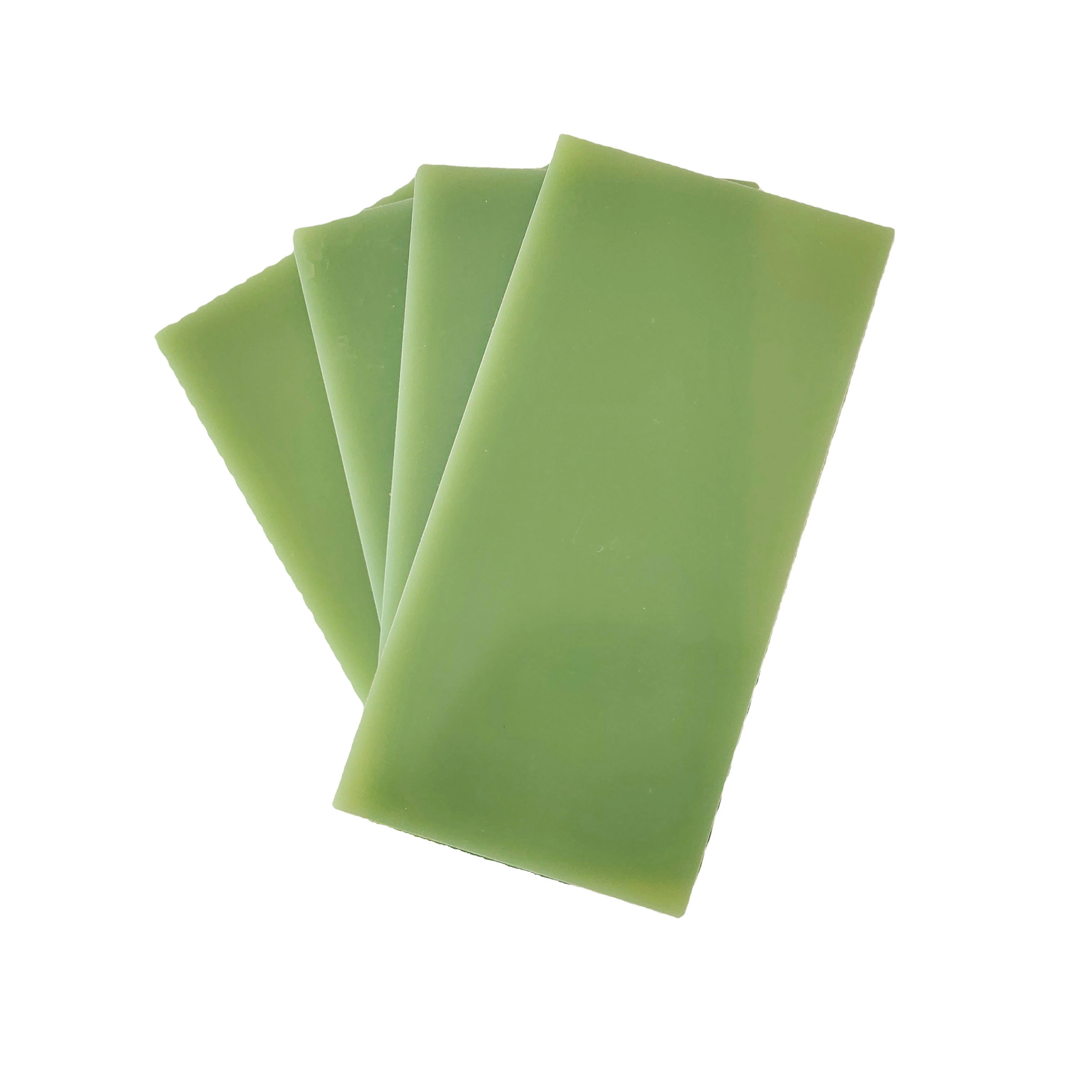
Bakelite sheets are the first industrial-grade phenolic laminate. They are made by heating and pressing layers of cellulose paper together with phenol-formaldehyde glue to make a thermosetting composite material. In contrast to modern thermoplastics, these phenolic paper laminates harden into chemically stable, rigid structures that are very good at resisting heat, electricity, and mechanical stress. In the electrical manufacturing, machinery fabrication, and power distribution industries, phenolic laminates solve important engineering problems that regular plastics can't. They do this by providing reliable performance in high-voltage switchgear, motor insulation assemblies, and structural parts that are heated and cooled many times and are under a lot of mechanical stress.
Understanding Bakelite Sheets and Their Properties
When our company started selling phenolic laminates twenty years ago, we found that most purchasing managers got Bakelite sheet mixed up with other plastics. In business settings, the difference is very important. Leo Baekeland came up with phenolic paper laminates in 1907. They were the first truly manufactured plastic, made by condensation reactions between phenol and formaldehyde. Polyoxybenzylmethyleneglycolanhydride is a three-dimensional network polymer that, unlike polyethylene or polypropylene, can't melt again once it's hardened. It's made by this chemical process.
The Chemical Foundation of Phenolic Laminates
Layering in the production process decides how well something works. You can use kraft paper for general-purpose grades or cotton cloth for NEMA XX standards that need higher mechanical strength. After the layers are filled with glue, they are pressed together at 1,200 to 2,000 PSI while being heated to 300 to 350°F. Cross-linked molecular links are made during this thermosetting process, which locks the structure of the material forever. The end result has a dielectric strength greater than 12 kV/mm thickness, a heat deflection temperature greater than 300°F, and a compression strength greater than 30,000 PSI, which are all things that regular plastics can't do.
Industrial-Grade Properties That Define Performance
Working with people who make transformers and put together switches taught us which specs are the most important. Phenolic paper sheets keep their shape even when the temperature changes, which is very important when making precision bolts or arc barriers with ±0.005-inch limits. Even in wet places, they don't absorb more than 1.5% of water, which keeps coastal power substations from breaking down. As required by ASTM D495 standards, arc resistance rates can withstand electrical discharge without carbonizing. This is important for circuit breaker isolation panels and commutator parts in rotating machinery.
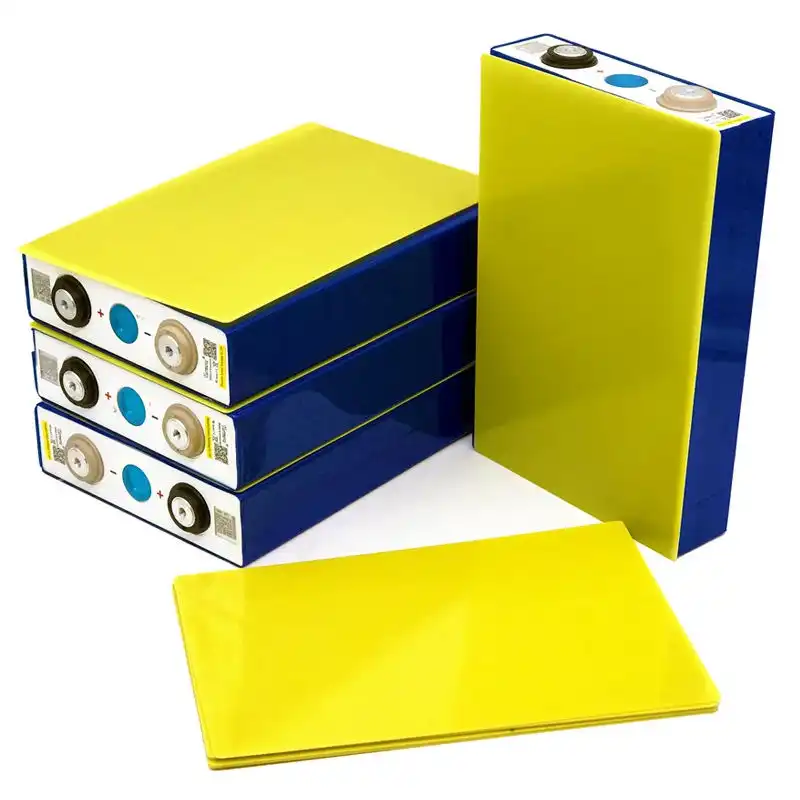
Chemicals like acids and alkalis don't hurt the material; it can also stand up to hydraulic fluids and petroleum solvents that are used in automobile assembly parts. We've provided phenolic sheets for battery pack shields in the production of electric vehicles. These sheets meet UL94 V-0 flammability standards because they can put out fires on their own without using halogenated flame retardants.
Manufacturing Processes and Customization Capabilities
Modern techniques for making things have greatly increased Bakelite sheet's usefulness. CNC routing tools can make complex shapes that can't be made with die-stamping. This makes it possible to make samples and small quantities of custom parts. We keep multi-axis routers and precise water-jet cuts in our building so that we can work with sheet stock that ranges from 0.020-inch thin gaskets to 2-inch structural plates. Surface finishes range from matte to glossy, and the roughness is less than 32 microinches, so they can be used with optical encoder mounts and precision bearing housings.
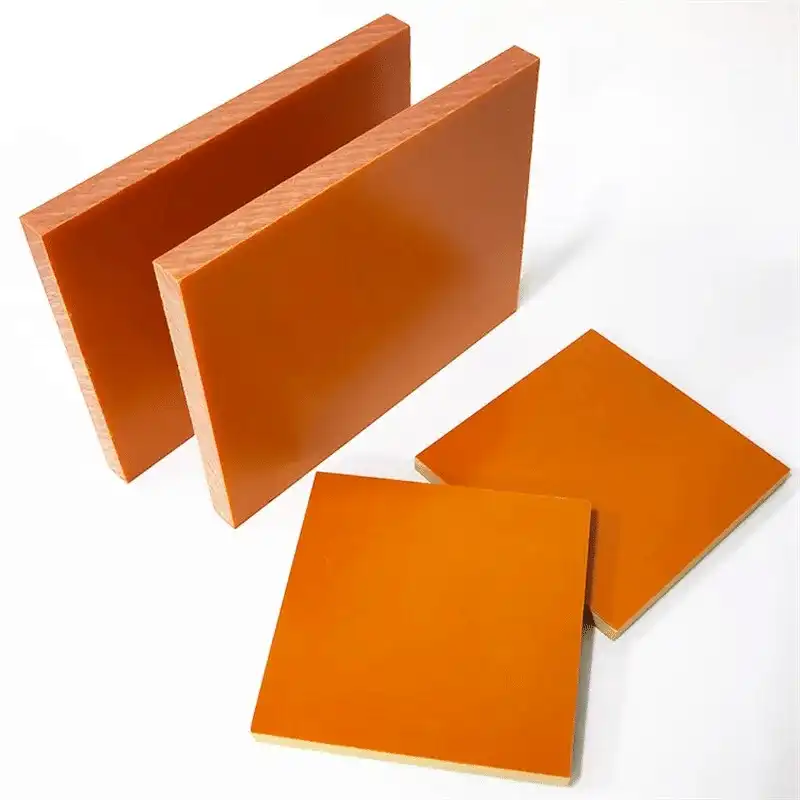
Since the beginning of commercial use, standards for thickness have become much tighter. For example, we stock sheets with ±3% dimensional variation across lengths greater than 48 inches. Color coding with pigment additives helps with quality control on an assembly line. For example, black means standard paper-base grades and brown means cotton-fabric reinforced grades. When making appliances, custom punching dies lower the cost per piece. For example, when making more than 5,000 pieces, investing in tooling for motor bracket forms that are used over and over again is worth it.
Procurement and Customization of Bakelite Sheets
To understand the industrial phenolic laminates supply chain, you need to know how to buy goods and how much they can be made in the United States. For the U.S. market to work, well-known manufacturers that follow NEMA standards and Asian sources that offer low prices on industrial grades are needed. We've teamed up with both domestic and foreign mills and makers to give our customers access to certified Bakelite sheets that come from clear sources.
Supplier Channels and Quality Verification
Direct makers, master wholesalers, and regional fabricators make up the different parts of distribution networks. Direct buying from mills works best for contracts that cover more than 10,000 pounds per year, as this lets you discuss prices and make sure that only a few units are made at a time. Many different grades and sizes are kept in stock by master wholesalers. This makes it easy to quickly complete sample orders with a range of specs, which is helpful when R&D teams are looking at several material choices at the same time.
To check the quality, you should first ask for certifications before placing an order. Flame-resistance grades are confirmed by UL marks, and environmental rules for electronics exported abroad are covered by ROHS compliance paperwork. We keep test records that confirm dielectric strength, flexural stiffness, and thermal expansion factors. This way, engineers can make sure that the values are the same from shipment to shipment. Third-party inspection services add extra security for important medical or military uses that need to be able to track things.
Customization Options and Lead Time Management
Standard sheet sizes are 36 inches by 48 inches and 48 inches by 96 inches. However, custom slitting cuts down on waste when plans for parts work better with smaller lengths. Paper-base grades come in thicknesses ranging from 0.020 inch to 3 inches, and fabric laminates can reach 4 inch structure plates for specialized machinery insulation. Some surface treatments are sanding, which makes glue bonds stronger, and polishing, which lowers friction in sliding wear uses.
Lead times change based on how complicated the specifications are and how many orders are placed. Stock widths in common grades ship from our stores within three business days, which helps with quick project timelines and needed replacements for maintenance. Custom-thickness runs need to be scheduled with the mill, which can push back delivery by four to six weeks, based on how deep the production queue is. We tell procurement teams to plan their needs every three months. This way, they can place blanket orders with planned releases that balance the costs of keeping supplies with the need to keep production going.
Fabrication services for Bakelite sheet turn raw sheets into final parts, skipping the need for buyers to do extra work if they don't have their own cutting facilities. CNC routing, water-jet cutting, and die-punching can all be used to make shapes ranging from simple squares to complicated shapes with mounting holes and radius edges. Different minimum order numbers apply. For example, single-piece orders can be accepted for trial runs, but production tooling is amortized over batches of more than 500 units to save money.
Pricing Factors and Volume Considerations
The prices of materials depend on the type of resin used, the type of reinforcement, and the width limits. Paper-base phenolics are the least expensive choice and can be used to insulate appliances and make other electrical parts. Premium cotton cloth types are priced that way because they work better mechanically in tough situations. Total landed costs are affected by import taxes and freight surcharges, especially for container shipments that need special treatment to keep them dry during ocean transport.
Discounts for large orders start at 500 pounds, and as packages go over 2,000 pounds, unit costs go down due to tiered prices. Annual purchase deals lock in good rates and make sure that supplies will be available during times when thermosetting markets experience resin shortages. We set up contracts so that prices are reviewed every three months based on rates of raw materials. This way, costs can be predicted without having to worry about long-term commitment risks.
Leading Brands and Suppliers in Bakelite Sheets
Supplier image has a direct effect on the dependability of products and the ability to keep making them. As we've coordinated foreign shipments for years, we've found makers whose quality systems and quick response times set them apart in competitive markets. When choosing a brand, you should think about price, technical ability, closeness, and after-sale help in the same way.
Recognized Quality Standards and Certifications
NEMA standards for Bakelite sheet use letters and numbers to describe different kinds of phenolic laminate. For example, NEMA X, XX, and XXX show different types of paper-based laminates with better mechanical and electrical performance. NEMA CE and LE grades say that the cloth support is made of cotton and linen, respectively. Military standards MIL-I-24768 cover defense uses that need strict qualification testing and proof of ownership. The ISO 9001 certification shows that the production process is controlled to ensure uniform quality, and the ISO 14001 certification shows that environmental management systems are becoming more important to companies' efforts to be more environmentally friendly.
UL approval is still needed for electrical parts that are put into listed equipment units. Flame spread tests were done on phenolic sheets with UL marks according to UL94 guidelines. Ratings from HB (horizontal burn) to V-0 (self-extinguishing vertical burn) showed how safe the sheets were in case of a fire. The ROHS compliance certification supports the limits on restricted substances, which is very important for gadgets sold in Europe under REACH rules or in California under Proposition 65 rules.
Evaluating Supplier Reputation and Service
Technical help is what sets competent providers apart from commodity dealers. We give preference to partners with applications engineering teams that help choose materials, provide CAD models for design integration, and fix processing problems during development stages. Responding quickly to questions means that important issues are solved within hours, not days. This is helpful when production lines need to confirm the details of a material before setting up machines.
Lead time dependability is also very important. When suppliers stick to their shipping times at least 95% of the time, production delays that cost a lot of money don't happen. We keep track of our vendors' on-time performance data and share scorecards with buying clients to help them make decisions about where to buy things. When there are problems with supplies, being flexible and giving different grades or faster shipping when standard choices are delayed shows that the partnership goes beyond a transactional relationship.
Technical assistance and fixing quality problems are both parts of after-sales support. Suppliers with a good reputation will take back goods when they don't meet stated tolerances and quickly credit accounts instead of disputing responsibility. Dimensional differences, pollution, or changes in properties lead to root-cause studies that stop the problem from happening again in future orders. This responsibility leads to long-lasting relationships where both parties care about each other's success instead of fighting over quality issues.
Conclusion
Even though newer composite materials are competing with Bakelite sheets, they are still very important in the making of electronics, machines, cars, and appliances. Their special mix of electrical insulation, temperature stability, ease of machining, and low cost meets technical needs that other materials have a hard time meeting at the same time. To be good at procurement, you need to know about property trade-offs, supplier skills, and customization choices that are specific to the application. When engineering teams choose materials based on practical stress factors and work with experienced suppliers, they can get solid performance and lower total costs. The science behind these laminates is over a hundred years old, which shows that old technologies can still be useful when basic performance needs stay the same across changing industries.
FAQ
Can phenolic laminates withstand continuous high-temperature environments?
Bakelite sheets based on paper can be exposed to temperatures up to 300°F for a long time without losing their mechanical properties. They can be used for most motor housings and gadget parts. Short trips to 350°F during welding don't damage the metal permanently. For uses above these limits, you should ask for silicone or polyimide compounds that are made to work at high temperatures.
How do I select appropriate sheet thickness for my application?
When choosing a thickness, you have to weigh the needs for practical support against the costs and weight of the material. Electrical insulation walls usually use sheets that are 0.06 to 0.125 inches thick and provide enough dielectric separation. For structural spacers and mounting brackets, stress estimates are needed to find the minimum width that will keep the parts from deflecting under load. Our engineering team helps with these evaluations.
What certifications should I verify from phenolic laminate suppliers?
Ask for UL certifications that prove flame-resistance ratings, ROHS certificates for restricted chemicals, and ISO 9001 quality management registration. For uses in aerospace or medical products, you might need extra AS9100 or ISO 13485 certifications to make sure that the process controls and traceability meet legal requirements.
Why Choose J&Q as Your Trusted Phenolic Laminate Supplier?
J&Q has been making and selling industrial-grade Bakelite sheets to the electrical, machinery, automobile, and appliance industries across North America for more than 20 years. Our vertical integration includes everything from getting raw materials to making finished parts. We also have our own specialized transportation team to make sure that deliveries happen on time and don't get held up by third parties. Our technical consulting services help engineering managers and procurement specialists match material requirements to stress factors in the application. This is true whether you need UL-recognized flame-resistant grades for switchgear parts or precision-machined bushings for transformer insulation. We keep a large stock of NEMA-standard thicknesses and special formulas, which lets us quickly fill sample orders and increase production volumes as needed. You can get in touch with our team at info@jhd-material.com to talk about your phenolic laminate needs with experts who know the difference between common plastics and designed insulation systems. Work with a phenolic sheet manufacturer that offers stable quality, open communication, and full answers for the supply chain.
References
Baekeland, L.H. (1909). "Method of Making Insoluble Products of Phenol and Formaldehyde." Journal of Industrial and Engineering Chemistry, Volume 1, Issue 3.
National Electrical Manufacturers Association (2018). "NEMA Standards Publication LI 1-1998: Industrial Laminating Thermosetting Products." Rosslyn, Virginia.
American Society for Testing and Materials (2020). "ASTM D709-20: Standard Specification for Laminated Thermosetting Materials." West Conshohocken, Pennsylvania.
Morgan, P. (1954). "The Chemistry and Structure of Phenolic Resins." Plastics Progress Series, Iliffe & Sons, London.
Knop, A. and Scheib, W. (1979). "Chemistry and Application of Phenolic Resins." Springer-Verlag, Berlin.
Institute of Electrical and Electronics Engineers (2017). "IEEE 1202-2006: Standard for Flame Testing of Cables for Use in Cable Tray in Industrial and Commercial Occupancies." New York.