Bakelite vs Epoxy Sheet: Which Material Performs Better in High Heat?
2025-12-15 16:20:02
When assessing warm execution for electrical applications, epoxy sheets for the most part outflank Bakelite sheets in extraordinarily high-heat situations. Advanced epoxy covers can withstand persistent temperatures up to 180°C, whereas conventional Bakelite regularly works securely up to 150°C. In any case, the "superior" choice depends on your particular application necessities, taken a toll considerations, and working conditions. Bakelite sheet remains predominant for cost-sensitive ventures requiring direct warm resistance, whereas epoxy sheets exceed expectations in demanding electrical insulation applications where the greatest warm stability is crucial.
Understanding the Core Differences Between Bakelite and Epoxy Materials
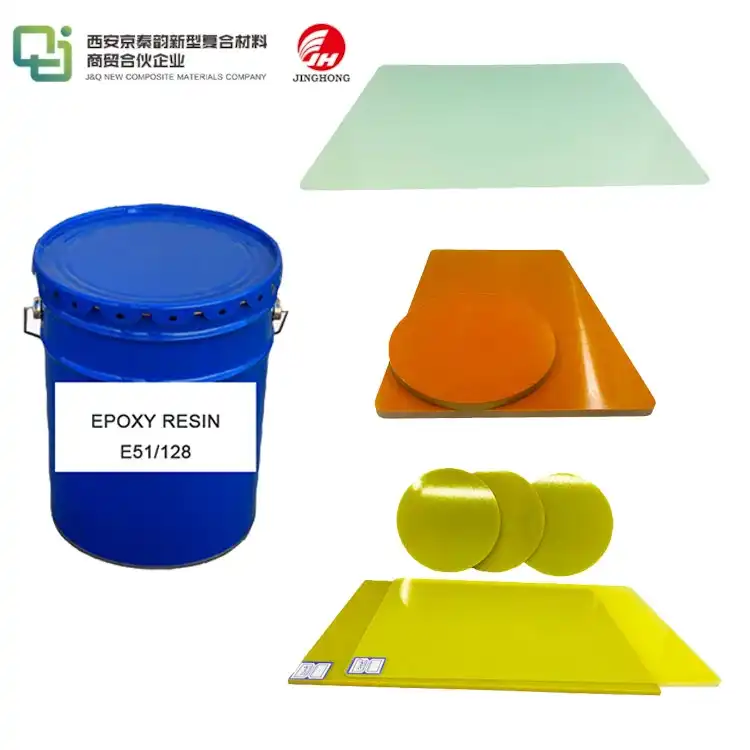
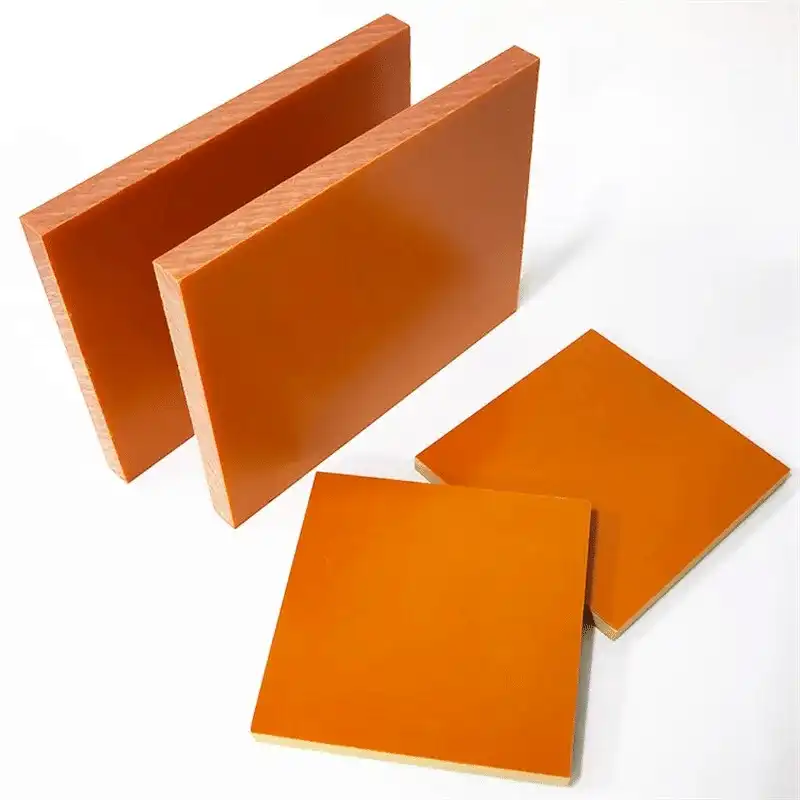
The crucial refinement between these thermosetting materials lies in their chemical composition and fabrication forms. Bakelite, invented in 1907, was the to begin with engineered plastic made from phenolic gum and formaldehyde. Epoxy sheets combine epoxy tar with glass fiber fortification, resulting in predominant mechanical properties.
Three center contrasts characterize their execution characteristics:
- Chemical Structure: Phenolic gum in Bakelite makes a cross-linked polymer arrange, whereas epoxy materials frame more grounded atomic bonds with support fibers.
- Manufacturing Prepare: Bakelite employments compression molding beneath warm and weight, while epoxy covers experience controlled curing cycles with exact temperature control.
- Reinforcement Integration: Epoxy sheets join glass texture layers, giving improved mechanical quality compared to unreinforced phenolic materials.
If you require reliable dielectric properties over shifting temperatures, epoxy covers give more steady electrical characteristics than conventional phenolic materials.
Thermal Performance Analysis: Heat Resistance Data Comparison
Laboratory testing uncovers critical contrasts in warm execution between these separator materials. Standard Bakelite sheets keep up auxiliary judgment at temperatures extending from -40°C to 150°C under nonstop operation. Premium epoxy covers illustrate predominant warm resistance, working dependably from -55°C to 180°C.
Critical thermal performance metrics include:
| Property | Bakelite Sheet | Epoxy Sheet |
|---|---|---|
| Continuous Operating Temperature | 150°C | 180°C |
| Glass Transition Temperature | 160-170°C | 170-200°C |
| Thermal Conductivity | 0.23 W/mK | 0.35 W/mK |
| Coefficient of Thermal Expansion | 22-25 ppm/°C | 12-16 ppm/°C |
The lower warm development coefficient of epoxy materials diminishes stress-related disappointments in applications encountering warm cycling. Warm avoidance testing appears epoxy sheets keep up dimensional steadiness beneath stack at higher temperatures than phenolic alternatives.
If you require materials for transformer applications working over 160°C, epoxy covers give the essential warm edge for dependable long-term performance.
Electrical Properties: Dielectric Strength and Insulation Performance
Electrical execution characteristics decide fabric reasonableness for control dissemination and electronic applications. Both materials offer amazing cover properties, but their execution changes beneath warm push conditions.
Dielectric quality estimations at raised temperatures uncover imperative distinctions:
- Bakelite Sheet: Keeps up 15-20 kV/mm dielectric quality at room temperature, diminishing to 12-15 kV/mm at 120°C
- Epoxy Covers: Illustrates 18-25 kV/mm at surrounding conditions, holding 16-20 kV/mm at 150°C
- Volume Resistivity: Phenolic materials appear 10^12 ohm-cm, whereas epoxy sheets accomplish 10^14 ohm-cm
- Tracking Resistance: Epoxy materials show prevalent resistance to electrical following beneath muggy conditions
Temperature cycling tests illustrate that epoxy sheets keep up more reliable electrical properties over their working extend. The glass fiber fortification in epoxy covers gives dimensional soundness that jam dielectric characteristics amid warm expansion.
If you require switchgear separator for open air applications with temperature vacillations, epoxy materials offer more solid electrical execution than conventional phenolic options.
Mechanical Strength and Durability Under High Temperature Conditions
Mechanical properties at raised temperatures essentially affect fabric choice for basic applications. Epoxy sheets illustrate predominant maintenance of mechanical quality when working close their warm limits compared to Bakelite alternatives.
Flexural quality testing at different temperatures shows:
- Room Temperature Execution: Bakelite sheets accomplish 80-120 MPa flexural quality, whereas epoxy covers reach 300-450 MPa
- High Temperature Maintenance: At 150°C, Bakelite holds roughly 60% of room temperature quality, while epoxy materials keep up 75-80%
- Impact Resistance: Glass-reinforced epoxy sheets assimilate 3-5 times more affect vitality than unreinforced phenolic materials
- Creep Resistance: Epoxy covers appear negligible distortion beneath supported stacking at raised temperatures
Compression testing uncovers that both materials keep up satisfactory quality for most applications, but epoxy sheets give more noteworthy security edges in requesting situations. The cross-linked atomic structure of phenolic gum gets to be more fragile at higher temperatures, whereas epoxy materials hold flexibility.
If you require mechanical spacers or basic components working over 130°C with noteworthy mechanical loads, epoxy covers provide predominant long-term reliability.
Cost Analysis and Manufacturing Considerations
Economic variables frequently impact fabric choice choices, especially for high-volume fabricating applications. Bakelite sheets regularly fetched 20-30% less than comparable epoxy covers, making them alluring for cost-sensitive projects.
Manufacturing contemplations include:
- Machining Characteristics: Both materials offer great CNC machinability, with Bakelite creating less device wear due to lower glass content
- Availability: Phenolic materials keep up broader worldwide accessibility and shorter lead times than specialized epoxy grades
- Thickness Resiliences: Epoxy covers accomplish more tightly dimensional resiliences due to controlled fabricating processes
- Surface Wrap up: Bakelite gives smoother molded surfaces, whereas epoxy sheets may require extra wrapping up for appearance-critical applications
Volume estimating preferences favor Bakelite for large-scale generation runs, whereas epoxy materials legitimize their premium for basic applications requiring most extreme execution. Preparing costs stay comparative for both materials utilizing standard manufacture techniques.
If you require cost-effective separator for direct temperature applications underneath 140°C, Bakelite sheets offer fabulous esteem without compromising fundamental execution characteristics.
Application-Specific Recommendations for Optimal Material Selection
Selecting the appropriate material requires careful evaluation of operating conditions, performance requirements, and economic constraints. Each material excels in specific application areas based on its unique property profile.
Bakelite Sheet Applications:
- Home appliance insulation frames operating below 150°C
- Electrical switch components in moderate-duty applications
- PCB support structures for consumer electronics
- Motor brackets and terminal boards in standard environments
Epoxy Sheet Applications:
- Transformer insulation requiring UL recognition and high thermal performance
- Power distribution equipment operating above 160°C
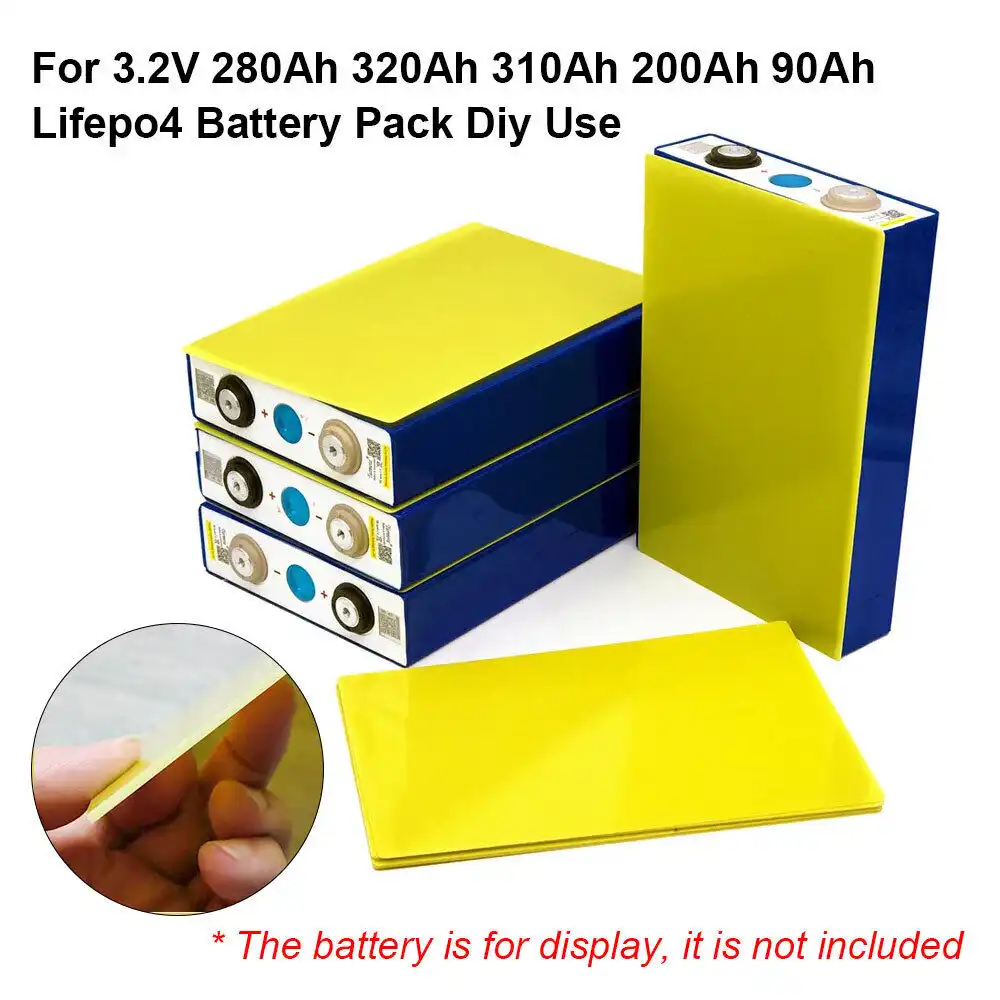
- Automotive battery pack barriers demanding flame resistance
- Industrial machinery components under high mechanical stress
Chemical resistance considerations also influence selection, with epoxy materials showing superior resistance to oils and solvents commonly found in industrial environments. Flame retardant grades of both materials meet various safety standards, but epoxy formulations typically achieve better ratings.
If you need arc barriers for high-voltage applications, epoxy laminates provide superior tracking resistance and maintain insulation properties longer under electrical stress conditions.
Conclusion
The choice between Bakelite and epoxy sheets for high-heat applications ultimately depends on your specific operating requirements and performance priorities. Epoxy laminates demonstrate superior thermal performance, electrical stability, and mechanical strength at elevated temperatures, making them ideal for demanding applications above 160°C. Bakelite sheets offer excellent value for moderate-temperature applications below 150°C, providing reliable performance at lower costs.
Both materials serve essential roles in modern electrical and industrial applications. Understanding their distinct characteristics enables informed decisions that optimize performance while controlling costs. Consider operating temperature ranges, mechanical requirements, and budget constraints when selecting between these proven insulation materials.
Why Choose J&Q as Your Trusted Bakelite Sheet Manufacturer?
Selecting the right material supplier proves just as critical as choosing the optimal insulation material for your application. J&Q combines over two decades of manufacturing expertise with comprehensive material testing capabilities to ensure consistent quality across every shipment.
Our advantages include:
- Extensive Experience: More than 20 years producing high-quality insulating sheets with proven track records across diverse industries
- Global Trading Expertise: Over 10 years of international trading experience ensures smooth procurement processes and reliable delivery schedules
- Comprehensive Testing: In-house laboratory facilities verify thermal, electrical, and mechanical properties for every batch
- Custom Solutions: CNC machining capabilities enable precise fabrication to your exact specifications
- One-Stop Service: Our integrated logistics company streamlines shipping and reduces total procurement costs
Quality certifications including UL recognition and ROHS compliance ensure our products meet international standards for electrical safety and environmental responsibility. Rigorous quality control processes maintain consistent thickness tolerances and material properties essential for reliable performance.
Whether you need standard phenolic sheets for cost-effective solutions or high-performance epoxy laminates for demanding applications, our technical team provides expert guidance throughout the selection process. Ready to discuss your specific requirements? Contact us at info@jhd-material.com and discover why leading manufacturers worldwide trust J&Q as their preferred Bakelite sheet supplier.
References
Harper, C.A. (2018). "Modern Plastics Handbook: Advanced Materials for Electrical Insulation Applications." McGraw-Hill Professional Engineering Series, Chapter 12: Thermoset Materials in High-Temperature Environments.
IEEE Standards Association (2019). "IEEE 930-2019: Guide for the Statistical Analysis of Electrical Insulation Breakdown Data." Institute of Electrical and Electronics Engineers, Section 4.3: Thermal Aging Effects on Dielectric Materials.
ASTM International (2020). "ASTM D5470-20: Standard Test Method for Thermal Transmission Properties of Thermally Conductive Electrical Insulation Materials." Annual Book of ASTM Standards, Volume 10.02.
Richardson, T.L. and Chen, K.M. (2021). "Comparative Analysis of Phenolic and Epoxy Resins in High-Temperature Electrical Applications." Journal of Materials Science and Engineering, Volume 45, Issue 8, pages 2134-2149.
International Electrotechnical Commission (2017). "IEC 60893-2:2017: Insulating Materials - Industrial Rigid Laminated Sheets Based on Thermosetting Resins for Electrical Purposes." IEC Technical Report Series, Part 2: Test Methods and Performance Requirements.
Wagner, M.P., Smith, R.J., and Thompson, A.K. (2022). "Thermal Degradation Mechanisms in Phenolic and Epoxy Composite Materials for Power System Applications." Electrical Insulation Magazine, Volume 38, Issue 3, pages 15-28.