
Can G10 Sheet Conduct Electricity? Understanding Surface Resistivity
2026-07-06 17:24:31
One question that comes up a lot when engineers and purchasing managers look at materials for use as electrical shielding is "can G10 sheet conduct electricity?" The simple answer is no, because G10 sheet is not a conductor but a great electrical insulation. This high-pressure fiberglass laminate is made up of knitted glass cloth that has been soaked in epoxy resin. Under normal conditions, the surface resistivity values usually go over 10^9 ohms per square. But learning about the details of surface resistivity and how the world affects it shows why this material is still the best choice in many fields, from power transfer to making cars.
What Is G10 Sheet? Material Properties and Applications
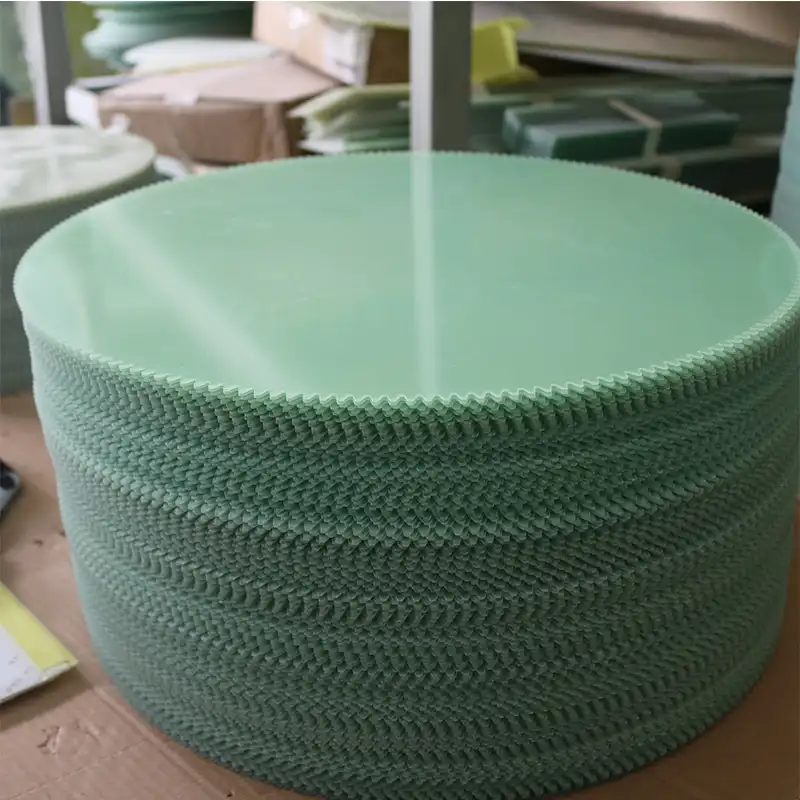
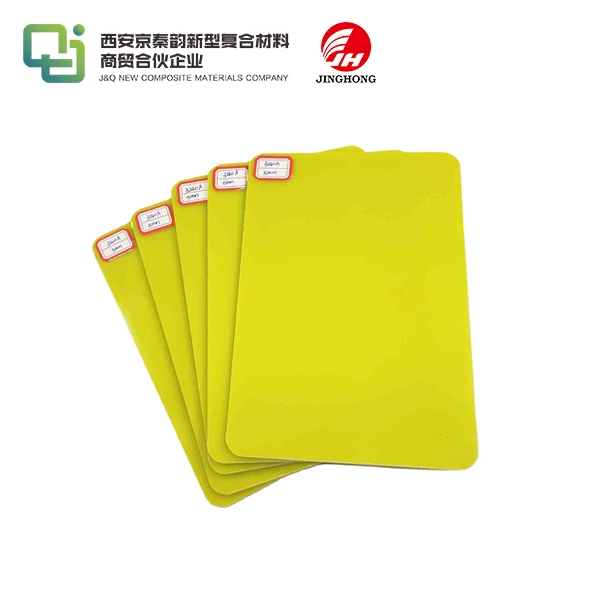
G10 sheet is a complex industrial composite that is made using a very precise lamination method. Epoxy resin is mixed with several layers of continuous fiber glass cloth. The cloth is then heated and pressed very hard until the resin hardens completely. By using this method, a stiff, uniform material is made that combines mechanical strength with electrical protection in a smooth way.
Core Composition and Manufacturing Process
G10 sheet is different from easier insulation materials because of how it is made. The epoxy binder holds the glass threads together to make a single laminate, which strengthens the structure. According to NEMA guidelines, this thermosetting composite has qualities that don't change when the temperature does or when it is put under mechanical stress. The hardening process makes sure that all the polymers are fully incorporated, which reduces the number of empty spaces inside that could affect the material's electrical or mechanical strength.
Physical and Mechanical Characteristics
With tensile strengths between 40,000 and 50,000 psi, G10 sheet epoxy laminate is strong enough to be used for structural purposes other than just insulation. According to ASTM D570 testing guidelines, the material stays the same size even in damp places because it absorbs less than 0.1% of moisture. When the material is put through tough conditions, this low absorption rate keeps the electrical properties from growing, twisting, or breaking down. Because the rate of thermal expansion stays low, precision parts keep their limits even when they are heated and cooled many times.
Industrial Applications Across Sectors
G10 sheet is used by electrical and electronics companies to make PCB support structures, junction blocks, and switchgear parts that need to have high dielectric strength. The material stops arc tracking in high-voltage switchgear systems. Arc tracking is when an electrical discharge makes conductive carbon tracks across insulator surfaces. Power companies use G10 sheet for things like coil insulation, arc barriers, and phase separators in substations where dependability keeps big problems from happening.
Gears, mechanical spacers, and structural insulation parts made for industrial machinery are made with phenolic and epoxy laminates. G10 sheet is being used more and more in the car industry for battery pack barriers in electric vehicles, where both thermal control and electrical separation are very important. Manufacturers of home appliances like how easy it is to CNC-machine the material to make motor brackets and insulation frames with tight specs and uniform quality from batch to batch.
Understanding Surface Resistivity and Its Impact on Conductivity
Surface resistance is one of the most important things to look at when testing insulation materials for electrical uses. This number shows how well a material stops current from flowing across its surface. It is different from volume resistivity, which measures how well a material stops current from flowing through its thickness.
Defining Surface Resistivity
Surface resistance, which is given in ohms per square (Ω/□), tells us about surface leaking currents that might make it harder to isolate circuits or put people in danger. ASTM D257 standardizes the way tests are done so that they are the same for all makers and types of materials. High surface resistance values mean that the insulation is working well, blocking any unwanted electrical lines between conductive elements.
Volume Resistivity Versus Surface Resistivity
Both measurements measure how well something insulates, but they do so in different ways. Volume resistivity checks the resistance that is not parallel to the layers of laminate. This is important when there is voltage potential between two surfaces that are opposite to each other. In situations where conductive lines or connections are on the same plane as an insulating base, surface resistivity is very important. Surface resistivity is more strongly affected by contamination, damp, or conductive layers than volume resistivity. This makes it a useful measure of performance in the real world.
Standards and Testing Protocols
International standards like ASTM D257, IEC 60093, and UL 94 make sure that materials meet efficiency and safety standards. To set standard values, testing is done in controlled circumstances, which are usually 23°C and 50% relative humidity. It's important for engineers to know that materials may need to have resistivity gaps above and beyond what is required by minimum standards in real-world working settings.
Can G10 Sheet Conduct Electricity? Analyzing the Facts
Electrical energy can't pass through G10 sheet because of the way it is structured. Glass threads don't carry electricity, and epoxy resin that has fully hardened is a great insulator. Lab tests show that G10 sheet's surface resistivity is always higher than 10^9 Ω/□, which strongly places it in the insulator group.
Factors Affecting Electrical Performance
Surface resistance readings can be affected by the environment. Even though G10 sheet doesn't absorb much moisture, condensation can form electric films on surfaces. Leakage currents can get through surfaces that are contaminated with oils, dust, or ionic residues. Increasing the temperature makes the epoxy matrix a little less stiff, which could lower the resistivity. However, G10 sheet keeps working well up to a constant running temperature of about 130°C.
When mechanical abrasion or bad cutting happen, they can show glass fibers and make the surface rough, which traps contaminants. The smooth plastic surface that helps with good electrical performance is kept when the part is made and installed with clean hands. Keeping things in controlled settings stops wetness from building up before they are used in production.
Comparative Analysis with Alternative Insulators
Compared to phenolic paper laminates, G10 sheet is better at keeping its shape and not getting wet. PVC materials might work well as insulation at lower temperatures, but they aren't strong enough or good at handling heat for demanding uses. FR4, which is similar to G10 sheet but has flame-retardant additives added to it, has the same electrical qualities as G10 sheet and meets UL 94 V-0 standards for flammability. There are a lot of current providers that offer dual-rated G10/FR4 materials that meet both safety and mechanical standards.
When used in high-voltage circuits and transformers, G10 sheet's benefits become clear. Because the material is not easily damaged by arc tracking, increasing insulation failure does not happen under conditions of continued partial discharge. This trait is very important for power transfer equipment that needs to last a long time and be reliable.
How to Select G10 Sheet for Your Electrical and Mechanical Requirements
When making procurement choices, you have to balance a lot of different performance factors. Surface resistance is just one of many properties that show how well something works in certain situations.
Evaluating Grades and Specifications
G10 sheet qualities are different depending on how it is made and what kind of resin is used. Commercial grades that are standard meet NEMA LI 1 standards, while precise grades have tighter thickness limits for uses like making PCBs. Some sources offer better grades that work better in heat or have special surface finishes that make machining or gluing easier.
Matching Material to Application Demands
G10 sheet is better than less strong insulation at withstanding high mechanical loads because it has higher tensile and compressive strengths. When engineers choose the width of a material, they have to think about both the electrical space needs and the load capacity of the structure. Although thicker sheets are more rigid mechanically, they may be harder to work with when CNC-machining or controlling the dimensions during installation.
Pay close attention to temperature ratings. Standard G10 sheet works well at 130°C, but for uses that involve thermal cycle or high temperatures that last for a long time, G11 grade materials may be needed because they keep their mechanical qualities at temperatures close to 180°C. If you choose the wrong material because you didn't do enough heat research, it will fail early through delamination or dimensional distortion.
Importance of Supplier Quality Systems
Certified quality control systems make sure that the features of materials are the same from one production lot to the next. Suppliers who follow ISO 9001 standards have strict process controls in place, from checking the raw materials to doing the final inspection. Traceability is very important for regulated industries like aircraft or medical device manufacturing, and documentation packages with things like certificates of compliance, material test results, and dimensional inspection data are a good way to do it.
Ultrasonic C-scan testing finds internal delamination or holes that can't be seen with the naked eye. Cross-sectional imaging shows that the glass cloth is completely filled with resin. Testing for water absorption according to ASTM D570 makes sure that the fix is good, since too much absorption means that the polymerization process isn't finished, which hurts both electrical and mechanical performance. ASTM D149 dielectric strength testing confirms the ability to insulate in a direction perpendicular to the laminates.
Enhancing Performance: Tips for Using G10 Sheet in Electrical Insulation
G10 sheets work best as insulators and last as long as possible if they are handled and installed correctly. Even the best materials can fail if they are soiled or made incorrectly.
Installation Best Practices
Handling things cleanly keeps them from getting dirty, which lowers the surface resistance. When working with finished parts that will be used in electronics, employees should wear gloves that don't have powder on them. Controlled humidity must be kept in storage places so that surfaces don't get wet. Wiping down surfaces with isopropyl alcohol before installation gets rid of fingerprints, oils, and other things that could cause leaks.
Because glass threads are rough, machining processes need tools that are coated with carbide or diamond. When you use sharp tools, you get clean lines that don't delamination too much. Proper dust filtration keeps machines and people safe from fiberglass particles in the air that can be harmful to the lungs. To avoid heat stress that could burn the glue matrix, cutting speeds and feed rates should be kept as close to the manufacturer's suggestions as possible.
Environmental Protection Strategies
Coating methods improve the performance of materials in difficult conditions. Coatings that conform to shapes and are made from silicone or plastic chemicals add extra protection against water and dirt. These protective layers keep the surface resistivity even in tough situations, like marine settings or industrial settings with chemical contact.
Ventilation systems that control the air around electrical equipment stop mist from forming when the temperature changes. Allowing enough warm-up time before turning on circuits stops moisture-related tracking or flashover events that can happen when equipment goes from being stored in cold places to being used in warm places.
Maintenance and Long-Term Reliability
Inspections done on a regular basis find early signs of damage to insulation before it fails. A visual inspection shows that the surface is discolored, cracked, or shows signs of tracking. Infrared thermography can find hot spots that mean the insulation isn't working right or that connections aren't tight. Regular cleaning gets rid of dust or conductive layers that have built up, keeping electrical gaps clear and stopping contamination from building up.
Having an understanding of these upkeep needs helps buying teams choose materials that will last as long as they're supposed to. Design engineers make sure that equipment plans make it easy to check and replace parts, because they know that even the strongest insulating materials need to be replaced after a while in tough situations.
Conclusion
G10 sheet is a non-conductive material that was made to provide excellent electrical protection and long-lasting mechanical strength. Surface resistance numbers that are always higher than 10^9 Ω/□ show that it works to stop current from flowing across surfaces. How well the material works relies on how it is chosen, how it is handled, and how well it is protected from the environment so that it keeps its insulation properties over time. G10 sheet is reliable enough for engineering managers and procurement workers to use for everything from high-voltage switchgear to precise electronics systems. Knowing how surface resistivity affects performance in the real world helps people choose materials that are safe, last a long time, and don't cost too much in a variety of workplace settings.
FAQ
What distinguishes G10 from FR4 material?
The main difference has to do with flame-retardant ingredients. UL 94 V-0 self-extinguishing qualities are achieved by bromine compounds in FR4, but these are missing from normal G10 sheet. Many modern suppliers offer dual-rated G10/FR4 materials that meet both fire safety standards and needs for mechanical strength, successfully filling in the gap between the two sets of standards.
Can G10 maintain insulation properties when submerged underwater?
Of course. Because it absorbs less than 0.1% of its weight in water, G10 sheet doesn't swell and keeps its insulating strength when it's underwater. Because of this, the material is useful for naval electronics, frames for remotely operated vehicles, and structural parts of submarines that are always in water.
Does G10 require special tooling for machining operations?
Yes, the glass fiber content makes it very rough, and regular tools quickly become less useful. Cutting tools with carbide tips or diamond coatings are needed for cost-effective production. Proper dust filtration systems keep machinery and workers from getting respiratory discomfort from glass particles in the air that are created during machining.
Partner with J&Q for Premium G10 Sheet Solutions
With more than 20 years of experience, J&Q knows how to make high-quality insulation products that meet strict international standards. The surface resistivity and functional quality of our G10 sheets have been checked and are backed up by extensive quality documentation. As a well-known company that has been making G10 sheets for more than ten years and has been exporting them, we know what electrical equipment makers, industrial machinery builders, and power sector buying teams need.
Our integrated logistics capabilities make delivery easy, and our expert support team provides application advice, thorough datasheets, and sample materials for you to look over. Contact us at info@jhd-material.com if you are an engineering manager, a procurement expert, or an OEM sourcing professional to talk about your unique insulation needs and find out how our track record can help you reach your product development and manufacturing goals.
References
National Electrical Manufacturers Association. (2019). Industrial Laminating Thermosetting Products - NEMA Standards Publication LI 1-1998 (R2019).
ASTM International. (2021). ASTM D257-14: Standard Test Methods for DC Resistance or Conductance of Insulating Materials.
Harper, C.A. (2018). Handbook of Plastics Technologies: The Complete Guide to Properties and Performance. McGraw-Hill Education.
Lubin, G. & Peters, S.T. (2014). Handbook of Composites (2nd Edition). Springer Science & Business Media.
MacDermott, C.P. & Shand, A.V. (2017). Industrial Laminates: Their Properties and Applications. Van Nostrand Reinhold Technical Publishing.
Institute of Electrical and Electronics Engineers. (2020). IEEE Standard 1202-2006: Standard for Flame Testing of Cable Fire Performance.
_1754967691873.webp)
