CNC Machining Errors for G10 Fiberglass Sheets
2026-06-12 16:52:00
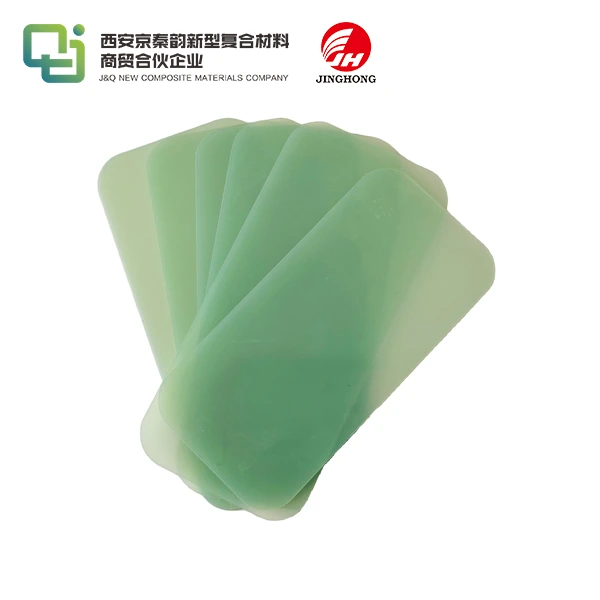
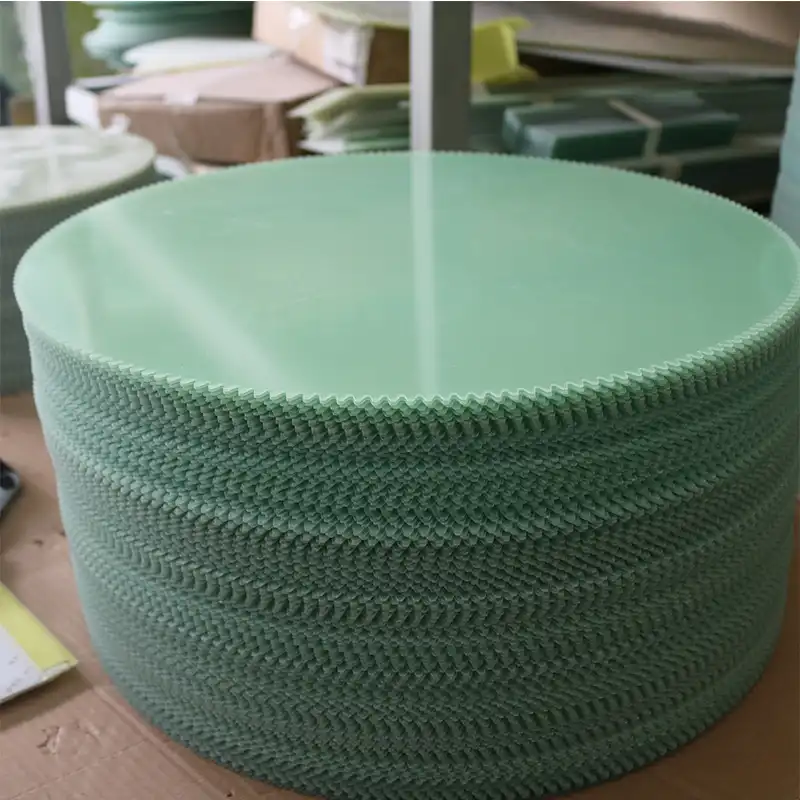
When using a CNC to work with G10 fiberglass sheet materials, it's important to know how to avoid making common cutting mistakes to keep quality and efficiency high. This high-pressure thermosetting laminate is made up of woven glass cloth that is saturated with epoxy resin. It is difficult to cut, drill, and mill because of its unique properties. The mixed structure of G10 fiberglass sheets makes them vulnerable to certain problems, such as edges that delaminate, microcracks around drilled holes, and heat degradation when the wrong tools or settings are used. When engineering managers and procurement teams are aware of these mistakes, they can choose the right materials and methods. This lowers the number of parts that are thrown away and makes sure that parts meet strict dielectric and mechanical requirements in electrical, industrial, and car applications.
Understanding Common CNC Machining Errors with G10 Fiberglass Sheets
The fact that G10 fiberglass sheets are made up of multiple layers makes them hard to machine. Each sheet is made up of several layers of woven glass cloth that are joined together under high pressure with thermosetting epoxy glue. This structure has great insulation qualities and is very strong, but it has specific failure modes when CNC operations are being done.
Delamination and Layer Separation
When cutting G10 fiberglass sheet laminates, delamination is still the most common problem. This happens when the cutting or drilling forces are stronger than the joining power between the glass layers and the resin material. The problem usually shows up where cutting tools enter and leave the workpiece, especially when drilling. Geometry of the tool is very important; dull cutting edges create compression forces instead of shearing forces, which means they push layers apart instead of cutting through them neatly. Too fast of feed rates make this problem worse by putting too much mechanical stress on the material, which is more than what its interlayer bonding capacity can handle.
Edge Chipping and Fracturing
G10 fiberglass sheet materials can get edges chipped because the finished epoxy resin is so fragile. This is especially likely to happen along the edges of cuts and holes. When working with thin sheets or making features close to the edges of sheets, this flaw stands out more. Poor ways of holding the work that let the material bend while it's being cut greatly raise the risk of breaking. The braided glass support has great tensile strength, but it causes stress to build up in specific areas where threads end at machined edges.
Thermal Damage and Resin Degradation
In practical settings, G10 fiberglass sheet materials can handle heat well, but the intense heat produced by CNC machining can be too much for the epoxy resin to handle. When the cutting surface gets hotter than about 140 degrees Celsius, the plastic starts to soften and could even catch fire. This heat damage shows up as spots that range in color from amber to dark brown or black, and they smell like something that has been burned. In the areas that have been damaged, the material has less dielectric strength and dynamic features. When cooling isn't done well and spindle speeds are high, the conditions are right for thermal damage.
Surface Roughness and Fiber Pull-Out
It can be hard to get the surface of G10 fiberglass sheets to be smooth after cutting them. When cutting, the layers of hard glass fiber and softer epoxy matrix react in different ways, which could lead to uneven surface shapes. When glass strands are torn from the resin matrix instead of being neatly cut, fiber pull-out happens. This leaves fibers sticking out and holes in the final surface. This flaw really hurts the material's ability to insulate against electricity because it makes it easier for moisture to get in and for electricity to flow.
By understanding these mistake processes, engineering teams can predict quality risks and give clear instructions. When buying professionals are aware of these problems, they can better judge the skills of suppliers and set reasonable quality standards for machined G10 fiberglass sheet parts that are used in electrical insulation, switchgear, and PCB supports.
Diagnostic Principles to Minimize Errors in G10 Fiberglass Sheet Machining
To cut down on machine errors, you need a methodical way to improve many process factors at the same time. We've worked with electrical makers and industrial machinery builders for 20 years and have found a few key factors that directly affect the quality of G10 fiberglass sheet cutting.
Tool Selection and Geometry Optimization
When cutting glass-reinforced materials that are rough, carbide tools with diamond finishes last the longest. Normal high-speed steel tools are quickly worn down by the very hard glass fibers, leaving behind dull edges that lead to delamination. The shape of the tool is very important. Positive rake angles of 5 to 10 degrees lower cutting forces while keeping a clean slicing action. It is important to have very sharp cutting edges because even light wear makes delamination and fiber pull-out much more likely.
Picking the right drill bit is very important. Standard twist drills often cause delamination at breakout that is not acceptable. It is easier to control exit forces with bits that are specifically made with brad-point or double-angle shapes. Split-point designs lower the push force needed for the first plunge, which lowers the risk of delamination at the drill entry.
Spindle Speed and Feed Rate Calibration
When you balance the spinning speed and feed rate, you stop both heat damage and too much mechanical stress. Higher spinning speeds usually make the surface finish better, but they also make more heat. It is important that the feed rates move fast enough to avoid grinding, which heats up the material without removing it, but slowly enough to keep the cutting edge from getting too heavy. For G10 fiberglass sheet materials, spindle speeds between 12,000 and 18,000 RPM are a good place to start. Feed rates can be changed based on the tool's width and number of flutes.
In real-life tests with transformer makers, lowering the spindle speed by 15% while keeping the feed rate the same got rid of problems with heat coloring without slowing down the cycle time. This change kept the temperature in the cutting zone below the key level where epoxy glue starts to break down.
Cooling and Chip Evacuation Methods
Managing heat well isn't just about keeping it from doing damage; it also affects tool life and accuracy of measurements. Compressed air is the most common way to cool glass-reinforced laminates because it does the job well without the problems that come with using liquid coolants, which can cause contamination with wetness. A blast of air aimed at the cutting area gets rid of the heat and clears away the glass dust that would otherwise build up and cause wear.
Minimal-quantity lubrication systems that give very small amounts of cutting fluid are helpful for some precision uses. The surface stays mostly dry with this method, which improves cooling and greasing. When working with these materials, vacuum chip extraction is very important because glass dust can damage equipment and be bad for your health at work.
Performance Optimization Strategies for CNC Machining of G10 Fiberglass Sheets
To make manufacturing more efficient, you need to find and get rid of process bottlenecks that raise costs and lower output. From working with companies that make industrial machinery and car parts, we've learned about a few strategic changes that lead to measurable results in G10 fiberglass sheet production.
Process Standardization and Documentation
A lot of cutting mistakes happen because different shifts or workers don't follow the same steps. Repetition is achieved by writing down tried-and-true factors for certain processes, such as tool specs, spindle speeds, feed rates, and fixture sets. Work instructions that include pictures of what is and isn't accepted lower the number of different interpretations. One company that makes power distribution equipment cut their scrap rate by 40% by using standard setup processes and user checklists for G10 fiberglass sheet machining tasks.
Tool Condition Monitoring Programs
Setting up regular check and replacement plans for tools stops the quality loss that happens when cutting edges wear down. When looked at closely under a microscope, edge wear can be seen before it gets bad enough to cause delamination. Tracking tool life data, like the number of hours spent cutting or the number of parts made, lets you change tools before they break down completely or start to cause quality problems. Cutting tools are only a small part of the total cost of production, so replacing them before they break is much cheaper than throwing away finished products.
Operator Training and Skill Development
Composite materials like G10 fiberglass sheets are very different from metals that workers may have more experience working with when it comes to their unique properties. Training programs that talk about the structure and failure processes of a material help workers understand why certain methods are important. Using sample materials and getting instant feedback on your work speeds up the process of learning new skills. Cross-training team members makes sure that everyone is skilled on all shifts and gives producers more options for when to work.
Advanced Software and Automation Integration
Computer-aided manufacturing software with material-specific toolpath methods makes the best use of cutting processes to reduce the number of operations that go wrong. Changes in the direction of the cutting force during climb milling instead of standard milling reduce edge chipping. When you approach the edges of a sheet diagonally instead of perpendicularly, the breakout forces that cause delamination are lessened. Automated methods for moving tools keep cutting edges sharp by turning tools before they wear out too much.
These optimization strategies are in line with the practical goals of procurement teams that want to boost productivity and cut costs. Manufacturers can meet tight production plans while keeping the surface quality and accuracy needed for electrical insulation and structural uses by cutting down on scrap and machine downtime.
Comparing G10 Fiberglass Sheet Machining with Alternative Materials
The choice of material has a big effect on both the performance of the part and its ability to be made. Engineers and buying managers can make better decisions when they know how G10 fiberglass sheets stack up against other insulation materials.
G11 is a version of G10 fiberglass sheet that can handle higher temperatures. It uses a different epoxy resin system that keeps its qualities at higher temperatures. This benefit in temperature comes at a higher cost and a little less ease of machining because the plastic is harder. Even though it needs more care when being machined, G11 is still a good choice for applications that are constantly heated above 140 degrees Celsius.
FR4 is made up of the same ingredients as G10 fiberglass sheet, but it also has flame-retardant ingredients that meet UL94 V-0 standards. Because it doesn't catch fire, FR4 is a must-have for places where fire safety is very important, like consumer products and building electrical systems. The way it cuts is very similar to G10 fiberglass sheet, though some flame-retardant mixes may make tool wear a little worse.
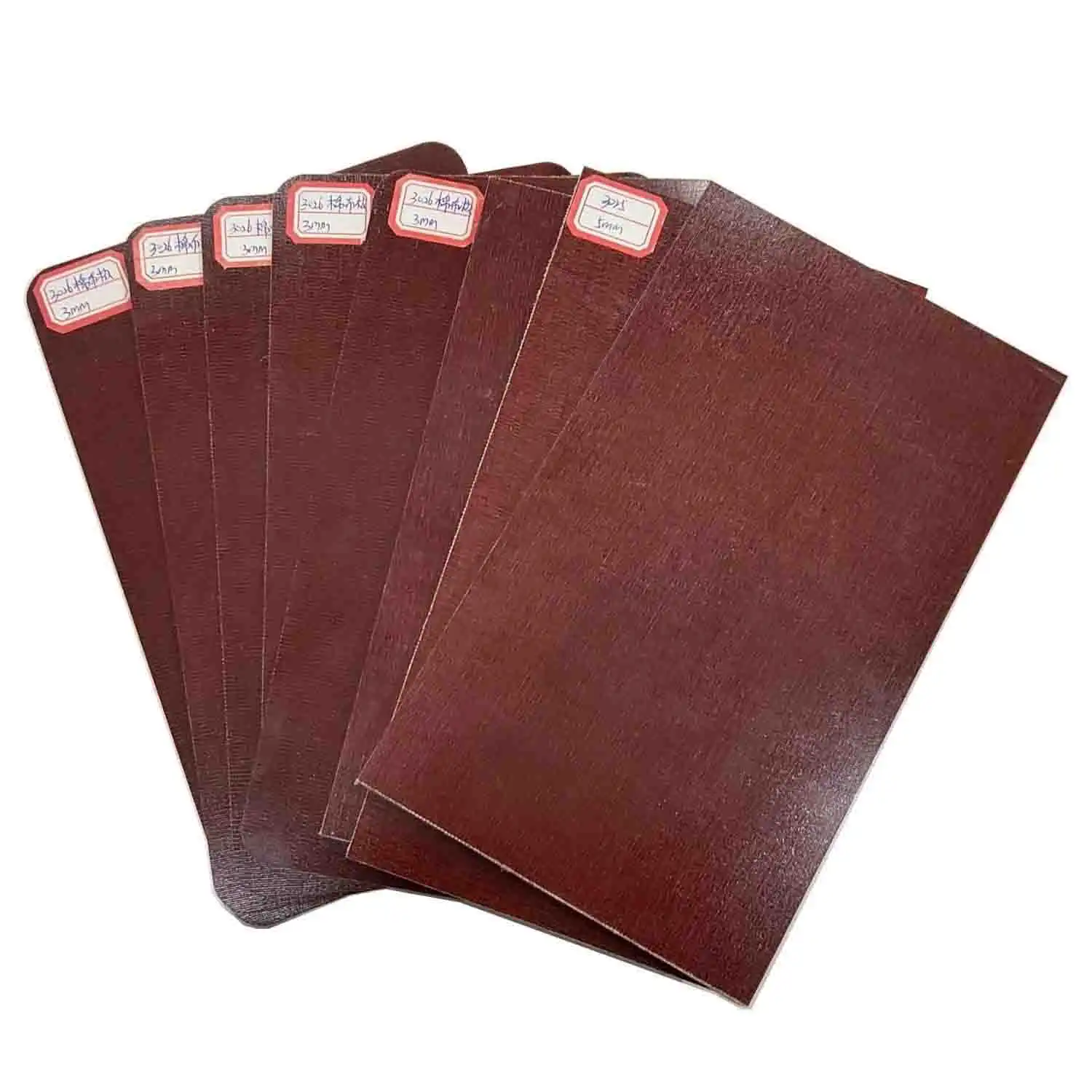
Compared to glass-reinforced epoxy materials, phenolic cotton laminates are cheaper and easier to work with. The paper or cotton cloth support makes it easier to cut and wears down tools less quickly. When modest mechanical loads and electrical insulation needs don't call for glass-reinforced types, these materials are a good choice. In exchange, the material is weaker, less resistant to water, and less stable in its shape.
Although carbon fiber alloys are very strong for how light they are, they are even harder to machine than G10 fiberglass sheet. Carbon fibers are very rough, so tools wear out quickly. Also, because the fibers are electrically conductive, they can't be used in places that need electrical shielding. Because of health worries about carbon particles in the air, specialized tools and dust collection methods are needed.
When buying teams look at these options, they have to think about how to machine them while also keeping performance needs and price limits in mind. A provider who has experience cutting glass-reinforced epoxy laminates can save you money on more than just the cost of the materials because they can cut down on defects and shorten wait times. The flat, smooth surface and stable dimensions of good G10 fiberglass sheets keep setup time and fixturing complexity to a minimum during CNC operations.
Procurement Considerations to Avoid CNC Machining Issues with G10 Fiberglass Sheets
Strategic choices about buying G10 fiberglass sheets have a direct effect on the success of downstream machining. Quality risks can be reduced by careful review of suppliers and management of specifications by engineering managers and procurement experts.
Certified sellers who use uniform production methods send materials that can be machined in a predictable way. Changes from batch to batch in the amount of resin, the factors of the curing cycle, or the weight of the glass cloth cause changes in how the material reacts to cutting forces and thermal loads. Suppliers that follow ISO 9001 quality management systems and keep process controls in place make it possible for improved CNC settings to work reliably across production runs.
Technical knowledge is an important but often ignored quality in a seller. If a supplier knows what CNC milling needs, they can suggest grades or widths that meet both performance and manufacturing needs. They can tell you what limits are possible, how far apart the edges should be for drilled holes, and the smallest features that can be made based on the thickness of the material. This kind of connection keeps design problems from happening, which could cause problems with quality or high costs.
Material approval paperwork shows that it meets UL and ROHS standards, which are very important for electrical uses. If a supplier gives full test results that include dielectric strength, flame resistance scores, and environmental compliance, there is no need to worry about whether the product meets legal requirements. This paperwork is especially important for uses in the auto and aircraft industries that need to be able to track materials very carefully.
Custom sizing cuts down on or gets rid of the need for basic cutting, which can be expensive and cause quality problems. The amount of CNC work that needs to be done is reduced when suppliers can send G10 fiberglass sheets that are cut to almost exact net measurements. Some providers offer services that add value, like precise cutting, drilling test holes, or putting on protected masking, which lowers the amount of work that the customer has to do.
Production stops when lead times are managed well through reliable supply lines and inventory systems. If suppliers have enough stock, they can quickly react to changes in demand or quality problems that mean materials need to be replaced. For high-volume projects, blanket buy orders with scheduled releases balance the costs of keeping inventory with the guarantee of a steady supply.
Conclusion
To successfully machine G10 fiberglass sheet materials, you need to know how their unique hybrid structure works and what kinds of mistakes it can cause. When the qualities of the material combine with the machining settings, problems like delamination, edge chipping, thermal damage, and surface roughness can happen. These flaws can be greatly reduced by choosing the right tools, setting the spinning speed correctly, and using the right cooling methods. Standardizing processes, keeping an eye on tool state, and teaching operators all lead to results that are the same from one production run to the next. When considering materials, G10 fiberglass sheet has great mechanical and electrical qualities, but it needs to be machined with more care than other options, such as phenolic laminates. Focusing on seller certification, technical know-how, and service skills during strategic buying lowers quality risks and helps manufacturing run smoothly.
FAQ
What causes delamination when drilling holes in G10 fiberglass sheets?
When drilling, too much thrust forces cause delamination because they are stronger than the connecting strength between the layers of glass cloth and epoxy resin. This problem is made worse by dull drill bits, wrong shapes, and too fast of feed rates. Delamination risk is greatly reduced when sharp carbide or diamond-coated bits with shapes made for composites are used on G10 fiberglass sheets.
Can standard metalworking tools machine G10 fiberglass sheet effectively?
When cutting glass-reinforced materials that are rough, standard high-speed steel tools wear out quickly and become dull enough to cause quality problems. When the right finishes are put on carbide tools, they last long enough and cut well enough. The money spent on good tools is returned many times over in the form of less waste and longer periods of time between tool changes.
How do I prevent thermal damage during high-speed machining?
Keeping the temperature in the cutting zone below 140 degrees Celsius stops the epoxy glue from breaking down. Putting compressed air cooling at the point where the metal is being cut gets rid of heat well. When you balance the spinning speed with the feed rate, chips are constantly formed that carry heat away instead of making heat through contact.
Partnering with J&Q for Superior G10 Fiberglass Sheet Solutions
As a reliable G10 fiberglass sheet maker, J&Q combines a deep understanding of the materials with service that puts the customer first. Our tech team knows the problems you're having with CNC processes and works hard to get you materials that are best for them. We have been in production for more than 20 years and have been trading with other countries for ten years. As a result, we know exactly what electrical makers, industrial machinery builders, and auto providers need to be successful.
Before it is shipped, our quality control methods make sure that every G10 fiberglass sheet meets strict material and size requirements. We keep a large stock of standard sizes and also offer custom cutting services that cut down on the amount of work you need to do. Our products' flat, smooth surfaces and high level of physical stability make setup and fixturing much easier for your CNC processes.
Our service is unique because it includes integrated logistics. We run our own logistics business and offer organized one-stop service from placing an order to delivering it. This kind of vertical merging makes your supply chain more reliable and helps you get help quickly when your production plan calls for it.
Our technical sales team is ready to talk about your unique application needs and suggest the best options at info@jhd-material.com. If you need help choosing between G10 fiberglass sheet and other materials, figuring out what limits are possible, or choosing the right grades for tough locations, we can help. This is extra value on top of the material itself.
Visit jhd-material.com to see our full selection of insulation materials and learn how working with an expert G10 fiberglass sheet provider can give you a competitive edge through high-quality materials and quick response times to customer service issues.
References
Peters, S.T. (2018). Handbook of Composites Manufacturing Processes. Society of Manufacturing Engineers Press.
National Electrical Manufacturers Association. (2021). NEMA Standards Publication LI 1-1998: Industrial Laminated Thermosetting Products.
Teti, R. (2002). "Machining of Composite Materials." CIRP Annals - Manufacturing Technology, 51(2), 611-634.
Hocheng, H., & Tsao, C.C. (2006). "Effects of Special Drill Bits on Drilling-Induced Delamination of Composite Materials." International Journal of Machine Tools and Manufacture, 46(12-13), 1403-1416.
Koplev, A., Lystrup, A., & Vorm, T. (1983). "The Cutting Process, Chips, and Cutting Forces in Machining CFRP." Composites, 14(4), 371-376.
Sheikh-Ahmad, J.Y. (2009). Machining of Polymer Composites. Springer Science & Business Media.