
Laser Cutting Challenges for Epoxy Resin Sheets
2026-06-15 17:18:11
Laser cutting epoxy resin sheet materials comes with its own problems that makers and buyers in business-to-business (B2B) must carefully solve. These thermosetting composites, like FR4, 3240 epoxy resin sheets, and glass fiber laminates, have great dielectric strength and mechanical longevity. However, their sensitivity to heat and fiber reinforcement make laser processing more difficult. When adding laser cutting to production processes, it's important to know about heat-affected zones, edge carbonization, and smoke generation. Taking care of these problems will ensure the accuracy of parts and the speedy production of electrical insulation, PCB creation, and industrial machines.
Understanding Epoxy Resin Sheets and Their Material Properties
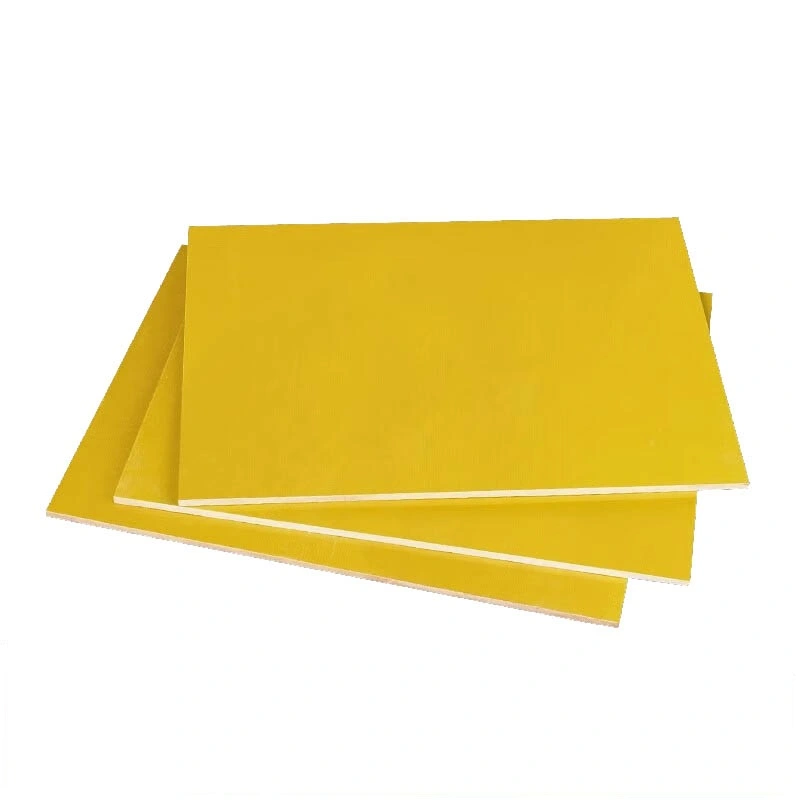
Epoxy resin sheet products are high-performance thermosetting polymers that are used in the infrastructure for power transfer, the making of electronics, and the production of industry equipment. Usually, they are made up of epoxy resin matrices and woven glass fabric reinforcements. This makes laminate structures that have densities between 1.9 and 2.0 g/cm³. This design has a very high flexural strength of over 340 MPa and Class F thermal values, which means it can be used continuously at 155°C.
Core Material Characteristics Affecting Laser Processing
The structure of these laminates on the inside has a direct effect on how lasers interact with them. The amount of glass fiber forms areas with different temperature conductivities. This means that the laser beam goes through areas of resin and reinforcement that change over time. The organic resin material receives laser energy faster than the glass fibers that are contained in it, which causes uneven thermal distribution during cutting. This effect is more noticeable in 3240 epoxy resin sheets and normal FR4 grades, where 50 to 60 percent of the weight is glass. Material hardness also affects how it cuts. For example, carbide tools wear out faster during mechanical processing, and laser focus point stability is affected by the same kind of roughness during long production runs.
Electrical and Thermal Properties in Laser Applications
With dielectric strength values of 10–12 KV/mm in transformer oil, these materials are necessary for electrical insulation. However, this feature makes laser cutting more difficult. When a material has a high insulation resistance (more than 10^13 Ω), it doesn't let go of the electrical charge that is created during processing. This could make the laser less stable in wet circumstances. Another level of complexity is added by thermal resistance. The material can handle high working temperatures, but the localized heating during laser cutting can temporarily exceed glass transition temperatures (130°C for standard grades and 170°C+ for high-Tg variants). This can cause microscopic structural changes in the heat-affected zone that engineering managers must take into account when checking dimensional tolerances.
Main Challenges in Laser Cutting Epoxy Resin Sheets
When these mixed materials are processed with laser technology, they show a number of recurring issues that set epoxy resin sheet apart from uniform plastics like acrylic or polycarbonate.
Thermal Damage and Edge Quality Issues
When the feed rate is too slow or the laser power is too high, heat builds up and shows up as charring, darkening, or microcracks along the sides of the cuts. We see this most clearly in FR4 materials that contain flame retardant compounds. Bromine-based chemicals made to meet UL94 V-0 standards can break down when exposed to strong laser light, leaving behind residues that hurt both the way the material looks and how well it works electrically. The glass support fibers add another layer. When vaporization isn't complete, protruding fibers form at the cut edges, which means extra finishing steps are needed, which raises the cost of production. When mechanical engineers work with precision spacers or motor parts, they say that limits change by 0.05 to 0.1mm because of temperature expansion in the hot spot. This makes it hard to put together parts that need to fit tightly.
Thickness Variation and Dimensional Control
You can use boards that are only 0.5mm thick for test tools or slabs that are 50mm thick to insulate heavy machinery. This span makes it hard to find the best settings for the parameters—settings that work for a 1.6mm PCB base don't work at all for 25mm transformer barriers. When cutting thicker materials, you have to do more passes or slow down, which extends the cycle time and builds up heat stress. When purchasing custom-cut parts, procurement professionals need to be clear about both the nominal thickness and the accepted tolerance bands. This is because material providers usually keep thickness differences between production runs at ±0.2mm. This version needs adaptive laser setting or first test cuts, which makes situations where a lot of parts need to be made more complicated.
Fume Generation and Safety Considerations
Epoxy resin sheet composites, on the other hand, produce complex chemical mixes when they are cut with a laser. Formaldehyde, phenolic compounds, and glass fiber-containing particles are all byproducts of decomposition that need strong extraction methods that meet health and safety standards at work. The 3240 epoxy resin sheets that don't have flame retardants give off different kinds of emissions than the FR4 types, so they need special air systems. Manufacturing sites that work with these materials say that the time between upkeep for filtration systems is 30–40% shorter than when they cut acrylic. This is an unavoidable practical cost that technical procurement teams should include in estimates of the total cost of ownership.
Proven Techniques and Best Practices for Optimized Laser Cutting
To get consistent results, you need to use a methodical approach that combines choosing the right tools, optimizing parameters, and following epoxy resin sheet material handling rules that have been used in the real world.
Laser System Selection and Parameter Tuning
Because they are so good at cutting through organic resin matrices, CO2 lasers with a wavelength of 10.6 microns are still the best choice for cutting epoxy resin sheet laminates. Power values between 80 and 150 watts work well for most uses, but systems with 200 watts or more may be needed for thick commercial panels. Changing the speed is more important than changing the power. Lower turn rates (10–20 mm/second for 3mm FR4) allow controlled melting without too much heat buildup, while higher speeds (40–60 mm/second) work better for thin materials but risk not cutting all the way through. Setting the frequency to between 5 and 10 kHz is the best way to get the best mix between cutting speed and quality. Fiber lasers are great for working with metals, but they don't work well on glass-reinforced materials because they don't absorb light well. However, new UV laser systems show promise for very precise tasks that need very few heat-affected areas.
It's very important to do basic test cuts on sample materials before making large amounts of them. A major electronics OEM cut down on scrap by 23% after putting in place a process that needed five test pieces of different thicknesses and tiny edge inspection before parameter sets could be approved for full production. This method finds differences between batches of materials that could affect whole production lots if they were not found.
Pre-Processing and Post-Processing Strategies
Surface preparation has a big effect on the quality of the result. Using isopropyl alcohol to clean sheets gets rid of any oils or handle leftovers that might get in the way of even laser absorption. Putting masking films on both surfaces stops back-reflection writing and makes it easier to remove debris, but the type of material you use is important because some adhesives leave behind leftovers that need to be cleaned up with a solvent. Using vacuum hold-downs instead of mechanical clamps to secure workpieces stops measurement mistakes caused by shaking. This is especially important for parts that need to be within 0.05mm of tolerances in PCB drilling jigs or motor stator gaskets.
Post-cutting edge cleaning makes the edge look better and work better. Light sandpaper finishing with 400–600 grit gets rid of fibers that stick out without hurting the structure of the material. Ultrasonic cleaning in alkaline solutions gets rid of carbon deposits that are embedded in cut surfaces. Some suppliers of car parts use thermal post-treatment at 140°C to ease residual stresses in cut parts. This is said to make the parts more stable in terms of their dimensions during later assembly steps.
Procurement Insights: Selecting and Ordering Laser-Cut Epoxy Resin Sheets
When B2B buyers are handling the supply world, they have to make choices that go beyond just comparing prices for epoxy resin sheets. These choices include things like the certification of materials, the processing powers, and the reliability of the supply chain.
Specification Requirements and Supplier Communication
In the buy specs, there should be a list of the material grade (FR4, G10, 3240), thickness with tolerances, color requirements (if any), and the quality of edge finish that is wanted. When buying electrical goods, buyers must check for UL certification and RoHS compliance paperwork. When buying power sector goods, buyers must look for flame resistance scores and oil compatibility test reports. It doesn't matter what the mechanical qualities are; stating the minimum flexural strength makes sure that structural parts like gears or spacers work when they're loaded. Clear communication about cutting parameters helps suppliers predict how complicated the process will be. For example, a transformer maker cut lead times by 15% by including specs for the roughest edges that could be used. This let suppliers set their equipment more efficiently before they needed to.
Evaluating Manufacturer Capabilities
Manufacturers who are certified and have complete quality control systems offer more guarantee than just inspecting each part individually. Systematic process control is shown by ISO 9001 certification, and environmental management is shown by ISO 14001 certification. This is becoming more important as rules about laser cutting emissions get stricter. To make sure that dimensional checking is accurate, supplier sites should keep measurement tools that are calibrated and can be traced back to national standards. Flexibility in processing is also important. Suppliers with multiple laser power levels and automatic parameter change can handle mixed orders of different types of materials and thicknesses without having to wait for setup.
Specification mismatches can be avoided by testing a sample before making big promises. Asking for pre-production pieces to be inspected with a microscope at the edges shows the level of processing quality and points out possible problems with certain amounts of material. Return policies and quality guarantees add another layer of safety. This is especially helpful when adding new parts to current product lines where they need to fit and work exactly the same as the old parts.
Future Trends and Innovations in Laser Cutting for Epoxy Resin Sheets
Precision-cut epoxy resin sheet composite parts are becoming more useful and changing how they can be used as technology changes.
Automation and AI-Driven Process Optimization
Modern laser systems use pyrometers and high-speed cameras to watch in real time and find heat problems while cutting. Machine learning systems look at waves of sensor data to figure out the best way to change parameters based on how the material responds. This means that operators don't have to be involved as much. Some car makers say that setting up their machines takes 40% less time now that they use adaptive systems that can automatically account for differences in panel thickness. Computer vision integration lets machines find flaws at cutting speeds faster than a person can check, finding edge irregularities or unfinished cuts before the parts go to the next step in the assembly process.
Sustainable Processing Methods
Innovations in both materials and working methods are driven by concerns about the environment. Bio-based epoxy resin sheet formulations made from renewable feedstocks are now being tested in the business world. They have similar electrical qualities but leave smaller carbon footprints. Manufacturers of laser systems are working on better gas assist systems and more efficient beam delivery optics that use less energy per linear meter of cutting. Closed-loop fume extraction with improved filtering catches particulates and volatile compounds more effectively, allowing conditioned air to be recirculated within manufacturing facilities instead of being released into the atmosphere. This is a big benefit in climate-controlled production settings.
By knowing about these changes, technical procurement teams can predict how supplier capabilities will change over time. This helps them make sure that their sourcing strategies are in line with their company's sustainability goals and meet the performance standards needed for things like electrical insulation, structural components, and precision mechanical parts.
Conclusion
To laser cut epoxy resin sheets successfully, you need to know a lot about how the material works, be able to precisely control the parameters, and handle quality in a planned way. Processing thermosensitive plastics, fiber reinforcement, and plastics of different thicknesses requires custom methods that are different from processing plastics that are all the same. Manufacturers and procurement workers can get the precision and consistency needed for electrical parts, industrial machinery, and automobile applications by using tried-and-true methods like optimizing equipment, following strict testing routines, and carefully evaluating suppliers. By keeping up with changes in technology, businesses can take advantage of new abilities while keeping the electrical performance and mechanical stability that these specialized materials provide.
FAQ
What laser power settings work best for different epoxy sheet thicknesses?
At 30 to 50 mm/second cutting speeds, thin FR4 sheets (0.5 to 1.6mm) usually need 60 to 100 watts. With 100–150 watts and 15–25 mm/second rates, medium widths (3-6mm) work best. For industrial screens bigger than 10mm, you usually need 200+ watt systems that can do more than one pass or speeds much slower than 10 mm/second. Test cuts are still necessary because the best epoxy resin sheet settings are affected by differences of 10-15% in the amount of glass fiber in each batch.
How do epoxy composites compare to acrylic for laser cutting efficiency?
Because its structure is uniform, acrylic cuts smoother and needs less edge finishing. It can reach speeds two to three times faster than glass-reinforced epoxy. But epoxy resin sheet materials are stronger, don't melt in hot weather, and don't conduct electricity. This makes them perfect for industrial uses where acrylic would break under stress from weight or temperature.
What safety measures are mandatory when laser cutting these materials?
It is necessary to have high-efficiency particulate air filtering systems that can catch fiberglass dust particles and chemical vapor extraction systems that can deal with formaldehyde and phenolic emissions. When operators work near cutting areas to maintain machines or move materials, they need to wear respirators. Regular tracking of air quality in the workplace makes sure that exposure limits stay within legal limits.
Partner with J&Q for Precision Epoxy Resin Sheet Solutions
J&Q has been making electrical insulation products for more than 20 years and has also been doing business internationally for 10 years, meeting the needs of demanding B2B customers. Our factories have strict quality control systems that make sure every FR4, 3240, and custom epoxy resin sheet exactly meets the requirements for dielectric strength, physical accuracy, and mechanical strength. In addition to high-quality materials, we offer full laser cutting consultations to help engineering teams find the best settings for their unique needs, whether they are making power distribution equipment, PCBs, or parts for cars.
Because we handle all of our own operations, we can really offer a one-stop service, from choosing the materials to cutting them precisely to delivering them right to your door. This saves you time and effort on planning issues. Technical support teams know how hard it is for procurement managers to find important insulation parts. They offer sample programs and quick contact throughout the lifecycle of a project. Contact our team at info@jhd-material.com to talk about your needs and see the difference that integrated knowledge can make when you need a reliable epoxy resin sheet provider that combines manufacturing depth with supply chain efficiency.
References
Chen, W., & Zhang, L. (2021). Advanced Laser Processing of Composite Materials: Thermal Analysis and Quality Control. Industrial Manufacturing Technology Press.
Kumar, R., et al. (2020). "Optimization of CO2 Laser Cutting Parameters for Glass Fiber Reinforced Polymers." Journal of Manufacturing Processes, 58, 891-903.
Thompson, D. (2022). Electrical Insulation Materials: Properties, Applications, and Processing Techniques. Technical Publishing International.
Yamamoto, H., & Lee, S. (2019). "Thermal Decomposition Characteristics of Epoxy Resins During Laser Ablation." Polymer Degradation and Stability, 167, 234-245.
Industrial Laser Solutions (2023). Best Practices Guide for Cutting Thermoset Composites. Laser Industry Association Technical Report.
Mitchell, P., & Roberts, K. (2021). B2B Procurement Strategies for Technical Materials: Quality Assessment and Supplier Evaluation. Supply Chain Management Press.

_1753951194967.jpg)

