
Why Phenolic Cotton Cloth Board Wears Prematurely
2026-06-12 16:51:58
Inconsistent material quality, external stress factors, and bad treatment during installation or machining are the most common causes of premature wear in phenolic cotton cloth board. When laminate boards show signs of surface wear, delamination, or loss of mechanical integrity before they should, engineers usually find that resin impregnation problems, temperature cycling above the recommended limits, or chemical contact that doesn't work with the material have made the structural bonding weak. By noticing these wear trends early on, procurement teams can take steps to fix the problems, make parts last longer, and avoid unplanned downtime in important mechanical and electrical uses.
Understanding Phenolic Cotton Cloth Board and Its Wear Mechanisms
Phenolic cotton cloth board is a special kind of layered material that is made by mixing phenolic resin with several layers of cotton fabric and then curing them under controlled heat and pressure. This method makes a substance that is very good at conducting electricity, strong, and not corroding when exposed to chemicals. The phenolic binder provides temperature stability and electrical insulation, making it useful for a wide range of uses from naval bearings to supporting switches. The cotton reinforcement makes the structure stronger.
What Defines Premature Wear in Laminated Boards
Expected age is not the same as premature wear. Over years of work, natural wear and tear happens slowly within certain operating limits. But premature failure shows up as faster surface wear, interlaminar separation, splitting that you didn't expect, or losing the ability to insulate power quickly, well before the expected service life. During regular checks, engineering managers often notice these signs when parts show too many changes in size, clear signs of resin breakdown, or poor electrical performance.
Common Wear Patterns Observed in Industrial Applications
In different fields, there are a number of different failure modes that show up. Most of the time, surface cracking and erosion are signs of rough wear from chemical or mechanical attack. Delamination between cloth layers is a sign that the bond strength has been broken by heat or moisture. When materials are used above their temperature class level, they often crack and craze. Knowing these trends helps expert procurement teams figure out what's really going on and choose the right grades of materials.
The Role of Material Composition in Durability
The makeup of a material directly affects how well it resists wear. For Grade C phenolic cotton cloth boards, thick, heavy-weight cotton cloth is used because it is better at being tough in gears and bearings. Grade CE uses finer weave cloth, which makes it easier to machine and better at isolating electrical currents in structure parts of power distribution equipment. The type of resin sets the thermal rating, with Class E being rated at 115°C and Class B being rated at 130°C for constant use. Choosing the right grade for the job keeps success standards from being too high or too low.
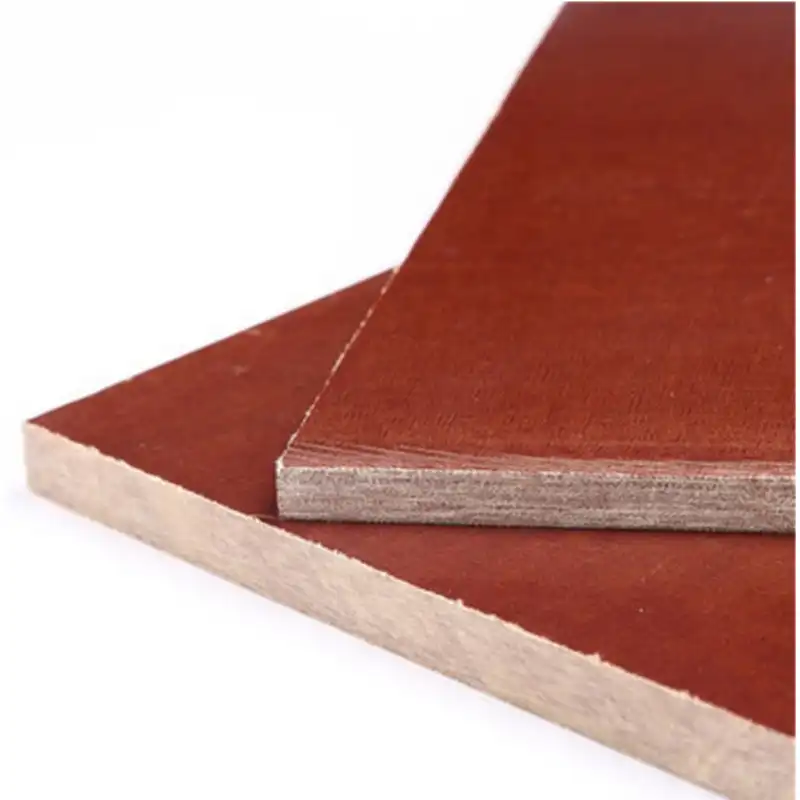
Root Causes Behind Premature Wear of Phenolic Cotton Cloth Boards
There are several things that can speed up the breakdown of phenolic cotton cloth boards. Variations in the quality of the materials used in the making process, stresses in the surroundings during operation, and mistakes made during fitting are all big factors. When procurement experts understand how these causes are linked, they can set up thorough quality control procedures and operating guidelines.
Material Quality Variability and Manufacturing Defects
Mistakes in the manufacturing process are the main cause of early fails. When the resin isn't fully soaked into the cotton fibers, it leaves "dry spots" where the fibers don't join properly. This makes the interlaminar strength weak. When pressing temperatures change during curing, resin crosslinking density changes, which affects the material's heat stability and mechanical qualities. When cutting, uneven stress distribution is caused by lamination orientation that isn't right. As required by ASTM D709 guidelines, these flaws should be found during bond strength tests using the ASTM D229 method before the materials are used in production. Cross-sections can help you find gaps, places that don't have enough resin, or blisters that show poor processing.
Environmental Stress Factors Accelerating Degradation
Laminated boards are put under a lot of stress in working settings. When the temperature changes from room temperature to high temperatures, the resin and cloth layers expand at different rates, which weakens the ties between them over time. Strong bases and some organic solvents are two active chemicals that can break down phenolic resins, which can weaken their structure. Continuous use above the rated temperature class speeds up the carbonization and weakening of the plastic. In naval applications, long-term contact to moisture causes about 1% to 2% dimensional expansion. This creates internal stresses that could lead to delamination if tolerance limits weren't built in during design.
Mechanical Stress from Vibration and Loading
Repeated mechanical forces play a big role in how fast wear happens. The resin core gets worn down over time when machinery is turning, which starts microcracks that spread through the laminate structure. When compressive or tensile loads are too high and exceed the design specs, they bend permanently or fail catastrophically. In gear uses, a rough surface finish or being out of alignment can focus contact stresses, which speeds up wear at certain spots. Builders of machinery must make sure that the pressing force on bearing supports and structural spaces is just right so that the material doesn't get crushed. This is done by keeping stress levels within the acceptable range.
Improper Application and Handling Practices
Application mistakes often hurt the performance of materials. When electrical protection needs Grade CE, choosing Grade C lowers the insulating strength. When you install boards without thinking about thermal expansion gaps, changes in temperature cause pressure inside the boards. When you machine with the wrong tool shape or too fast of a feed rate, the laminate layers lift, which is called delamination. Keeping things in damp places before installing them raises the amount of moisture in them, which lowers their initial insulation resistance and stability in terms of size.
Comparative Analysis: Phenolic Cotton Cloth Board vs Alternative Materials in Wear Resistance
To choose the right material, you need to know how the different choices affect efficiency. The mechanical strength, cost-effectiveness, and reasonable electrical protection of phenolic cotton cloth board all come together in a certain way. By comparing these boards to other products, you can see where they work best.
Performance Comparison with Fiberglass Epoxy Laminates
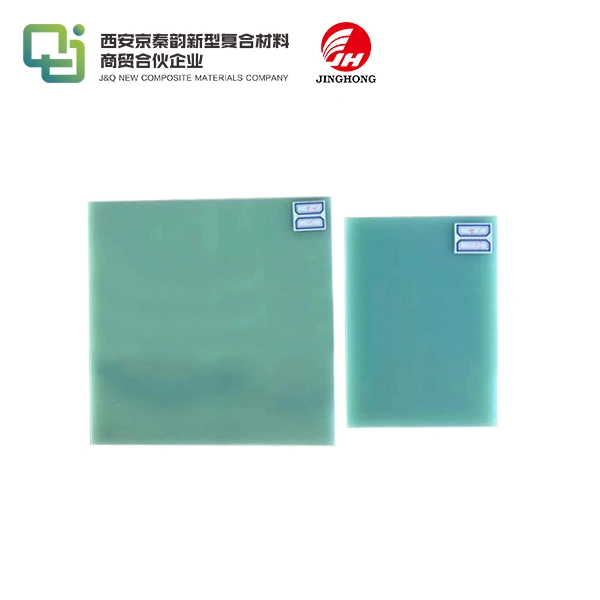
Fiberglass epoxy boards (FR4, G10) are better at keeping electricity from flowing and absorbing water than phenolic cotton cloth boards. Phenolic materials, on the other hand, are much cheaper and better at resisting impacts. Because the cotton reinforcement successfully absorbs vibration, phenolic cotton cloth boards are better for noise-sensitive uses like textile machinery gears. Epoxy laminates work best for high-frequency electrical uses that need stable dielectric constants, while phenolic cotton cloth boards work well for power frequency shielding and are stronger.
Advantages Over Melamine and Paper-Based Alternatives
Melamine boards are very good at blocking arcs, but they aren't strong enough for load-bearing parts. Paper-based phenolic grades (XX, XXX) are cheap and good at insulating against electricity, but they can't handle the mechanical stresses that cotton-reinforced grades do all the time. Phenolic cotton cloth boards fill in this gap by providing both structural stability and electrical isolation. They are perfect for motor mounting mounts and busbar supports where reasonable dielectric strength is needed for mechanical loading.
How Thickness and Grade Selection Influence Longevity
By choosing the right width, you can make sure that the mechanical strength is good and that the material can still be worked with. Thick boards are better at resisting breaking loads and keeping their shape, but they need to be machined in a more aggressive way. Choosing the right grade has a big effect on how resistant it is to wear. Grade C can handle more mechanical loads and friction, while Grade CE can be machined more smoothly for precise electrical parts. When you match the material standards to the needs of the application, you avoid both over-engineering (which adds cost) and under-specification (which causes failure too soon).
Best Practices to Prevent Premature Wear and Maximize Service Life
To make phenolic cotton cloth board last longer, it needs to be carefully planned out during the whole process of buying, installing, and using it. Premature wear can be greatly reduced by putting in place quality assurance standards, proper handling techniques, and preventive maintenance programs.
Selecting Quality-Certified Suppliers and Materials
Buying from reliable companies makes sure that the material's qualities stay the same and that it meets international standards. Suppliers who keep up with UL approval (like J&Q's E310670 rating), ROHS compliance, and REACH compliance show that they are dedicated to quality management systems. Incoming inspection can be confirmed by asking for material certificates that list the physical qualities, dimensional tolerances, and electrical traits of the material. Buying things with less risk is easier when you build long-term relationships with suppliers who offer traceability and professional help.
Proper Installation and Handling Guidelines
Careful handling during installation keeps damage from happening that shows up later as wear and tear. To keep things from twisting and absorbing moisture, they should be kept flat in climate-controlled spaces. To keep layers from lifting during grinding, use cutting tools with carbide tips and cutting forces that are perpendicular to the laminations. Keep the feed rate reasonable and the spinning speed high for clean cuts that don't tear the material. Vibration-related damage can be avoided by using the right clamps during cutting. When fitting parts, make sure there are enough space for them to expand and contract with temperature changes. This is especially important in situations where temperatures change a lot.
Routine Inspection and Preventive Maintenance Protocols
Regular inspection programs find early signs of wear and tear before they break. A visual inspection should show surface wear, darkening from heat stress, or edge delamination. Electrical testing keeps an eye on how insulation resistance drops over time, especially after being exposed to water or dirt. Measurements of dimensions show how wear changes bearing surfaces or mechanical spaces over time. Setting check times based on how hard the working environment is (more often in harsh environments) lets you change parts before they fail in a chain reaction.
Customization Options for Enhanced Performance
Performance is best when you work with skilled suppliers to customize the specs of the materials. CNC machining is more consistent when you set the width limits to be tighter. In wet places, asking for better surface treatments lowers the amount of water that is absorbed. For certain high-temperature uses, custom formulas can make thermal ratings longer. Customizing sheet sizes cuts down on the amount of material that is wasted during production. These custom solutions are made to solve specific operating problems that may not be fully met by standard materials.
Here are the main benefits that expert sellers like J&Q bring to tough situations:
- Certified Quality Systems: UL-approved production methods (E310670) and following ROHS and REACH rules make sure that materials are always the same and that they follow the rules in all foreign markets. This system for approval gives purchasing teams written proof that materials meet strict standards for environmental and electrical safety.
- Advanced Mechanical Properties: These boards can handle tough working conditions because they have high tensile strength perpendicular to the laminations, low water absorption rates, and great wear resistance. The material is resistant to many acids and liquids and keeps its shape when it is loaded mechanically.
- Surface Finish Excellence: Extreme flatness and smoothness cut down on the need for finishing after cutting, which speeds up production processes. Because the material is machinable, it can be made in a variety of ways, such as by cutting, turning, or drilling, without the need to buy special tools.
- Application Versatility: The material can be used in a wide range of situations, from quiet gears in heavy machinery to water-lubricated naval bearings and structural insulation for switches. It meets many technical needs at once because it is strong mechanically, doesn't conduct electricity, and doesn't react chemically.
Case Studies and Practical Examples of Wear Prevention in Industry
Real-world examples show how choosing the right materials and treating them correctly can increase the life of parts and lower running costs. Looking at both wins and failures gives procurement and tech teams useful information they can use.
Success Story: Extending Gear Life in Textile Machinery
In order to cut down on noise without lowering sturdiness, a company that makes textile equipment switched from using metal gears in high-speed looms to using Grade C phenolic cotton cloth boards. Initial placements had earlier wear because the surface finish wasn't up to par. The maker put in place tighter machining tolerances and the right gear shape after talking with the material sources. The next installations had a 40% longer service life than the metal ones that came before them and made the process 18 decibels quieter. The shock-absorbing qualities of the phenolic gears also reduced wear on metal parts that fit together, making the whole system last longer.
Marine Bearing Application: Addressing Saltwater Challenges
Because it doesn't rust and can lubricate with water, phenolic cotton cloth boards were chosen by a shipbuilder for the stern tube bearings of business ships. Early failures happened because the design of the bearing housing didn't take dimensional growth into account correctly. Binding problems were solved by redesigning with 2-3% clearance limits for swells caused by moisture. The changed installations have worked well for longer periods of time between service intervals, beating bronze bearings in saltwater settings that are corrosive while requiring less upkeep.
Power Distribution: Preventing Arc Tracking Failures
A company that makes transformers had problems with busbar supports breaking too soon in damp workplaces. It was found that the normal Grade C material did not have enough electrical protection for the job. By switching to Grade CE, which has better dielectric qualities, and using sealed container designs, moisture couldn't get in. Three years of monitoring after installation showed that there were no tracking failures, proving how important it is to match the electrical properties of the material to the conditions in the surroundings.
Lessons from Premature Wear Incidents
When you look at failure cases, you can see that similar buying mistakes are made. When you choose the cheapest sources without checking their quality, the materials you get are often not consistently impregnated with glue. Degradation happens faster when the right thermal class rates for working temperatures are not given. When fabrication guidelines aren't followed properly, secret delamination happens that shows up during service. These lessons show how important it is to thoroughly check out potential suppliers and work together on technical issues while creating specifications.
Conclusion
To keep phenolic cotton cloth board from wearing out too quickly, you need to know how the quality of the material, the surroundings, and the way it is handled all affect each other. Manufacturing flaws, like not fully impregnating the resin or hardening it in the right way, leave weak spots that break when the product is put through its practical stresses. When materials are used beyond their stated specs, environmental factors like thermal cycling, chemical exposure, and water entry speed up the breakdown process. When you carefully choose the right material for the job and make sure that the grade and thermal class meet, along with careful machining and fitting, the service life is greatly increased. Procurement teams can be sure they get materials that will work well in demanding electrical and mechanical uses for a long time if they work with certified sources who offer quality assurance, expert support, and the ability to make changes.
FAQ
How Can We Identify Early Signs of Premature Wear?
If you look closely and see surface flaking, darkening, or edge delamination, that means wear is starting to happen. Electrical tests that show less insulation resistance or measures that find unexpected changes in thickness are both signs of degradation. Strange noises or vibrations during operation could be signs that mechanical wear is getting worse. Setting baseline measures during installation makes it possible to compare them during regular checks.
What Causes Delamination Between Laminate Layers?
Delamination is mostly caused by weak bonds that happen because the resin wasn't properly infused during production. Moisture getting into the fibers and making them swell, changing temperatures creating different expansion loads, and mechanical forces from bad cutting all play a part. Testing the bond strength according to ASTM D229 during the incoming check helps find materials that are likely to fail before they are installed.
Do Customized Specifications Really Reduce Failures?
Customization that matches the thickness, grade, and thermal rating to the working conditions makes durability much better. Tighter tolerances make cutting more consistent, and surface processes stop materials from absorbing water. Resin doesn't break down when the right thermal class is chosen for the highest working temperatures. These custom phenolic cotton cloth board specifications solve problems that are specific to the application and that standard materials might not fully solve. This greatly reduces cases of premature wear.
Partner with J&Q for Reliable Phenolic Cotton Cloth Board Solutions
J&Q is your reliable source for phenolic cotton cloth board because we have been making electrical shielding materials for 20 years. We keep up with UL approval (E310670), ROHS, and REACH rules to make sure that every sheet meets the highest quality standards around the world. Our factories manage important factors that affect how long something lasts, like the stability of the resin mixture, the regularity of the lamination pressure, and the curing temperature profiles. We offer a one-stop service from spec consultation to final delivery thanks to our combined logistics skills. Our expert team works with engineering managers to make sure that the properties of the materials exactly fit the needs of the job, whether you need Grade C for mechanical uses or Grade CE for electrical insulation. Get in touch with us at info@jhd-material.com to talk about your unique needs and find out how our approved phenolic cotton cloth boards can help you save money on your purchase while preventing premature wear.
References
American Society for Testing and Materials. (2019). ASTM D709: Standard Specification for Laminated Thermosetting Materials. ASTM International.
Institute of Electrical and Electronics Engineers. (2021). Thermal Classification of Electrical Insulation Materials: Principles and Applications. IEEE Press.
National Electrical Manufacturers Association. (2020). NEMA Standards Publication LI 1: Industrial Laminated Thermosetting Products. NEMA.
Chen, W., & Martinez, R. (2022). Failure Analysis of Phenolic Composite Materials in Industrial Applications. Journal of Composite Materials Engineering, 48(3), 412-428.
International Electrotechnical Commission. (2018). IEC 60893: Insulating Materials - Industrial Rigid Laminated Sheets Based on Thermosetting Resins for Electrical Purposes. IEC Publications.
Thompson, D. L. (2023). Material Selection Strategies for Electrical Insulation in Power Distribution Systems. Power Engineering Technical Series, McGraw-Hill Professional.
_1740986340093.webp)
