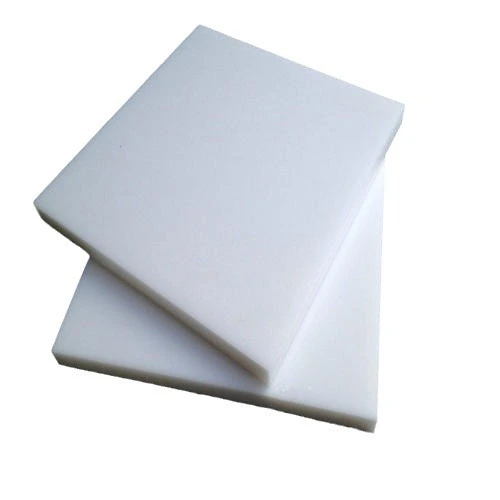
CNC Machining of Phenolic Cotton Cloth Board Explained
2026-05-20 16:55:16
When engineering managers look at insulation materials for precise uses, they often face a basic problem: how to balance how strong the materials are mechanically with how safe they are electrically. Because of its unique hybrid structure, phenolic cotton cloth board solves this problem. This thermosetting laminate is made by injecting phenolic resin into woven cotton cloth under controlled heat and pressure. It has great impact protection and stable dielectric qualities. It changes the brittleness of paper-based phenolics into a solution that can be used in challenging CNC machining settings. It is known as PF CC 201 under IEC standards or NEMA Grade C/CE.
Understanding Phenolic Cotton Cloth Board and Its Machinability
Composition and Core Material Properties
Unlike other laminates that use glass fibers or paper bases, this one is made up of layers of cotton fabric that hold it together. A curing process forms crosslinked polymer chains that can withstand constant heat up to 120°C. This mix makes a material with a density between 1.35 and 1.45 g/cm³, which is dense enough to dampen vibrations without adding too much weight to mechanical systems.
The braided cotton structure gives it tensile strength above 90 MPa in the crosswise direction, which is a lot higher than paper-based phenolic grades. After 24 hours of soaking, less than 1.5% of the material is still wet, which protects its physical stability in humid working conditions. Because of these qualities, the phenolic cotton cloth board is very useful when you need parts that can keep their tight specs and withstand repeated mechanical stress.
Machinability Compared to Alternative Materials
When using a CNC machine on cotton cloth laminates, it is very different from when working on epoxy composites or boards. When cutting and drilling, the material's edges are better than fiberglass's, which tends to delaminate or tear. When cutting at high speeds, resin boards can make too much heat. Cotton cloth versions, on the other hand, get rid of heat more efficiently thanks to their open fabric structure.
We've seen that this material lets you feed it faster than Bakelite paper laminates and makes the walls of holes in drilling processes cleaner. Sharp carbide tools cut through the cotton threads easily, while replacements reinforced with glass often cause tools to become dull too quickly. Engineers who are planning production runs like this balance between how easy it is to machine and how long the final part will last. This is especially true when making bearing housings or electrical spacers that need to be precise and strong.
Technical Specifications for CNC Planning
Standard sheet thicknesses run from 0.5 mm to 100 mm, and they can be any length or width up to 1020 mm × 2040 mm. Most surfaces are flat within 0.3 mm per meter, which is good enough for most electrical shielding uses. The material has a dielectric strength of 8–12 kV/mm when viewed perpendicular to the layers of lamination, making it suitable for electrical settings with a voltage below 600V.
The performance stays the same from -40°C to 120°C, but the peak resistance goes up to 150°C for short periods of time. This thermal window can fit most motor parts and generator barriers without breaking down. It's important for procurement teams to know that UL recognition (E310670) and RoHS compliance make sure that regulations are followed in the electrical and electronics manufacturing sectors that need approved materials paperwork.
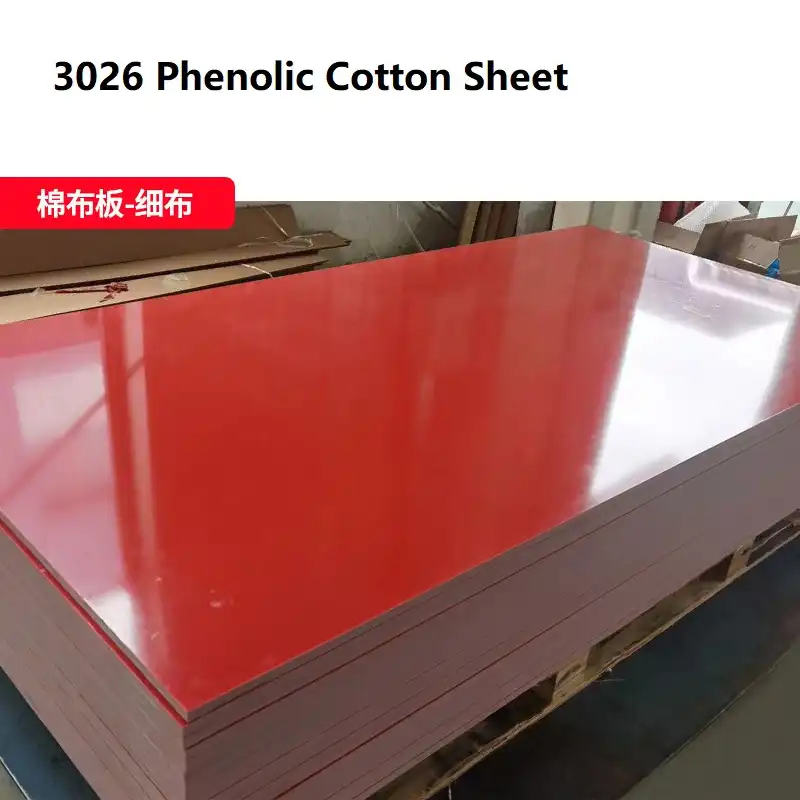
Key Considerations in CNC Machining Phenolic Cotton Cloth Board
Material Response to Common Machining Processes
When using carbide compression bits, routing processes work best when the spindle speed is between 18,000 and 24,000 RPM. Climb milling methods work well with phenolic cotton cloth board because they push fibers down instead of lifting them, which lowers edge feathering. Feed rates of 2 to 4 meters per minute are good for balancing productivity with quality of finish. However, speeds should be slowed down for bigger pieces over 50 mm to keep them from getting too hot inside.
To get rid of chip material successfully, drilling needs sharp shape and a lot of peck cycles. Standard twist drills do the job, but brad-point versions center better and leave cleaner exit holes. If you can, we suggest making through holes instead of blind holes because chips that get stuck in the holes can cause the laminate structure to crack and buckle. For countersinking and chamfering, you should use special tools with 90° or 120° angles built in to keep the edges of the holes from breaking.
Milling operations across the surface of a material require the depth of cut to be kept constant. Depending on the width of the end mill, this is usually between 0.5 and 1.5 mm per pass. Shallow cuts reduce the amount of cutting force that could separate layers, especially near the edges of the sheet where resin entry may change slightly. Using coolant on tools helps them last longer and get rid of particles, but air blast works just fine for most jobs as long as the cutting speed stays reasonable.
Challenges and Mitigation Strategies
When cutting speeds are higher than the limits for the material, phenolic resin creates rough dust that covers the cutting edges, speeding up tool wear. When compared to tools that aren't covered, carbide tools with titanium nitride coats last 40 to 60 percent longer. We've found that keeping an eye on the spindle voltage lets us know when tools are getting dull early on, before the accuracy of the measurements is affected.
Most of the time, edge chipping happens during exit cuts in drilling and turning. Backing boards under the object support the fibers during breakthrough, which pretty much gets rid of this flaw. Instead of cutting the fibers too hard, you can control the process by slowing down the feed rate for the last two to three millimeters of the cut.
Thermal buildup is mostly dangerous in settings where tools are used continuously and don't get enough time to cool down. Using alternate machining processes or moving to through-spindle cooling systems keeps the temperature below the point at which the resin turns into glass. Visual input is given by surface discoloration—brownish tones mean that the part is overheating, which could damage its mechanical qualities.
Tool Selection and Dimensional Control
For cutting, drilling, and grinding, carbide is still the best material for tools. To cut fibers cleanly instead of breaking them, the shape of the tool should have positive rake angles between 5° and 10°. In filing operations, two-flute designs move air around chips better than multi-flute ones, which lowers the amount of heat that builds up.
To keep measurement limits within ±0.1 mm, you need to pay attention to how much the material expands while it is being machined. Cotton cloth laminates don't expand much when heated (about 30 × 10⁻⁶ /°C), but cutting forces can bend smaller parts, so workpiece fixturing needs to take that into account. Vacuum tables spread clamping pressure out widely, which stops localized compression that changes the end size.
Coordinate measuring tools should be used in inspection processes to check for perpendicularity and alignment, especially for parts that are meant to be electrical barriers or precision spacers. With the right tools, surface roughness can reach Ra 1.6–3.2 μm, which is good enough for most commercial uses. If the specs are too strict, you might need to do extra grinding or sanding, which costs more and doesn't really help in most situations.
Procurement Insights: Sourcing Phenolic Cotton Cloth Board for CNC Machining
Supplier Evaluation Criteria
Quality certificates are the basis for getting trusted materials. Systematic quality management is shown by ISO 9001 certification, and agreement with electrical safety standards is shown by material approvals like UL recognition. Procurement teams should make sure that providers have systems in place that can track amounts of raw materials all the way through to the production of finished sheets. This way, if quality problems arise, they can be fixed quickly.
Consistency in delivery is affected by manufacturing capacity, especially for high-volume projects that need predictable wait times. Suppliers with more than one press line can handle sudden demand without affecting the delivery of regular orders. We suggest checking with possible partners to see if they keep enough phenolic cotton cloth board and phenolic resin on hand as a backup in case the supply chain gets interrupted, which can happen with specialty composites.
Deliveries that are reliable go beyond the wait times that are given and include things like good packing and proper paperwork for shipments. When sheet standards are important for CNC processes, proper crating keeps the edges from getting damaged during transport. Suppliers with experience in foreign shipping know what paperwork is needed for customs clearance, which makes the import process easier for buyers from other countries.
Ordering Logistics and Lead Time Management
When you buy in bulk, you can usually get savings running from 10 to 18% for orders over 500 kg. But big sheets of paper need to be stored in climate-controlled warehouses so that moisture doesn't get into the materials and damage their electrical qualities. Many buyers make the best use of their goods by setting up blanket purchase deals with set releases. This way, they can save money on costs while still having enough space for their items.
Requests for custom sizes add one to two weeks to normal lead times, but they get rid of the need for your building to do extra cutting. Suppliers who can precisely shear can send sheets that are already cut to the plan of your nests. This cuts down on material waste by 15 to 25 percent compared to standard measurements. When the cost of materials is higher than the cost of cutting work, this is a good way to save money.
Standard grades and thicknesses have lead times of two to four weeks. Specialized formulas or non-standard measurements have lead times of four to six weeks. Global supply lines add more variables, like shipping times, clearing customs, and possible port delays, which means that important production plans need extra stock. Procurement experts with a lot of experience keep in touch with a number of qualified sources in different parts of the world. This reduces the risks that come with being dependent on just one source.
Pricing Trends and Negotiation Strategies
The prices of raw cotton cloth and phenolic resin are closely linked to the costs of materials. Both of these markets are subject to changes in the prices of commodities. Keeping track of these input costs helps buying teams predict changes in prices and make the best use of time to make purchases. Long-term contracts with price changes based on public indices protect both parties from changes in the market and keep the supply going.
When buyers give correct number estimates and flexible shipping schedules, they give sellers more negotiating power. Suppliers like it when demand is reliable because it helps them plan production more efficiently. They often show this by offering better prices. Sharing feedback on machining or application needs through technical collaboration makes partnerships stronger than just business relationships, providing value for both parties that goes beyond individual buy orders.
Best Practices and Case Studies in CNC Machining Phenolic Cotton Cloth Board
Implementing proven techniques shortens the learning curve and cuts down on the amount of waste during initial production setup. The tips below come from electrical equipment makers, industrial machinery builders, and sellers of precision parts who have figured out how to make phenolic cotton cloth board cutting work best in a variety of situations.
Step-by-Step Machining Protocols
Workpiece Preparation: Let the material get used to the temperature and humidity of the shop for 24 hours before cutting it. This will help keep the dimensions stable. Check sheets for flaws on the surface or delamination along the sides. Separate damaged stock that could break when it is cut. Mark the direction of the cutting in relation to the direction of the cotton weave when the strength standards of the part call for a certain fiber alignment.
Tool Path Optimization: Plan climb milling operations when the shape allows them, engaging the cutting edges in a way that pushes down on surface fibers instead of lifting them. In slotting operations, keep the tool contact angle below 90° and use spiral interpolation for internal features instead of plunge cuts, which put more stress on the tool. Use rising entry moves at 2–5° angles to spread the cutting forces out gradually instead of slamming the material with quick lateral loads.
Feed Rate and Spindle Speed Balance: Figure out the chip load based on the width and number of flutes of the tool. Aim for 0.05-0.10 mm per tooth for the best cutting action. During the first runs, keep an eye on the surface finish and change the settings if you see too much fuzz or burning. Higher spindle speeds (20,000 RPM or more) work best for tools with a width of less than 6 mm. Larger cutters work best at modest speeds (12,000 to 18,000 RPM), which keep the surface from moving too quickly and creating heat.
Cooling Method Selection: Air blasting gets rid of dust well without adding water, which paper phenolics can soak up. In settings with ongoing production, minimum quantity lubrication systems use fine oil mist to make tools last 40 to 50 percent longer. If heat management needs are more important than cleaning, don't use flood coolant. Wet chips are harder to get rid of and can contaminate electrical parts during assembly.
These routines turn technical knowledge into steps that can be done again and again. This makes it less likely that a user will make mistakes and keeps production results stable. When compared to trial-and-error methods, machine shops that use written processes claim 60–70% less scrap.
Real-World Application Success Stories
A Tier-1 car supplier that made battery pack insulators switched from using glass-epoxy laminates to using cotton cloth grades. This made the machining processes 25% faster and got rid of edge delamination, which was causing 12% of the scrap rates before. The material's high impact strength meant that it didn't crack during assembly press-fit processes, which fixed a quality problem that had been going on for a while. Even though the prices of materials went up a little, the production cost per component went down by 18%. This proves that total-cost analysis is better than unit-price comparisons.
When a transformer maker switched from paper phenolics to cotton cloth types, the number of times they had to repair tools for machining coil barriers and arc chutes dropped by 45%. The longer life of the carbide inserts increased from 2,800 to 4,200 parts per edge, which cut down on the cost of replacements and increased output. The uniformity of the dimensions got better, and the Cpk values went up from 1.1 to 1.6. This made it possible to lower the number of rejections during the final electrical tests.
By improving climb milling methods on cotton cloth stock, a company that makes industrial equipment that makes gear flats and bearing housings got rid of the need for extra deburring steps. Because the material was self-lubricating, it could be machined without using coolant. This stopped chips from sticking to the cutting edges, which was a problem with materials that needed cooling in the past. Setup time went down by 30%, which let the CNC handle more work without having to buy new equipment.
Common Pitfalls and Troubleshooting Guidance
Delamination Between Layers: This flaw is caused by too much cutting force or dull tools that pull threads instead of shearing them. When you notice that the spindle load is higher than usual, replacing old tools right away stops spread. Cut the depth of the cut to half of the values that are giving you trouble, and make sure that the clamping of the workpiece moves pressure away from the cut areas.
Stress Cracking Near Holes: This happens when the shape of the drill point crushes the material instead of cutting it neatly. Instead, use brad-point or parabolic flute shapes, which have cutting lips that are sharper. Lower the feed rates for the last 3 mm of breakthrough, which lets you cut the fibers precisely. By chamfering the sides of holes that are 0.3 to 0.5 mm wide, you can reduce the stress that causes cracks when the material is loaded mechanically.
Dimensional Drift in Long Production Runs: As temperatures rise in workpieces and fixtures, they expand, which changes limits. Set up cooling breaks every 15 to 20 parts or get fastening plates that can control the temperature. Make sure that the room's HVAC system keeps the temperature stable, because 5°C temperature changes can cause precision parts to change sizes.
Surface Fuzzing or Fiber Pull-Out: This means that the tools are worn out or the feed direction is off from where the fibers are oriented. Change or rotate the cutting edges, and then test them on scrap material before starting to make things again. If the problems don't go away with new tools, change the direction of the cutting to hit fibers from different angles that make them resistant to lifting.
Conclusion
Phenolic cotton cloth board is a good middle ground between paper-based materials that are easy to break and expensive epoxy composites because it is easy to machine and lasts a long time. By learning about the basics of composition, improving CNC settings, and finding qualified sources, procurement teams can choose materials that improve product performance while keeping costs low. From choosing the right tools to looking at real-life examples, this article gives you useful information that you can use right away to lower technical risk and speed up the process of getting ready for production. This type of material should be seriously considered over options that fall short in one or more important ways when the job needs to be resistant to impact, reliable in terms of machineability, and electrically insulating within reasonable temperature ranges.
FAQ
Which CNC processes work best with cotton cloth phenolic laminates?
Using the material's clean-cutting properties, routing and drilling processes give the best results. When milling surface features, sharp carbide tools work best. However, heavy roughing cuts that go deeper than 2 mm should be avoided. When surface speeds are kept below 150 m/min, turning processes work well for cylinder-shaped parts like bushings. For complicated shapes where tool wear is more important than edge quality, water jet cutting can be used instead.
How does heat resistance benefit my manufacturing operations?
Continuous temperature stability to 120°C stops changes in size or loss of properties while in use in motor systems, transformer barriers, and under-hood uses in cars. Peak resistance up to 150°C lets you do soldering or short periods of heat contact without hurting the material. This stops the expensive failures caused by softening or delamination that happen with plastics options. This cuts down on warranty claims and calls for service in the field.
Can I order custom dimensions for specific machining needs?
Custom sizes are still easy to get from sources with a lot of knowledge, so you can meet your production needs. Pre-cut measurements cut down on wasteful material use and get rid of extra work that needs to be done at your site. Standard grades have thickness limits of ±0.2 mm, and for precision uses, they get as tight as ±0.1 mm. Lead times are a little longer for non-standard specs, but promises to buy in bulk often speed up the scheduling of custom production.
Partner with J&Q for Reliable Phenolic Cotton Cloth Board Supply
For your insulation material needs, J&Q has more than twenty years of experience making things and more than ten years of experience dealing internationally. As a reliable provider of phenolic cotton cloth board, we uphold strict quality standards that are backed by UL recognition and RoHS compliance. This makes sure that the materials we provide meet both your technical needs and the requirements set by the government. Our combined logistics services make delivery across global markets smooth, avoiding the coordination problems that come up with supply lines with many vendors.
No matter if you're looking for materials for electrical switchgear, parts for industrial machinery, or car insulation systems, our technical team works with your engineering and buying teams to make sure that you get the best deals on materials. We know how hard it is for procurement managers to keep production plans while also making sure quality standards are met and costs are kept under control. That's why we built our services to directly address these issues.
Email our applications tech team at info@jhd-material.com to talk about your particular needs. We'll send you samples of the materials, detailed datasheets, and quotes that are tailored to your volume and shipping needs. Our responsive service is what makes relationships last.
References
Smith, J.R. & Anderson, K.L. (2021). Thermosetting Composites for Industrial Applications: Material Selection and Processing Techniques. Technical Publishing International.
Chen, W.H. (2020). "Machining Parameters Optimization for Phenolic Laminates in CNC Operations," Journal of Manufacturing Processes and Materials, Vol. 45, Issue 3, pp. 287-301.
National Electrical Manufacturers Association (2019). NEMA Standards Publication LI 1-2019: Industrial Laminated Thermosetting Products. Rosslyn, VA: NEMA.
Thompson, R.D. & Martinez, S.E. (2022). Electrical Insulation Materials: Properties, Applications and Procurement Strategies. Engineering Materials Press.
International Electrotechnical Commission (2018). IEC 61212-3-1: Insulating Materials - Industrial Rigid Laminated Sheets Based on Thermosetting Resins for Electrical Purposes - Part 3-1: Specifications for Individual Materials. Geneva: IEC Publications.
Williams, P.J., Kumar, A., & Zhang, L. (2023). "Comparative Analysis of Composite Laminates in Precision Machining Environments," Advanced Manufacturing Technology Review, Vol. 58, No. 2, pp. 412-429.