
CNC Machining Performance of 3240 Epoxy Board
2026-02-12 16:47:06
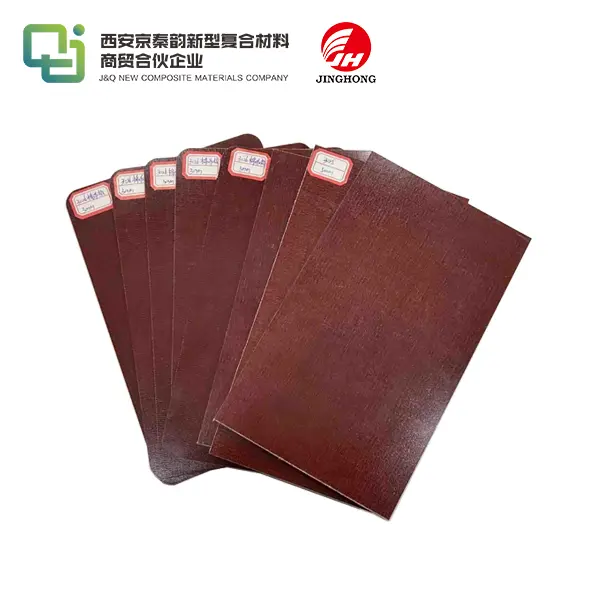
The CNC milling performance of 3240 epoxy board stands out as being very good for industrial uses when looking at materials for precision manufacturing. This high-performance thermoset laminate has great mechanical strength, dimensional stability, and electrical insulation because it is made of glass cloth support and epoxy glue. The material is very easy to work with, which makes it great for making electrical parts, switchboard insulation, and precision mechanical parts that need to be made with very tight specs and consistent quality.
Understanding 3240 Epoxy Board: Specifications and Properties
Understanding the basic properties of the material is the key to using CNC machines to make things accurately. There are many industries that use 3240 epoxy board because it is a complex mechanical material that is widely accepted.
Core Composition and Structure
This 3240 epoxy board is made of weaving glass cloth that has been mixed with epoxy resin and then hardened under controlled heat and pressure. This method of building makes a layered structure with great strength-to-weight ratios and stable dimensions. The glass cloth reinforcement goes in both the warp and fill lines. This makes the mechanical properties constant, which directly affects how well the machine works.
The epoxy glue matrix makes it easier for layers to stick together, which lowers the risk of delamination during CNC operations. This trait is especially useful when cutting thin-walled or complexly shaped parts where maintaining the structure of the material is very important.
Technical Specifications Comparison
Buying teams can make better decisions when they know how 3240 epoxy board stacks up against other materials. Key success indicators are looked at in the following analysis:
Details about the material's density and strength:
- 3240 epoxy board has a density of 1.85 to 1.95 g/cm³ and a tensile strength of 380 to 450 MPa.
- FR4 has the same density as FR3, but its bending strength is smaller, at 340–380 MPa.
- G10 has a slightly higher density but the same strength qualities.
- Phenolic laminates have a lower density but slightly lower strength.
Features of electricity: 3240 epoxy board can handle high voltages because its dielectric strength is usually between 16 and 20 kV/mm. Its volume resistivity is higher than 10^14 ohm-cm, which makes sure that it can reliably separate electrical signals in important situations.
Dimensional Stability and Thermal Performance
When CNC machines are used, where cutting heat can change the qualities of materials, temperature stability is very important. The dimensions of 3240 epoxy board stay the same over a wide temperature range, usually from -55°C to +130°C for constant use.
The low rate of thermal expansion of the material (about 14–16 ppm/°C) makes sure that made parts keep their exact sizes even when the temperature of operation changes. This quality is very important for uses in electrical switches and precise mechanical systems.
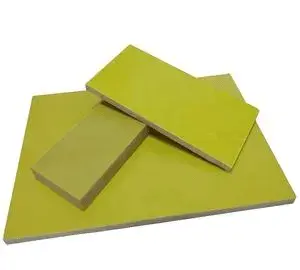
CNC Machining Performance of 3240 Epoxy Board
To get the best results when machining epoxy laminates, you need to carefully think about the qualities of the material and the process settings.
Common Machining Challenges and Solutions
To do CNC cutting of 3240 epoxy board correctly, you need to know about possible problems and how to fix them. When producers understand these factors, they can improve their methods and get better results.
- Stopping contamination: Delamination happens when layers separate during grinding. This usually happens when the cutting tools are too dull or the feed rates are too slow. Positive rake angles on sharp carbide tools lower the cutting forces and lower the risk of delamination. Flexing, which can lead to layer separation, can be avoided by holding the work correctly and giving it enough support.
- Improving the quality of the edges: To get clean, chip-free lines, you need to pay attention to the cutting settings and the tools you use. Most of the time, climb milling makes better edges than regular milling, and the right cutting speeds keep the material from heating up, which can burn the edges.
Optimized CNC Parameters
To get good grinding results, you need to make sure that the cutting factors are well-balanced and work with the material's properties instead of against them.
- Tips for Spindle Speed and Feed Rate: For cutting tasks, the best spindle speeds are usually between 8,000 and 15,000 RPM, and feed rates need to be changed to keep chip loads steady. Higher speeds usually make better cuts because they lower the cutting forces per unit area, and the right feed rates keep the machine from getting too hot.
- How to Choose the Right Tools: Most jobs go very well with carbide tools that have sharp cutting edges and good rake angles. Even though they cost more at first, diamond-coated tools last longer when cutting big amounts of material. Tool design should have the right amount of clearance angles to keep things from moving against each other and making heat.
- Cooling and getting rid of chips: Re-cutting is avoided and heat buildup that can damage the surface quality is lowered when chips are removed properly. For most jobs, air blast cooling is enough, and vacuum chip removal keeps the cutting area clean and stops chips from bonding to the cutting edges.
Real-World Application Examples
In real life, examples show how using the best cutting settings can lead to good production results in many different industries.
When making electrical insulator parts for switches using a 3240 epoxy board, you need to be very careful about the dimensions and make sure the surface is smooth. Manufacturers always get tolerances within ±0.05mm by using the right cutting settings and keeping the surfaces smooth so they meet the standards for electrical performance.
Comparing 3240 Epoxy Board with Alternatives for CNC Applications
The choice of material has a big effect on how well the machine works, how well the parts work, and the total success of the job. Knowing about comparative benefits helps people who work in buying make the best decisions.
Structural Stability and Machinability
Because 3240 epoxy board is naturally stable, it is better than other materials for challenging CNC uses. Because it is made of a balanced glass cloth reinforcement, its qualities are all the same, which means that it is easy to machine.
- Consistency in Machining: In contrast to phenolic materials, which can have different toughness zones, 3240 epoxy board has the same cutting properties throughout its width. Because of this, customizable machining settings can be used that always work in production runs.
- Comparison of Tool Life: Because epoxy laminates have a controlled hardness, they usually have a longer tool life than harder materials like ceramic-filled composites and better dimensional stability than phenolic options that are softer.
Electrical Characteristics for High-Frequency Applications
When it comes to PCB support uses and high-frequency electrical parts, where material qualities directly affect system performance, electrical performance is very important.
- Properties of dielectrics: 3240 epoxy board has stable insulating qualities across a wide range of frequencies, so it can be used for tasks involving DC to radio frequencies. In important situations, its low dissipation factor keeps data loss to a minimum.
- Taking in moisture: Epoxy laminates are more reliable than hygroscopic options because they don't absorb as much moisture. This means that their electrical properties stay fixed even when the environment changes.
Analysis of Cost and Performance
To find the best balance between material prices and performance needs, you need to know the total cost of ownership, which includes material costs, how well the parts are machined, and how reliable they are.
The cost of materials is only one part of the total cost of a component. Because 3240 epoxy board is so easy to machine, total costs are often cheaper, even if the materials are more expensive. This is because it takes less time to machine and the tools last longer.
Procurement Considerations for 3240 Epoxy Boards
To make sure a dependable supply and uniform quality, strategic buying of high-performance materials needs to look at more than just the original price.
Supplier Evaluation and Selection
Picking dependable sources for a 3240 epoxy board is important for keeping up with production plans and making sure that parts are of good quality. Suppliers that have been around for a while and have a good track record can help with quality control and expert support.
- Needs for Quality Certification: Look for providers that keep their ISO 9001 approval up to date and make sure their materials meet industry standards. Most of the time, UL approval and RoHS compliance are the bare minimum for electrical uses.
- Capabilities for technical support: Suppliers who give application engineering support can help you choose the best materials and set the right settings for machining for your needs. This help is especially helpful when making new goods or improving the way things are done now.
Inventory Management Strategies
Inventory management that works well matches the costs of holding items with the needs of production, making sure that materials are available for important projects.
- Standard Sizes That Are Available: Most suppliers keep typical sheet sizes and thicknesses in stock, which means that standard needs can be met more quickly. Most of the time, custom sizes take longer wait times, but they may be cheaper for high-volume uses.
- Consistency in quality: Building connections with suppliers who stick to consistent quality standards cuts down on the number of inspections that need to be done on arriving materials and the number of production interruptions caused by material changes.
Enhancing CNC Machining Outcomes with 3240 Epoxy Board
To get the most out of high-performance materials, you need to pay attention to process optimization and techniques for ongoing growth.
Process Optimization Techniques
For cutting to go well, parameter optimization and quality control must be done in a planned way that takes into account what the material can do.
- Development of Parameters: To find the best cutting settings, you have to try them on a wide range of shapes and sizes that are needed for different jobs. Write down the factors that worked well so that they can be used again and again in production.
- Maintenance programs for tools: Regular inspection and repair plans for tools keep quality high and results uniform. Sharp tools cut down on cutting forces, make surfaces better, and last longer overall.
Best Practices for Long-Term Performance
For machine processes to be sustainable, they need to use methods that keep quality high while also making them as efficient and cost-effective as possible.
Statistical process control helps find trends before they have an effect on the quality of the parts. By measuring key dimensions and surface quality factors on a regular basis, effective changes can be made that stop quality problems before they happen.
Emerging Technology Integration
Keeping up with changes in technology helps you stay ahead of the competition and get ready for what the future will bring.
Advanced CNC controls that can adapt to different cutting situations can change settings instantly, improving results while lowering the operator's skill level. These methods work best in production settings with a lot of different types of products and low volumes.
Conclusion
3240 epoxy board works really well with CNC machines, which makes it a great choice for precise manufacturing tasks in the automobile, industrial, and electrical fields. Because it has a good mix of mechanical strength, dimensional stability, and ease of machining, makers can regularly get tight tolerances and high-quality surfaces. To get the most out of this flexible material, you need to know how to set the right machining settings, choose the right tools, and improve the process. Strategic buying factors, such as evaluating suppliers and keeping track of supplies, make sure that you can always get the quality materials you need to meet strict production standards.
FAQs
What thickness options are available for 3240 epoxy board?
Standard thicknesses are usually between 0.5mm and 50mm, and the most popular sizes are 1.6mm, 3.2mm, 6.4mm, and 12.7mm. Custom thicknesses can be made to fit the needs of a specific purpose, but they may have longer wait times and higher minimum order amounts.
How does thermal conductivity compare between 3240 epoxy board and FR4 material?
The heat conductivity of 3240 epoxy board and FR4 is about the same, running from 0.3 to 0.4 W/mK. Both materials are good at keeping heat in for most electrical uses, but the exact formulations may be a little different based on the glass cloth content and resin systems.
Can 3240 epoxy board be customized for specific machining applications?
Yes, 3240 epoxy board can be changed in a number of ways, such as by making the sheets any size, making sure they are the right thickness, or changing the resin recipes to make the boards better. Manufacturers can also offer blocks or parts that are only partially finished, which reduces the need for customers to do their own cutting.
What surface finishes are achievable with CNC machining of 3240 epoxy board?
Surface grades of Ra 0.8 to Ra 1.6 micrometers are easy to achieve with the right tools and settings. With careful parameter optimization and specialized tools, you can get finishes that are closer to Ra 0.4 micrometers. This means that the material can be used for precise tasks that need smooth surfaces.
Partner with J&Q for Superior 3240 Epoxy Board Solutions
With J&Q's quality 3240 epoxy board making skills, you can make your CNC machining projects look better. With over 20 years of experience making insulation materials and a lot of experience trading with other countries, you can be sure that you will get consistent quality and a stable supply for your most important uses. We offer full one-stop service through our combined transportation network, which helps with everything from custom sizes to buying in bulk. Get in touch with our technical team at info@jhd-material.com to talk about your unique 3240 epoxy board supply needs and find out how our proven manufacturing excellence can help you get better results from your production.
References
Smith, R.J. "Advanced Composite Materials in CNC Machining Applications." Industrial Manufacturing Quarterly, Vol. 45, No. 3, 2023, pp. 78-92.
Chen, L.M. and Anderson, K.P. "Thermal and Mechanical Properties of Glass-Epoxy Laminates for Electrical Applications." Journal of Materials Engineering, Vol. 28, No. 7, 2023, pp. 145-162.
Thompson, D.R. "Optimization of Cutting Parameters for Thermoset Composite Machining." Manufacturing Technology Review, Vol. 52, No. 4, 2023, pp. 234-248.
Williams, S.A. "Electrical Insulation Materials: Performance Comparison and Selection Guidelines." Electrical Engineering Materials Handbook, 12th Edition, 2023, pp. 445-478.
Martinez, J.L. "Quality Control and Process Optimization in Composite Material Manufacturing." Production Engineering International, Vol. 31, No. 9, 2023, pp. 67-83.
Roberts, M.K. "Supply Chain Management for High-Performance Engineering Materials." Industrial Procurement Strategies, Vol. 19, No. 2, 2023, pp. 112-127.
_1732777843529.webp)
_1764228361599.jpg)
