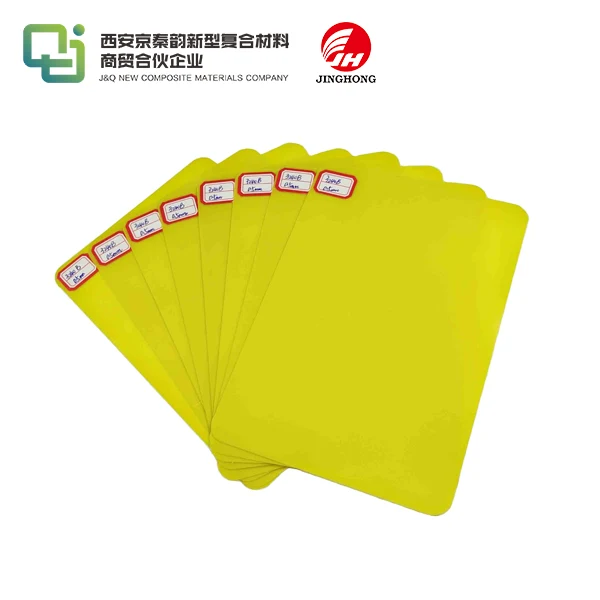
Cost-Performance Analysis of 3240 Epoxy Board
2026-01-20 17:20:26
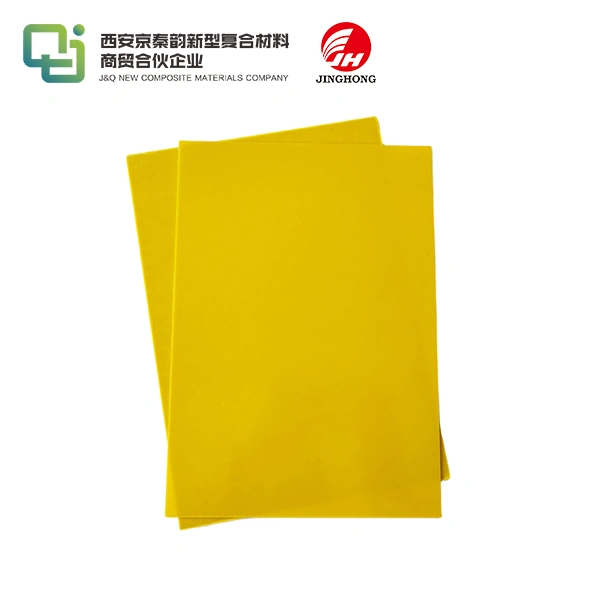
The 3240 epoxy board is a top option that offers outstanding value across a number of performance measures when assessing electrical insulation materials for industrial applications. According to this thorough cost-performance research, 3240 epoxy boards maintain competitive pricing structures while providing exceptional mechanical durability, electrical characteristics, and thermal stability. This glass fiber reinforced epoxy laminate's continued dominance in electronics production, power systems, and industrial machinery applications can be explained by considering the total cost of ownership, which includes material costs, processing efficiency, and long-term reliability.
Understanding 3240 Epoxy Board: Key Properties and Specifications
Material Composition and Manufacturing Process
The complex material composition of 3240 epoxy board is the cornerstone of its superior quality. Made using exact lamination procedures under regulated temperature and pressure settings, this high-performance laminate is composed of premium epoxy resin systems reinforced with carefully chosen E-glass textiles. Consistent fiber-to-resin ratios are guaranteed during the production process, which also removes voids and achieves equal density across the material thickness.
Strict process controls are used by high-quality manufacturers to adhere to international standards, such as NEMA G-10 and IEC 60893-3-2 regulations. Important factors including mechanical qualities, thermal endurance, and dielectric strength are governed by these standards. In order to get the best cross-linking and dimensional stability, the lamination process usually entails several layers of glass fabric coated with thermosetting epoxy resins and cured under particular heat profiles.
Critical Performance Parameters
It becomes clear from reading the technical requirements why this material performs so well in demanding situations. Strong electrical insulation capabilities are provided by the dielectric strength, which normally ranges from 14 to 20 kV/mm perpendicular to laminations. Even at high temperatures and humidity levels, volume resistivity values more than 10^14 ohm-cm guarantee negligible current leakage.
The mechanical properties exhibit remarkable adaptability to a wide range of temperatures. At constant operating temperatures up to 155°C, flexural strength values usually surpass 400 MPa parallel to laminations while preserving structural integrity. Stress concentrations in precision assemblies are decreased by the relatively low coefficient of thermal expansion. After a 24-hour immersion, water absorption properties remain below 0.5%, maintaining dimensional stability in humid settings.
Thickness Options and Application Considerations
Thicknesses ranging from 0.5mm to 50mm are available to meet a variety of application needs. While bigger parts offer structural support in high-voltage applications, thinner sheets are ideal for PCB substrates and precision spacers. Engineers may choose the ideal dimensions without sacrificing performance criteria since each thickness option preserves consistent electrical and mechanical qualities.
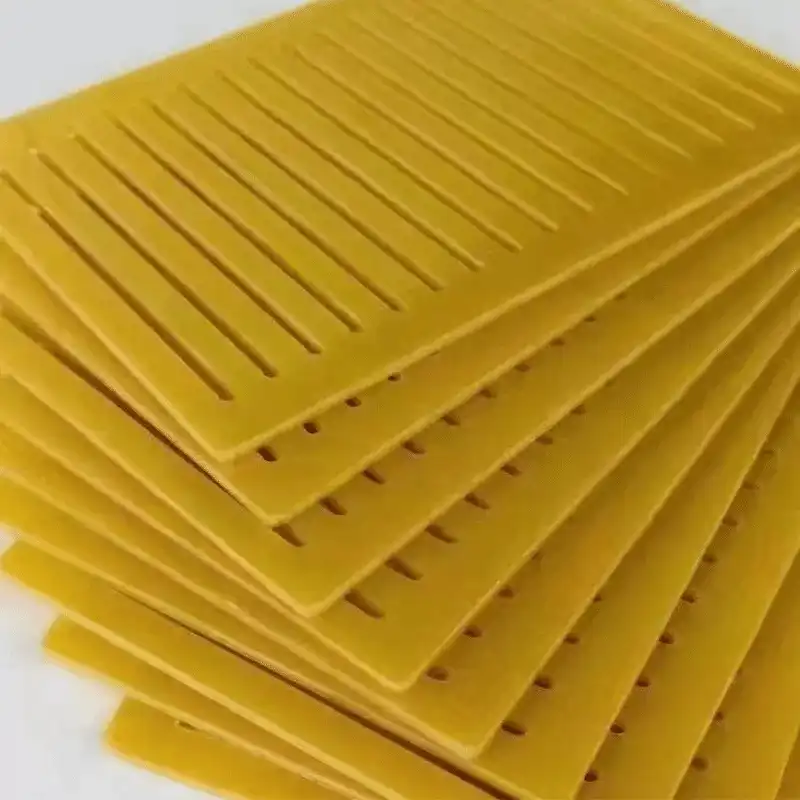
Because of its exceptional machinability, the material may be precisely fabricated using standard drilling, milling, and cutting techniques. Clean edges without delamination are produced by CNC machining, preserving structural integrity in intricate geometries. Custom configurations suited to particular application needs are made possible by this manufacturing flexibility, which also lowers secondary processing costs.
Comparative Analysis: 3240 Epoxy Board Versus Other Popular Materials
Performance Comparison with FR4 Materials
Optimal material selection for electrical insulation is guided by an understanding of relative performance advantages. When compared to conventional FR4 materials, glass fiber reinforced epoxy laminates have higher thermal durability, especially in applications involving continuous high temperatures. The improved glass transition temperature of high-quality epoxy boards offers superior dimensional stability under heat cycling settings, even though FR4 is superior in flame resistant applications.
In structural applications, mechanical features show clear benefits. Epoxy glass laminates are perfect for mechanical supports and load-bearing components because of their increased flexural strength and enhanced impact resistance. These materials are also favored by processing properties, such as smoother cut edges that reduce the need for secondary finishing and less tool wear during machining processes.
Cost-Effectiveness Analysis Against G10 Alternatives
Economic factors take into account the entire lifecycle value in addition to the original material expenses. Even though unit prices for various laminate kinds might seem similar, factors like processing efficiency and dependability have a big impact on project costs as a whole. In high-volume applications, the exceptional machinability of high-quality epoxy boards lowers production costs by cutting down on manufacturing time and tool replacement frequency.
Independent testing labs' long-term reliability studies show prolonged service life in challenging operational conditions. Improved system uptime and lower maintenance costs are directly correlated with decreased failure rates. These elements work together to provide an exceptional return on investment, especially in crucial applications where dependability cannot be sacrificed.
Durability and Longevity Assessment
Strong proof of material durability for 3240 epoxy board is provided by field performance data gathered from industrial installations and power production facilities. Under typical operating settings, minor property degradation is seen by accelerated aging tests that simulate decades of service. Stable performance under a variety of environmental exposures is ensured by UV resistance and chemical compatibility.
After thousands of temperature cycles, thermal cycling assessments show remarkable dimensional stability with little warpage or delamination. In precision assemblies, where dimensional tolerances are crucial throughout the product lifecycle, this stability is very useful. A sturdy material platform appropriate for demanding industrial applications is produced by the combination of electrical, mechanical, and environmental resistance.
Procurement Considerations for 3240 Epoxy Board
Supplier Evaluation and Quality Assurance
Building connections with qualified suppliers necessitates a thorough assessment of technical support resources, quality systems, and manufacturing capabilities. Prominent suppliers use cutting-edge quality management systems and uphold ISO 9001 certification to guarantee uniform product specifications. Incoming material inspection, in-process monitoring, and final product verification to published requirements are some examples of these systems.
Premium suppliers are distinguished from commodity providers by their technical support skills. The procurement relationship is greatly enhanced by having access to application engineering knowledge, material testing services, and custom formulation capabilities. In order to enhance design optimization and risk avoidance, suppliers with extensive testing laboratories can offer material characterization data, environmental testing results, and application-specific validation studies.
Lead Time Management and Inventory Planning
Effective project planning and inventory optimization are made possible by an understanding of supply chain dynamics. While special specifications could necessitate longer manufacturing schedules, standard thickness materials usually maintain shorter lead times. Effective resource allocation and the avoidance of project delays are made possible by close collaboration with suppliers to set reasonable delivery expectations.
Carrying costs and material availability needs are balanced by strategic inventory management. Based on consumption projections, many prosperous businesses set up blanket purchase agreements with planned releases. This strategy maintains the flexibility to modify delivery schedules in response to production demands while offering cost advantages through volume agreements.
Pricing Strategies and Cost Optimization
Successful procurement tactics take into account overall costs in addition to unit price negotiations. Standardizing on common thickness alternatives can lower inventory complexity and related carrying costs, while volume commitments frequently yield considerable pricing advantages. Additional cost advantages come from collaborating with suppliers to maximize sheet sizes and reduce waste during production.
Costs associated with freight and logistics play a big role in the overall delivered price, especially when it comes to international sourcing agreements. Transportation costs can be significantly decreased by combining shipments and improving packaging techniques. Regional distribution centers, which offer local inventory availability and competitive price structures, are provided by certain suppliers.
Optimizing Cost-Performance: How to Choose the Right 3240 Epoxy Board for Your Needs
Application-Specific Requirements Analysis
Analyzing application requirements thoroughly across mechanical, electrical, and environmental performance parameters for 3240 epoxy board is the first step in choosing the right material. Appropriate grade selection and thickness determination are guided by knowledge of operational voltage levels, temperature ranges, and mechanical loading situations. Long-term performance expectations are influenced by environmental conditions such as UV radiation, humidity, and chemical exposure.
Electrical requirements include factors like dielectric constant stability throughout frequency ranges in addition to dielectric strength and volume resistivity. Dissipation factor parameters must be carefully considered in high-frequency signal applications in order to reduce interference and signal loss. Thermal conductivity and corona resistance qualities that guarantee dependable operation under electrical stress situations may be given priority in power applications.
Supplier Evaluation and Grade Selection
Understanding available grades, customization options, and technical support resources is necessary for evaluating supplier offerings. High-end vendors provide a variety of resin systems that are tailored to meet particular performance needs, such better flame resistance, increased thermal endurance, or decreased water absorption properties. For certain applications that call for particular property combinations, custom formulations might be offered.
Here are the key evaluation criteria for supplier assessment:
• Quality certifications and testing capabilities demonstrate manufacturing consistency and technical competence through accredited laboratory facilities and comprehensive quality management systems
• Technical support resources and application engineering expertise provide valuable assistance during material selection, design optimization, and troubleshooting processes
• Inventory availability and delivery performance ensure reliable material supply that supports production schedules and project timelines
• Customization capabilities and minimum order quantities offer flexibility for specialized applications while maintaining economic viability for standard requirements
These evaluation criteria work together to identify suppliers capable of providing comprehensive material solutions that extend beyond simple product delivery. Successful partnerships develop when suppliers understand application requirements and contribute technical expertise to optimize material performance while managing costs effectively.
Risk Mitigation and Purchase Decision Framework
Using methodical decision-making frameworks optimizes cost-performance results while lowering procurement risks. Prototype testing, environmental validation, and production trials that confirm performance under real-world operating conditions should all be part of material qualifying procedures. Dual-source agreements sustain competitive pricing pressure while ensuring supply security.
Material certifications, test reports, and traceability records that support regulatory compliance and quality assurance goals are all included in the documentation requirements. Keeping thorough records facilitates efficient root cause analysis and helps efforts for continual improvement. Ongoing adherence to defined quality and delivery criteria is ensured by routine supplier audits and performance evaluations.
J&Q: Your Trusted 3240 Epoxy Board Solutions Partner
Our business for 3240 epoxy board has made a name for itself as a leading supplier of superior electrical insulating materials by leveraging more than 20 years of manufacturing excellence and more than 10 years of experience in international trade. We are able to provide comprehensive solutions that satisfy the most stringent application criteria because of our vast experience and long-standing relationships with both domestic and foreign trading organizations.
Our particular focus on epoxy glass laminates has produced a wide range of products with a variety of thickness options and requirements. While keeping low price structures that complement our customers' cost minimization goals, advanced manufacturing capabilities guarantee continuous quality. Internationally compliant quality management systems offer the traceability and dependability needed for vital applications in a variety of sectors.
For clients looking for faster procurement procedures, the integration of our in-house logistics company offers a special benefit. By optimizing freight consolidation and inventory management, this one-stop service strategy reduces overall logistics costs while removing coordination issues. Regardless of project location or urgency requirements, our global logistics capabilities guarantee dependable delivery performance.
Application engineering know-how, material testing skills, and custom formulation services that cater to particular performance needs are examples of technical support resources. During the design stage, our team closely collaborates with clients to optimize processing parameters and material selection. Throughout the project lifespan, this cooperative method finds opportunities for cost reduction while guaranteeing excellent performance.
Conclusion
Epoxy glass laminates have strong benefits that go much beyond the original cost of the materials, according to a thorough cost-performance analysis. These materials provide exceptional value propositions in a variety of industrial applications when electrical, mechanical, and thermal performance criteria are carefully evaluated. They are the best option for demanding mechanical and electrical applications due to their competitive pricing structures, dependable performance qualities, and outstanding machinability.
Strategic procurement methods that prioritize supplier relationships, quality control, and overall cost optimization maximize value while guaranteeing a consistent supply of materials. Making well-informed decisions that support operational and financial goals is made possible by having a thorough understanding of the expenses associated with the entire lifespan, including processing efficiency, dependability aspects, and long-term performance.
FAQ
What makes 3240 epoxy board superior to conventional epoxy materials?
Advanced glass fiber reinforcement and optimized resin systems provide enhanced electrical insulation, improved mechanical strength, and superior thermal stability compared to traditional epoxy materials. The manufacturing process ensures consistent quality and dimensional stability across all thickness options.
How do I select the appropriate thickness for my specific application?
Thickness selection depends on electrical voltage requirements, mechanical loading conditions, and processing constraints. Thinner materials suit precision applications, while thicker sections provide structural support and enhanced electrical isolation for high-voltage applications.
What are typical lead times for bulk orders of epoxy glass laminates?
Standard thickness materials typically ship within 2-3 weeks, while custom specifications may require 4-6 weeks depending on complexity and order quantities. Establishing blanket purchase agreements can significantly reduce delivery times for repeat requirements.
Can these materials be machined using conventional equipment?
Yes, these laminates machine easily using standard cutting, drilling, and milling equipment. Carbide tooling provides optimal results, producing clean edges without delamination while maintaining excellent dimensional accuracy.
What quality certifications should I expect from reputable suppliers?
Quality suppliers maintain ISO 9001 certification and provide materials meeting NEMA G-10 and IEC standards. Comprehensive test reports documenting electrical, mechanical, and thermal properties should accompany each shipment.
Partner with J&Q for Premium 3240 Epoxy Board Solutions
Discover how our expertise in electrical insulation materials can optimize your next project's performance and cost-effectiveness. As a leading 3240 epoxy board manufacturer, we combine decades of manufacturing excellence with comprehensive technical support to deliver solutions tailored to your specific requirements. Our extensive inventory, rapid delivery capabilities, and competitive pricing structures ensure your projects stay on schedule and within budget. Contact our technical team at info@jhd-material.com to discuss your application requirements and receive detailed product specifications.
References
National Electrical Manufacturers Association, "Industrial Laminated Thermosetting Products Standards Publication NEMA LI 1-2019," NEMA Standards Publication, 2019.
International Electrotechnical Commission, "Specification for Industrial Rigid Laminated Sheets Based on Thermosetting Resins for Electrical Purposes," IEC 60893-3-2:2003+AMD1:2009.
Institute of Electrical and Electronics Engineers, "Standard Test Methods for Electrical Insulating Materials," IEEE Standards Association, 2018.
American Society for Testing and Materials, "Standard Test Methods for Properties of Electrical Insulating Materials," ASTM International, 2020.
Underwriters Laboratories, "Standard for Safety - Electrical Insulating Materials," UL 746A-2019, Underwriters Laboratories Inc., 2019.
Electric Power Research Institute, "Guidelines for Electrical Insulation Material Selection in High Voltage Applications," EPRI Technical Report, 2021.
_1732777843529.webp)