Dealing with Burrs and Rough Edges in Machined 3240 Epoxy Boards
2026-07-02 17:27:17
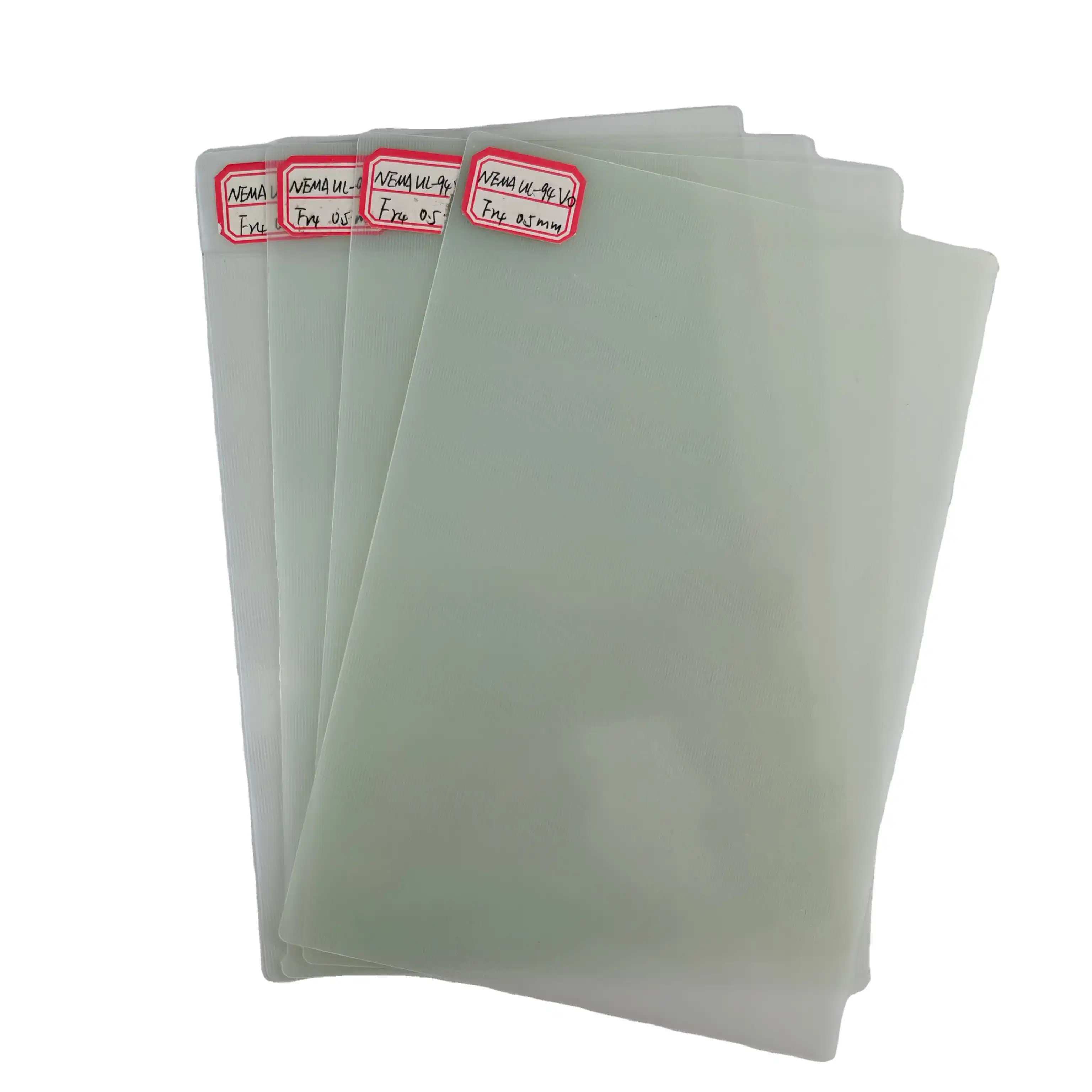
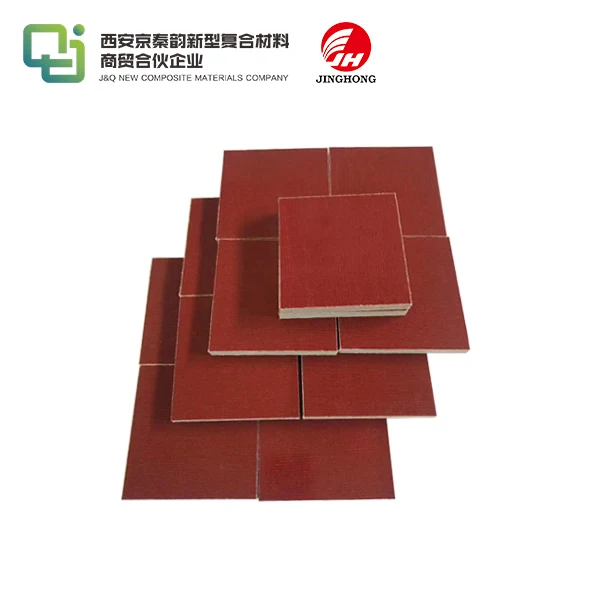
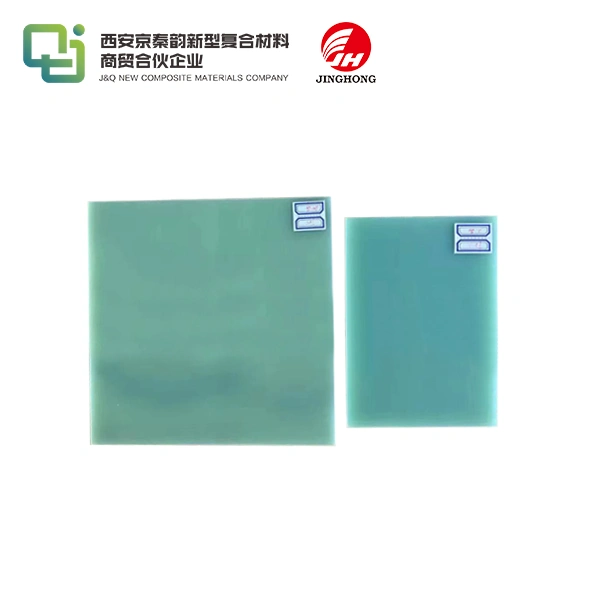
One of the most constant quality problems when cutting 3240 epoxy sheet for use as electrical shielding is getting burrs and rough edges. Both the function and the appearance of final parts are compromised by these flaws, which include sharp extensions and uneven surfaces along cut edges. It is very important for production teams that use epoxy laminates in switches, PCB supports, and motor insulation systems to know how to stop and get rid of these flaws. By using the right machining methods, finishing methods, and source choices, getting lines that are always clean stops being a problem and starts being a reliable, regular process.
Understanding Burrs and Rough Edges in Epoxy Laminates
What Causes Burr Formation During Machining
When cutting moves the material around instead of taking it completely, a burr is formed. The glass fiber support in epoxy composites doesn't fight cutting as well as the resin matrix does, which makes the stress distribution uneven at the cut zone. When the machine factors don't match the properties of the material, like when you use too fast of feed rates or dull cutting tools, the fibers tear instead of shear, leaving behind frayed edges and pieces that stick out.
The shape of the tool is very important for the quality of the edge. Cutting tools with bad rake angles or worn edges cause too much heat and friction, which briefly softens the epoxy resin and lets it deform instead of breaking neatly. This makes a smeared surface with fibers that are only partly divided. As the material cools, the fibers harden into burrs. The temperature and amount of wetness in the material, as well as other environmental factors, also affect how the composite reacts to mechanical stress during cutting processes.
Impact of Burrs on Component Performance
Rough edges and burrs have a direct effect on how well electrical shielding works. Sharp projections can cause localized field concentrations that can start a partial discharge, especially in high-voltage settings like arc chutes and transformer barriers. Even small surface flaws can make the effective creepage distance between conductive elements smaller, which lowers the safety gaps in switchgear systems.
Burrs make it harder to accurately assemble things from a technical point of view. When burr measurements add random changes in thickness, parts that should fit together tightly may stick together or leave gaps. Burrs make it hard for machines to feed parts and place them correctly, which extends cycle times and raises the rate of failure. The way something looks is also important—procurement teams that are judging the quality of suppliers look at how well they can machine by how well the edges are finished. This makes burr control a clear sign of how well someone can make something.
Material Properties That Influence Edge Quality
Standard epoxy laminates have a Class B temperature grade, which means that the resin system stays stiff at room temperature but can break easily when put under a lot of mechanical stress. Because of this brittleness and the rough nature of the glass fiber support, certain cutting methods are needed. Changes in sheet density, which is usually between 1.90 and 2.0 g/cm³, affect how hard it is to cut and how chips move out of the way during grinding.
How well the resin has cured has a big effect on the quality of the edges. When sheets are properly hardened, their hardness is the same across their entire cross-section. This makes chip formation predictable. If the material isn't fully dried, it might act gummy when it's cut, with resin spreading across the cut surfaces and fibers pulling out instead of splitting neatly. Controlled hot-pressing processes from good sources make sure that all the polymers are fully incorporated, which makes laminates that can be machined reliably at thicknesses ranging from 0.5 mm to 50 mm and beyond.
Analyzing the Technical Properties Affecting Machining Behavior
Mechanical Characteristics and Cutting Response
These laminates can survive strong cutting forces without breaking because their tensile strength is over 300 MPa and their bending strength is over 340 MPa. But this mechanical toughness also means that cutting tools need to keep their sharp edges and the right shape to start clean shear deformation instead of compressive deformation. Cutting resistance changes depending on the direction of the anisotropic structure, which is made up of glass strands that are mostly parallel to the laminate planes.
Knowing these mechanical traits helps engineering teams choose the right settings and tools. When working with rough fiber composites, carbide cutting tools keep their sharp edges longer than high-speed steel ones. This means that burr-causing tool wear happens less often. Cutting speeds between 1,500 and 3,000 surface feet per minute usually give the best results. This is because they balance the rate of material removal with the amount of heat that is produced, which could soften the resin matrix.
Comparing Machining Characteristics Across Laminate Types
Even though 3240 epoxy sheets are similar to FR4 and G10 materials in some ways, the way they are machined is affected by the different resin formulations. The flame-retardant ingredients in FR4 can make it a little more flimsy, which can make it easier to chip the edges but sometimes make it easier to break when cutting. In normal electrical-grade laminates, the phenolic-modified epoxy system strikes a balance between being tough enough to keep chips from happening and being brittle enough to allow clean fiber cutting.
Differences in material grade are also important. Natural-colored sheets that meet GB/T1303.1-1998 standards should have the same amount of glue and density in all of their production runs. Changes in these factors lead to unpredictable cutting behavior, with some sheets making clean cuts and others from the same order making too many burrs. To make sure that big orders are all machined the same way, procurement specs should clearly call for batch consistency testing.
Interpreting Technical Datasheets for Machining Planning
Technical standards give us important information about how the process should work. Low water absorption rates (below 0.1% of the material's weight) mean that its dimensions will stay the same during storage and machining. This is because moisture-related growth could change how the material cuts. Volume resistance values and breakdown voltage scores show how good the resin is and how well it has cured. These are measurements that show how the material's mechanical properties stay the same across its cross-section.
Engineering teams should look at more than just the electrical grades on source datasheets; they should also look at the results of any mechanical tests that were done. Data on delamination resistance shows how strong the bonds between layers are, which lets you guess whether polished edges will stay together or show layer separation. Chemical resistance tests make sure that the material is safe to use with the coolants and cleaning liquids that are used during the machining and finishing processes. This makes sure that the methods used for edge treatment won't damage the material's qualities.
Effective Methods to Remove Burrs and Smooth Rough Edges
Manual and Mechanical Finishing Approaches
For prototypes and repairs, deburring by hand with fine-grit sandpaper paper is still popular. Grits between 320 and 600 work well for cutting without removing too much material, but this method needs trained workers and doesn't always produce the same results at different production rates. Because glass-reinforced composites are flimsy, using too much pressure when grinding by hand can chip the edges or separate the layers, which needs a delicate touch that is hard to standardize.
Better consistency is achieved when mechanical deburring is done on 3240 epoxy sheets with rotating tools that have rough wheels or brushes. When used at controlled feed rates, belt sanders with fine ceramic or aluminum oxide belts get rid of burrs well. Keeping the touch pressure steady is the hardest part. If it's too light, burrs stay, and if it's too heavy, new edge damage happens. For large-scale production, this problem can be solved by edge-finishing tools with programmable factors that keep the quality of the edges the same throughout the whole production run.
Advanced Precision Finishing Techniques
For important jobs, precision grinding with wheels that are coated in diamond gives the edge better quality. The very sharp, very hard abrasive particles cut through resin and glass fibers neatly without making too much heat, so the qualities of the materials are kept all the way to the edge. Using coolant while grinding stops the material from breaking down at high temperatures and gets rid of any debris that could scratch the final surface. This method works especially well for bigger sheets where straight and upright edges are important for aligning the parts.
A new method for getting rid of burrs in epoxy resins is laser ablation. Short-pulse lasers preferentially vaporize sticking fibers and resin burrs without changing the main material. This makes the edges very smooth with little heat impact. Laser systems are very accurate, so they can selectively remove burrs from small and complicated shapes that are hard for mechanical methods to reach. The initial costs are still higher than those of traditional finishing tools, so this method works best for expensive parts where the quality of the edges directly affects how well they work.
Optimizing Machining Parameters to Minimize Burrs
It is more effective to avoid burrs while cutting than to remove them later. The process starts with choosing the right tools. For example, using routers or end mills with sharp carbide cutting edges and the right helix angles lowers the cutting forces and heat production. Manufacturers of tools now make shapes that are specially made for composite materials. These shapes have diamond-coated sides and special chip-breaker designs.
Changes to the feed rate and spindle speed have a big effect on the beauty of the edges. Cutting edges can work for longer distances when the feed rate is slower, which makes the slicing action smoother. When the spindle speed is higher than what the tool maker recommends, the cutting forces per tooth contact go down. This makes it less likely for material to tear instead of cut. Support fibers during through-cutting by putting backing plates or spare layers under the workpiece. This stops release burrs on the exit side of cuts.
Case Studies: Successful Burr Control in Production Environments
Transformer Manufacturer Improves Coil Insulation Quality
A company that makes power equipment for distribution transformers had failure rates of more than 12% because of burrs on 3240 epoxy sheets epoxy barriers that interfered with the building process. Their purchasing team found materials that met electricity requirements, but they hadn't checked the flatness and quality of the surfaces of the sheets that they got from sources. By switching to a source with stronger dimensional controls, the difference in the material that came in was cut down, and using special carbide tools for epoxy composites during CNC routing operations stopped burrs from forming.
The maker also changed the order of operations for cutting so that all routing operations were done before the final dimensioning cuts. This method separated any processes that could cause burrs early on in the process. This way, edges could be cleaned up in the finishing steps as part of normal dimension control. Improvements in edge quality cut assembly time by 18% and stopped insulation failures during high-potential tests. This shows that controlling burrs has a direct effect on production costs and product reliability.
Automotive Supplier Achieves Consistent Battery Barrier Quality
An automobile tier-one provider that made insulation for electric vehicle battery packs had trouble keeping the edges consistent across all three shifts. When deburring by hand, different machine workers used different methods, which led to differences in size that made it harder to automate the building of barrier frames. The engineering team knew that differences in user skill led to differences in quality, so they bought programmable edge-finishing tools that made the deburring process more consistent.
They came up with finishing factors based on ranges of sheet thickness, making programs that could be used again and again and that new operators could run without a lot of training. The difference in edge dimensions dropped from ±0.3mm to ±0.08mm, which was within the tolerances of the assembly tools. The uniform process cut the time it took to finish each part by 35%, which increased output and quality at the same time. This result paid for the initial investment within eight months.
Procurement Insights: Sourcing Quality Epoxy Laminates and Finishing Services
Evaluating Supplier Capabilities and Certifications
There's more to choosing providers than just comparing prices per kilogram. Quality standards, such as ISO 9001, show that the process is controlled in a way that keeps differences in material qualities between batches to a minimum. Suppliers who work with companies that make electrical equipment should show that they follow safety rules by making sure their laminates meet the right levels of dielectric strength and heat protection for the end use.
Suppliers who work as partners for 3240 epoxy sheets are different from those who just fill orders because they offer technical help. The best providers have applications engineers on staff who know how to deal with problems that come up during machining and can suggest grade choices, cutting strategies, and finishing methods based on the needs of each component. They give engineering teams full technical datasheets with information on chemical resistance, mechanical qualities, and thermal characteristics that they need to build new processes and figure out why things went wrong.
Custom Sizing and Value-Added Services
Precision cutting service providers send materials that are already cut to almost exact dimensions, which cuts down on the time and materials that customers have to spend on milling. This feature comes in handy for testing and small production runs where it wouldn't be cost-effective to set up in-house machining processes. Some providers also offer edge-finishing services, which means they send parts with smooth, burr-free edges that are ready to be put together. This means that the deburring task is basically given to experts with the right tools.
Strategies for buying things are affected by minimum order amounts and wait times. This is especially true for projects with tight deadlines or limited storage space. Suppliers who keep a lot of stock on hand can meet pressing needs without the long lead times that come with making things to order. MOQ policies that are flexible can fit the prototype development and pilot production stages. This lets engineering teams test designs before committing to large-scale purchases.
Building Long-Term Supplier Relationships
For quality to stay the same across multiple orders, providers must keep their manufacturing methods and raw material sources stable. Long-term relationships urge suppliers to put money into learning about specific customer needs and keeping a collection of specs that are often bought. When problems appear in the process, established relationships make it easier to talk about them and figure out what's wrong quickly, which keeps production plans from getting thrown off.
Beyond the price of the materials, logistics skills affect the total cost of purchase. International purchases are made easier by suppliers who have established shipping networks and know how to deal with customs. This cuts down on wait times and prevents paperwork mistakes that cause shipments to be late. There are some sellers with logistics departments that handle coordinating transportation. This lets procurement teams focus on technical standards instead of managing freight.
Conclusion
To control burrs and rough edges during machining of 3240 epoxy sheets epoxy laminate, you need to know how the material works, use the right cutting strategies, and pick finishing methods that meet quality standards. Because of their uneven structure, brittleness, and abrasiveness, glass-reinforced epoxy composites need different tools and settings for cutting than metal or plastic that isn't reinforced. Preventing burrs by using the right cutting conditions works better than deburring after the fact, but finishing processes are still needed to get the edge quality needed for electrical and mechanical uses. Strategically choosing a source completes the quality equation by making sure that the properties of the materials stay the same so that the results of machining can be predicted across all output amounts.
FAQ
How can we minimize burr formation when machining epoxy sheets?
The best way to improve the quality of the first edge is to keep the carbide cutting tools that were made for composite materials sharp. Depending on the thickness of the material, the best feed rates and spinning speeds are usually slower feeds and faster speeds that stay within the tool's limits. During through-cutting of 3240 epoxy sheets, use backing boards to hold the threads on the exit side and keep them from coming apart. When you fix a piece of work correctly, you stop the vibrations that cause rough edges.
Which finishing methods preserve dielectric strength near machined edges?
When used properly, mechanical methods that use fine abrasives work well as long as they don't create too much heat or cause layers to separate. Precision grinding with cooling keeps the qualities of the material by stopping it from breaking down at high temperatures. Do not use harsh chemicals that could get between the layers of the laminate or damage the qualities of the glue. Laser ablation gives the best results in high-voltage uses that need to be perfect because the quality of the edges affects how well the insulation works.
What specifications should we require when sourcing pre-cut epoxy laminates?
In addition to numerical limits, you should also list the maximum edge roughness values using standard measurements for surface finish. Need to be free of fiber pullout and delamination along the sides of the cuts. Ask for proof that the cutting process doesn't introduce contamination or change the dielectric qualities of materials that are a certain distance from the sides. Before agreeing to large orders, samples of the production methods should be sent with quotes so that they can be carefully looked over.
Partner With J&Q for Premium Epoxy Laminate Solutions
J&Q can help you with your buying needs because they have more than twenty years of experience making epoxy laminates and more than ten years of experience trading internationally. Our technical team knows the problems that companies that make electrical equipment have with cutting, and they can provide 3240 epoxy sheet materials that are made to strict standards that reduce the need for finishing later on. During production, we keep a close eye on quality to make sure that the density stays the same, the plastic cures completely, and the dimensions are kept within tight ranges that make cutting predictable.
Our combined logistics skills allow us to provide true one-stop service, from placing your order to delivering it to your building. Our industrial freedom lets us meet the needs of both small prototypes and large-scale production runs, whether you need standard sheet stock or precision-cut blanks with finished edges. Email our applications engineering team at info@jhd-material.com to talk about your particular part needs and get expert advice on how to choose the grade, how to machine it, and how to finish it. You can see our full selection of electrical insulation materials and value-added processing services at jhd-material.com. These services are meant to make your industrial processes more efficient.
References
Harper, C.A. (2000). Modern Plastics Handbook. McGraw-Hill Professional Publishing.
Mazumdar, S.K. (2001). Composites Manufacturing: Materials, Product, and Process Engineering. CRC Press.
Peters, S.T. (1998). Handbook of Composites (2nd ed.). Chapman & Hall.
Trostmann, E. (1990). Water Hydraulics Control Technology. Marcel Dekker, Inc.
ASM International Handbook Committee (2003). Composites: Engineered Materials Handbook Volume 1. ASM International.
Chawla, K.K. (2012). Composite Materials: Science and Engineering (3rd ed.). Springer Science & Business Media.