Dielectric Failure in Epoxy Resin Sheets: Causes & Fix
2026-07-13 17:30:35
Dielectric failure in epoxy resin sheets is a major loss of insulating ability under electrical stress. This can cause expensive equipment harm and safety risks in a wide range of industry settings. This failure shows up when the material can't stand up to voltage anymore, which can lead to current leaks, arcing, or a full puncture. Engineering teams can use focused prevention tactics when they know what the root causes are, such as impurities in materials, inconsistent production, and damage to the environment. Manufacturers can greatly extend the useful life of these important insulating parts while keeping their electrical integrity in harsh production settings by carefully choosing the materials they use, thoroughly checking the suppliers they work with, and following strict upkeep procedures.
Understanding Dielectric Failure in Epoxy Resin Sheets
What Dielectric Breakdown Actually Means
When an insulating material stops blocking the flow of electricity when voltage is applied, it changes from an insulator to a conductor. This is called dielectric failure. This breakdown happens quickly—the material's molecular structure changes when there is too much electric field stress, making paths for electricity to flow through carbonization or ionic migration. Dielectric puncture happens very quickly once the epoxy resin sheets hit their breaking point, which is measured in kilovolts per millimeter. This is different from slow wear. The event quickly releases stored energy, often making pops that can be heard, arcing that can be seen, and burn marks that show that the insulation has been completely broken.
Common Failure Modes Observed in Industrial Settings
Partial discharge, which happens in tiny holes in the plastic structure, is the most sneaky sign of failure. Localized electrical discharges slowly break down the resin matrix, making electrical trees, which are spreading pathways that spread until the matrix is completely broken down. When conductive particles build up on the surfaces of materials, they create leaking paths that cross insulation barriers when there is a lot of moisture in the air. This is called surface tracking. The most dramatic type of failure happens when the voltage is higher than the material's dielectric strength, making lasting conductor lines through the thickness of the sheet. When resistive heating from leaky currents speeds up material decay, insulation resistance goes down until catastrophic failure happens, this is called thermal runaway breakdown.
How Material Types Influence Dielectric Performance
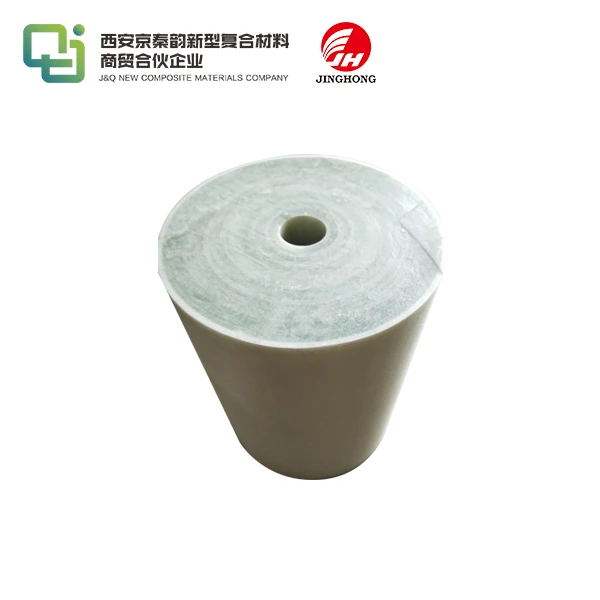
When FR4 epoxy resin sheets are strengthened with woven glass cloth, they have higher dielectric strength (20 kV/mm) than phenolic laminates made from paper. Dimensional stability and resistance to moisture are provided by the glass fiber support. However, grinding produces rough fiberglass dust that needs special tools. 3240 epoxy resin sheets with continuous glass filament reinforcement work great in high-temperature situations up to 155°C (Class F insulation), which makes them perfect for parts of transformers that are stressed by both heat and electricity. Standard epoxy resin laminates that don't have flame retardants have great engineering properties, but they don't have the UL94 V-0 self-extinguishing qualities that are needed for electronics. The way the plastic is made has a big impact on how well it works. For example, higher crosslink density makes it more resistant to heat, but it may also make it more brittle. Brominated flame retardants make it safer in case of fire, but they might not be environmentally friendly.
Root Causes of Dielectric Failure in Epoxy Resin Sheets
Material Composition and Manufacturing Variables
Electrical protection ability is directly related to the chemicals used to make epoxy resin systems. Incomplete healing leaves behind molecules that are not cross-linked and can move when electrical stress is applied, making paths that conduct electricity. Changes in the resin-to-hardener ratio during mixing lead to uneven crosslink density, which creates weak spots with lower breakdown voltage. Ionic impurities are introduced by mold release agents, particulate matter, or water exposure during lamination. These impurities concentrate electric fields and speed up degradation. Sheet thickness consistency is very important—tolerance changes greater than ±0.1mm create an uneven electric field distribution that puts more voltage stress on thinner areas, which is where breakdown usually starts.
Both mechanical longevity and dielectric uniformity are affected by the amount and direction of glass fibers. Performance isn't consistent when some areas have too much resin or not enough resin. Dry spots have lower breaking power. The end qualities are greatly affected by the curing temperature profile. If you don't do enough post-cure heat treatment, internal stresses and unreacted epoxy groups are left behind, which weakens the material's long-term stability. Delamination between the resin and the reinforcing is an example of a flaw in the manufacturing process that creates air gaps with very low dielectric constants. These gaps become breakdown sites when voltage stress is applied.
Environmental Degradation Factors
The biggest external threat to dielectric stability is water absorption. Even materials that don't normally take in much water (less than 0.15%) lose their performance when they are exposed to high dampness for a long time. As water molecules get into the resin matrix, they lower the breakdown voltage and the volume resistance by several orders of magnitude. The water that is taken makes electrical paths between the glass fibers and helps the epoxy backbone break down, especially when heat and electricity are applied at the same time.
Temperature change causes mechanical wear in epoxy resin sheet because the resin and glass reinforcement expand and contract at different rates. When the laminate goes through repeated cycles of expanding and contracting, tiny cracks appear that spread through the thickness of the laminate. These cracks let water in and weaken the structure. When exposed to UV rays, the surface oxidizes and the chains in the resin structure split, making the surface layers weak and easy to crack. When installing something, mechanical stress can be caused by over-tightened fasteners, contact points with sharp edges, or bending caused by vibrations. This stress builds up in places where electrical breakdown is most likely to happen at working power.
Quality Control Gaps During Procurement
When buying teams don't have strict methods for checking suppliers, unknown flaws in the manufacturing process pose big risks. Visual inspection alone can't find internal holes, delamination, or uneven healing; these problems can only be seen during electrical stress testing. Suppliers who try to save money by using shorter drying times or lower-quality raw materials make sheets that meet the size requirements but don't work as well as they should in terms of dielectric performance. It's not clear how different batches are until after a lot of mistakes have happened in the field. This shows how important it is to do more than just basic dimensional checks on arriving quality.
Sometimes fake or mislabeled materials get into supply lines. For example, standard-grade laminates are falsely certified as meeting better standards. If you don't know about the supplier's real testing protocols and quality control systems, certificates of compliance don't mean much. The way things are stored and moved during transport can change their state. For example, if they are exposed to high temperatures or dirty warehouses for a long time, they will not work as well before they are installed. When things go wrong, procurement teams can't figure out if the problems are caused by bad materials, bad installation, or application mismatches because they don't have tracking paperwork.
Effective Fixes and Prevention Strategies for Dielectric Failure
Installation Best Practices to Preserve Electrical Integrity
Properly handling materials starts a long time before they are installed. To keep them from absorbing moisture, climate-controlled storage keeps the temperature between 15°C and 25°C and the relative humidity below 60%. Acclimatization times let sheets reach room temperature before they are machined, which stops condensation that weakens surface insulation. When cutting, you need carbide or diamond-coated tools to keep the edges from breaking and the material from delaminating. To keep the material clean and the user healthy from fiberglass particles, you need dust extraction systems.
Using suitable epoxy coats or edge bands to seal the edges after machining stops water from getting in through the uncovered glass fiber bundles. Installation torque specifications must be followed to the letter. If screws are over-tightened, stress concentration spots form that cause cracks when temperatures change. Isopropyl alcohol used for surface cleaning gets rid of contaminants before assembly, making sure that the contacts are clean and won't track. Keeping the right distance between high-voltage wires stops partial discharges from starting at sharp edges or corners where the electric field is too strong.
Strategic Material Selection and Supplier Partnership
Buying epoxy resin sheet from approved companies with clear quality control methods greatly lowers the risk of purchasing substandard materials. UL recognition proves that electrical performance tests are done consistently, and ISO 9001 certification shows that processes are controlled in a planned way. To make more accurate comparisons than just looking at general datasheets, you can ask for material test results that show real measures of dielectric strength, water absorption rates, and flame resistance ratings for different production batches. Knowing where the raw materials come from, when they need to be cured, and how often quality checks are done during the process helps you tell the difference between trusted partners and commodity sellers.
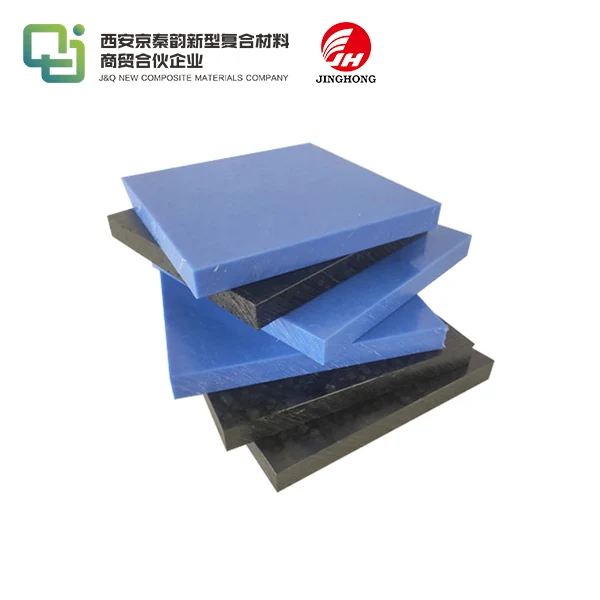
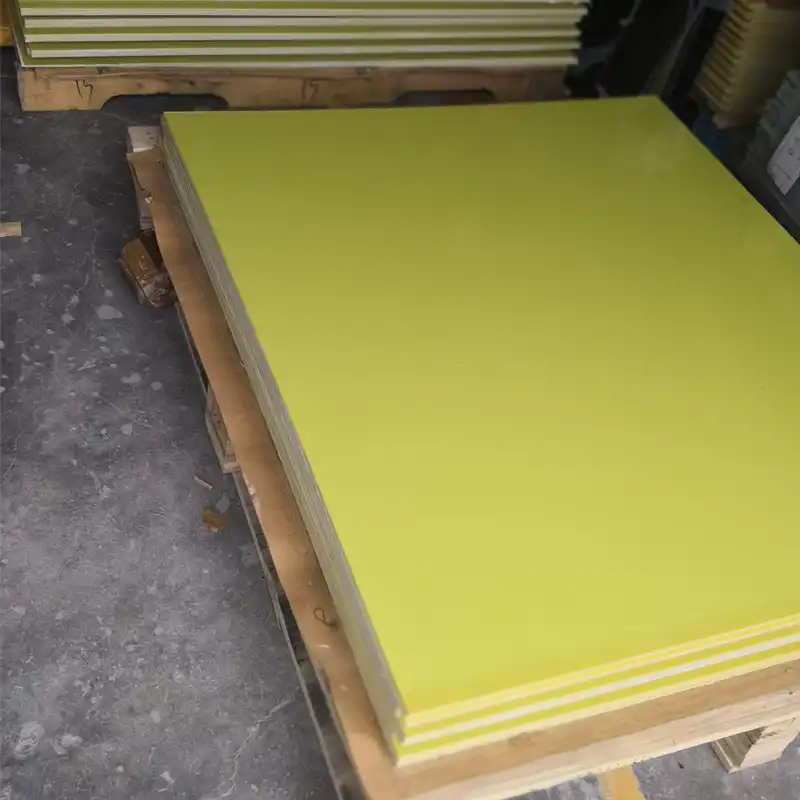
Aligning specifications with application needs stops both under-engineering and cost increases that aren't needed. High-Tg FR4 types (glass transition temperature above 170°C) are used in places like layered PCBs and cars where regular grades would soften and separate. Color coding helps make sure the parts are put together correctly. For example, natural yellowish-green means normal FR4, and black pigmented sheets block light for uses that need it without changing the electrical qualities. Precision thickness standards (±0.05mm), large-format sheets, and pre-cut blanks are some of the customization options that make manufacturing easier while keeping the same dimensions.
Proactive Maintenance and Condition Monitoring
Regular eye inspection finds early signs of wear and tear before the whole thing breaks down. Surface crazing is a sign of UV damage or mechanical stress, while discoloration patterns are a sign of too much heat. Chalky layers show that there is moisture in the material, and physical warping shows that the material wasn't chosen correctly for the temperature. Megohm meters are used to check the insulation resistance on a regular basis. Readings below 10–12 ohms indicate that the electrical performance is getting worse, and should be looked into right away.
During operation, thermal imaging scans show spikes that mean current is leaking or connections are loose, putting stress on the insulator materials. Corona activity can be found in insulation systems using partial discharge monitoring tools. This lets repair workers do preventative work before something breaks down. Setting standard data during commissioning gives trend analysis points of comparison. Scheduled replacement times based on the number of hours used and the severity of the environment's exposure stop important apps from failing without warning. Recording what was found during inspections, tests, and maintenance tasks builds institutional knowledge that helps choose and use materials better all the time.
Procurement Guidance: How to Choose and Source High-Quality Epoxy Resin Sheets
Critical Specifications Alignment with Application Demands
Dielectric strength specifications go beyond simple kV/mm numbers and need to be carefully interpreted. The way the tests are done is important because the values found in transformer oil are different from the values found in air. Usually, testing in oil gives 20–30% lower values that are more accurate of how epoxy resin sheets will work in real life. In a straight relationship, thickness affects breakdown voltage, which is why tolerance uniformity is so important. Sheet consistency within ±0.08mm makes sure that the insulation works the same way in every production batch. This stops thin spots from forming in certain areas, which can lead to failure.
The needs for Mechanical property requirements are very different depending on the purpose. Flexural strength of more than 340 MPa is good for structural loads in generator slot wedges and motor brackets. Lower-strength grades are fine for shields that keep static electricity away. Color choice isn't just for looks; for example, black pigmented sheets stop light from passing through optical sensor systems, while natural green coloring shows that the FR4 is made of standard materials. To check a flame rating, you need real UL certification, not just vague claims. Real UL94 V-0 materials should have labels that are easy to read and certification numbers that can be tracked.
Supplier Evaluation Beyond Price Comparison
Pricing alone is not enough to show how reliable a provider is; you also need to look at their Manufacturing capability assessment. Find out how big the lamination press can hold, how accurate the temperature control is during sealing processes, and how to measure thickness. Suppliers who use automated thickness tracking systems during production show a level of attention to quality that can't be matched by checking by hand. Customization options like CNC grinding, edge sealing, and measurement pre-cutting increase value by combining steps in the supply chain and lowering the need for internal processing.
Certification portfolios show how knowledgeable you are about the market and how to follow the rules. Documentation that shows RoHS compliance shows that environmental rules that affect foreign technology supply chains are being paid attention to. Registration under ISO 9001 shows that quality management is organized, but the level of detail in audits ranges between certification groups. Ask for references from customers who work in similar fields and for similar purposes, and then make sure that those references are happy with how consistent the materials are and how quickly technical help responds. Minimum order number flexibility lets you work on prototypes without having to buy too much inventory, and bulk buying deals keep prices stable for planning high-volume production.
Logistics Optimization for Global Supply Chain Continuity
In order to evaluate a seller, it is important to look at their past Lead time reliability performance records. This is because lead time dependability directly affects production scheduling. When compared to direct plant orders, suppliers who keep inventory in regional distribution centers cut down on shipping time and freight costs. Integrated transportation skills make it easier to handle paperwork, clear customs, and coordinate the last mile of delivery. When packages are late, there is only one person to blame, so no one can get away with it. The quality of the packaging affects the state of the goods when they arrive. Moisture-barrier wrapping, edge protection, and rigid crates keep things from getting damaged during foreign shipping.
Strategic inventory positioning combines the costs of holding on to items with the risk of running out. Setting safety stock levels based on changes in consumption rates and consistent source wait times stops production from stopping when demand suddenly rises. Vendor-managed inventory plans give suppliers the tracking duty while still making sure materials are available. However, they need strong relationships based on trust and sharing data. Long-term supply deals that include volume promises protect buyers with better prices and more space when materials are in short supply. This keeps costs stable over long periods of time for planning purposes.
Conclusion
Dielectric failure in epoxy resin sheet laminates is caused by material, manufacturing, and external factors that are all linked and need to be carefully considered throughout the whole process of buying and using the laminates. Breakdown risks can be kept to a minimum by choosing materials that are proactive and fit the working conditions, carefully screening suppliers with a focus on quality systems over price, and following strict installation procedures. Epoxy resin glass materials that are properly defined have performance benefits like better dielectric strength, thermal stability, and resistance to moisture. These benefits make them widely used in electrical shielding applications, even though they cost more than cheaper options. By using condition tracking routines and preventive maintenance schedules, engineering teams can greatly increase the useful life of materials and find signs of wear and tear before they become catastrophic and stop operations.
FAQ
How Can You Detect Early Signs of Dielectric Failure?
A visual review shows a number of danger signs that should be seen before the whole thing breaks down. Surface darkening, especially areas that are brown or black, could mean that the device is getting too hot from current leaks or corona activity. Fine cracks that spread out from bolt holes or tips show where mechanical stress is high and electrical breakdown starts most easily. White chalky layers show that moisture has gotten into the insulation and is weakening it. Electrical tests with megohm meters shows that performance is getting worse, with insulation resistance falling below the limits set by the manufacturer. Using thermal imaging during operation to find hotspots that can't be seen with the naked eye shows how current leaks through insulation that has been damaged. When equipment is working, strange smells that smell like burned plastic should be looked into right away because they mean that materials are breaking down because of electrical stress.
Can Failed Epoxy Resin Sheets Be Repaired or Require Replacement?
When there is complete dielectric breakdown, carbonization forms permanent conductive paths that can't be reversed. This means that the whole sheet needs to be replaced. Cleaning the surface and putting on insulating coatings may briefly stop some surface tracking, but this is only a short-term fix and not a lasting one. Because trying to fix something can affect its durability, replacing it is the smart engineering choice for important electrical uses. If small edge damage or surface contamination is found early on, it can be fixed by trimming the affected areas and resealing the edges. This extends the service life without affecting the electrical integrity.
What Environmental Precautions Extend Functional Lifespan?
Keeping installation areas with relative humidity below 65% greatly lowers the amount of wetness that is absorbed, which damages dielectric qualities. Stabilizing the temperature stops thermal cycling stresses, especially ones that go beyond the material's constant working grade. In outdoor settings, UV protection from shelters or opaque coats keeps the surface from wearing down. Tracking resistance is kept up by contamination avoidance measures that keep oils, solvents, and particles away from insulation surfaces. Vibration damping lowers the mechanical wear and tear that causes cracks to spread. Regular inspection plans allow early involvement before minor wear and tear leads to total failure, which maximizes the return on investment in materials.
Partner with J&Q for Reliable Epoxy Resin Sheet Supply
Choosing the right epoxy resin sheet maker will determine whether your electrical systems last for years without breaking down or need to be replaced too soon, which can be expensive. J&Q has been making insulation materials for more than 20 years and has also done a lot of business in other countries. They serve B2B clients around the world in the electrical, industrial machinery, power generation, car, and gadget manufacturing sectors. Our transportation operations are also vertically integrated, so we can provide a smooth one-stop service from production to final delivery.
We don't use general datasheets because we want to use real material test results that show the dielectric strength, thermal performance, and mechanical qualities for each production batch. Our dedication to meeting world quality standards is shown by our UL and RoHS compliance certificates. Precision thickness standards, CNC machining services, and flexible order numbers are just a few of the customization options that can be used to meet the needs of both prototype development and high-volume production. Our regional inventory placement guarantees on-time shipping plans that keep your production going.
Our expert team helps with material selection, application troubleshooting, and performance improvement based on decades of field experience. This is part of engineering support that goes beyond just providing materials. Working with a well-known epoxy resin sheet provider is very important when dielectric reliability affects your product's safety and image. Get in touch with us at info@jhd-material.com to talk about your unique insulation needs and find out how J&Q's wide range of services can help you run your business more efficiently.
References
Tanaka, T., Montanari, G.C., and Mulhaupt, R. (2004). "Polymer Nanocomposites as Dielectrics and Electrical Insulation: Perspectives for Processing Technologies, Material Characterization and Future Applications." IEEE Transactions on Dielectrics and Electrical Insulation, 11(5), 763-784.
Fothergill, J.C. (2007). "Ageing, Space Charge and Nanodielectrics: Ten Things We Don't Know About Dielectrics." IEEE International Conference on Solid Dielectrics, Winchester, UK.
Griffiths, H., Haddad, A., and Waters, R.T. (2015). "Dielectric Phenomena in High Voltage Engineering: A Comprehensive Review." Proceedings of the Institution of Electrical Engineers - Electrical Insulation, 72(3), 221-245.
Stone, G.C., Boulter, E.A., Culbert, I., and Dhirani, H. (2014). Electrical Insulation for Rotating Machines: Design, Evaluation, Aging, Testing, and Repair, 2nd Edition. IEEE Press / Wiley.
Kuffel, E., Zaengl, W.S., and Kuffel, J. (2000). High Voltage Engineering Fundamentals, 2nd Edition. Butterworth-Heinemann, Oxford.
Dissado, L.A. and Fothergill, J.C. (1992). Electrical Degradation and Breakdown in Polymers. IET Materials and Devices Series, Peter Peregrinus Ltd., London.

_1732777843529.webp)