Electrical Insulation Phenolic Resin Cotton Fabric for Switchgear
2026-10-23 17:27:04
Phenolic resin cotton fabric sheet is one of the most dependable switchgear insulation materials available to electrical engineers and procurement teams today. Manufactured by impregnating fine-weave cotton cloth with thermosetting phenolic resin under high pressure and elevated temperature, this composite laminate delivers a reliable combination of dielectric strength, mechanical toughness, and moisture resistance. As a type of Electrical Insulation Phenolic Resin Cotton Fabric, it is widely considered for applications requiring dependable electrical insulation and mechanical stability. Whether you are sourcing for medium-voltage switchgear panels, transformer components, or industrial motor assemblies, understanding this material's properties and sourcing parameters will directly affect your equipment's safety and service life. This guide walks through everything you need to know.
Understanding Electrical Insulation Phenolic Resin Cotton Fabric
Material Composition and Manufacturing
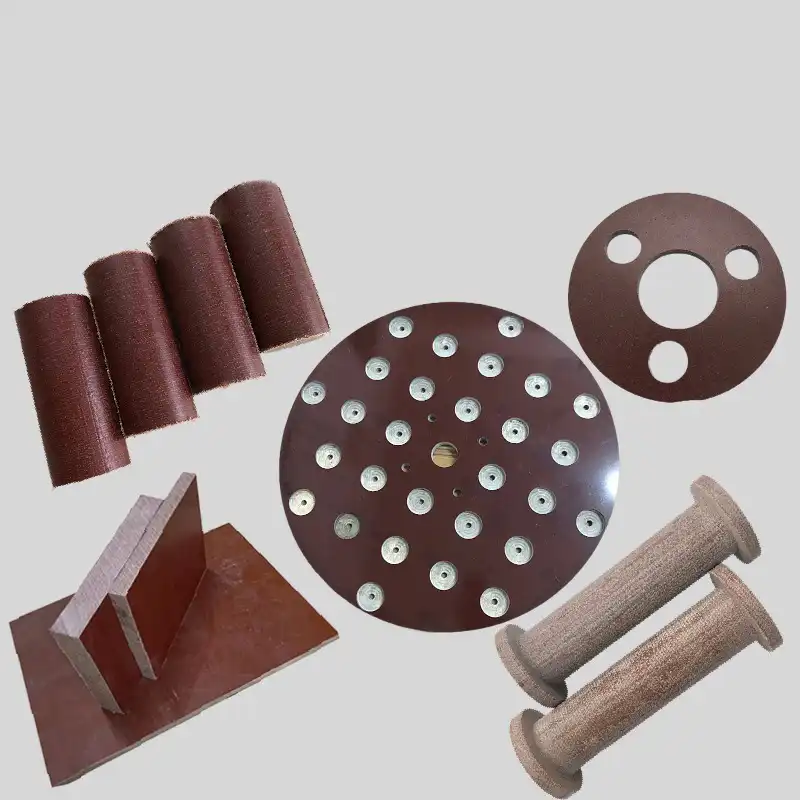
A phenolic resin is strongly bound to a woven cotton base that is put on top of it under a lot of pressure. This thermal-cure method makes a dense sheet with uniform cross-sectional qualities that doesn't have any holes in it. Hongda makes phenolic cotton laminate that is 0.5 mm to 100 mm thick and has a normal sheet size of 1220 mm × 2020 mm. That means manufacturers can make a lot of different kinds of very difficult CNC-machined parts.
Key Physical and Electrical Properties
There is a lot of volume resistance in this substance, and it works well at a lot of different temperatures. Because it is reinforced with woven cotton, it is much more durable and easier to work with than phenolic grades made from paper. It can be used in dry or oily electrical settings because it is dense and doesn't soak up water quickly. It can even come into direct contact with transformer oil.
How It Compares to Alternative Insulation Materials
You can use FR4 or G10 epoxy laminates with fiberglass reinforcements as dielectrics. These work better at high temperatures, but they cost more and are harder to work with. Mesa-based materials can handle high temperatures well, but they are pricey and break easily. Phenolic cotton laminate is a good middle ground because it is cheap, easy to cut and drill, and doesn't change chemically in oil. Parts for switchgear that need to withstand high temperatures aren't always the best choice when it comes to phenolic cotton.
Applications of Phenolic Cotton Laminate in Switchgear
Insulating Barriers and Arc Partitions
The phase-to-phase barriers and arc partitions in medium- to high-voltage switchgear cabinets must withstand both electrical tracking and the mechanical shock caused by circuit breaker operation. Electrical Insulation Phenolic Resin Cotton Fabric is used to manufacture these barriers and partitions because it can be cut and shaped to fit specific cabinet designs while providing the mechanical strength and arc erosion resistance required for reliable insulation. These materials also help maintain their structural integrity under mechanical stress and meet applicable IEC and ASTM insulation standards.
Structural Spacers and Mechanical Support Components
They need structural parts that aren't conductive and can handle real mechanical loads in order to work. Plinyl cotton laminates that have been machined are used to make support bars, link arms, fixing brackets, and moving vanes. Composites made of only resin don't absorb vibration and impact as well as those made of cotton fiber. This makes sure that parts that are used a lot don't break from wear and tear.
Oil-Immersed Transformer and Switchgear Applications
A lot of the time, phenolic cotton laminate is used for parts of tap switches that are inside oil-filled switchgear and transformers, as well as for bearing surfaces and bushing supports. When the material is put in hot transformer oil, most plastics will swell, soften, or break down chemically. But this material keeps its shape and dielectric properties.
Electrical engineers still choose phenolic cotton laminate in the power transfer, industrial machinery, and car businesses because it can be used for these three things. When single-use materials don't work well, this is a good choice because it can separate power and build something.
How to Choose the Right Phenolic Cotton Laminate for Your Switchgear Needs
Evaluate Dielectric Strength and Thermal Class
To begin, choose the power and temperature you will use. Certain types of phenolic cotton work well in temperatures up to about 120°C for a long time. The breakdown voltage rating should match the design specs for your equipment. If the temperature stays the same, you might want to check out whether an epoxy-glass grade is better.
Confirm Machinability and Dimensional Requirements
People responsible for procurement should ensure that suppliers can provide Electrical Insulation Phenolic Resin Cotton Fabric in all the thicknesses required for their manufacturing processes. Hongda offers sheets ranging from 0.5 mm to 100 mm thick, accommodating most hardware component sizes. This versatility helps improve dimensional accuracy, achieve tighter tolerances, and reduce tool wear during CNC routing, drilling, and milling, ultimately affecting the production cost of each part.
Verify Supplier Certifications and Quality Systems
Make sure the material meets the standards, such as IEC 60893 or ASTM D709. Ask for proof. It is easier to check the things that suppliers send you if they have consistent quality systems and batch records that can be tracked. They've been making things for over 20 years and can now make 13,000 tons of stuff a year. In large orders, this means that the quality of each batch is the same.
It's not enough to know the right grade; you also need to know how well your provider can meet your needs by keeping specs the same across multiple orders, responding quickly to your technical questions, and letting you make changes when standard sizes don't work for your design.
Bulk Purchasing and Customization: What B2B Clients Should Know
MOQ, Pricing Structure, and Lead Times
The smallest order quantity for Electrical Insulation Phenolic Resin Cotton Fabric from Hongda is 500 kg, suitable for both trial orders and regular production. Payment can be made by T/T, and pricing varies depending on the order quantity. Lead times depend on the material thickness and order volume. For the most accurate lead time estimate based on your specific requirements, please contact the sales team at info@jhd-material.com.
Shipping and Logistics Options
Hongda ships goods by sea, land, and air, depending on how quickly they need to get to their destination and what methods are available. To protect the surface during shipping, sheets are put on boxes and packed. This is important for parts that are going straight to CNC tools and need to fit very closely. The company has its own transportation department, so it doesn't need to hire outside middlemen to handle customs paperwork and freight schedules. This could cut down on wait times.
Requesting Samples Before Committing to Volume
First, get a sample of the material and compare it to your engineering plans to make sure it fits your needs. Make sure it can be machined and has a smooth surface. This is a normal part of buying things responsibly, and it helps keep things under control during the first check. If something goes wrong, it can cost a lot of money. People who are approved by Hongda can ask for samples to see how the material works for new equipment designs.
Conclusion
An Electrical Insulation Phenolic Resin Cotton Fabric laminate that consistently delivers strong mechanical performance and heat resistance is well suited to switchgear applications. Rather than selecting materials at random, buyers should clearly define their performance requirements, including compatibility with transformer oil, impact resistance, and compliance with relevant technical standards. When sourcing this material, look for a supplier that can provide verified dielectric performance data and maintain consistent production quality. With over 20 years of manufacturing experience, an annual production capacity of 13,000 tons, and an integrated production system, Hongda helps procurement teams move efficiently from specification confirmation to product delivery.
FAQ
How does phenolic cotton laminate compare to fiberglass epoxy for switchgear insulation?
If the temperature is high, fiberglass epoxy (FR4/G10) can handle it better and has better dielectric strength. Phenolic cotton laminate is easier to work with, better at absorbing shocks, and more reliable in dirty areas. For many uses of medium-voltage switchgear, the cost and usefulness of phenolic cotton are higher than the difference in how well it works at different temperatures.
What certifications should I require from a phenolic laminate supplier?
Check to see if it meets ASTM D709 and IEC 60893 (for laminates that don't conduct electricity). Check the UL grade if the end use needs to be able to handle fires. You should always ask for batch test results and paperwork that shows how materials can be tracked.
Can phenolic cotton sheets be used directly in transformer oil?
Yes. This stuff is better than many plastics because it doesn't change chemically when it comes in contact with hot generator oil. There are times when it's needed for parts of tap changers, supports for bushings, and bearing surfaces inside oil-filled machinery.
What thickness range is available for switchgear fabrication?
The phenolic cotton laminate that Hongda sells comes in standard sheets that are 1220 mm × 2020 mm and range in thickness from 0.5 mm to 100 mm. These sheets are the right shape for most structural and insulating parts of switches.
Partner with J&Q for Phenolic Cotton Laminate Supply
People who buy from J&Q can talk to Hongda's phenolic resin cotton fabric production line directly. For more than 20 years, Hongda has been making soundproofing materials. J&Q has its own delivery team to make sure orders get to customers safely all over the world. Our team will give you accurate lead times, clear paperwork, and low prices whether you need a test sample or a lot of phenolic cotton laminate to make switchgear. Send us your question right away by emailing info@jhd-material.com or visiting jhd-material.com.
References
1. IEC 60893-3: Insulating Laminates for Electrical Purposes — Specification for Individual Materials, International Electrotechnical Commission, 2003.
2. ASTM D709: Standard Specification for Laminated Thermosetting Materials, ASTM International, 2017.
3. Harper, C. A. Handbook of Plastics Technologies. McGraw-Hill, 2006.
4. Bruins, P. F. Plastics for Electrical Insulation. Interscience Publishers, 1968.
5. Mohanty, A. K., Misra, M., & Drzal, L. T. Natural Fibers, Biopolymers, and Biocomposites. CRC Press, 2005.
6. IEEE Std C57.12.00: IEEE Standard for General Requirements for Liquid-Immersed Distribution, Power, and Regulating Transformers, IEEE, 2015.