
FR4 Epoxy Board for Transformer and Switchgear Insulation
2026-01-13 17:27:18
FR4 epoxy board is the preferred material for transformer and switchgear applications when electrical systems require dependable insulation that can endure harsh environments. This flame-retardant composite offers remarkable mechanical endurance, thermal stability, and dielectric strength by combining woven fiberglass fabric with epoxy resin. Because of its exceptional electrical insulation qualities, it is essential for shielding vital power infrastructure components from heat stress and electrical faults, guaranteeing safe and effective operation in a variety of industrial settings.
Understanding FR4 Epoxy Board Fundamentals
Any successful insulation approach starts with an understanding of the fundamental composition and characteristics of the material. For demanding electrical applications, FR4, a particular grade of flame-retardant fiberglass composite, has emerged as the industry standard.
Composition and Manufacturing Excellence
Multiple layers of woven fiberglass fabric impregnated with flame-retardant epoxy resin make up FR4 epoxy board. The production technique produces a homogenous material with uniform mechanical and electrical properties throughout its structure by precision lamination under regulated temperature and pressure conditions. For manufacturers who need consistent performance during large-scale production runs, our meticulous production process guarantees batch-to-batch consistency.
Superior dimensional stability, chemical resistance, and adherence to the fiberglass reinforcement are all provided by the epoxy resin matrix. In order to maintain stringent tolerance requirements that satisfy UL and ROHS compliance standards, modern manufacturing facilities use sophisticated quality control systems that keep an eye on resin composition, curing temperatures, and layer thickness.
Key Physical and Electrical Properties
Because of its remarkable dielectric strength, which usually ranges between 20 and 25 kV/mm, the material is appropriate for high-voltage applications where resistance to electrical breakdown is crucial. It offers superior electrical isolation between conductive components because its volume resistivity is more than 10^14 ohm-cm.
Glass transition temperatures between 130 and 140°C and continuous operating temperatures up to 180°C are examples of thermal performance qualities that enable dependable operation in high-temperature situations typical of power distribution systems. Even in humid environments, the material's steady electrical characteristics are guaranteed by its low moisture absorption rate of less than 0.5%.
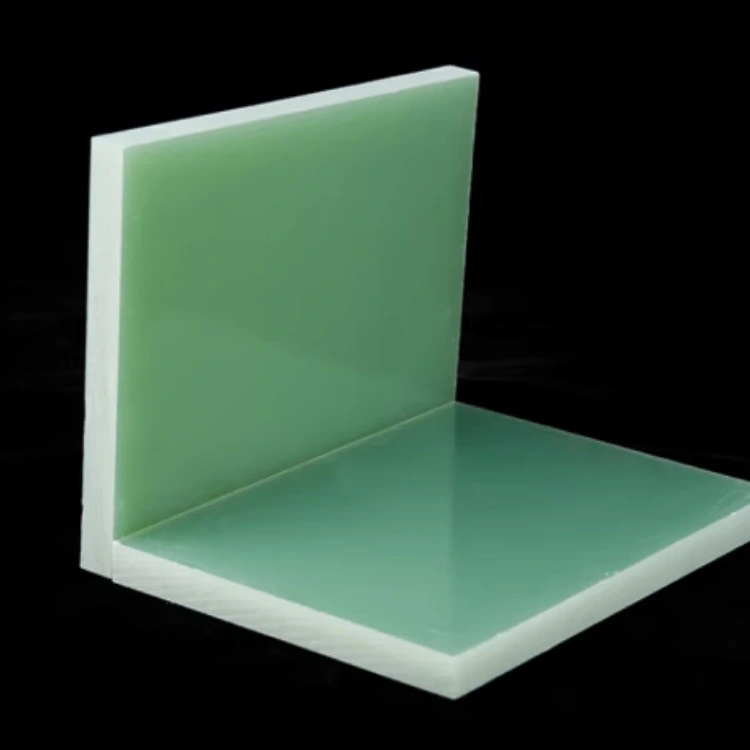
Application and Advantages of FR4 Epoxy Board in Transformer and Switchgear Insulation
Examining FR4's performance advantages in actual operating conditions is necessary to comprehend why it performs so well in these crucial applications. The material's special combination of properties solves particular problems that power equipment makers encounter.
Transformer Insulation Performance
Beyond just providing electrical insulation, FR4 epoxy boards play a number of vital roles in transformer applications. They preserve electrical isolation at various voltage levels while giving coil assemblies structural stability. The material's superior thermal conductivity over conventional insulating materials aids in the dissipation of heat produced during operation, enhancing the longevity and overall efficiency of the system.
In transformer applications, where arc faults or overload circumstances may cause insulating materials to fire, the flame-retardant qualities become more crucial. The self-extinguishing properties of FR4 contribute to the prevention of fire spread, safeguarding persons and important equipment.
Switchgear Environmental Resilience
Switchgear surroundings provide special difficulties, such as exposure to electrical arcing, temperature fluctuations, and mechanical vibration. FR4 is perfect for these harsh circumstances because of its exceptional mechanical strength and tracking resistance. Even when subjected to partial discharge conditions or surface pollution, which could jeopardize less durable materials, the material retains its insulating qualities.
Here are the core performance advantages that make FR4 particularly suitable for switchgear applications:
• Arc resistance: The material resists carbonization and maintains insulating properties even after exposure to electrical arcing, preventing the formation of conductive paths that could lead to equipment failure.
• Mechanical stability: High flexural strength and impact resistance ensure the insulation remains intact during switching operations and mechanical stress.
• Chemical compatibility: Excellent resistance to oils, solvents, and cleaning agents commonly encountered in switchgear maintenance procedures.
These performance characteristics directly address the reliability concerns that drive procurement decisions in power equipment manufacturing, where failure costs far exceed material costs.
Comparative Material Analysis
FR4 exhibits better lifespan and lower maintenance needs than more conventional materials like phenolic laminates or paper-based insulation systems. Although phenolic materials may be less expensive initially, their propensity to absorb moisture and deteriorate over time leads to greater lifetime costs because they need to be replaced more frequently.
Procurement Considerations for FR4 Epoxy Boards in B2B Context
In order to maximize performance and cost-effectiveness, successful procurement strategies must strike a balance between technical objectives and commercial factors. Procurement teams can make better selections if they are aware of the major elements that affect material selection.
Technical Specification Optimization
The choice of thickness for FR4 epoxy board is important for mechanical needs as well as electrical performance. Standard thicknesses vary from 0.8 to 25 mm, and for some applications, space limitations, mechanical load requirements, and voltage requirements must be carefully taken into account. Although thicker sections offer higher breakdown voltage ratings, in certain applications they may present weight or machining issues.
Selecting a material grade entails deciding between regular FR4 and upgraded versions that provide better thermal performance or lower dielectric loss characteristics. Extreme temperature applications could call for materials with higher glass transition temperatures, while high-frequency applications might require specific grades with lower dissipation factors.
Supplier Evaluation Criteria
A basic prerequisite for any provider of industrial insulating materials is quality certification. Seek out producers who uphold UL flame retardancy certificates, ISO 9001 quality management systems, and environmental compliance certifications such as ROHS and REACH compliance. The established quality control procedures and regulatory compliance skills necessary for industrial applications are indicated by these certificates.
Production capacity, customisation skills, and technical support services should all be evaluated as part of the manufacturing capability assessment. During the stages of material selection and application optimization, suppliers who offer in-house testing labs and engineering support can be of great assistance.
Supply Chain Management Strategies
For project-based procurement, where material availability needs to coincide with production schedules, lead time management becomes especially crucial. Building connections with vendors who offer consignment agreements or inventory management programs can assist lower working capital needs and supply chain concerns.
Total cost of ownership should be taken into account in cost optimization measures instead than just per-unit pricing. Higher initial prices may be justified by lower lifetime charges for materials with longer service lives or fewer processing requirements.
Comparative Analysis to Aid Decision-Making
Understanding the trade-offs between various possibilities and their suitability for particular application needs is necessary to make well-informed material choices. Procurement experts can use this methodology to methodically examine alternatives.
Performance Comparison Framework
Standard FR4 can function dependably up to 180°C continuous service temperature, according to thermal performance analysis; however, specialized high-temperature grades can increase this range to 220°C or more. Premium pricing for applications involving harsh operating conditions may be justified by this increased capacity.
Comparing mechanical properties reveals that FR4 has a flexural strength that is substantially higher than phenolic alternatives, usually surpassing 400 MPa. For equal structural requirements, this higher mechanical performance results in narrower sections, which may compensate for material cost disparities by requiring less space.
Application-Specific Considerations
Thicker sections (6–15 mm) for FR4 epoxy board are generally advantageous for transformer applications, as they optimize for both mechanical support needs and electrical breakdown resistance. In many situations, designers may do away with additional structural components since FR4 is self-supporting.
Switchgear systems frequently need for precise machining skills to produce intricate shapes for component mounting or bus bar insulation. Because of FR4's exceptional machinability with ordinary carbide tooling, unique shapes can be produced affordably without the need for specialist processing equipment.
Here are the critical decision factors that should guide material selection:
• Environmental conditions: Consider operating temperature range, humidity exposure, and chemical compatibility requirements when comparing material options.
• Electrical requirements: Match dielectric strength and volume resistivity specifications to actual voltage stress levels with appropriate safety margins.
• Mechanical demands: Evaluate structural loading, vibration resistance, and thermal cycling requirements to ensure adequate mechanical performance.
• Manufacturing compatibility: Assess machining requirements, bonding processes, and quality control capabilities needed for successful integration.
These factors collectively determine the optimal material choice for specific applications, ensuring both technical performance and commercial viability.
J&Q: Your Trusted Partner for Premium FR4 Epoxy Board Solutions
With more than ten years of worldwide trading expertise and more than twenty years of manufacturing excellence, J&Q has made a name for itself as a top supplier of premium insulating products for industrial markets throughout the world. Our broad cooperation with both local and foreign trading partners has improved our service capabilities, allowing us to provide all-inclusive solutions that satisfy the changing demands of producers of power equipment.
Manufacturing Expertise and Quality Assurance
Strict quality control procedures are upheld at our production facilities to guarantee uniform material qualities and adherence to global standards. Every production batch's electrical, mechanical, and thermal characteristics are checked in state-of-the-art testing facilities, which give clients performance data that is documented and fulfills essential application criteria.
Customers who need dependable delivery dates and specific handling needs benefit from the integration of our own logistics company. This all-inclusive service strategy ensures that goods arrive in ideal shape for prompt usage while removing coordination issues that are typical in multi-vendor supply chains.
Product Portfolio and Customization Capabilities
Our selection of FR4 epoxy boards includes both specialty formulas intended for harsh operating conditions and regular grades appropriate for general-purpose applications. Options for thickness include heavy-duty plates for structural insulation needs and extremely thin sheets for small applications.
Precision cutting, machining, and surface treatment choices are examples of customization services that relieve clients of the need for further processing. This value-added feature guarantees dimensional precision, which is essential for automated assembly operations, while lowering overall procurement costs.
Our product offers are enhanced by technical support services, which include advice on material selection, performance optimization, and application engineering support. In order to provide solutions that satisfy certain technical specifications while maximizing cost-effectiveness, our engineering team works directly with clients.
Conclusion
Performance requirements, environmental factors, and long-term reliability expectations must all be carefully taken into account when choosing the right insulation materials for transformer and switchgear applications. FR4 epoxy boards provide an appealing blend of mechanical, thermal, and electrical qualities that meet the demanding needs of contemporary power equipment applications. Engineers and procurement experts looking for dependable insulating solutions choose this material because of its track record of success and compliance with international safety and environmental regulations. Selecting the right materials is simply one factor in these applications' success; another is working with suppliers who recognize how important these applications are and can offer.
FAQs
What makes FR4 epoxy board suitable for high-voltage insulation applications?
FR4 provides exceptional dielectric strength typically exceeding 20 kV/mm thickness, combined with excellent volume resistivity that maintains electrical isolation even under harsh operating conditions. The material's flame-retardant properties and low moisture absorption ensure stable performance across varying environmental conditions commonly encountered in power equipment applications.
How do customization options work for specific transformer and switchgear requirements?
Customization services include precision cutting to customer specifications, machining of complex geometries, and surface treatments for enhanced bonding or environmental resistance. Standard lead times for custom processing typically range from 2-3 weeks depending on complexity and quantity requirements, with expedited options available for urgent project needs.
What quality assurance measures should I look for when evaluating suppliers?
Look for suppliers maintaining ISO 9001 certification, UL recognition for flame retardancy compliance, and comprehensive testing capabilities covering electrical, mechanical, and environmental performance parameters. Batch testing documentation and traceability systems ensure consistent quality and provide verification of material properties for critical applications.
Partner with J&Q for Superior FR4 Epoxy Board Solutions
Ready to enhance your transformer and switchgear insulation performance with premium-quality materials? J&Q combines decades of manufacturing expertise with comprehensive service capabilities to deliver FR4 epoxy board solutions that meet your most demanding requirements. Our experienced team stands ready to provide technical consultation, custom quotations, and sample evaluation to support your project success. Contact our specialists today at info@jhd-material.com to discuss your specific insulation needs and discover how our FR4 epoxy board manufacturer capabilities can optimize your procurement strategy while ensuring reliable performance in critical applications.
References
Institute of Electrical and Electronics Engineers. "IEEE Standard for Electrical Insulation Materials - Test Methods and Performance Criteria." IEEE Standards Association, 2019.
International Electrotechnical Commission. "Specification for Industrial Rigid Laminated Sheets Based on Thermosetting Resins for Electrical Purposes." IEC Publication 61212, 2018.
National Electrical Manufacturers Association. "Standards Publication for Thermosetting Laminated Products for Electrical Applications." NEMA LI-1 Standard, 2020.
American Society for Testing and Materials. "Standard Test Methods for Electrical Insulating Materials." ASTM D149-09 Reapproved 2020.
Underwriters Laboratories Inc. "Standard for Safety of Polymeric Materials - Use in Electrical Equipment Evaluations." UL 746A Standard, 2019.
Society of Plastics Engineers. "Engineering Properties of Thermosetting Laminates for Electrical Equipment Design." SPE Technical Publication Series, 2021.
 拷贝_1755500211555.jpg)
