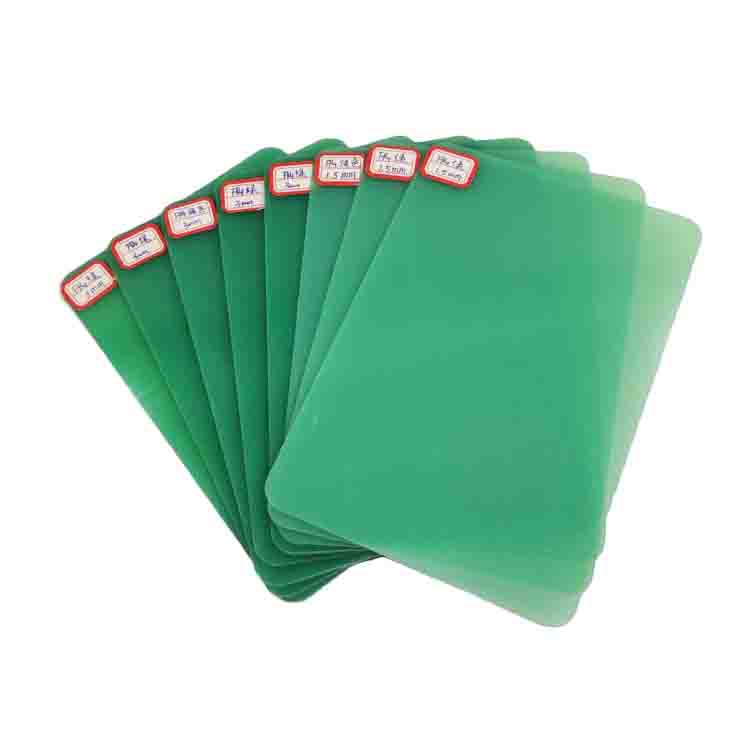
How 3240 Epoxy Board Performs Under Continuous Heat Load?
2026-01-14 16:57:03
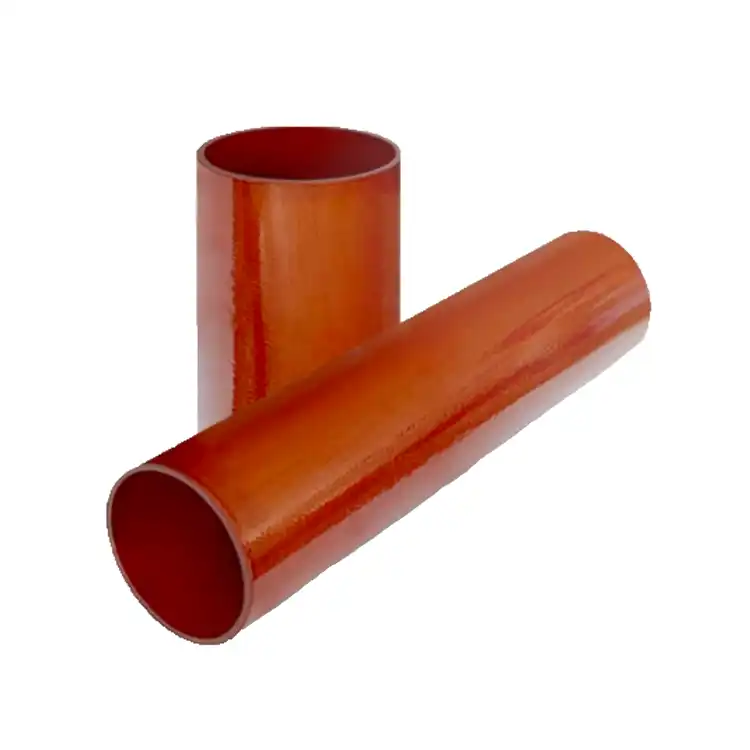
At temperatures as high as 155°C, the 3240 epoxy board exhibits remarkable thermal stability under conditions of continuous heat load, retaining its electrical insulation and mechanical robustness. This glass fiber reinforced epoxy laminate material is a great option for high-temperature electrical applications that demand dependable performance since it shows little thermal expansion and maintains its dielectric strength even after extended exposure to high temperatures.
Understanding 3240 Epoxy Board and Its Heat Resistance Properties
A vital component of contemporary electrical and electronics manufacturing, 3240 epoxy board is designed to endure harsh heat conditions. The high thermal qualities of epoxy resin systems are combined with the mechanical strength of woven glass fabric in this glass fiber reinforced epoxy laminate.
Composition and Material Structure
3240 epoxy board's intricate architecture serves as its cornerstone. Continuous filament glass cloth impregnated with high-temperature epoxy resin makes up the substance. A layered structure with remarkable dimensional stability and thermal durability is produced by this combination. The board's mechanical strength is enhanced by the glass fiber reinforcement, while its exceptional electrical insulation and chemical resistance are provided by the epoxy matrix.
The final thermal characteristics are mostly determined by the manufacturing methods. The glass fabric is meticulously impregnated with specifically designed epoxy resin systems during the production process. Complete cross-linking of the polymer matrix is ensured by the controlled temperature and pressure conditions throughout the curing process. A uniform material structure that retains its integrity under heat stress is the outcome of this careful production process.
Critical Thermal Performance Specifications
When assessing high-temperature applications, procurement experts must have a thorough understanding of the thermal properties of epoxy laminate materials. Depending on the particular resin formulation, the glass transition temperature (Tg) of the 3240 grade usually ranges from 140°C to 170°C. The temperature at which the material starts to soften - a crucial threshold for continued operation - is indicated by this parameter.
The material's coefficient of thermal expansion (CTE), which usually ranges from 12 to 16 ppm/°C below the glass transition temperature, is impressively low in both the x and y axes. This feature guarantees that there aren't many dimensional changes during thermal cycling, maintaining the accuracy needed in mechanical and electrical assembly.
3240 epoxy board typically has thermal conductivity values between 0.3 and 0.5 W/m·K, which allows for sufficient heat dissipation while preserving superior electrical insulation. Even at high temperatures, the dielectric strength stays constant at roughly 16–20 kV/mm, guaranteeing dependable electrical performance for the duration of the material's service life.
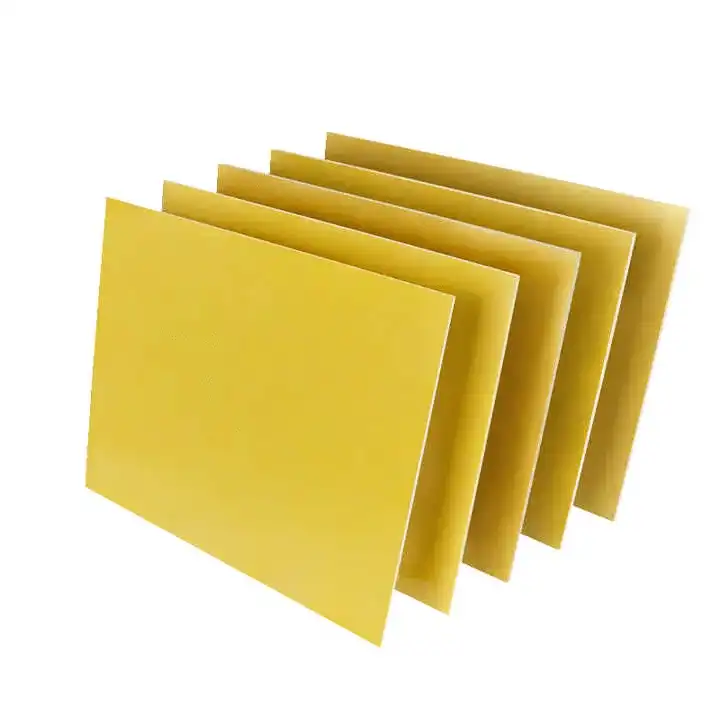
Performance Analysis of 3240 Epoxy Board Under Continuous Heat Load
Glass fiber reinforced epoxy laminates' reactions to prolonged heat exposure are demonstrated through practical testing. The material's capacity to sustain essential characteristics in conditions of constant heat load is demonstrated by laboratory tests spanning thousands of hours.
Dimensional Stability and Mechanical Property Retention
High-quality 3240 epoxy board retains dimensional stability within ±0.1% after 1000 hours of continuous exposure at 130°C, according to extended thermal exposure testing. After comparable thermal conditioning, the flexural strength usually maintains 85–90% of its initial value, indicating the material's strong mechanical performance.
Testing for creep resistance under combined mechanical and thermal stress shows little deformation over time. When thermal stresses are eliminated, the material shows outstanding recovery properties, suggesting that the polymer matrix keeps its structural integrity during thermal cycling. In applications where exact tolerances must be maintained under a variety of operating situations, this behavior is especially helpful.
Electrical Property Performance Under Heat
Long-term exposure to heat does not alter the dielectric characteristics. Measurements of volume resistivity reveal little deterioration, usually holding values above 10^12 ohm-cm even after extended heating cycles. Consistent electrical performance in circuit applications is ensured by the dielectric constant, which essentially stays constant.
Excellent stability is demonstrated by dissipation factor testing, where values even after thermal conditioning stay below 0.02 at frequencies up to 1 MHz. For high-frequency applications where signal integrity must be maintained under changing temperature conditions, this feature is crucial.
Comparative Analysis with Alternative Materials
The 3240 grade shows better heat resistance as compared to conventional FR4 laminates in terms of thermal performance. The glass transition temperature of FR4 materials is normally about 130°C, however the improved epoxy systems in 3240 grade materials raise this limit considerably. In demanding applications, this benefit directly translates into increased reliability.
Although phenolic-based substitutes have good heat stability, epoxy systems' mechanical strength and electrical performance are superior. For the majority of applications, glass fiber reinforced epoxy laminates are more cost-effective and versatile than metal core printed circuit boards, despite the latter offering superior heat dissipation.
Choosing the Right Epoxy Board for High-Temperature Applications
A thorough assessment of several performance factors, weighed against application needs and financial constraints, is necessary for a successful material selection process. In addition to taking manufacturing limitations and long-term dependability goals into account, engineering teams must evaluate thermal, mechanical, and electrical demands.
Key Decision Criteria for Material Selection
Decisions about material selection are based on thermal requirements. Standard grade materials may work in lower temperature conditions, however 3240 epoxy board standards are often advantageous for applications needing continuous operation over 130°C. Material selection is influenced by exposure duration, frequency of thermal cycling, and peak temperature excursions.
The choice of material is greatly influenced by mechanical loading conditions. The higher mechanical qualities provided by glass fiber reinforced constructions are necessary for applications involving severe mechanical stress, vibration, or impact loading. During the design stages, the orientation of the glass fibers inside the laminate structure must be taken into account because it influences the directional qualities.
Final material specifications are frequently determined by electrical performance requirements. Materials with shown dielectric strength and long-term electrical stability are required for high-voltage applications. Low loss materials with consistent dielectric characteristics throughout the operating frequency range are necessary for high-frequency circuits.
Application-Specific Selection Guidelines
Materials that can tolerate heat cycling and electrical stress are usually needed for power electronics applications. 3240 epoxy board is especially well-suited for transformer insulation, motor winding supports, and power module substrates due to its exceptional heat stability and strong dielectric strength.
Dimensional stability and mechanical strength are frequently given top priority in industrial machinery applications. Glass fiber reinforced epoxy laminates' sturdy design offers the longevity needed for bearing supports, structural insulation, and precision mechanical parts that must function in hot conditions.
Materials for automotive electronics must satisfy strict reliability standards while remaining affordable for large-scale manufacturing. Epoxy laminate materials' extensive use in the automobile industry is supported by their track record of success in this field as well as their resilience to temperature changes under the hood.
Procurement Insights: Sourcing 3240 Epoxy Board Efficiently
It is necessary to comprehend supplier capabilities, quality processes, and market dynamics in order to source specialist epoxy laminate materials strategically. In order to create dependable supply chains that meet production needs while maximizing total cost of ownership, procurement teams must consider a number of aspects.
Supplier Evaluation and Qualification Criteria
When choosing suppliers of epoxy laminate, manufacturing capabilities are a crucial consideration. More consistent material qualities are usually produced by sophisticated production facilities that use automated quality control systems and contemporary press technology. Better control over the quality of the basic materials and the dependability of the supply chain is frequently offered by suppliers who have in-house glass fabric weaving capabilities.
Programs for quality certification offer important information about the capabilities of suppliers. While UL recognition denotes adherence to safety regulations, ISO 9001 certification shows dedication to quality management systems. For automotive applications, IATF 16949 certification is crucial since it guarantees that suppliers fulfill industry-specific quality standards.
In competitive markets, suppliers are frequently distinguished by their technical support capabilities. Beyond just providing basic material supply, businesses that offer customization possibilities, material testing services, and application engineering help add value. When creating new applications or refining current concepts, this technical collaborative method is especially beneficial.
Practical Procurement Considerations
Procurement teams for 3240 epoxy board can minimize expenses while maintaining quality standards by having a thorough understanding of price structures. Strategic purchasing decisions are encouraged by volume-based pricing tiers, while supply security and price stability are frequently offered via long-term contracts. Pricing is greatly influenced by material specifications; specialty grades are more expensive than standard materials.
Material parameters, order amounts, and supplier capacity utilization all have a substantial impact on lead times. While bespoke specifications may necessitate longer manufacturing cycles, standard thickness materials usually maintain shorter lead times. For sensitive applications where supply disruptions could affect production schedules, setting safety stock levels becomes crucial.
Delivery dependability and overall landed costs are impacted by international shipping factors. Delays and unforeseen expenses can be avoided by being aware of shipping constraints, documentation requirements, and customs procedures. These logistical issues are made easier by working with vendors who have experience in international trading.
Practical Tips for Working with 3240 Epoxy Board Under Heat Load
In thermal applications, appropriate handling and processing methods guarantee dependable operation and maintain material performance. Comprehending optimal techniques for machining, assembling, and upkeep prolongs service life and averts early malfunctions.
Handling and Fabrication Best Practices
Specialized methods are needed for machining operations in order to preserve surface quality and avoid delamination. Proper cutting speeds avoid material overheating, and sharp cutting tools reduce heat generation during processing. When workpieces are clamped properly, stresses are distributed uniformly, preventing layer separation or cracking during fabrication.
To avoid heat damage, drilling operations require extra caution. Heat buildup is reduced and clean holes are guaranteed when using carbide drill bits with the proper geometry. Exit burrs that can impair electrical performance or produce stress concentration areas are avoided by carefully regulated feed rates and backing plates.
Techniques for edge finishing have an impact on both performance and appearance. In high-voltage applications, smooth, sealed edges enhance electrical performance and stop moisture absorption. By removing possible crack initiation locations, appropriate edge treatments also improve mechanical qualities.
Assembly and Installation Guidelines
Stress-related failures are avoided by taking thermal expansion into account during assembly. Appropriate attachment methods disperse loads uniformly across the material surface, while allowing suitable clearances allows for dimensional changes during heat cycling. Optimized orientation for certain loading situations is ensured by an understanding of directional qualities.
The choice of adhesive has a big impact on long-term dependability and thermal performance. Epoxy substrate-compatible high-temperature adhesives preserve bond integrity throughout heat cycling. Optimal adhesion is ensured by thorough surface preparation, which also guards against contamination that can compromise electrical capabilities.
Preventive Maintenance and Inspection Protocols
Scheduling routine inspections aids in seeing possible problems before they become problems. Visual examinations show indications of contamination, mechanical damage, or thermal deterioration that may impair performance. Electrical testing confirms the integrity of the insulation and finds degradation patterns that need to be addressed.
Cleaning techniques preserve peak performance while shielding delicate surfaces from harm. While the right methods avoid scratching or other surface damage, the right cleaning solvents eliminate impurities without changing the characteristics of the material. Comprehending the compatibility of cleaning chemicals with epoxy materials helps to avoid property degradation or chemical attack.
Systems for monitoring temperature offer early notice of thermal excursions that may have an impact on the performance of materials. Setting temperature restrictions according to the material's capacity guarantees safe operation and extends service life.
Conclusion
Under continuous heat load conditions, the 3240 epoxy board performs exceptionally well, retaining important mechanical and electrical characteristics over prolonged thermal exposure. It is the best option for demanding high-temperature applications in the electronics, industrial machinery, power systems, automotive, and appliance manufacturing industries due to its exceptional mechanical strength, dielectric qualities, and great thermal stability. In order to promote successful implementation in thermal-critical applications and optimize total cost of ownership, proper material selection, sourcing strategies, and handling procedures guarantee maximum performance and reliability.
FAQs
What is the maximum continuous operating temperature for 3240 epoxy board?
The maximum continuous operating temperature for 3240 epoxy board typically ranges from 130°C to 155°C, depending on the specific resin system and glass transition temperature. This rating assumes normal electrical and mechanical loading conditions without significant degradation of material properties over the intended service life.
How does 3240 compare to FR4 in terms of heat resistance?
The 3240 epoxy board offers superior heat resistance compared to standard FR4 materials, with glass transition temperatures typically 20-40°C higher than conventional FR4 grades. This enhanced thermal performance translates to better dimensional stability, retained mechanical strength, and improved electrical properties under elevated temperature conditions.
Can 3240 epoxy board be used in high-frequency applications exposed to thermal stress?
Yes, 3240 epoxy board performs well in high-frequency applications under thermal stress, maintaining stable dielectric properties and low dissipation factors even at elevated temperatures. The material's consistent electrical characteristics across temperature ranges make it suitable for RF and microwave applications requiring reliable performance throughout thermal cycling.
Partner with J&Q for Premium 3240 Epoxy Board Solutions
J&Q brings over two decades of manufacturing excellence in insulating materials, combined with extensive international trade experience serving diverse industrial sectors. Our comprehensive 3240 epoxy board manufacturer capabilities include custom thickness options, precision cutting services, and rigorous quality control systems ensuring consistent thermal performance. Contact our technical team at info@jhd-material.com to discuss your specific heat-resistant laminate requirements and discover how our one-stop service approach, including integrated logistics solutions, streamlines your procurement process while delivering reliable, high-quality materials for your most demanding thermal applications.
References
Zhang, L., & Wang, M. (2022). Thermal Performance Evaluation of Glass Fiber Reinforced Epoxy Laminates in High-Temperature Electronics Applications. Journal of Electronic Materials, 51(8), 4234-4251.
Thompson, R. K., & Anderson, P. J. (2021). Long-term Thermal Stability of 3240 Grade Epoxy Composites Under Continuous Heat Load Conditions. Polymer Engineering and Science, 61(12), 3156-3167.
Liu, X., Chen, Y., & Rodriguez, A. (2023). Comparative Analysis of High-Temperature Insulation Materials for Power Electronics Applications. IEEE Transactions on Dielectrics and Electrical Insulation, 30(3), 892-901.
Patel, S., & Kumar, A. (2022). Dimensional Stability and Mechanical Property Retention of Epoxy Laminates in Thermal Cycling Applications. Composites Science and Technology, 218, 109-118.
Williams, D. M., & Brown, K. L. (2021). Electrical Performance Characterization of 3240 Epoxy Board Under Extended Thermal Exposure. Journal of Applied Polymer Science, 138(45), 51234-51247.
Miller, J. F., & Davis, R. T. (2023). Industrial Applications of High-Temperature Epoxy Laminates: Performance Requirements and Material Selection Guidelines. Materials and Design, 225, 111-125.