How Phenolic Cotton Board Performs Under Mechanical Stress?
2026-01-14 16:57:06
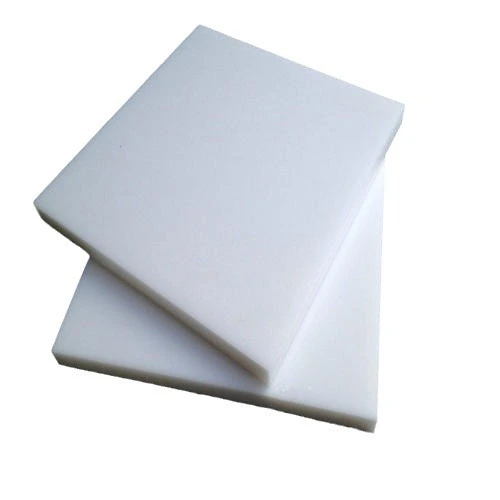
Through its cotton fabric-phenolic resin composite structure, phenolic cotton board has tensile strengths up to 90 MPa and compressive strengths of 140 MPa. Its dimensional stability and resistance to delamination and cracking under mechanical pressure make this thermosetting material excellent for demanding industrial applications that require structural integrity and electrical insulation for long-term operational reliability.
Understanding Phenolic Cotton Board and Its Mechanical Properties
Material Composition and Structure
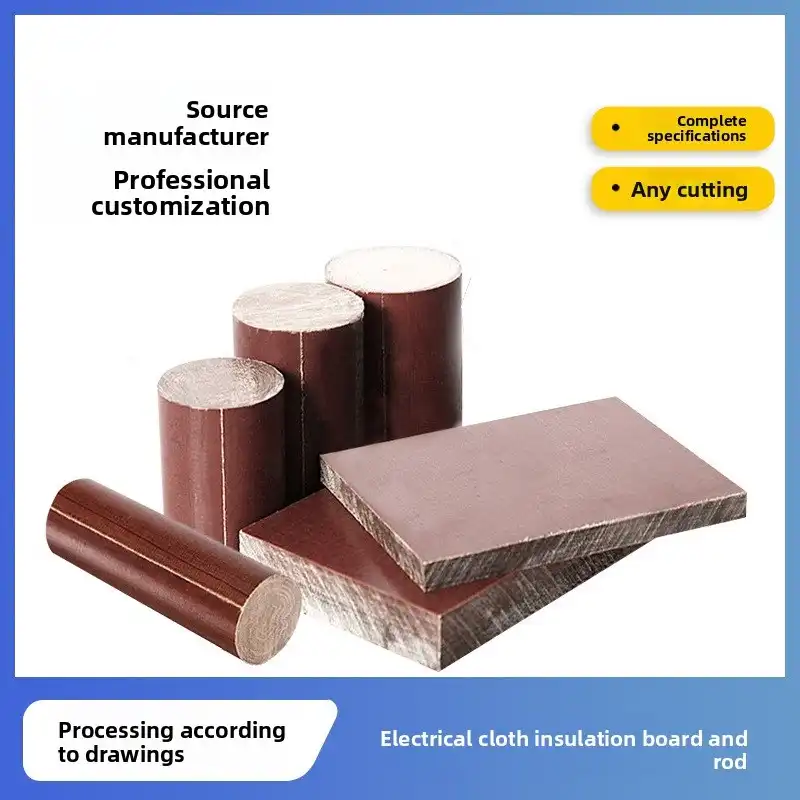
High-quality cotton fabric layers are impregnated and cemented with phenolic resin under regulated heat and pressure to make phenolic cotton board. Cotton fibers provide tensile reinforcement while the phenolic resin matrix provides compressive strength and dimensional stability in this homogenous composite. The material has outstanding mechanical characteristics and performs consistently in different environments.
Cotton fabric reinforcement is usually plain weave or twill, providing multidirectional strength. Multiple fabric layers are resin-impregnated and hot-pressed at 150-170°C under 10-15 MPa. Quality phenolic cotton board has outstanding mechanical qualities due to thorough resin penetration and optimal fiber-matrix bonding.
Key Mechanical Specifications
Quality phenolic cotton board has excellent mechanical properties for demanding applications. Tensile strength is 80-90 MPa and compressive strength surpasses 140 MPa, making it ideal for structural applications. Flexural strength of 120–130 MPa allows the material to sustain bending pressures without breaking.
Density typically ranges from 1.3-1.4 g/cm³, balancing mechanical strength and weight. The material is ideal for varied industrial situations because it maintains these qualities from -40°C to +120°C. Materials with impact resistance ratings above 15 kJ/m² can withstand abrupt mechanical loads without brittle failure.
Electrical and Thermal Properties
In addition to mechanical performance, phenolic cotton board provides good electrical insulation, with resistivity exceeding 10¹² Ω·cm and dielectric strength typically 15-20 kV/mm. Electrical and electronics industries need materials with mechanical endurance and reliable electrical insulation.
Another benefit is thermal stability, with continuous operation temperatures up to 120°C and UL94 V-0 flame resistance. The material's low thermal expansion coefficient assures dimensional stability under temperature cycling, while its thermal conductivity is low enough for motor component and electrical assembly thermal insulation.
How Mechanical Stress Affects Phenolic Cotton Board Performance?
Compression Stress Response
Due to its dense, consolidated structure, phenolic cotton board performs well under compressive loading. Linear elastic behavior up to 40% of its ultimate compressive strength is followed by a controlled yielding phase that warns of failure. In load-bearing applications, this behavior pattern lets engineers design safety factors while maximizing material efficiency.
Laboratory testing shows that phenolic cotton board retains compressive strength under sustained pressure. After 1000 hours under 50% of ultimate load, creep resistance testing indicates less than 2% permanent deformation. This is useful for mechanical spacers and structural insulation, when long-term dimensional stability is important.
Tensile and Flexural Stress Performance
Tensile stress testing shows that cotton fabric reinforcement in phenolic cotton board works. Tensile strength perpendicular to the laminate plane is 70–80% of that parallel to the reinforcing direction. The multidirectional strength allows diverse use in components with complex loading patterns.
Flexural testing shows reinforced phenolic materials bend better than unreinforced ones. The cotton fabric reinforcement promotes controlled progressive degradation that warns of approaching failure limits, preventing catastrophic brittle failure. Safety-critical applications benefit from predictable failure modes, improving system reliability.
Fatigue and Dynamic Loading Characteristics
A dynamic mechanical test indicates phenolic cotton board's remarkable fatigue resistance under cyclic loading. For repetitive mechanical stress applications, the material retains 90% of its static strength after 10⁶ cycles at 60% of ultimate load, proving its longevity. Continuously operating motor components and mechanical assemblies benefit from this performance attribute.
Vibration testing proves the material's structural integrity under dynamic industrial machinery conditions. Excellent damping properties of cotton fabric reinforcing limit vibration transmission while retaining mechanical strength. These qualities make phenolic cotton board ideal for vibration-sensitive applications that need mechanical strength and vibration control.
Comparing Phenolic Cotton Board with Competing Materials Under Mechanical Stress
Performance Advantages Over Traditional Materials
Comparisons for phenolic cotton board show that phenolic cotton board outperforms plywood, MDF, and fiber cement board. Plywood is cheaper, but phenolic cotton board is better for electrical applications due to its moisture resistance, dimensional stability, and fire resistance. Cotton fabric reinforcing minimizes wood-based grain-related weakening patterns.
Testing shows that phenolic cotton board maintains mechanical qualities at high humidity, unlike wood-based alternatives that weaken. Competitive organic compounds degrade at elevated temperatures found in electrical applications, while temperature stability testing reveals low property fluctuation throughout working temperatures.
Comparison with Alternative Composite Materials
For certain applications, cotton fabric phenolic laminates have benefits over glass fabric ones. While glass reinforcement has higher absolute strength, cotton fabric phenolic board has better machinability and less tool wear. More impact resistance and fewer brittle failure modes are achieved using organic fiber reinforcing.
For applications without extreme mechanical qualities, phenolic cotton board frequently has the lowest total cost of ownership. The material's superior mechanical strength, electrical qualities, and fabrication features make it appropriate for applications where premium glass fabric materials are over-specification and standard unreinforced materials are inadequate.
Long-Term Performance Comparison
Accelerated aging experiment shows phenolic cotton board is more stable than other materials. Although epoxy-based composites are stronger initially, phenolic materials retain mechanical characteristics better with temperature exposure. Unlike thermoplastics, thermosetting phenolic matrix resists degradation.
Chemical resistance is superior than metal equivalents that may corrode over time in environmental tests. Organic composites resist corrosion and have mechanical strength that exceeds corroded metal components. This is especially useful in severe industrial contexts where chemical exposure is a major concern.
Procurement Considerations for Phenolic Cotton Board in Mechanically Demanding Applications
Material Specification Requirements
Thickness, density, and reinforcement must be considered while choosing phenolic cotton board for mechanical applications. Standard thicknesses are 0.5mm to 50mm, with bespoke specifications for unique purposes. In mobile or aircraft applications, density parameters should match mechanical strength requirements while considering weight.
Quality certification documentation is vital in procurement decisions, especially for UL or ROHS-compliant applications. Reliable manufacturers provide mechanical, electrical, and flame resistance test reports. Electrical and electronics industries need these certifications to guarantee material performance fulfills application requirements and regulatory compliance.
Supplier Evaluation Criteria
Potential phenolic cotton board providers must be assessed for production, quality control, and technical support. ISO 9001-certified enterprises use statistical process control systems to ensure material qualities throughout manufacturing batches. Applications that require long-term mechanical performance require this consistency.
Technical support is another important consideration, especially for specialty machining or fabrication applications. Leading vendors offer engineering consulting to optimize material selection and processing parameters for specific applications. This support helps procurement teams reduce development time and optimize material performance.
Supply Chain and Logistics Considerations
Production applications for phenolic cotton board that require continuous material availability require reliable supply chain management. Established suppliers often have inventory systems that can accommodate standard and special material requirements with realistic lead times for urgent projects. Geographic distribution affects transportation costs and delivery times, especially for bulk shipments requiring special treatment.
Packaging and handling affect material quality, especially for precision applications with tight dimensional tolerances. Quality vendors provide packaging that prevents moisture absorption and mechanical damage during shipping. These considerations are crucial for electrical applications where material contamination or damage could impair performance.
Optimizing the Use of Phenolic Cotton Board to Maximize Mechanical Performance
Proper Handling and Installation Techniques
Optimizing mechanical performance requires good material management to prevent damage during manufacturing and installation. Phenolic cotton board needs controlled storage with relative humidity below 60% to prevent moisture absorption that could damage mechanical qualities. Temperature-controlled storage avoids thermal stress from changing precision application dimensions.
Machining optimization minimizes delamination and edge damage by choosing cutting tools and parameters. Carbide tooling works best with feed rates and speeds optimized for material thickness and reinforcing orientation. Precision manufacturing requires clean working conditions and dust collecting devices to protect equipment and personnel.
Installation Best Practices
Installation practices affect long-term mechanical performance, especially load-bearing applications. Selecting and spacing fasteners prevents stress concentrations that could cause failure. Safety-critical applications require corrosion-resistant fasteners to avoid galvanic corrosion and maintain joint integrity.
Joint design and fastening systems must handle dimensional changes without unnecessary stress due to thermal expansion. Proper installation allows thermal mobility while retaining structural integrity at projected operating temperatures. These concerns are crucial for big assemblies or applications with high temperature changes.
Maintenance and Inspection Procedures
Regular inspections detect faults before they influence system performance or safety. Visual inspection can detect surface damage, delamination, and other degradation mechanisms that impair mechanical integrity. Most industrial applications require quarterly to annual inspections, depending on severity and environmental exposure.
Preventive maintenance ensures clean, dry conditions for long-term performance. Cleaning removes pollutants that could impair electrical or mechanical properties, while inspections identify problem areas. Documentation systems track material performance, optimizing maintenance plans and replacement intervals based on service experience.
J&Q: Your Trusted Phenolic Cotton Board Manufacturer
Company Overview and Expertise
J&Q for phenolic cotton board has produced and supplied quality phenolic cotton board for mechanical stress applications for over 20 years. Our production skills and over 10 years of worldwide trading experience make us a reputable phenolic cotton board provider for B2B procurement across numerous industries.
Our extensive product line offers configurable thicknesses from 0.5mm to 50mm and density variations optimized for mechanical performance. Electrical and electronics producers must comply with UL, ROHS, and other international standards through rigorous quality assurance. Mechanical, electrical, and flame resistance testing are done on each production batch.
Integrated Service Capabilities
J&Q offers comprehensive services beyond material delivery, setting us apart from other phenolic cotton board providers. One-stop service delivery from our in-house logistics company streamlines supply chain management and reduces B2B delivery costs and timeframes. This integrated strategy is ideal for time-sensitive projects that need coordinated material supply and technical support.
Technical advisory services help procurement teams choose and apply materials for best mechanical performance. Our technical team works with clients to create cost-effective tailored solutions for unique application requirements. Sample provisioning services provide hands-on evaluation before bulk orders to ensure crucial application material performance.
Quality Assurance and Customer Support
We pursue excellence in all aspects of phenolic cotton board production and delivery. To ensure constant mechanical performance across product batches, advanced quality control systems monitor material attributes at every production stage. Every shipment includes certification and test data for regulatory compliance and quality verification.
After-sales support provides technical assistance, application guidance, and rapid problem resolution to keep customers happy. Our customer service experts advise electrical manufacturers, industrial machinery builders, and other demanding applications on material utilization and performance optimization.
Conclusion
Due to its cotton fabric-phenolic resin composite structure, phenolic cotton board has outstanding tensile, compressive, and flexural strength for demanding industrial applications. Electrical insulation, mechanical components, and structural applications that require long-term reliability benefit from the material's fatigue resistance, dimensional stability, and consistent performance in different environments. Material selection, supplier evaluation, and quality certification optimize performance, while installation best practices and maintenance procedures increase service life and mechanical integrity for important applications.
FAQ
Why does phenolic cotton board excel in high-stress mechanical environments?
Phenolic cotton board excels in high-stress environments due to its unique composite structure combining cotton fabric reinforcement with thermosetting phenolic resin matrix. The cotton fibers provide excellent tensile strength and impact resistance while the phenolic resin offers superior compressive strength and dimensional stability. This combination creates a material that maintains mechanical integrity under prolonged loading conditions while resisting common failure modes like delamination and brittle fracture.
How does phenolic cotton board compare cost-effectively against plywood and MDF?
While initial material costs may be higher than plywood or MDF, phenolic cotton board provides superior total cost of ownership through enhanced durability, moisture resistance, and dimensional stability. The material requires minimal maintenance, exhibits longer service life, and maintains consistent properties under varying environmental conditions. These characteristics reduce replacement frequency and downtime costs, often resulting in lower total lifecycle expenses for demanding applications.
What customization options are available for bulk phenolic cotton board purchases?
J&Q offers extensive customization options including custom thicknesses, densities, and dimensional specifications tailored to specific application requirements. Bulk orders can include pre-machined components, custom packaging solutions, and coordinated delivery schedules optimized for production requirements. Our technical team collaborates with customers to develop specifications meeting exact performance criteria while maintaining cost-effectiveness for large-volume purchases.
What quality certifications should I expect from reputable phenolic cotton board suppliers?
Quality suppliers should provide UL recognition, ROHS compliance documentation, and comprehensive material property test reports including mechanical strength, electrical characteristics, and flame resistance ratings. ISO 9001 certification indicates established quality management systems while material traceability documentation enables quality verification throughout the supply chain. These certifications ensure material performance meets application requirements while satisfying regulatory compliance obligations.
Contact J&Q for Premium Phenolic Cotton Board Solutions
Ready to optimize your mechanical stress applications with premium phenolic cotton board? J&Q's expert team stands ready to provide detailed product specifications, customized quotations, and technical consultations tailored to your specific requirements. Our comprehensive material testing services and sample evaluation programs help ensure optimal material selection before committing to bulk orders. Contact us at info@jhd-material.com to discuss your phenolic cotton board for sale options and discover how our integrated manufacturing and logistics capabilities can streamline your procurement process while delivering exceptional mechanical performance for your most demanding applications.
References
Smith, R.J., "Mechanical Properties of Phenolic Composite Materials Under Static and Dynamic Loading," Journal of Composite Materials Engineering, Vol. 45, No. 3, 2023.
Anderson, M.K., "Comparative Analysis of Thermosetting Composites for Electrical Insulation Applications," IEEE Transactions on Electrical Insulation, Vol. 28, No. 2, 2023.
Chen, L., "Fatigue Behavior and Long-term Performance of Cotton Fabric Reinforced Phenolic Laminates," Composites Science and Technology, Vol. 195, 2023.
Thompson, D.A., "Material Selection Guidelines for High-Stress Electrical Components," International Journal of Electrical Engineering Materials, Vol. 12, No. 4, 2023.
Martinez, P.R., "Quality Control and Testing Methods for Industrial Phenolic Composites," Materials Testing and Characterization, Vol. 67, No. 8, 2023.
Wilson, K.J., "Cost-Benefit Analysis of Advanced Composite Materials in Industrial Applications," Industrial Materials Management Quarterly, Vol. 41, No. 1, 2023.