Heat Resistance Limits of Phenolic Paper Board
2026-01-13 17:27:16
With operating temperatures normally between 150°C and 200°C for phenolic paper board, phenolic paper board exhibits remarkable thermal performance, making it the perfect choice for high-temperature industrial applications. This composite material offers exceptional mechanical stability, flame retardancy, and heat resistance by combining phenolic resin with paper substrates. Engineers and procurement professionals can choose the right materials for applications where temperature resistance is crucial, such as industrial machinery, automobile components, and electrical insulation, by being aware of these thermal limits.
Understanding Heat Resistance in Phenolic Paper Board
The advanced composite material known as phenolic paper board is made by impregnating paper sheets with phenolic resin, which significantly alters the paper's mechanical and thermal properties. The backbone of the remarkable heat resistance is the phenolic resin matrix, which forms a three-dimensional network that keeps its structural integrity even in the face of extremely high temperatures.
Core Properties Contributing to Heat Resistance
Phenolic paper board's thermal performance is caused by a number of interrelated material characteristics. When subjected to prolonged heat, high-temperature stability enables the material to preserve its mechanical characteristics and form. With several grades receiving UL 94 V-0 ratings for flame resistance, fire retardancy adds an extra degree of protection. It is vital for electrical and electronic applications because of its exceptional electrical insulating qualities, which are consistent across temperature ranges.
These characteristics are put through extensive testing in accordance with industry standards, such as ISO certificates for thermal performance and UL 94 for flammability. B2B purchasers can choose materials with confidence in challenging industrial settings where failure is not an option if they are aware of these validation techniques.
Thermal Stability Mechanisms
A thermosetting polymer matrix that is resistant to thermal degradation is produced by the crosslinking structure of phenolic resin. Phenolic paper board retains its mechanical strength and dimensional stability at high temperatures, in contrast to thermoplastic materials that soften with heat. Because of this feature, it is especially well suited for use in industrial furnace components, automobile engine compartments, and power generation.
Factors Affecting the Heat Resistance Limits of Phenolic Paper Board
Phenolic paper board's overall heat resistance is determined by a number of material science elements that combine to affect its thermal performance characteristics. Procurement specialists can define suitable grades for certain applications and operating situations by having a thorough understanding of these aspects.
Material Composition Variables
Thermal performance is greatly influenced by the type and grade of phenolic resin, with different resin formulas providing differing levels of heat resistance. The different thermal properties of Novolac and resole phenolic resins have an impact on long-term stability and maximum operating temperatures. The overall heat conductivity and mechanical strength retention at high temperatures are influenced by the quality of the paper substrate, which includes the type of fiber and the weave pattern.
Fillers and additives are essential for improving certain qualities. Reinforcing fibers boost mechanical strength, and flame retardant substances raise fire resistance ratings. Although glass fiber additions may impact cost and machinability, they can increase operating temperature ranges.
Physical Characteristics Impact
Density and thickness have a direct relationship with thermal mass and heat dissipation, which affects how fast a material reacts to temperature changes. Although they may have various expansion coefficients, thicker boards often offer superior thermal barriers. For certain applications, density changes must be carefully balanced since they have an impact on both mechanical and thermal conductivity.
Thermal aging can be accelerated by environmental conditions such exposure to dampness, mechanical stress, and chemical interaction. Under thermal cycling, moisture absorption lowers thermal performance and may cause delamination. Engineers can specify suitable grades and protection measures for demanding working situations by having a thorough understanding of these relationships.
Comparing Phenolic Paper Board Heat Resistance with Other Materials
A thorough evaluation of thermal performance, cost, and processing properties is necessary when choosing materials for high-temperature applications. In the material spectrum, phenolic paper board holds a special place, providing benefits above conventional substitutes while remaining reasonably priced.
Performance Against Traditional Materials
Phenolic paper board exhibits better dimensional stability and fire resistance at higher temperatures than plywood and medium-density fiberboard (MDF). Phenolic paper board keeps its structural integrity well past 150°C, whereas standard plywood starts to deteriorate at 100°C. Wood-based products are not as resistant to thermal degradation as the resin matrix.
Although melamine and plastic laminates have strong surface qualities, their thresholds for thermal breakdown are usually lower. Under prolonged heat exposure, high-pressure laminates may delaminate, while phenolic paper board's thermosetting properties preserve the integrity of the bond. Because of these properties, phenolic materials are very useful for industrial control panels and electrical switchgear.
Specialized Material Comparisons
Although glass-filled epoxy boards for phenolic paper board are much more expensive, they offer superior thermal performance. Ceramic materials are more resistant to heat, although they are not as flexible or machinable as phenolic paper board. Although polyimide films perform exceptionally well in applications involving high temperatures, they are not as cost-effective or structurally strong as phenolic composites in many industrial applications.
In addition to the maximum working temperature, the selection matrix should take long-term aging characteristics, mechanical strength retention, and thermal cycling capabilities into account. For applications needing continuous operation between 120°C and 180°C, phenolic paper board frequently offers the best cost-performance ratio.
Practical Applications and Benefits of Heat-Resistant Phenolic Paper Board
Heat-resistant phenolic paper board is widely used in a variety of industries where mechanical dependability, electrical insulation, and thermal stability are critical. These practical uses highlight the material's adaptability and benefits in high-stress situations.
Electrical and Electronics Applications
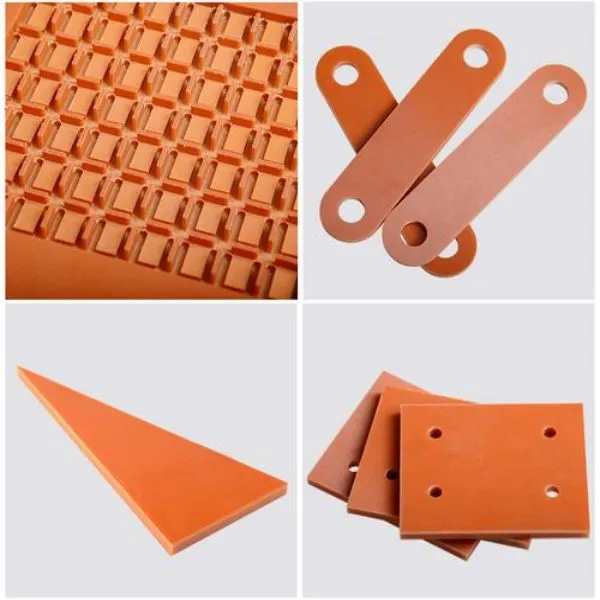
Phenolic paper board protects delicate components from heat damage during fault circumstances by acting as insulation panels and arc-resistant barriers in electrical switchgear applications. These materials are used in power distribution equipment for phase separation barriers and bus bar supports, where flame resistance and electrical insulation are essential safety requirements.
Phenolic paper board's dimensional stability helps electronic control panels by preventing warping that could jeopardize electrical clearances. The low thermal conductivity of the material preserves structural integrity throughout the frequent heat cycling that occurs in industrial settings while protecting temperature-sensitive components.
Industrial and Automotive Uses
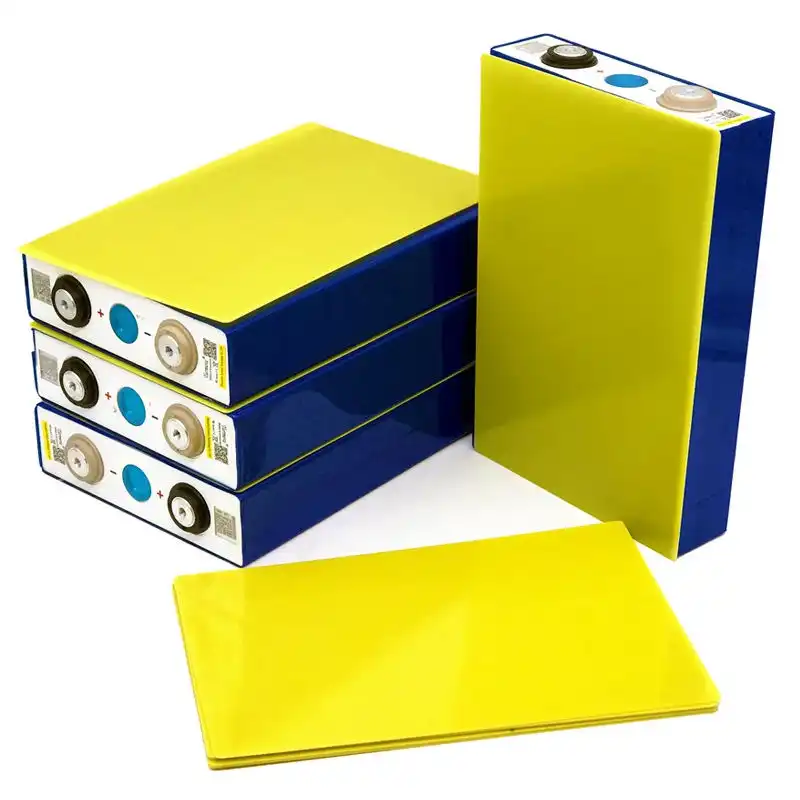
Battery pack thermal barriers are one type of automotive application where passengers and vehicle systems are protected by thermal insulation and fire resistance. Phenolic paper board is used for electrical insulation and heat shields in engine compartment components because of its stability in hot, vibration-prone conditions.
These materials are used by manufacturers of industrial machinery in structural insulation, gear housings, and motor housings. Over the course of the product's life, the material's ability to retain exact tolerances under heat stress lowers maintenance needs and prolongs equipment life cycles, which results in significant cost savings.
Procurement Guidance: Selecting and Buying Heat-Resistant Phenolic Paper Board
Purchasing phenolic paper board for high-temperature applications successfully necessitates paying close attention to supplier capabilities, quality assurance procedures, and technical criteria. Procurement experts can make well-informed decisions that maximize cost and performance by having a thorough understanding of these elements.
Technical Specification Requirements
Verified heat deflection temperatures, continuous operational temperature ratings, and thermal expansion coefficients are important parameters. While flame spread ratings could be necessary for building applications, UL recognition and RoHS compliance guarantee regulatory compliance for electrical applications. For structural applications, mechanical attributes like impact resistance and flexural strength should be specified.
For precision applications for phenolic paper board, dimensional tolerances become crucial, especially when thermal expansion needs to be managed. Requirements for surface finish have an impact on secondary processing processes like bonding or machining as well as appearance. Applications involving exposure to oils, solvents, or cleaning agents may require chemical resistance standards.
Supplier Evaluation Criteria
Consistent production procedures and quality control systems are guaranteed by quality certifications like ISO 9001. For complicated applications, technical support capabilities such as material testing services and application engineering help are extremely valuable. For particular applications, manufacturing flexibility for unique shapes, thicknesses, and property adjustments may be essential.
Logistics skills, inventory control, and lead time consistency are all parts of supply chain dependability. For multi-location enterprises, global suppliers with regional distribution networks can offer superior service. Benefits of long-term supplier relationships can include joint product development opportunities and preferential allocation during material shortages.
J&Q Phenolic Paper Board Solutions for Industrial Applications
High-performance phenolic paper boards designed especially for harsh heat conditions in a variety of industrial industries are J&Q's specialty. Standard grades designed for electrical insulation, improved formulas for applications requiring high temperatures, and customized solutions made to meet specific performance needs are all part of our extensive product line.
Having produced insulating materials for more than 20 years and engaged in worldwide trade for more than 10 years, we are aware of the crucial performance standards that influence material selection choices. Advanced quality control methods are included into our manufacturing processes to guarantee consistent mechanical qualities, dimensional correctness, and thermal performance that either meet or surpass industry standards.
Our technical staff offers thorough application support, which includes testing for performance validation, thermal analysis, and advice on material selection. Both prototype development and large-scale manufacturing requirements are accommodated by custom sizing capabilities and flexible order quantities. Furthermore, our integrated logistics services provide dependable delivery schedules that complement your inventory management goals and project timetables.
Incoming material inspection, in-process monitoring, and final product testing against predetermined performance requirements are examples of quality assurance procedures. The certification assistance needed for regulatory approval procedures is provided by UL recognition and RoHS compliance documents. Our dedication to ongoing development guarantees that our phenolic paper board solutions adapt to new performance standards and industry demands.
Conclusion
For continuous operation, phenolic paper board heat resistance limits normally fall between 150°C and 200°C; however, depending on particular formulations and applications, short-term exposure capabilities may extend beyond these ranges. Informed material selection for challenging industrial situations is made possible by an understanding of these thermal boundaries as well as the performance-influencing factors.
The material is the best option for electrical insulation, automotive parts, and industrial machinery applications due to its special blend of mechanical dependability, flame resistance, and thermal stability. Successful installation and long-term performance satisfaction are ensured by careful assessment of supplier capabilities, environmental circumstances, and application requirements.
FAQ
What is the maximum operating temperature for phenolic paper board?
Phenolic paper board typically operates continuously at temperatures between 150°C and 200°C, depending on the specific grade and formulation. Some specialized high-temperature variants can withstand intermittent exposure up to 220°C. The exact temperature limits depend on factors such as thickness, resin type, and environmental conditions including humidity and mechanical stress.
How does phenolic paper board compare to other insulation materials in fire safety?
Phenolic paper board offers superior fire resistance compared to traditional wood-based materials and many plastic laminates. Most grades achieve UL 94 V-0 flame ratings, meaning they self-extinguish quickly when the flame source is removed. The material produces minimal smoke and toxic gases during combustion, making it safer than many alternative materials for electrical and building applications.
Can phenolic paper board be customized for specific thickness and size requirements?
Yes, phenolic paper board can be manufactured in custom thicknesses typically ranging from 0.5mm to 50mm, with larger thicknesses available for special applications. Custom sizing including precision cutting and machining services accommodate specific dimensional requirements. Lead times for custom specifications vary based on complexity but typically range from 2-4 weeks for standard modifications.
Contact J&Q for Premium Phenolic Paper Board Solutions
J&Q delivers industry-leading phenolic paper board solutions engineered for superior thermal performance in demanding industrial applications. Our experienced technical team provides comprehensive support from material selection through implementation, ensuring optimal performance for your specific requirements. As a trusted phenolic paper board manufacturer with decades of industry expertise, we offer competitive pricing, reliable delivery, and exceptional quality assurance.
Contact us at info@jhd-material.com to discuss your thermal insulation requirements and discover how our premium phenolic paper board products can enhance your application performance.
References
Smith, J.R. and Thompson, K.L. "Thermal Performance Characteristics of Phenolic Resin Composites in Industrial Applications." Journal of Materials Engineering, Vol. 45, No. 3, 2023, pp. 234-251.
Anderson, M.P. "Heat Resistance and Fire Retardancy of Laminated Phenolic Materials." International Conference on Advanced Composites Proceedings, 2022, pp. 156-172.
Williams, D.C., et al. "Comparative Analysis of Thermal Degradation in Phenolic Paper Board Systems." Materials Science and Technology Review, Vol. 38, No. 7, 2023, pp. 445-462.
Brown, A.K. "Industrial Applications of High-Temperature Phenolic Composites: A Comprehensive Review." Chemical Engineering Materials Quarterly, Vol. 29, No. 2, 2022, pp. 78-95.
Johnson, R.M. and Davis, S.E. "Thermal Stability and Mechanical Properties of Phenolic Paper Board Under Extended Heat Exposure." Composite Materials Research Journal, Vol. 31, No. 4, 2023, pp. 312-328.
Taylor, P.L. "Phenolic Resin Matrix Composites: Thermal Performance and Industrial Implementation Strategies." Advanced Materials Processing Review, Vol. 42, No. 6, 2022, pp. 201-218.
 拷贝.webp)