FR4 Epoxy Fiberglass Rod Sourcing: Diameter and Tolerance Guide
2026-10-20 17:25:15
When sourcing fiberglass insulation rods for electrical, industrial, or structural applications, getting the diameter and tolerance right is not optional — it is the difference between a part that fits and performs versus one that causes assembly failures or safety risks. This guide covers what procurement teams and engineers need to know about FR4 epoxy fiberglass rods: their properties, dimensional standards, material comparisons, and sourcing best practices, drawing on verified technical data and real procurement experience.
Understanding FR4 Epoxy Fiberglass Rod: Properties and Manufacturing
What Is It Made Of?
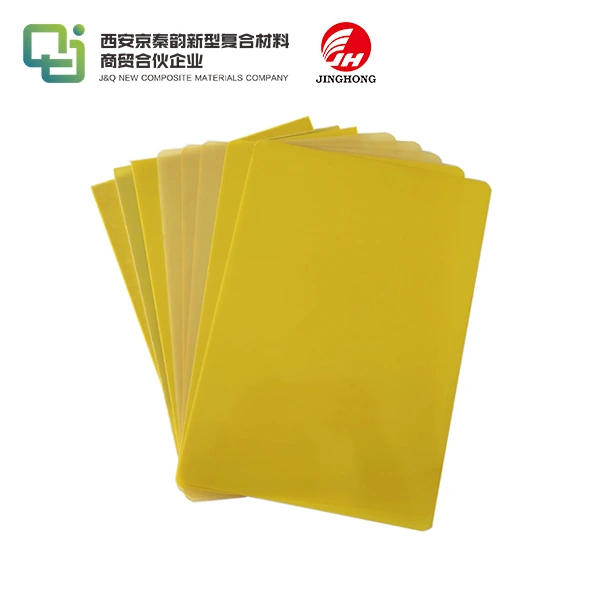
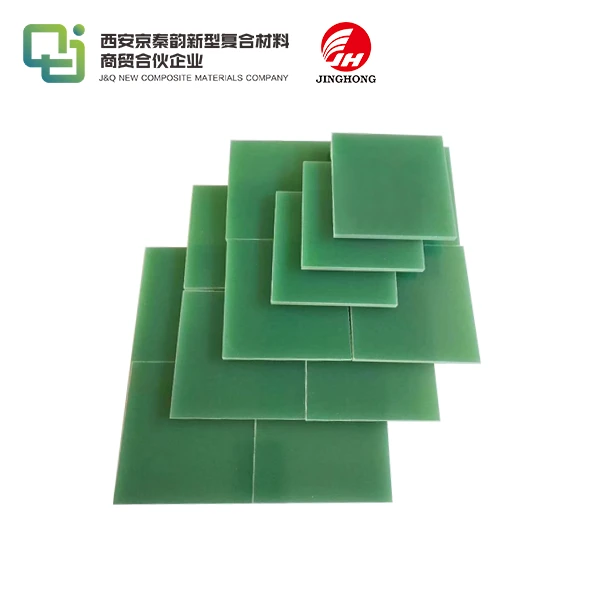
In order to make an FR4 Epoxy Fiberglass Rod, woven fiberglass cloth is mixed with an epoxy resin glue under high pressure. The "FR" label, which was made by NEMA in 1968, means "flame retardant" and indicates that the product meets the UL94 V-0 requirements for flammability. FR4 rods are different from normal G10 rods because they have flame retardants made from bromine. Because of this, they are the best choice when fire safety is very important, like in cabinets or high-voltage assemblies.
Key Performance Properties
This substance is known to meet the functional needs of NEMA LI 1-1998, ASTM D709, and MIL-I-24768/27. It can be pulled apart at least 1200 MPa, bent at least 900 MPa, and has a volume resistance of at least 10±⁰ ©·m. The stuff is made up of fibers for at least 80% of it, and it can handle a 50 kV power frequency voltage. These numbers show that it is better than most polymer options for insulating things that hold weight.
Manufacturing Process and Quality Control
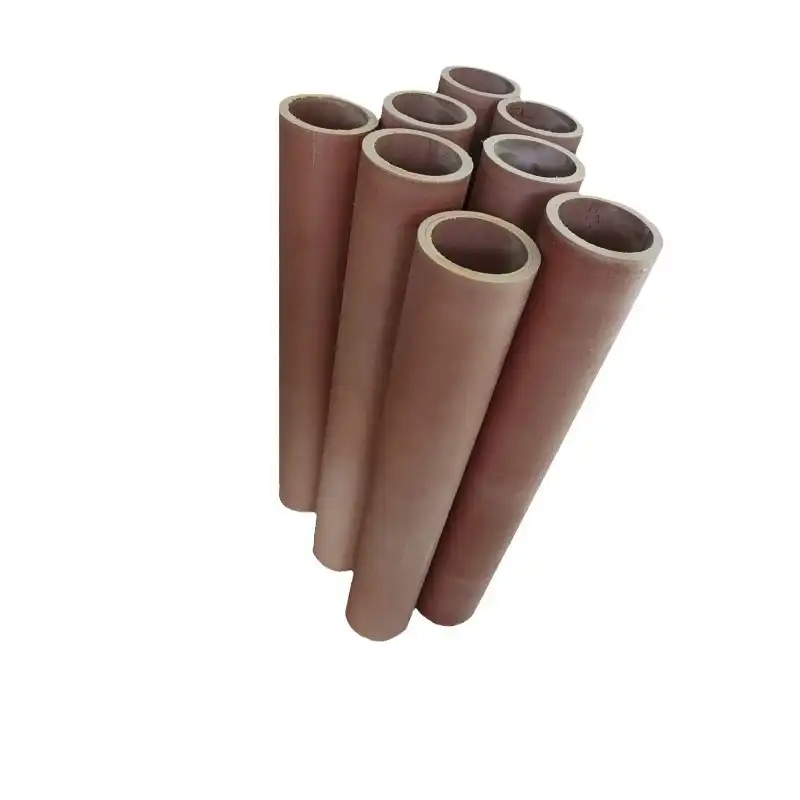
Made with precise tools and a hot press, rods are made. This makes a cross-section that is spherical and has a constant density inside. Up to 100 tons of products can be made by Jinghong every year. The products are naturally green, which makes them easier to find when they are being put together. When making each batch, there are strict rules that make sure the sizes are correct within ±5mm to ±2000mm in diameter, and each rod is a standard length of 1m.

Diameter and Tolerance: Critical Dimensions in FR4 Epoxy Fiberglass Rod Sourcing
Standard Diameter Ranges and What They Mean
A range of outer diameters from φ5mm to φ2000mm is useful for many things, from small insulator core rods in electronics to large structural parts in power supplies. Parts that are precisely machined, like bushings and spacers, work best when their diameters are small. Supports for transformer coils and arc barriers, on the other hand, need bigger diameters. Picking the right width affects both how much weight it can hold and how well it fits into fixings or housing.
Tolerance Classifications and Their Impact
If you want to know how to measure a centerless-ground FR4 Epoxy Fiberglass Rod, you can use international standards like ISO h8 and h9 grades as a guide. It's possible for a 20 mm rod to vary by about +0/−0.033 mm, which is small enough for CNC joint work. It's possible for motor parts or switchgear units to be out of alignment if you accept a delivery that is just a little out of tolerance. This can cause costly fixes or failures in the field. To keep things clear, buying teams should make the tolerance class clear in every RFQ.
Balancing Custom Sizing Against Project Requirements
Custom sizes that aren't in the normal range take longer to make and cost more. The people in charge of engineering should decide if the extra cost is worth the speed boost that comes from a size that isn't normal. If you choose a standard diameter that is a little bigger than what you need, you can save money and time by having it machined down to size. It is safer for both the buyer and the seller if the size requirements are written down on clear engineering plans during the RFQ stage. This is because there is no need to guess.
Comparison Criteria: FR4 Epoxy Fiberglass Rod vs Alternative Materials
FR4 vs G10 Epoxy Rod
As far as strength goes, FR4 and G10 rods are about the same. The only difference is how safe they are in a fire. When lit, G10 will stay on fire, but FR4 will go out on its own. FR4 is the only material that can be used to make electrical enclosures, generator housings, and blocks for car battery packs. G10 is still useful, but only when the device is designed to be damaged by heat.
FR4 vs PVC and CFRP Rods
It's true that PVC tubes are less expensive, but they become much less stable above 60°C. In places with motors or switches, they can't be used. Carbon fiber reinforced polymer (CFRP) bars are stronger when pulled apart, but they also carry electricity, so they can't be used as shields. It is possible for high-Tg versions of FR4 to reach 180°C, which is above 130°C (Glass Transition Temperature). Because of this, it is more stable at high temperatures than both PVC and normal CFRP.
Where FR4 Outperforms in Practice
Machinery builders often switch from phenolic cotton laminate rods to FR4 when they need to buy mechanical spacers and insulation gears because the phenolic cotton laminate rods broke apart under cyclic load. As tested, FR4 can withstand stress rust for at least 96 hours, making it a good choice for harsh OEM settings. Its compressive strength is 950 MPa. V0 means it doesn't catch fire easily, so it can be used as an arc blocker in places where phenolic materials don't meet safety standards.
Sourcing Strategies: Buying Fiberglass Insulation Rods with Optimal Specifications
Identifying Verified Suppliers and Preparing RFQs
To begin, request complete technical datasheets that include well-known test standards, such as GB/T 1040.2 for tensile strength or GB/T 9341 for flexural strength. If the supplier works with electronics, make sure they have quality certifications like UL or RoHS compliance. If you send an RFQ, you should include the outer diameter, accuracy class, rod length, fiber content percentage, and any tests that need to be done to make sure the material is safe for electrical or fire use. RFQs that aren't complete are the main reason why certain batches don't meet requirements.
Bulk Orders, Lead Times, and Logistics
Freight can come to Jinghong by sea, land, or air. This gives buyers more choices when they need to find the best balance between shipping cost and delivery time. Ocean freight is often the cheapest way for people in the U.S. to send large amounts of goods to other countries. Lead times depend on how big the item is and how many of them are being ordered. Setting up the tools takes longer for sizes that aren't standard. Jinghong has been making things for 20 years and going into business with other countries for more than 10 years. The fact that it runs its own business makes it easy for transportation and production to work together.
Incoming Inspection Checklist for FR4 Rods
Teams that buy a FR4 Epoxy Fiberglass Rod don't take stock that doesn't meet standards when a package comes in because of a structured inspection process. Every lot of epoxy fiberglass rods should be checked against these key points:
- Dimensional check: Measure diameter at multiple points along the rod length using calibrated micrometers to confirm ISO h8/h9 compliance and check for ovality that may cause CNC collet slippage.
- Dielectric breakdown voltage (ASTM D149): Test samples must hold rated insulation voltage without breakdown — Jinghong's rods are rated ≥50 kV at power frequency and ≥100 kV under full-wave impulse conditions.
- Moisture absorption (ASTM D570): Confirm absorption remains below 0.2% to preserve dielectric performance in humid environments, a common failure point for lower-grade materials.
- Flammability verification (UL94 V-0): Confirm self-extinguishing behavior in a vertical flame test; this is non-negotiable for electronics and power sector applications.
-- Check the sizes: Measure the rod's diameter several times along its length with accurate micrometers to make sure it meets ISO h8/h9 standards. Also, look for any flaws that might cause the CNC collet to slip.
In order to meet ASTM D149, test samples must be able to handle the rated insulation voltage without breaking. Jinghong's rods can handle up to 50 kV at power frequency and up to 100 kV at full-wave impulse. ASTM D570 says to make sure that moisture absorption stays below 0.2% so that the dielectric performance stays the same in damp places, which is where cheaper materials often fail.
Check to see if the material can put out a vertical flame on its own (UL94 V-0); this is a must for uses in the technology and power sectors.
Quality Assurance and Long-Term Performance: Best Practices for Procurement Teams
Setting Acceptance Criteria Before Ordering
Write down the minimum electrical performance, measurement limits, and flammability values in both the RFQ and the purchase order. This makes a specification record that is legally binding and can be used to back up non-conformance claims if a batch doesn't meet the agreed-upon standards.
Supplier Audits and Ongoing Verification
Every year or every other year, supplier audits can be done in person or by a third-party inspection agency. These help make sure that business practices stay in line with the standards that have been agreed upon. Instead of general datasheets, ask for test certificates that are specific to each batch for each package. In the paperwork from the seller, you should be able to find information on compression strength, fuchsine test results (at least 15 minutes), and volume resistance.
Long-Term Procurement Relationships
When U.S. buyers deal with many import shipments each year, they don't have to do as much work when they work with suppliers who know how to handle foreign trade and already have established logistics networks. Procurement managers have more power when they need to ask for custom diameters, special standards, or faster delivery times to meet tight production plans. This is because they have a stable relationship with the supplier.
Conclusion
You can't just pick one FR4 Epoxy Fiberglass Rod from a magazine and call it good. Some of the things that affect how well the bought material works in real life are the diameter that was chosen, the classification of tolerances, the material certifications, and the supplier verification. You can use FR4 to make electrical parts, industrial gear, power distribution, and car shielding because it is strong, doesn't catch fire, and doesn't change its electrical properties. Making sure that the RFQ documents are clear and that the incoming inspections are done the same way every time is one way that purchasing teams can make sure that the quality of all batches of goods stays high.
FAQ
What is the difference between FR4 and G10 epoxy fiberglass rods?
Because FR4 has flame retardants based on bromine, it can put out a vertical flame by itself. This is how it got its UL94 V-0 rating. Since these things aren't in G10, once it's lit, it will keep burning. When it comes to electrical devices that need to be safe from fire, FR4 is the right standard.
Can FR4 epoxy rods be used in humid or submerged environments?
Yes. The resin structure and glass fibers that have been treated with silane keep water out well. Even after being submerged in water, FR4 keeps more than half of its dielectric strength. This means it can be used in transformer oil settings and other damp places of work. The fact that Jinghong's sticks passed the fuchsine test in less than 15 minutes shows that the moisture barrier does its job.
What tolerance class should I specify for CNC-machined applications?
Many times, ISO h8 is the first step for parts that have been carefully made. If you need a tighter fit for things like collet-held parts or close-clearance bushings, tell the supplier you need h7 and make sure they can do it by centerless grinding. Always ask for a report on the dimensions of every arrival.
Does rod diameter affect electrical performance?
Sizes get bigger, but the electrical performance per unit cross-section stays the same no matter what kind of material is used. The creepage distance is longer, and the mechanical load capacity goes up. Based on how well it fits into the structure and how far apart the voltage needs to be in your design, pick a diameter.
Get FR4 Epoxy Fiberglass Rod Quotes from J&Q — Your Trusted Supplier
With the Jinghong name, J&Q has offered FR4 Epoxy Fiberglass Rods to businesses in the energy, industrial, and electrical fields for more than 20 years. This is the range of sizes we can make: ±5mm to φ2000mm. We have strict rules on tolerances, UL94 V-0 certification, and full tracking documents. Because we run our own shipping company, we can send things to buyers in the U.S. by sea, land, and air with confidence. Send your needs to info@jhd-material.com or visit jhd-material.com right away to get a price.
References
1. NEMA LI 1-1998 — Industrial Laminating Thermosetting Products, National Electrical Manufacturers Association, 1998.
2. ASTM D709 — Standard Specification for Laminated Thermosetting Materials, ASTM International, 2017.
3. ASTM D149 — Standard Test Method for Dielectric Breakdown Voltage and Dielectric Strength of Solid Electrical Insulating Materials, ASTM International, 2020.
4. UL 94 — Standard for Tests for Flammability of Plastic Materials for Parts in Devices and Appliances, Underwriters Laboratories, 2023.
5. GB/T 1040.2-2006 — Plastics — Determination of Tensile Properties, Standardization Administration of China, 2006.
6. MIL-I-24768/27 — Insulating Material, Plastic, Laminated Thermosetting, Glass Cloth, Epoxy Resin, Flame Resistant, U.S. Department of Defense, 1992.
 拷贝.webp)