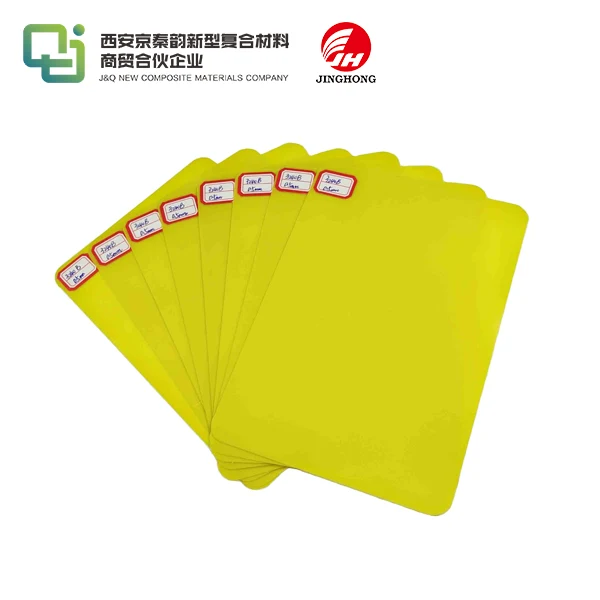
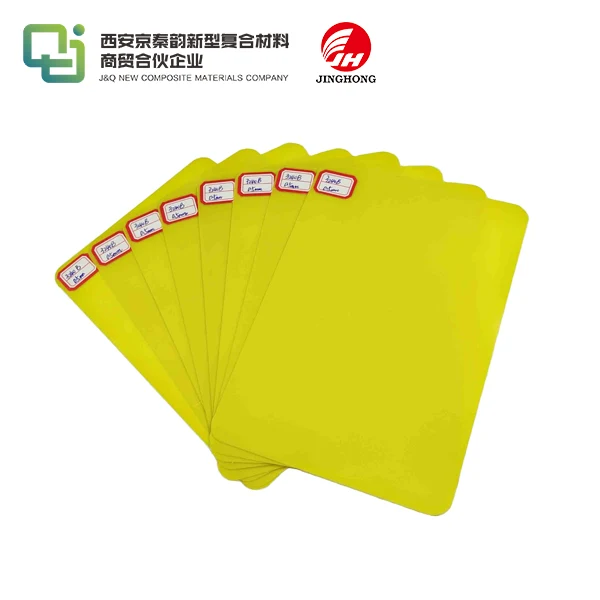
FR4 Epoxy Laminate Provides Consistent Quality for Electronic Assembly
2026-08-04 17:17:45
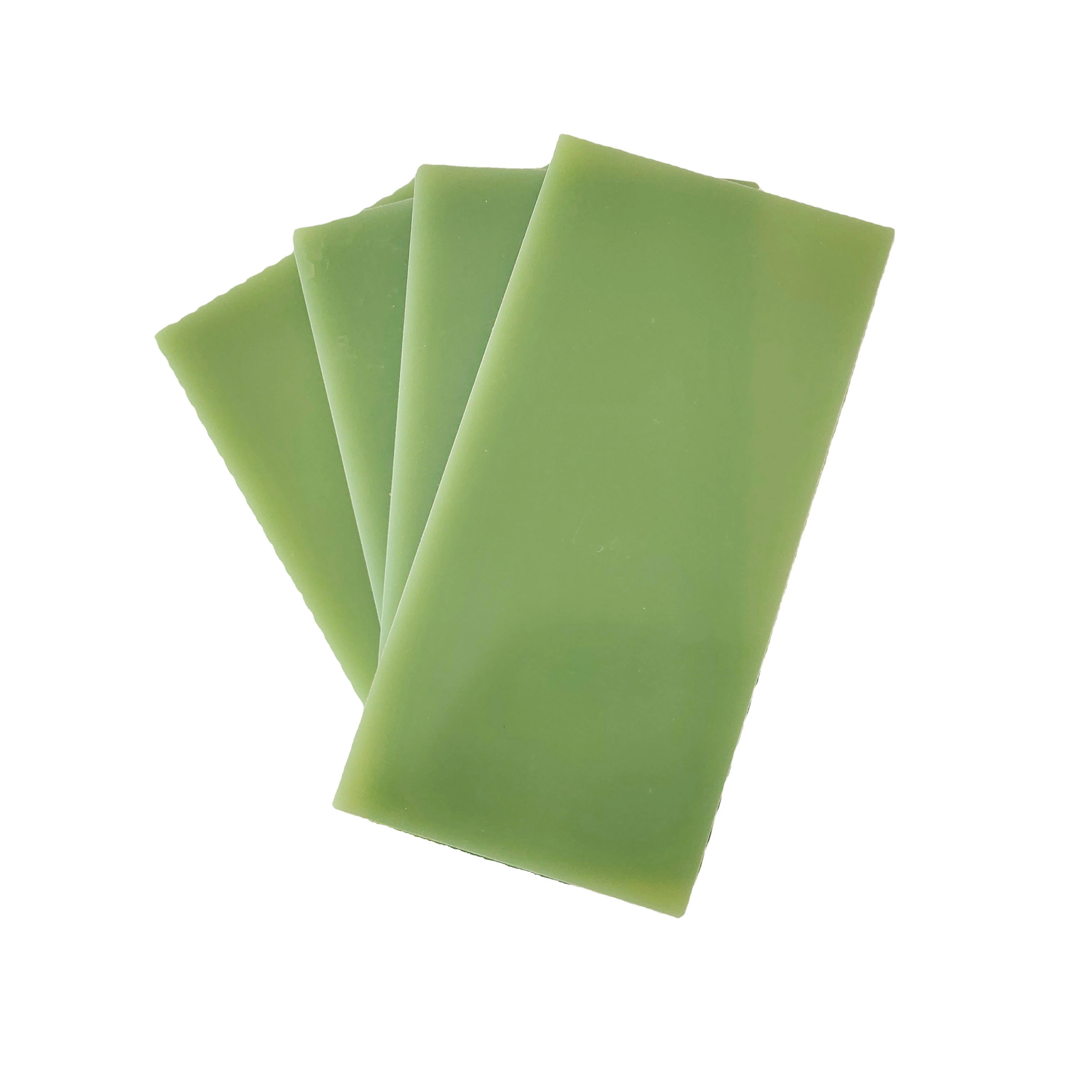
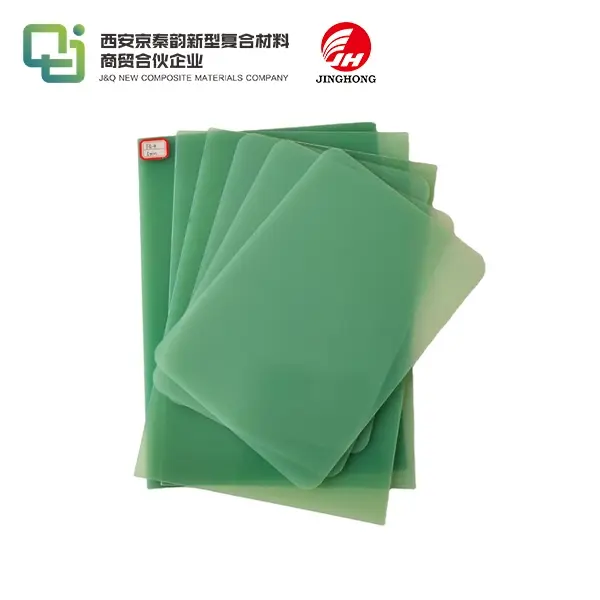
When your electronic assembly line faces inconsistent board performance or thermal failures during reflow soldering, the root cause often traces back to substrate quality. FR4 Epoxy Laminate has emerged as the industry standard for PCB fabrication because it delivers predictable electrical insulation, mechanical stability, and flame resistance across diverse manufacturing environments. This glass-reinforced epoxy composite material ensures your production maintains tight tolerances while meeting stringent safety certifications, making it the backbone of reliable electronic assemblies in telecommunications, power distribution, automotive systems, and consumer electronics.
Understanding FR4 Epoxy Laminate and Its Core Properties
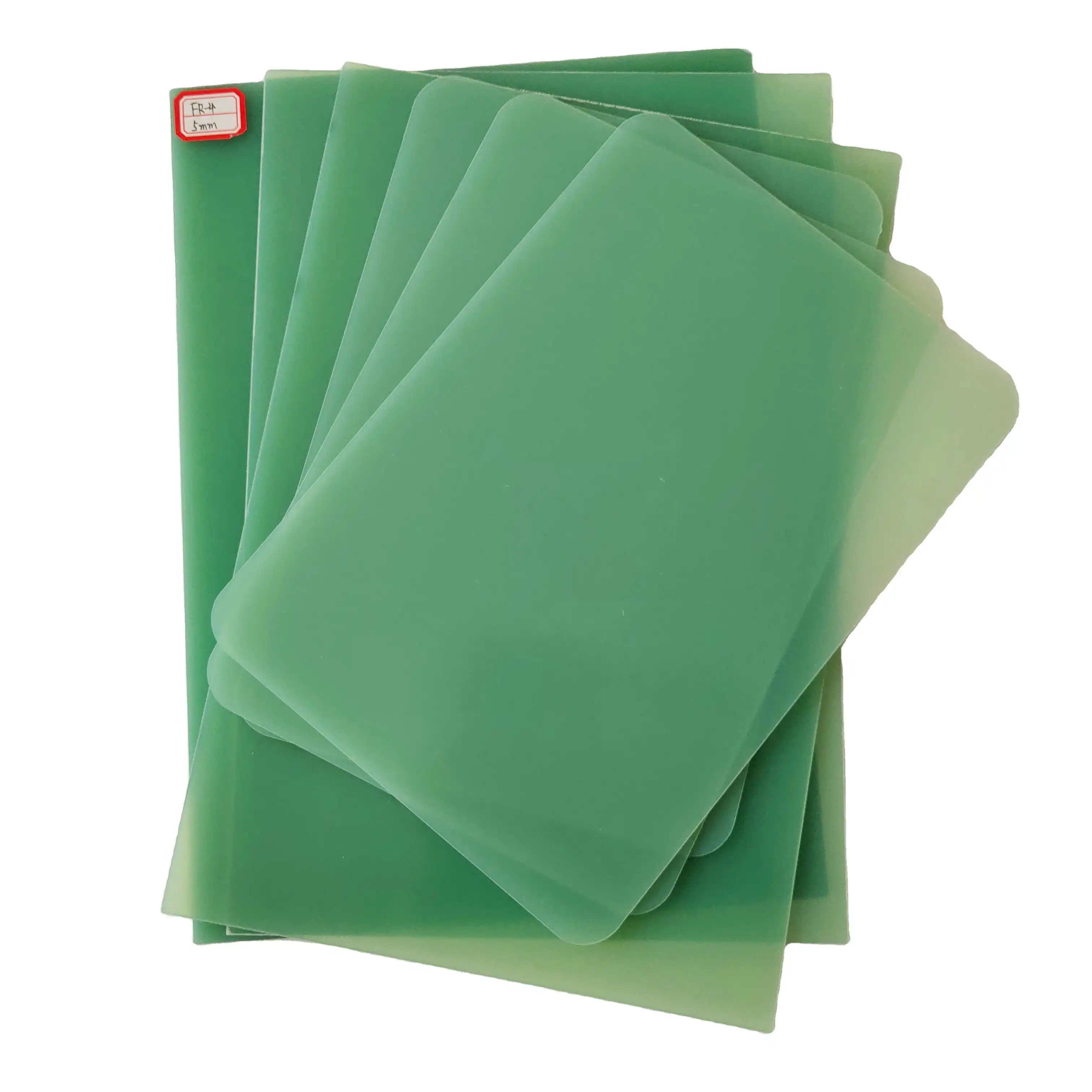
Choosing materials that won't break down under real-world stress is the key to making sure that a computer system works well. FR4 Epoxy Laminate stands for "Flame Retardant 4," which means that it can put out fires on its own and meets UL94 V-0 standards. This composite material is made up of woven fiberglass cloth that has been soaked with epoxy glue. This creates an uneven structure that gives it great tensile strength along the X and Y axes.
Composition and Manufacturing Excellence
Twenty years of making shielding materials have taught us that the quality of FR4 Epoxy Laminate starts with the correct mixture of the resin. The brominated chemicals in the epoxy glue stop the material from burning, so it goes out on its own in 10 seconds after an ignition source is taken away. This flame retardancy isn't just a nice-to-have trait; it's often required by law for electronic devices that can get too hot because of electricity problems or the surroundings.
E-glass fibers are usually woven into the woven glass fabric reinforcement in either a plain or twill weave pattern. Multiple layers of pre-impregnated glass cloth are heated and pressed together in a lamination press during production. This makes sheets that are all the same thickness, which can be anywhere from 0.008 inches to several inches for specific uses. The controlled hardening process makes sure that the density is always the same, which is usually between 1.80 and 1.90 g/cm³. This helps the material's strength-to-weight ratio be so good.
Critical Technical Parameters
When you look at the detailed datasheet, you can see why engineering managers and buying teams choose FR4 Epoxy Laminate for tough jobs. The Glass Transition Temperature (Tg) is a very important measure of how well something handles heat. Standard FR4 Epoxy Laminate works well at 130°C to 140°C, but High-Tg variants with transition temperatures between 170°C and 180°C are needed for lead-free soldering processes that reach 240°C to 260°C. PCB pad lifting and delamination become big problems during assembly if there aren't enough Tg margins.
It's amazing how little water it absorbs—less than 0.10% after 24 hours of immersion—which stops electrical leakage and keeps the dielectric integrity in damp places. The bending strength is more than 400 MPa along the lengthwise direction, which makes sure that the structure stays strong when it's under mechanical load. Rockwell M hardness scores between 110 and 115 make the material very resistant to wear and tear when it is being handled or machined.
When measured perpendicular to laminations, dielectric strength is usually higher than 45 kV. This provides strong safety against electrical breakdown in high-voltage situations. At 1 MHz, the dissipation factor stays below 0.02, which means that FR4 Epoxy Laminate can be used on high-frequency circuit boards in telecommunications facilities where signal loss needs to be kept to a minimum.
Comparing FR4 Epoxy Laminate to Alternative Laminates
To choose the best substrate material, you have to balance performance needs with budget limits and the needs of the application. Even though FR4 Epoxy Laminate is the most common material used for general-purpose electrical assembly, procurement experts can make better choices when they know when other materials are more cost-effective.
Performance Against Competing Materials
G10 laminate is also made of glass and resin, but it doesn't have the brominated flame retardants that make FR4 Epoxy Laminate self-extinguishing. As a result, FR4 Epoxy Laminate has mostly replaced G10 in places where fire safety rules must be followed. Since there isn't much of a price difference between these two materials, FR4 Epoxy Laminate is the obvious choice for most electronic assemblies.
Parts of the support in CEM-1 and CEM-3 composite materials are made of non-woven glass or paper instead. This lowers the cost of single-sided PCBs used in household electronics. But these materials don't have the mechanical strength or resistance to moisture that FR4 Epoxy Laminate does. This means that they can't be used in industrial tools or cars where dependability is important.
Polyimide laminates work great in places with very high or very low temperatures; they stay stable at temperatures that are above 200°C for extended periods of time. The much higher costs of the materials are worth it for aerospace and defense uses, but High-Tg FR4 Epoxy Laminate works just as well for most industrial machinery and power distribution equipment at a much lower cost.
In order to get lower dielectric constants and dissipation factors, Rogers and Arlon's high-frequency laminates use special glue systems and ceramic fills. For RF circuits that work above 1 GHz, like 5G base station parts, these materials become necessary. For digital circuits and power systems where signal frequencies stay below this level, standard FR4 Epoxy Laminate is still the best choice.
Cost-Effectiveness Across Applications
FR4 Epoxy Laminates are very popular because they can be used in a lot of different ways. Electrical and electronics companies like that a single material base can be used for PCB boards, motor insulation parts, and switchgear barriers. This standardization makes it easier to keep track of supplies and make sure that suppliers meet certain requirements. This makes buying easier for technical teams.
The expected ability of FR4 Epoxy Laminate to be machined helps people who build industrial machines make mechanical spacers, structural insulation panels, and wear-resistant parts. With carbide or diamond-tipped tools, the material can be machined cleanly to make parts with tight tolerances on size that keep working well under heavy loads.
Procurement Considerations for FR4 Epoxy Laminate
Finding the lowest unit price is not enough to make sure you have a steady supply of FR4 Epoxy Laminate. Over the past ten years, working with both domestic and international trading companies has taught us that good procurement strategies balance cost, quality assurance, and the ability of the supply chain to keep going.
Supplier Evaluation Criteria
Quality certificates are the basis for judging a seller. For flame resistance scores, look for companies that keep up with ISO 9001 quality control systems and UL recognition. Products going on the North American market need to have ROHS compliance documentation to make sure the materials meet the rules about not having lead or other dangerous substances.
The truth of a product datasheet is what sets professional sellers apart from unreliable ones. Ask for test reports that show Tg values, measurements of dielectric strength, and thickness tolerances. Manufacturers with a good reputation give batch-specific certificates of approval that link the qualities of materials to specific production runs instead of general averages.
Strategic Sourcing Approaches
Minimum order quantities have a big effect on the cost of buying things for mid-sized manufacturers. Global distributors let you choose the size of your order, but working directly with FR4 Epoxy Laminate manufacturers is more cost-effective when you use more than a few hundred sheets per month. Because we have combined operations, we can offer a one-stop service that makes it easier to schedule deliveries and lowers the cost of freight.
Lead times depend on the width requirements and copper covering needs. It usually takes two weeks to ship standard thicknesses with single-sided copper, but it could take four to six weeks for custom FR4 Epoxy Laminate configurations. By keeping extra of certain thicknesses in stock, you can keep production going even when demand suddenly rises.
Customization options go beyond just choosing the thickness. By choosing the right copper foil weight, surface treatment, and sheet size for your CNC cutter bed, you can cut down on waste and cutting time. When making battery pack barriers and insulation pads with precise shapes, automotive component makers really value these customizable options.
Advantages of FR4 Epoxy Laminate in Electronic Assembly
Glass-reinforced epoxy surfaces are widely used because they have been shown to work well in harsh industrial settings. Consistent FR4 Epoxy Laminate properties directly lead to more efficient production and more reliable products, which procurement managers can measure.
Dimensional Stability Under Thermal Stress
During the reflow soldering, wave soldering, and conformal coating steps of electronic assembly processes, PCBs are put through a lot of harsh thermal cycling. Because FR4 Epoxy Laminate has a low rate of thermal expansion, especially along the Z-axis, the layers on layered boards stay in place. This physical stability makes sure that metal through-holes work well even after being heated many times.
FR4 Epoxy Laminates are used to make wave solder boards and test tools that don't warp after thousands of thermal cycles. Our industrial customers say that FR4 Epoxy Laminate jigs keep the accuracy of alignment to within 0.001 inches even after long production runs. This keeps them from having to replace expensive fixtures and cuts down on the time it takes to set up new products.
Electrical Performance Consistency
The dielectric properties stay the same across the operating temperature range. This makes sure that high-speed digital signals have stable impedance control. When they make coil insulation and arc barriers, power delivery companies and transformer makers respect this stability. The breakdown voltage of the material is higher than most service voltages by a safe amount, protecting against short-lived overvoltage events.
Arc resistance is very important in high-voltage switchgear applications where electrical problems can cause arcing to last for a long time. When FR4 Epoxy Laminate sheets are cut into arc chutes and phase barriers, they stop catastrophic flashovers that could damage equipment and put people in danger. The self-extinguishing features of the material keep electrical fires contained, so damage is limited to specific areas and flames don't spread throughout shelters.
Long-Term Value Proposition
The initial prices of materials are only a small part of the total costs of a product over its lifetime. When substrate degradation leads to equipment failures, it causes warranty claims, field service calls, and damage to the brand's reputation that is much worse than any savings from using cheaper materials. Manufacturers of home appliances know that using tested FR4 Epoxy Laminates for motor brackets and insulation frames cuts down on calls for repairs and makes products last longer.
When working with materials that have properties that stay the same from batch to batch, quality control costs go down. Incoming inspection methods can change from checking each lot in detail to taking samples on a regular basis for verification. This lets quality engineers focus on improving processes instead of qualifying materials.
Real-World Applications Beyond Standard PCBs
Printed circuit boards are still the most common use, but FR4 Epoxy Laminate can also be used in a wide range of industrial situations where material predictability is important.
High-Frequency Telecommunications Infrastructure
As 5G networks are built out, they need materials that keep signals from getting lost and can withstand being outside. FR4 Epoxy Laminate with a high Tg value is used as the dielectric backbone for layered PCBs in base station radio units and huge MIMO antenna arrays. The material's low dissipation factor at microwave frequencies makes data transfer efficient, and its resistance to moisture keeps electrical performance stable as humidity changes with the seasons.
In data centers, server backplanes send differential signals at high speeds between processor modules and memory arrays. At multi-gigabit data rates, controlled impedance lines on FR4 Epoxy Laminate substrates keep the purity of the signal, stopping bit errors that could hurt the accuracy of computing. The material is mechanically strong, so it can hold heavy connection loads without deflection, which could cause mated interfaces to break from time to time.
Industrial Power Distribution Systems
Medium-voltage circuit breakers have arc chutes that must contain and put out electrical arcs when the fault is interrupted. Ionized gases are kept away from live bus bars by machined FR4 Epoxy Laminate shields that can withstand the high temperatures that are created during arcing events. Because the material is both arc-resistant and mechanically strong, it keeps structures from breaking down, which could let arcs happen again.
In switchgear systems, busbar supports keep high-current wires from touching grounded parts. FR4 Epoxy Laminates keep their dielectric properties even when they are heated continuously by resistive heating. This keeps the insulation from breaking down, which could cause phase-to-ground faults. The physical stability makes sure that the locations of the fixing holes stay correct even if the temperature changes during normal use.
Precision Manufacturing Fixtures
Pick-and-place tools that are automated need work-holding fixtures that stay accurate in size over thousands of production rounds. FR4 Epoxy Laminate pallets hold PCBs in place while wave soldering. They keep the board surfaces safe from molten solder and spread heat evenly across assembly areas. With a thermal conductivity of about 0.25 W/mK, the material moves heat well without creating hot spots that could damage temperature-sensitive parts.
Before final packing, test tools probe circuit boards to make sure they work electrically. The FR4 Epoxy Laminate construction makes the fixing surfaces for spring-loaded test pins stable, which makes sure that the contact resistance stays the same during high-volume testing. Because the material is insulating, signals don't crosstalk between test points that are close to each other, which could lead to false readings.
Quality Control Standards for Incoming Inspection
When materials arrive that meet specifications without needing a lot of testing to make sure, procurement decisions have proven their worth. Receiving teams can find nonconforming FR4 Epoxy Laminate before it goes into production if they know the key checking parameters.
Glass Transition Temperature Verification
Differential Scanning Calorimetry is the most accurate way to measure Tg because it can see how the heat capacity changes as epoxy goes from being shiny to flexible. When approving new suppliers or moving between types of material, this test is now required. To keep pad lifting problems from happening during lead-free assembly processes, automotive tier-1 suppliers usually need Tg confirmation on the first production lots.
Surface Quality Assessment
Surface flaws that make it hard for copper cladding to stick can be seen with the right lighting. When there isn't enough epoxy to cover the glass weave, fiber show-through happens because there isn't enough resin. Measling shows up as white spots that show the fiber-matrix split from production moisture contamination. These flaws weaken the peel and make it more likely that the layers will separate during heat cycles.
Digital micrometers are used to measure thickness to make sure it meets the requirements of the order. In layered board lamination, registration mistakes happen when sheet sizes vary too much. Manufacturers in the power and energy sector set tight thickness standards to make sure that the insulation around transformer coils always has the same electrical gaps.
Electrical Property Validation
In high-voltage breakdown tests, the voltage is raised perpendicular to the lamination lines until the dielectric breaks. This damaging test on sample coupons proves that the glue is completely cured and there are no holes in the coupons. Breakdown voltages below the minimums listed in the document mean that there were problems during production that require the lot to be thrown away.
Using a surface plate and a dial indicator, warp and twist measurements check how flat a sheet is. Robotic assembly machines, especially pick-and-place machines that need flat substrate surfaces for vacuum hold-down systems, can't work properly when there is too much distortion. The IPC-4101 standards say how much a sheet can bend depending on its thickness and size. Usually, the limits are between 0.75% and 1.5% of the diagonal measurement.
How to Choose the Right FR4 Epoxy Laminate Supplier
When deciding to work with an FR4 Epoxy Laminate supplier, it's not just about negotiating prices. For long-term success in manufacturing, you need suppliers whose skills match your production needs and growth plans.
Technical Support and Documentation
Technical support teams that are quick to respond help solve problems with applications and suggest material grades for new product designs. Suppliers who offer help with field application engineering add value beyond just selling raw materials. When car engineers make battery pack barriers that need specific FR4 Epoxy Laminate specifications, working together with suppliers shortens the time it takes to build new products.
Professional manufacturers can be told apart from sellers who just resell generic materials by their thorough product paperwork. Full mechanical, electrical, and thermal property tables with test method references should be included in detailed datasheets. Processing standards for drilling, machining, and bonding processes help production engineers get the best results from the factors of creation.
Supply Chain Resilience
Dependencies on a single source make production more likely to stop when a seller has problems with quality or capacity. Getting critical FR4 Epoxy Laminate from more than one approved source gives you supply security without lowering quality standards. Our long-term partnerships with several laminate makers allow us to use flexible buying methods that can be changed to meet the needs of the market as it changes.
Geographic diversity lowers the risk of problems in the area caused by things like natural disasters, strikes in the transportation industry, or changes in trade policy. When unexpected demand comes up, emergency replenishment lead times are cut down when suppliers keep inventory close to your manufacturing facilities.
Value-Added Services
Material cutting and turning services turn raw sheets into blanks that are ready for production, which means you don't have to do as much work yourself. With CNC routing, suppliers can make parts that exactly match your needs, so you don't have to waste material on sheets that are too big. When it doesn't make sense to have dedicated in-house machining capacity for low-volume specialty applications, these value-added services become very appealing.
Inventory management programs make sure that production keeps going while shifting the costs of moving materials to providers. Vendor-managed inventory systems and consignment agreements free up working capital that can be used for other business priorities. They also make sure that FR4 Epoxy Laminate is always available for just-in-time manufacturing.
Conclusion
To choose the best substrate material for electronic assembly, you need to carefully look at how well it works technically, how reliable the supplier is, and the total cost of ownership. FR4 Epoxy Laminate has the balanced qualities that companies that make electronics and electrical goods, build industrial machinery, distribute electricity, supply parts for cars, and make appliances need for tough jobs. The material's consistent dielectric strength, thermal stability, and mechanical sturdiness make it easier to make things and make sure the products are reliable, which buying teams can measure. When engineering managers know about important quality parameters and supplier selection criteria, they can make decisions that support production goals while keeping costs low.
FAQ
What distinguishes FR4 from G10 laminate materials?
Both products are made of glass and resin, but FR4 Epoxy Laminate has brominated flame retardants that make it UL94 V-0 flammability rated. G10 doesn't have this fire resistance, so it can't be used in places where fires need to go out on their own. FR4 Epoxy Laminate has mostly taken the place of G10 in electronics manufacturing where safety rules must be followed.
Can standard-grade material withstand lead-free soldering temperatures?
Standard FR4 Epoxy Laminate with a Tg of about 135°C could delaminate at the high temperatures needed for lead-free solder reflow processes, which can hit 240°C to 260°C. High-Tg variants with transition temperatures above 170°C are designed to be put together without lead and keep their Z-axis dimensions stable through many thermal cycles.
How does moisture absorption affect electrical performance?
Although water absorption stays below 0.10%, even trace moisture reduces dielectric strength and can cause popcorn—explosive delamination from steam expansion during reflow. Proper storage in vacuum-sealed packaging with desiccants before use prevents moisture-related defects.
What tooling is required for machining operations?
The abrasive glass fiber content quickly dulls high-speed steel tools. Carbide or diamond-tipped cutting tools are mandatory for drilling, routing, and milling operations. Dust extraction systems protect operators from inhaling glass particles generated during machining.
Partner with J&Q for Reliable FR4 Epoxy Laminate Supply
J&Q can help you with your electronic assembly needs because they have been making insulation sheets for over 20 years and have been dealing internationally for ten years. Standard and High-Tg types of FR4 Epoxy Laminate are available in widths ranging from 0.5mm to 100mm, and they are all fully certified by UL and ROHS. We keep the quality of each batch consistent by following strict protocols for inspecting incoming materials and testing while they are being made. Our integrated logistics services let you choose the materials you need and have them delivered right to your production floor. Our expert team is ready to help you find the best solutions, whether you need custom-cut blanks for making prototypes or container-load amounts for mass production. Get in touch with us at info@jhd-material.com right away to talk about your unique needs and get quotes from a reliable FR4 Epoxy Laminate provider.
References
1. IPC-4101 Specification for Base Materials for Rigid and Multilayer Printed Boards, Institute for Printed Circuits, 2021 Edition
2. UL 94 Standard for Safety of Flammability of Plastic Materials for Parts in Devices and Appliances, Underwriters Laboratories, Current Edition
3. Coombs, Clyde F., Printed Circuits Handbook, Seventh Edition, McGraw-Hill Professional, 2016
4. Harper, Charles A., Electronic Materials and Processes Handbook, Fourth Edition, McGraw-Hill Education, 2018
5. Prasad, Ray P., Surface Mount Technology: Principles and Practice, Second Edition, Springer Science, 2013
6. Wong, C.P., et al., Polymers for Electronic and Photonic Applications, Academic Press Materials Science and Engineering Series, 2017